
If you’re traveling from Seoul to Osaka for the first time, the practical question is simple: pick a direct flight for the shortest door-to-door travel and lowest connection risk, or choose a connecting itinerary to widen scheduling and price options while accepting extra time and complexity. Which is right depends on what you value most: speed and fewer moving parts, or flexibility and potential savings. This article explains the tradeoffs, how to compare options when both are offered, and the concrete things to verify before you buy—connections, minimum layover time, luggage transfer rules, and airport-to-city transit. Use the guidance here to match the route to your schedule, budget, and tolerance for travel friction.
Time and convenience: direct flights versus connections
A direct flight between Seoul and Osaka typically shortens your overall journey and simplifies travel day logistics. For first-time visitors, fewer airline changes mean fewer tickets to keep track of, fewer boarding passes to collect, and less chance of misunderstanding transfer procedures. Direct routings also reduce the stress of navigating unfamiliar airports during a tight layover. If you have a limited itinerary in Osaka—only a few days, a time-sensitive event, or early meetings—minimizing travel complexity often improves the trip experience.
On the other hand, connecting itineraries can offer departure times or airport pairings that better suit your schedule, particularly if direct service departs at inconvenient hours. Connections can allow you to choose a cheaper or more convenient inbound or outbound airport, or to build an intentional stopover in a second city. When considering a connecting option, add the layover cushion you need for immigration, security, and terminal transfers; for international-to-international transfers also verify whether you must re-clear security or passport control.
Cost and flexibility: what connecting routes can offer
Connecting flights sometimes lower the headline fare or create more seat availability around your preferred dates, because you’re combining seats across carriers or routing through additional hubs. If price is a primary driver, compare total ticket cost including likely baggage fees and any separate airport transfer costs you’ll incur. Be careful to compare like with like: a cheap connection that requires re-checking bags or buying separate domestic tickets increases both risk and potential extra costs if plans change.
Flexibility also arises when a connecting itinerary lets you mix airlines or fare types, potentially giving access to different change or cancellation policies. But that flexibility can be illusory: if segments are booked on separate tickets, the airlines are not obligated to protect you for missed connections. Always inspect the fare rules and confirm whether the carrier will keep your baggage checked through. If you need a refundable or changeable option, verify those terms on the booking page before purchasing.
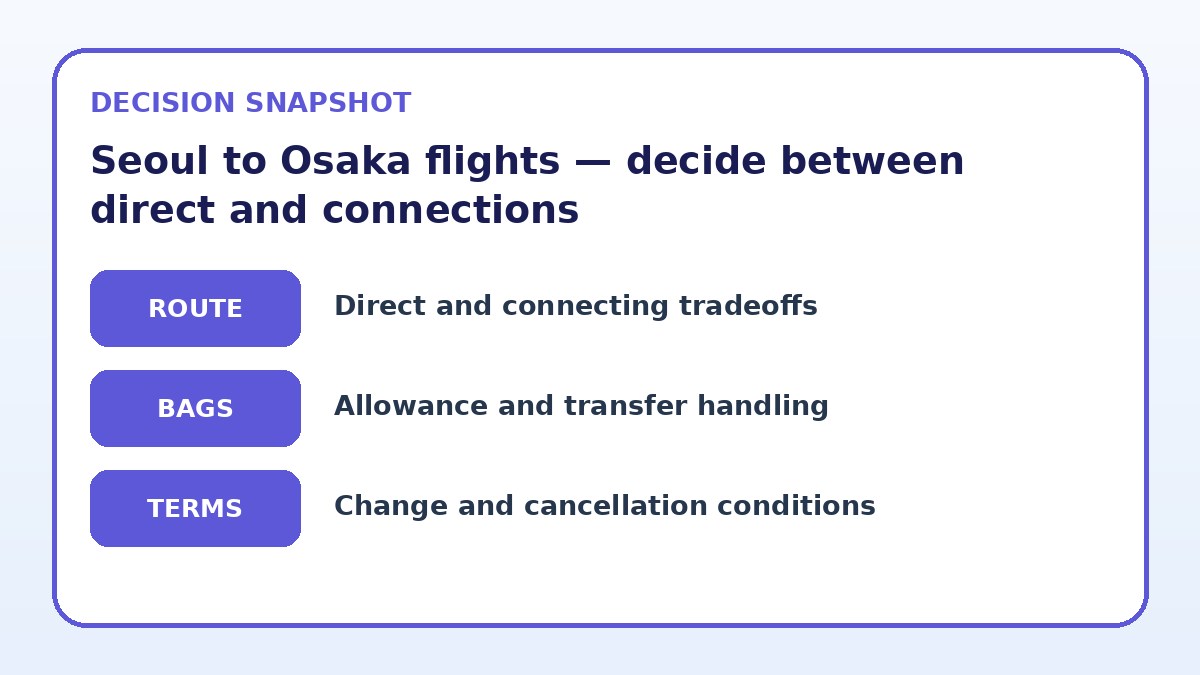
| Approach | Best for | Tradeoff to check |
|---|---|---|
| Direct flight | Travelers prioritizing speed, simplicity, and fewer transfer risks | Usually less schedule variety and potentially fewer low-fare options |
| Single-ticket connecting flight | Those seeking lower fares with carrier protection for missed connections | Longer total travel time and possible tighter airline rebooking limits |
| Separate-ticket connections | Budget-conscious travelers willing to accept extra risk for savings | No guaranteed protection for missed connections and baggage complications |
| Intentional stopover connection | Travelers who want to visit a second city en route without rushing | Adds planning complexity and more transit time overall |
Risk management: missed connections and luggage rules
The main operational risk with any connecting option is a missed connection due to delay on the first leg. If both segments are on the same ticket, airlines usually rebook passengers on the next available flight; but policy specifics vary and you should check that at booking. For separate tickets, you may be treated as a new arrival and need to purchase a fresh ticket if you miss the onward flight. First-time travelers should plan longer layovers, avoid tight single-digit connection windows, and have a backup plan to reach their destination if an early segment runs late.
Luggage handling is another critical detail to verify: some itineraries permit checked bags to transfer automatically, others require you to collect and re-check them during the layover. When bags must be reclaimed, add time for immigration, customs, and transferring between terminals or airports. Confirm baggage transfer rules and any additional fees on the airline or booking site before you finalize a purchase. If this seems unclear, ask the carrier directly or compare the final terms on the provider’s booking page; Trip.com may be a convenient place to view options but always rely on the airline’s own policy for final confirmation.
Before you book
- Confirm whether your ticket is a single itinerary (both segments on one PNR) or separate tickets; single PNRs typically offer missed-connection protection.
- Verify baggage rules: will checked luggage be transferred automatically or must you collect and re-check during layover?
- Check minimum connection times and recommended layover durations for the airports and terminals involved.
- Compare door-to-door travel time by adding transit from your accommodation to the origin airport and from the arrival airport into Osaka city.
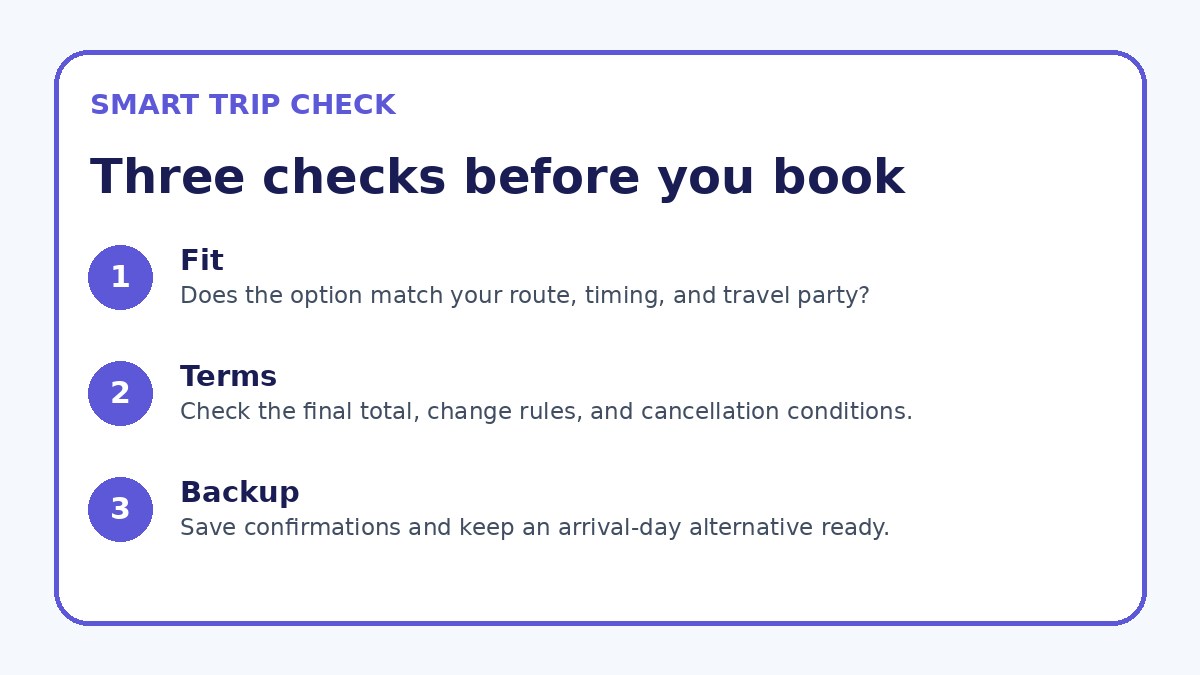
- Read the fare rules on the booking page for change, cancellation, and rebooking policies before you complete payment.
- If planning a separate-ticket connection, purchase travel insurance that covers missed connections and additional transport costs.
Airport pairs and ground connections that affect totals
In the Seoul–Osaka market you may encounter different airport combinations; for example, flying from Seoul’s different airports or into Osaka’s alternative airports will change your ground transit time. When evaluating flights, calculate door-to-door time: include travel from your accommodation to the origin airport, transfer time after arrival in Osaka, and local transit to your final destination. Some airports are faster and cheaper to reach from the city center than others, which can negate airborne time savings if the direct flight uses a farther airport.
Also consider the cost and convenience of getting between airport and city—express trains, buses, taxis, and rideshares vary in price and frequency. If a connecting itinerary requires changing airports mid-route, add ample buffer and plan how you’ll move luggage between terminals. For first-time visitors, a slightly longer single-airport trip is often preferable to a complex multi-airport connection; check local transit options and schedules as part of your comparison before booking.
Frequently asked questions
How much layover time should I plan when connecting through another airport?
Aim for a comfortable cushion rather than the airline’s minimum; for international-to-international transfers allow at least 90–180 minutes if you must change terminals or clear immigration. Shorter connections can work if the itinerary is on the same ticket and the airline lists it as a valid connection, but first-time visitors should prefer extra time to navigate unfamiliar signage, retrieve luggage if needed, and clear security. Also factor in the time required to move between different airports in a city if the connection requires it.
Is it safer to book a direct flight even if a connecting option is cheaper?
Safer in operational terms: direct flights reduce the number of things that can go wrong and are simpler to manage on travel day. However, safety must be measured against your priorities—if price savings are substantial and you’re comfortable with longer layovers, a connecting option can be perfectly acceptable. The deciding factors are whether the connection is on the same ticket, how comfortable you are handling transfers, and how much buffer time you build into your schedule.
What should I verify on the airline’s booking page before completing a Seoul–Osaka purchase?
On the final booking page check baggage allowance and whether bags are checked through, the total itinerary PNR status (single ticket versus multiple tickets), exact airport codes and terminals, and the fare-change or cancellation terms. Also confirm whether meals or seat selections are included, and whether any overnight layover requires a visa or transit permit. If anything is unclear, contact the airline directly—booking platforms like Trip.com can display options but the carrier’s published policy is the definitive source.
Final planning note
For first-time travelers from Seoul to Osaka, direct flights simplify the trip and reduce the chance of missed connections—valuable if your time is limited or you prefer low-stress travel. Connecting itineraries can expand schedule and fare options and enable stopovers, but they demand careful attention to baggage rules, layover duration, and whether segments are combined on one ticket. Use the checklist items here every time you compare options, and verify the final fare rules and baggage policy on the airline’s booking page before purchasing. That verification is the best way to match the route choice to your priorities and ensure a smoother arrival in Osaka.
Continue planning
Check current options and final conditions
Use the provider page to confirm live availability, the final total, cancellation terms, and every condition that matters to your trip.
This evergreen planning guide was created with AI-assisted drafting and a structured quality review. It does not display live prices, schedules, availability, visa guidance, or provider rankings. Verify current details before booking. Some links are affiliate links; we may earn a commission at no additional cost to you.