Practical answer first: for most families travelling between Sydney and Melbourne, a coach or plane makes sense when you want the fastest or cheapest point-to-point option; the train is best if you value space and relaxed travel time; driving gives ultimate flexibility; ferries or mixed sea options are rare and typically impractical for full door-to-door journeys. Your choice hinges on travel time, luggage and car needs, child comfort, overnight options, and how important scenery versus convenience is. This guide explains the tradeoffs in everyday family terms, what to compare on booking pages, and the critical checks to run before you click confirm—seat layouts, baggage rules, child fares, family discounts, connection logistics, and cancellation flexibility. Use Trip.com or provider sites to confirm current schedules and rules before final payment.
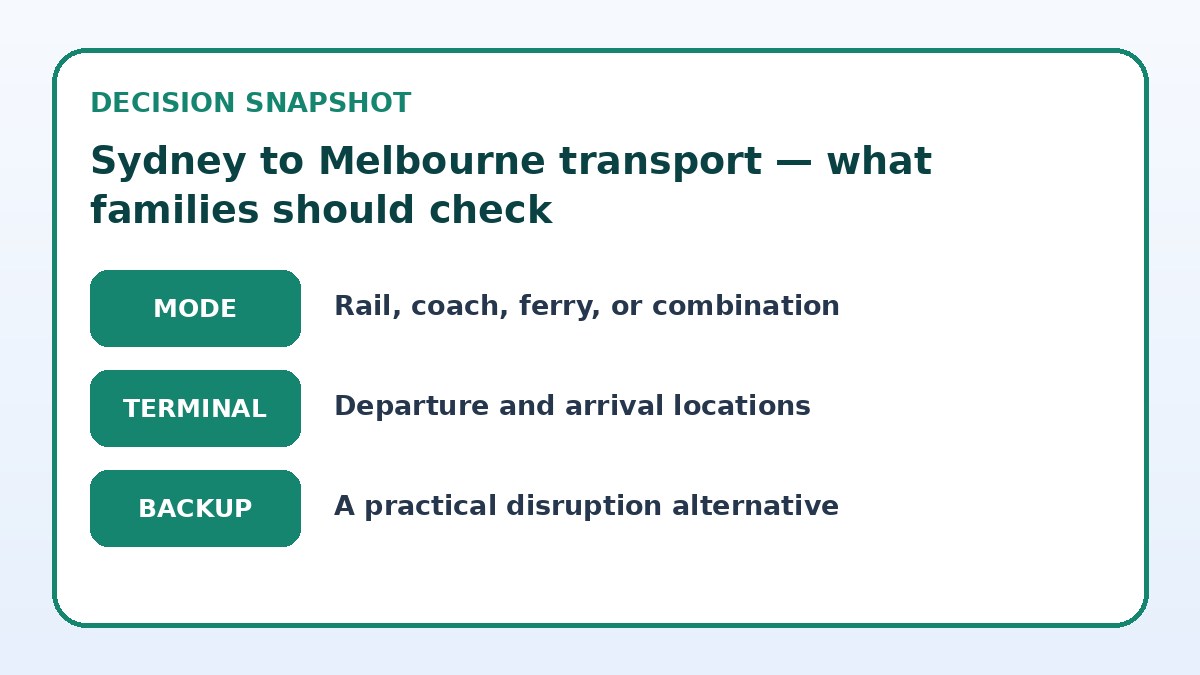
See current options before you compare the details
Availability and final conditions change. Open Trip.com now or keep reading for the practical comparison.
Train: comfort, space, and a slower pace
The train appeals for families wanting room to move, a fixed timetable, and less hassle with security screening or airport transfers. Trains usually let kids walk around, visit a dining car if available, and change nappy or stretch legs without pulling over. Look for family-friendly seating or quiet carriages, and verify whether reservations are required for every passenger. Also check luggage allowances, whether you can keep a stroller at your seat, and what onboard facilities exist for hot food or reheating baby meals.
Tradeoffs include longer travel times than flying and fewer departures than coaches or flights, which affects flexibility. If you need to fit the trip into a tight schedule, compare a direct train against connecting options that add transfer waits. Inspect the operator’s booking page for seat maps, accessible toilets, and child fare policies; these details can change and are decisive for families with infants or toddlers who need specific seating or assistance.
Coach: simplicity and straightforward scheduling
Coaches often run direct services between major cities and can be a low-stress choice for families because they remove the airport routine and usually park close to city centres. Modern coaches can come with reclining seats, onboard toilets, and power outlets—helpful for keeping devices charged for kids’ entertainment. When comparing coach options, check whether the service is express or makes many stops, whether onboard storage suits prams and luggage, and how child fares or booster seat rules are handled.
The main tradeoff is that coaches typically have less space per person than a train and fewer opportunities to move freely. Long coach rides can be tiring for young children who need frequent breaks; factor in where you could pause and how easy roadside stops are. Also verify the pickup and drop-off locations in both cities—if these are far from your accommodation, the convenience advantage may shrink when you add local transfers.
| Approach | Best for | Tradeoff to check |
|---|---|---|
| Train | Families who want space, the ability to move, and a relaxed scenic journey | Longer travel time and fewer daily departures compared with flights or some coaches |
| Coach | Budget-conscious families wanting direct, city-centre pickups and minimal transfer hassles | Less personal space and more limited onboard facilities for long legs than trains |
| Driving / Car hire | Families who prioritise flexibility, carry bulky equipment, or plan multiple stops | Driver fatigue, fuel/toll/parking costs, and possible heavy traffic into cities |
| Plane or mixed sea | Families short on time who accept airport procedures, or those taking a leisure cruise segment | Airport logistics can erase time savings; maritime options are rarely direct city-to-city |
Ready to check the option that fits your plan?
Use your exact dates and traveler details so the provider page can show the current total and conditions.
Driving and car hire: flexible stops and door-to-door control
Driving gives families the most control: leave when you need, stop for rests, visit attractions en route, and carry bulky items without worrying about baggage allowances. It’s also the simplest way to use your own car seats and keep routines steady for napping children. When renting, check child-seat availability or bring your own, inspect fuel and toll arrangements, and understand the drop-off and one-way rental policies if you plan to leave the car in a different city.
Downsides include concentration fatigue for the driver and the cost of fuel, tolls, and parking in city centres. Driving times are longer than flying and require planning for reliable rest stops and alternates in bad weather. If you’re comparing driving to public transport, factor in motorway conditions, potential traffic into each city, and whether the extra stops make the travel day into a pleasant road trip or an exhausting slog for everyone.
Before you book
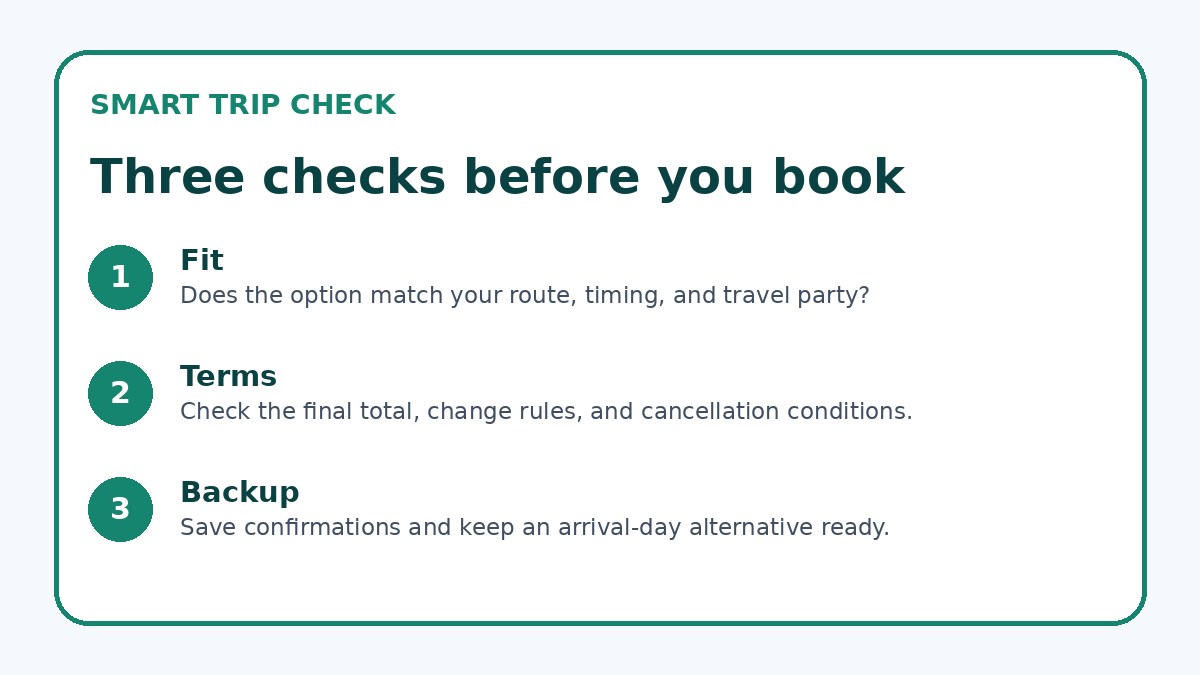
- Confirm total door-to-door time for each option, including transfers, parking or taxi time at each end.
- Check seat type, seat reservations, and whether family or bulkhead seating is available when booking.
- Verify baggage rules for strollers, car seats, and larger items on the carrier’s final booking page.
- Compare cancellation, change and refund policies, especially if travel plans could shift.
- Plan child comfort: availability of toilets, food warming, and space to move for long legs.
- Confirm pickup/drop-off addresses and local transfer options to your accommodation in both cities.
Plane and mixed/sea options: fast versus scenic or niche
Flying is the fastest way to travel point-to-point and can be best for families on limited time, but air travel adds airport arrival windows, security, and often more transit to city centres. Compare total door-to-door times, baggage allowances for car seats and strollers, and the ease of family check-in. If you are weighing plane versus train, keep in mind how much time you will spend on transfers, and whether an earlier or later flight that suits children’s sleep schedules is available.
Sea or ferry links between these cities are uncommon as a full route and usually form part of longer, recreational cruises or mixed modes. These can be fun for family holiday segments but are rarely practical for direct city-to-city transfers. If considering any maritime leg, verify onboard facilities for children, luggage and car transport rules, cancellation terms, and how shore transfers are arranged at each port before booking.
Frequently asked questions
Is the train from Sydney to Melbourne better for kids than flying?
It depends on what your family values. Trains usually offer more space to stand and walk, easier access to restrooms, and room for strollers and larger items, which can reduce fuss on longer journeys. Flying is faster but adds airport time and transfer logistics that can be tiring with young children. Compare door-to-door travel time, how much time you’ll spend in airports, and whether onboard facilities on the train meet your family’s needs by checking the operator’s booking page.
Can I take a car seat on coaches or trains?
Policies differ by operator. Many families bring portable car seats for cars or rental vehicles, but fixed seats on trains or coaches may not be designed to accept child restraints. Before booking, check the carrier’s final booking page for allowed restraints, storage for a stroller, and whether ongoing safety advice or seatbelt laws affect your choice. If you must use a car seat, driving or private transfers may be the simplest reliable option.
How do I choose between a direct option and one with connections?
Prioritise direct services if you want to reduce transfers, luggage handling and the risk of missing connections with restless kids. If direct options are limited, compare total extra time for connections, length of transfer windows, and how easy the connection is (same station/terminal versus a cross-city transfer). Factor in the family’s tolerance for waits and whether you can book protection for missed connections on the provider’s site; always confirm actual connection logistics on the carrier’s booking pages.
Final planning note
Choosing the right Sydney to Melbourne transport for your family boils down to a few simple tradeoffs: time versus comfort, convenience versus flexibility, and cost versus control. Trains offer space and a calmer pace; coaches simplify logistics; driving gives unmatched flexibility; flying saves time at the cost of extra transfer steps. Start by listing what matters most—shortest door-to-door time, ability to carry gear, fewer transfers, or room to move—and then compare concrete booking details like seat maps, luggage rules, child policies, and cancellation terms on provider pages. Use Trip.com or official operators to confirm schedules and rules before you pay, and pack a short in-transit kit to keep kids comfortable on whichever mode you choose.
Continue planning
Check current options and final conditions
Use the provider page to confirm live availability, the final total, cancellation terms, and every condition that matters to your trip.
This evergreen planning guide was created with AI-assisted drafting and a structured quality review. It does not display live prices, schedules, availability, visa guidance, or provider rankings. Verify current details before booking. Some links are affiliate links; we may earn a commission at no additional cost to you.