
If you’re booking New York City to Los Angeles flights for your family, the practical starting point is this: choose a direct flight when minimizing stress, time in airports, and the chance of missed connections matters most; choose a connecting flight when you need lower fares, more departure time options, or want a midday break between long travel segments. Families with young children, tight schedules, or lots of gear often prefer a nonstop even if it costs a bit more because it reduces the number of transitions and the need to herd kids through another security line or gate change. But connecting itineraries can be smarter for families trying to match specific arrival times, fit within a strict budget, or combine loyalty rewards. Below you’ll find the tradeoffs to weigh, practical checks to run on any provider’s final booking page (including seat assignment rules, baggage allowances, connection minimums, and change/cancellation terms), and a short checklist to finalize your family-friendly booking with confidence.
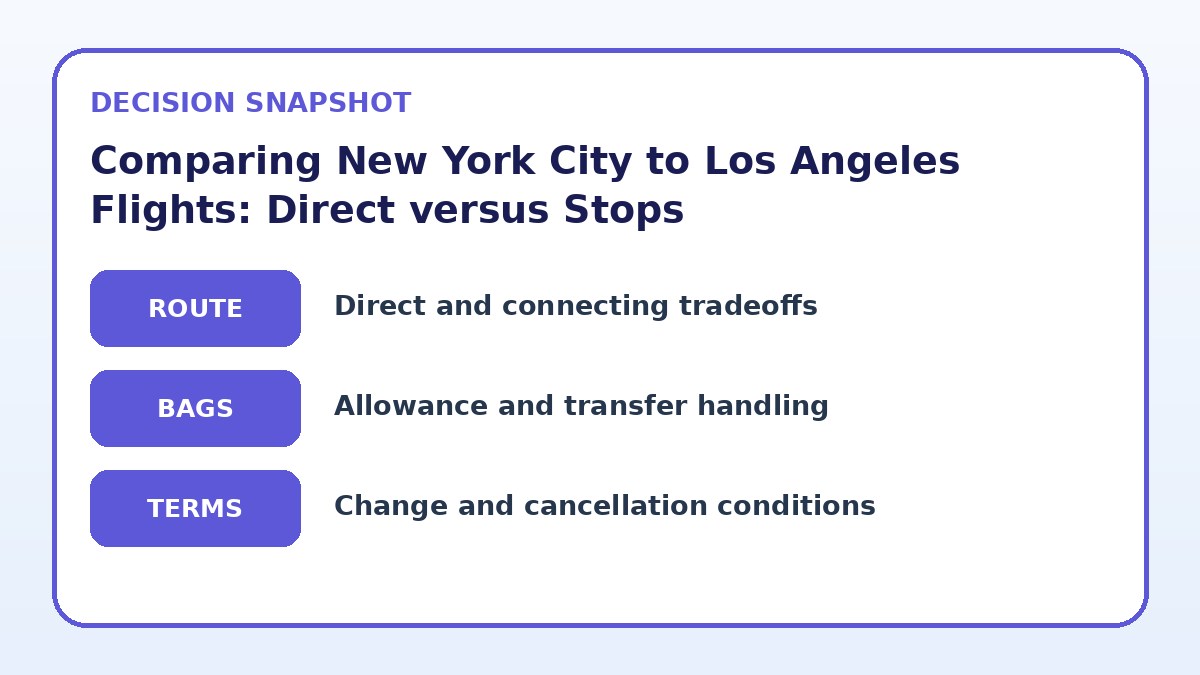
See current options before you compare the details
Availability and final conditions change. Open Trip.com now or keep reading for the practical comparison.
How to weigh direct versus connecting options for families
Start by listing what matters most to your household: total travel time, nap schedules, tight onward connections, stroller or car seat needs, and the tolerance level of each child for airport waits. Direct flights simplify logistics because you only manage security, boarding, and one arrival. That matters most for toddlers, infants, or anyone for whom a single uninterrupted flight will be easier. Factor in your comfort with longer single flights — a nonstop across the country means a longer uninterrupted block of time in the air but fewer transitions on the ground.
Connecting flights broaden your choices. If nonstop times don’t match your family’s sleep or activity patterns, a single stop can let you pick an arrival that aligns with check-in times at your Los Angeles accommodation or a favorable time to avoid rush-hour traffic to your hotel. A connection also breaks a long day into two shorter flights, which some children handle better. But remember each connection adds a set of tasks: deplaning, moving between gates or terminals, possible re-clearing of security, and watching the clock to avoid tight transfers.
Time, cost, and comfort tradeoffs explained
Time matters in two ways: scheduled flight time and total travel time from your home in New York City to your final Los Angeles address. Nonstops typically shorten the latter because they remove an extra layover, but the scheduled departure or arrival time could make the day longer if it forces an early wake-up or late-night arrival. For families, also think about daylight and circadian rhythms — landing in Los Angeles late in the evening might be harder for little ones despite a shorter flight duration.
Cost tradeoffs are real but not absolute. Connecting itineraries often appear cheaper, especially when airlines compete on hub routes, but checked-bag fees, seat selection charges for assigned seats together, and separate-leg restrictions can add up. Comfort considerations include seat pitch, entertainment options, and whether the plane’s configuration supports family needs. When comparing price, run the math including baggage, carry-on policies, and any fees to transfer terminals or recheck bags during a layover. Verify all these details on the airline’s final booking page before you buy.
| Approach | Best for | Tradeoff to check |
|---|---|---|
| Direct flights | Families wanting fewer transitions, simpler logistics, and lower stress on travel day. | Often fewer scheduling choices and sometimes higher base fares compared with connecting options. |
| Connecting flights with short layovers | Families prioritizing shorter overall itineraries or specific arrival times not served nonstop. | Higher risk of missed connections and more hurried transfers when flights are delayed. |
| Connecting flights with longer layovers | Families who prefer a relaxed transfer, time for meals, or a mid-trip rest between flights. | Longer total door-to-door time and more time spent in airports or terminals. |
| Mixed-carrier connections | Families seeking lower fares or unique schedule combinations across airlines. | Greater need to verify baggage through-checking, rebooking rules, and separate boarding arrangements. |
Ready to check the option that fits your plan?
Use your exact dates and traveler details so the provider page can show the current total and conditions.
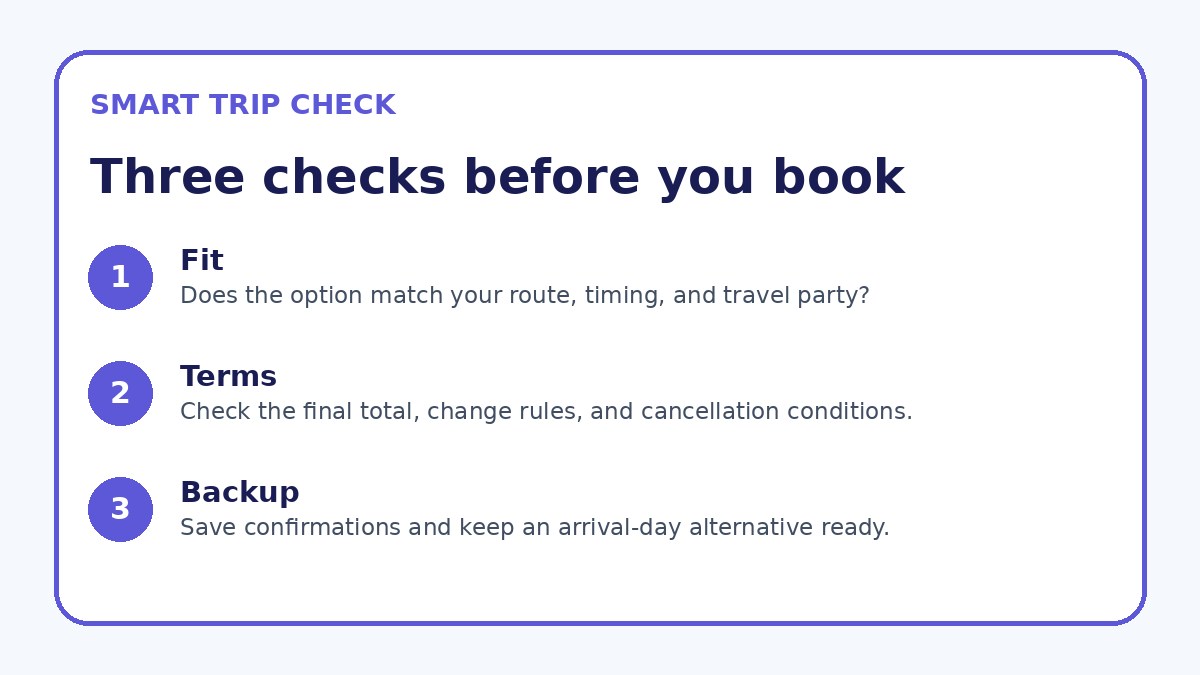
Practical planning steps for a family-friendly booking
Map out the whole door-to-door timeline and include buffer time for airport processes. If you have a morning departure with a toddler, plan where you’ll park, how long security typically takes at your chosen NYC airport (JFK, LGA, or EWR), and whether precheck or family lanes would speed you through. For connections, aim for at least the airline’s published minimum connection time plus an extra 30–45 minutes when traveling with kids, strollers, or special equipment. That reduces stress and lowers the chance you’ll need to rebook if a delay occurs on the first leg.
Decide seat strategy early. Families usually want to sit together; direct flights mean one seat selection task, while connections may require confirming seats on each leg or understanding whether the same reservation covers both. Some fares restrict advance seat selection or charge for it — check that on the final booking screen. If you travel with a car seat or stroller, confirm airline policies for gate-checking, whether a car seat counts as an extra carry-on, and how it impacts boarding. If you’re using loyalty points or mixing carriers, verify how connections affect baggage allowance and reissue policies.
Before you book
- Confirm total door-to-door travel time and compare it against kids’ usual nap or sleep schedules.
- Verify baggage allowances and fees for every flight leg and item (strollers, car seats) on the airline’s booking page.
- Check seat assignment rules and reserve seats together for all passengers before finalizing payment.
- Plan at least an extra 30–45 minutes above minimum connection time when booking a layover with children.
- Prepare an airport bag with snacks, quiet activities, chargers, and any needed medications for easy access.
- If using separate carriers, confirm whether luggage transfers through or must be claimed and rechecked between flights.
What to verify on the booking page and at the airport
Before handing over payment, inspect three things on the airline’s final booking page: baggage allowance for each passenger and each flight leg, whether seats are assigned or must be purchased, and the change/cancellation policy tied to your fare type. For connecting itineraries on different carriers or codeshares, confirm if your luggage will be checked through to your final destination or if you must claim and recheck bags during the connection. Also check whether the fare includes onboard meals, in-flight entertainment, and whether airline family services (priority boarding for families, family lanes) are available.
At the airport, use family-friendly resources to make the trip smoother: arrive early enough to allow stroller checks, bathroom breaks, and a calm snack; bring a refillable water bottle you can fill after security; and use airline or airport staff to request assistance if you have a tight connection. If you booked a connection with a short layover, ask the gate agent on arrival about expedited transfer lanes, shuttle options between terminals, and whether gates are close enough to move between without risking a missed flight.
Frequently asked questions
Is a nonstop or a one-stop flight better for toddlers on a New York City to Los Angeles trip?
For toddlers, nonstops are usually easier because they eliminate the need to leave the gate area, re-enter security, or manage unpredictable transfers. Fewer transitions mean fewer opportunities for tantrums or lost items, and you only have to settle them for one longer flight rather than two separate takeoffs and landings. However, if the nonstop departs at an inconvenient time or is much more expensive, a single well-planned stop with a comfortable layover can be a workable alternative — just plan extra transfer time and bring familiar snacks and entertainment.
How much connection time is safe for a family traveling between New York City and Los Angeles?
There’s no one-size-fits-all number, but a practical approach is to add 30–45 minutes to the airline’s published minimum connection time when children, strollers, or checked car seats are involved. This buffer helps account for slower deplaning, bathroom and snack breaks, and moving between distant gates or terminals. If your itinerary requires changing airports or re-clearing security, allow substantially more time or avoid that routing entirely. Always verify airport layout and shuttle requirements on the airline or airport website before booking.
What should I watch for on the airline’s booking page when comparing routes?
Key items to verify are baggage rules for each leg, seat selection availability and cost, whether the fare is refundable or changeable, and if your luggage will be checked through to Los Angeles for connecting itineraries. Also check whether seats are guaranteed together and whether the fare allows online check-in for all segments. If booking connecting flights on different carriers, confirm the connection is protected and what happens if the first flight is delayed. For current schedules and availability, you can compare options on sites like Trip.com but always confirm details on the airline’s own booking page before purchasing.
Final planning note
Choosing between direct and connecting New York City to Los Angeles flights for your family comes down to priorities: reduce airport transitions and choose nonstop for lower day-of-travel stress, or use a connection to match schedules, reduce fare costs, or split the day. Run the numbers on total door-to-door time, baggage costs, and seat assignments, and add generous buffers for connections when traveling with children. Double-check all baggage and seat policies on the airline’s final booking page, and use the checklist above to make the day as smooth as possible. With the right planning you can balance comfort, time, and budget and get your family to Los Angeles ready to enjoy the trip.
Continue planning
Check current options and final conditions
Use the provider page to confirm live availability, the final total, cancellation terms, and every condition that matters to your trip.
This evergreen planning guide was created with AI-assisted drafting and a structured quality review. It does not display live prices, schedules, availability, visa guidance, or provider rankings. Verify current details before booking. Some links are affiliate links; we may earn a commission at no additional cost to you.