If you travel to Hong Kong for work, price alerts can save time and money — provided you stop alerts from becoming impulse triggers. Practical first step: set narrow alerts for your exact travel window and preferred cabin or hotel room type, then attach clear booking triggers: e.g., an alert only becomes actionable if it meets your predefined schedule, seat/room class, and a total trip cost threshold that includes likely taxes, transfers, and baggage. Use at least two alert sources so you see a trend rather than a single blip; cross-check availability on the provider’s final booking page before committing. This article gives a compact system you can use on the go: how to design alerts for business itineraries to Hong Kong, how to avoid emotional buys, and what to verify at booking to ensure the deal actually meets your work requirements.
See current options before you compare the details
Availability and final conditions change. Open Trip.com now or keep reading for the practical comparison.
Design alerts that match business needs
Start by translating the priorities of your business trip into concrete alert settings. If you must be in Hong Kong for a morning meeting, filter alerts by flights that arrive before a specific time and by connection counts you will tolerate. For multi-day conferences, set hotel alerts for room types with reliable Wi‑Fi and flexible cancellation. Narrow alerts reduce noise and make each notification actionable. Avoid broad searches such as “all flights to Hong Kong” which generate many irrelevant price drops and increase temptation to accept inconvenient itineraries.
Next, encode non-price constraints into your alert plan. Decide whether you need refundable or changeable fares, extra legroom seats, or loyalty accrual. For hotels, decide if you require on-site business facilities or late checkout options. Many alert tools allow tags or notes—use them to remind yourself of these constraints when the alert arrives. That way an attractive fare that misses a critical requirement will be dismissed quickly instead of being considered impulsively.
Stop impulse buys with preset booking triggers
Impulse buying usually happens when a good-looking fare arrives without context. Create simple booking rules you follow automatically. Examples: book only if the total cost, including expected baggage and transfer fees, is below your internal limit; accept only flights with fewer than a set number of connections; or book hotels only if the cancellation window covers schedule changes. Put these rules somewhere easy to see—your calendar note or a phone reminder—so you obey them under pressure.
Complement rules with timing limits to avoid last-minute decisions. For instance, decide not to book any alert-driven fare within a short window before departure unless it meets strict refundable or changeable conditions. If an alert appears outside your acceptable window, archive or mute it and set a new alert for the proper dates. The point is to turn each alert into a checklist item rather than an emotional prompt to buy immediately.
| Approach | Best for | Tradeoff to check |
|---|---|---|
| Single broad alert for all Hong Kong options | travelers who want to see maximum market movement | high volume of noise and strong temptation to book unsuitable itineraries |
| Multiple narrow alerts by time, cabin, and hotel room | business travelers with fixed meeting windows | lower alert frequency, requires upfront setup and discipline |
| Alerts plus standby flexible booking (refundable fares) | those who prioritize schedule flexibility over cost | higher upfront cost with potential savings from later changes |
| Alert monitoring with a strict preapproved threshold | travel managers who want controlled decision-making | may miss last-minute bargains that fall outside strict limits |
Ready to check the option that fits your plan?
Use your exact dates and traveler details so the provider page can show the current total and conditions.
Cross-check providers and verify before you buy
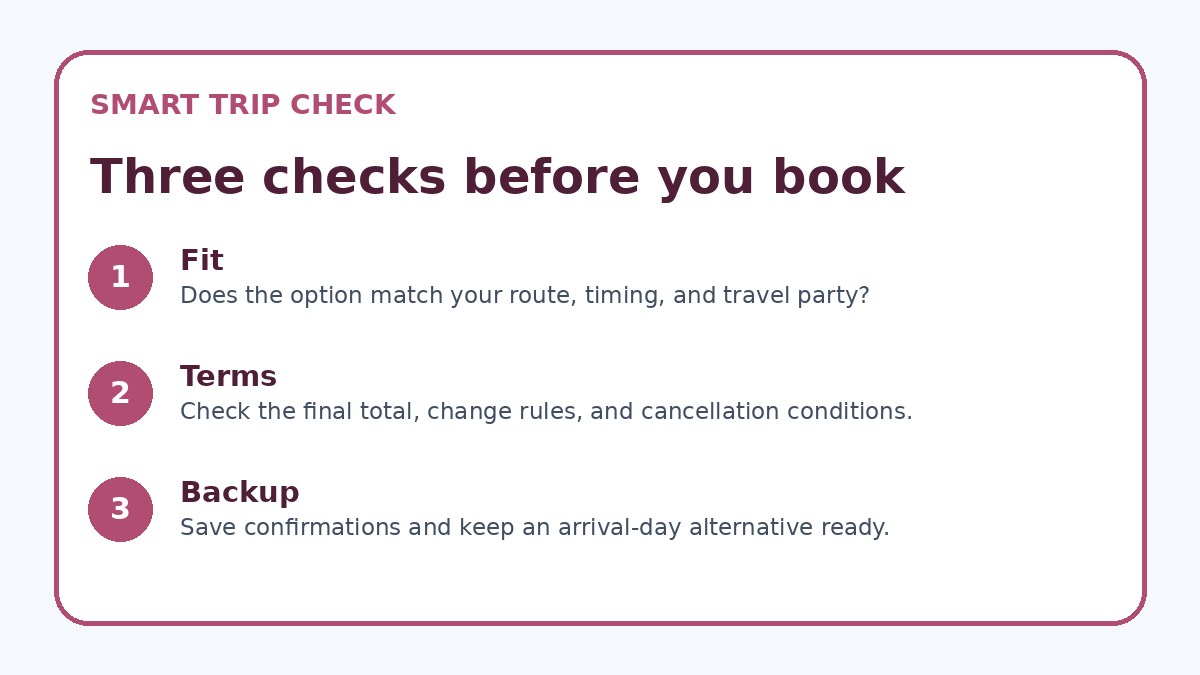
When an alert looks right, verify availability and total cost on the provider’s final booking page before you enter payment. Alerts can show base fares or cached prices that exclude taxes, surcharges, baggage, and seat selection fees. Also confirm the ticketing or reservation rules: whether the fare is changeable, what penalties apply, and how refunds are processed. For hotels, check the exact room type and cancellation policy; for transfers or ground services, confirm pick-up windows and extra fees.
Use at least one independent comparison source to confirm the trend you saw in alerts. Trip.com can be a useful comparison point to check schedules and booking conditions, but always verify the final terms on the airline’s or hotel’s official booking page. If booking through a third party, read the provider’s terms on that booking page carefully and note contact points for customer service in case plans change.
Before you book
- Set alerts only for your exact travel dates, preferred departure/arrival windows, and required cabin or room type.
- Define and record your booking triggers: total trip cost cap, acceptable connections, and refundable/changeable conditions.
- Activate alerts on two different platforms so you see consistent price movement before acting.
- When an alert fires, open the airline or hotel’s booking page and confirm total cost, taxes, baggage fees, and cancellation rules.
- Mute or remove alerts after booking and subscribe to official schedule-change notifications from the provider.
- If a lower price appears after purchase, check fare rules immediately to decide within 24–48 hours whether to change or rebook.
Manage alerts during travel and after booking
Once you book, prune or silence related alerts to avoid double-booking or panic re-booking when prices fluctuate. Keep a simple change-watch: subscribe to the airline’s schedule-change notifications and check the hotel’s confirmation for any room changes. If your company allows itinerary flexibility, set a monitoring alert for price drops that trigger a review—not an automatic rebooking—so you can decide during a calm window whether to change plans.
If a lower fare appears after you’ve bought a ticket, check the fare rules for reissue or refund possibilities. Some fares allow changes for a fee; others don’t. For hotels, free cancellation windows may permit a rebook and cancel strategy, but verify availability first. Maintain a short decision timeline for these reviews—decide within 24–48 hours of noticing the drop—so you avoid procrastination and last-minute scrambling that undercuts the time savings alerts are supposed to provide.
Frequently asked questions
How should I set price alerts if my Hong Kong dates are flexible?
If you can shift travel by a day or two, create multiple narrow alerts for the small range of alternate dates rather than one broad alert. That preserves relevance while increasing the chance of catching a lower fare that still meets your time constraints. For hotels, set alerts for the same room type across those nearby dates and include a note about cancellation flexibility. When an alert arrives, evaluate it against your business schedule and total cost, not just the advertised nightly or base fare.
Can I rely on third-party sites when alerts show dramatic drops?
Third-party sites are useful for trend spotting, but you must verify final terms on the provider’s booking page before buying. Alerts sometimes surface cached fares or base prices that exclude taxes, baggage, or mandatory fees. Always check who issues the ticket or reservation, the fare rules, and the customer-service contact details on the final booking screen. Trip.com can be a helpful comparison, but do not treat its alert as definitive—use the official booking page to confirm availability and rules.
What’s a simple rule to avoid impulse booking under time pressure?
Adopt a one-line decision rule you repeat when an alert arrives: for example, “Book only if total trip cost is under X, arrival before Y, and fare is refundable or changeable.” Keep that rule visible—on your phone lock screen or travel note—so it interrupts emotional reactions. Combine it with a short mandatory verification step: open the airline or hotel booking page and confirm the full price and cancellation terms before entering payment. This habit reduces rushed errors and ensures business requirements remain central.
Final planning note
Price alerts are a powerful tool for business travelers to Hong Kong, but they only help if you systematize how you respond. Narrow alerts, predefined booking triggers, and routine verification on the provider’s booking page turn noisy notifications into reliable decision signals. Use two alert sources to spot trends, prune alerts after booking, and keep simple rules to prevent emotional purchases. When in doubt, prioritize schedule fit and changeability over a slightly lower sticker price—those features preserve your ability to work effectively while traveling. With a disciplined alert routine, you’ll capture meaningful savings without sacrificing the reliability your business trip requires.
Continue planning
Check current options and final conditions
Use the provider page to confirm live availability, the final total, cancellation terms, and every condition that matters to your trip.
This evergreen planning guide was created with AI-assisted drafting and a structured quality review. It does not display live prices, schedules, availability, visa guidance, or provider rankings. Verify current details before booking. Some links are affiliate links; we may earn a commission at no additional cost to you.