
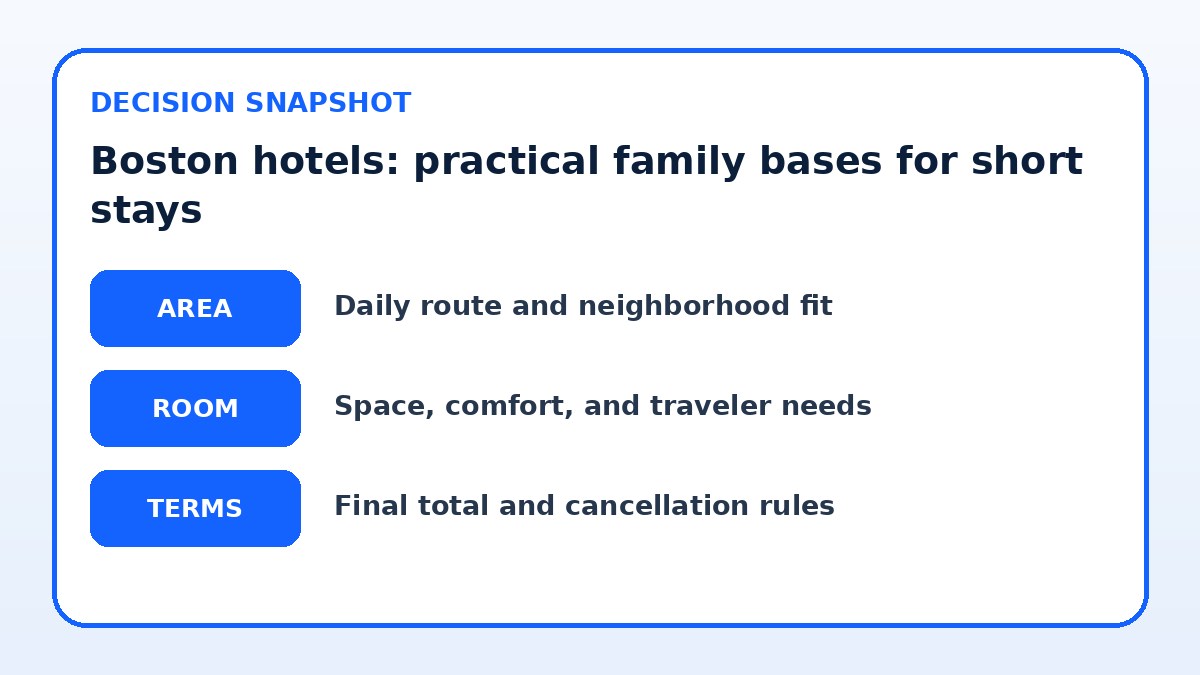
If you have only a few days in Boston with children, pick a base that minimizes transit time and maximizes simple comforts: a central neighborhood with easy access to key sights, family-sized rooms or suites, and straightforward transit or walking options. For most short stays, that means prioritizing proximity to the Freedom Trail, a good subway stop, and quick access to parks or kid-focused attractions so you spend more time exploring and less time in taxis. Consider room layout (separate bedding or a connecting room), breakfast or kitchenette options, and reliable luggage storage for arrival and departure days. Before booking, compare how far the property is from the subway, whether the hotel charges for extra beds or parking, and whether breakfast or a simple kitchenette can cut meal stops with kids. Trip.com is one tool to compare current availability and conditions; always verify room details and extra-fee policies on the property’s final booking page.
See current options before you compare the details
Availability and final conditions change. Open Trip.com now or keep reading for the practical comparison.
Location first: neighborhoods that save time
For a short family stay, location is the single biggest time-saver. Choose neighborhoods that let you walk to at least one or two major attractions and that are on a convenient subway line for the rest. Staying near the North End or downtown means easy walking to historic sites and ferry access; Back Bay offers a blend of shopping and rail links; the Seaport gives you modern waterfront walks and family-friendly dining. Think about how many attractions you want within a 15–30 minute walk versus how often you’ll use transit or rideshares with kids in tow.
When comparing individual properties, map the walking distance to places you actually plan to visit—museums, aquarium, playgrounds, and main restaurants—rather than to a generalized center. Factor in sidewalk conditions and crossings with strollers, as well as green space for breaks. If you expect museum-heavy days, base yourself closer to the museum cluster; if waterfront time is a priority, staying in a neighborhood with easy harbor access reduces transit time and lets afternoons be more relaxed.
Room types and bedding: what eases family life
Room layout can make or break a short family trip. Decide whether you need two separate rooms, a suite with a living area, or a large room with rollaway/sofa bed—each has tradeoffs in privacy, cost, and space. Suites or rooms with a sitting area give you a place for kids to be awake while adults rest; connecting rooms are great if you need separate sleeping spaces but want convenience. Always verify the exact bedding configuration and whether an extra bed is included or charged, because those details vary by provider and can affect final costs and comfort.
If you have infants or toddlers, ask about crib availability and whether there’s a fee for it. A small kitchenette or at least a microwave and refrigerator can make snack time and simple meals much smoother, particularly for picky eaters or late arrivals. Confirm housekeeping frequency and laundry options—short stays still benefit from knowing if you can refresh clothes mid-trip. Check the hotel’s policy on sofa beds and the mattress type if sleep quality is critical for adults and children alike.
| Approach | Best for | Tradeoff to check |
|---|---|---|
| Central walking base near attractions | Families focused on sightseeing and minimizing transit | Smaller rooms and higher rates; fewer quiet spaces for nap times |
| Neighborhood base with subway access | Families who want balanced cost and quick transit options | Short daily commutes may be needed for some attractions |
| Suite or connecting rooms | Families needing separate sleeping spaces and flexible routines | Often higher room rate and less central location options |
| Hotel with kitchenette or breakfast included | Families wanting to simplify meals and mornings | Fewer onsite attractions; may pay more for larger room types |
Ready to check the option that fits your plan?
Use your exact dates and traveler details so the provider page can show the current total and conditions.

Logistics and transport: minimizing transit friction
Boston’s compact core rewards walking, but when you need to use public transit, being close to a reliable subway line (the T) or commuter rail saves time. Look for properties within a short walk of a station and confirm how easy the route is with a stroller or young children—some stations have stairs and limited elevators. Also factor in how you’ll get to and from Logan Airport: compare hotels that are straightforward to reach by public transit, shuttle, or rideshare, and check luggage considerations for short stays where arrival and departure frames matter.
Parking and city driving are common tradeoffs for families who prefer a rental car. If you plan a day trip outside Boston, a hotel with on-site parking or easy morning access to rental-car locations may be worth the cost. For strictly in-city sightseeing, prioritize walkability and transit access over parking. When booking, verify transit advisories and elevator availability on the hotel’s final booking page, and check whether the property offers help with taxi or shuttle arrangements for airport transfers.
Before you book
- Map the hotel to your top three planned stops and confirm walking time with a stroller or small child in mind.
- Verify exact room bedding and any extra-bed or crib fees on the hotel’s final booking page before reserving.
- Confirm luggage storage and early check-in/late check-out policies so you aren’t rushed on arrival or departure days.
- Check whether the property has on-site breakfast, kitchenette access, or nearby grocery options for simple meals.
- Ask about elevator access and stroller-friendly routes from the hotel to the nearest subway station.
- Read recent guest comments about noise levels and family experiences to gauge suitability for naps and early bedtimes.
Amenities that actually matter for families
Not every amenity is equally helpful on a short stay. Prioritize conveniences that reduce friction: breakfast or grab-and-go options for early starts, convenient luggage storage on arrival/departure days, laundry or same-day service for spills, and on-site dining that suits children. A pool can be a great way to unwind, but weigh whether pool time will displace sightseeing; sometimes a nearby park or indoor play area is more useful. Also check childcare policies if you plan any evening activities—many properties list whether they offer babysitting or can recommend vetted services, and this should be confirmed directly before booking.
Look for simple extras that shorten your to-do list: a small grocery or vending area, complimentary coffee in the lobby, and secure storage for strollers or sports gear. If you need accessibility features, confirm the type and availability of accessible rooms and bathrooms on the property’s booking page. Finally, read recent guest notes about noise, elevator wait times, and family experiences to get a realistic sense of whether the hotel’s atmosphere will suit your kids’ rhythms during a short stay.
Frequently asked questions
Which Boston neighborhood is most convenient for a two-day family visit?
For a short, two-day itinerary, prioritize a neighborhood that reduces transit time between your must-see sites. Downtown or the North End places you within walking distance of historic sites and waterfront activities; Back Bay is convenient for rail links and broad sidewalks, while the Seaport gives easy harbor walks and family dining. Which of these is best depends on your planned highlights—museum-heavy days favor Back Bay, waterfront or aquarium visits favor Seaport or downtown. Map your actual attractions and aim for a hotel you can reach on foot or with a single short subway ride.
Are suites or connecting rooms worth the extra cost for short family stays?
Suites and connecting rooms offer privacy and flexible sleeping arrangements, which can make a short trip feel less cramped and preserve naps and adult downtime. For very short stays the extra cost pays off when it prevents disrupted sleep or the need to book two separate rooms. However, if you’ll be out most of the day and only use the space for sleeping, a single well-sized room with good bedding and early check-in might be more economical. Verify exact room layouts and any added fees for rollaways or connecting doors on the hotel’s booking page.
What practical amenities should families check when booking Boston hotels?
Look for amenities that reduce daily friction: an included or inexpensive breakfast, in-room refrigerator or kitchenette, laundry facilities for spills, and reliable luggage storage. Confirm elevator availability and stroller-friendly access to nearby transit. If you plan to drive, check parking options and fees directly with the property. Also confirm child-specific services such as cribs or babysitting and ask about the hotel’s noise environment and housekeeping schedules so you can plan naps and bedtime without surprises.
Final planning note
For a short family stay in Boston, the right base is the one that saves time and reduces stress: a neighborhood that cuts transit, a room layout that fits your sleeping needs, and a few practical amenities that simplify meals and luggage handling. Balance walking access to your top sights with easy subway links for anything farther afield. Before you book, verify bedding configurations, crib and rollaway policies, luggage storage, and any fees on the property’s final booking page. With those checks done, you’ll spend less time coordinating logistics and more time enjoying Boston’s compact, walkable highlights with your family.
Continue planning
Check current options and final conditions
Use the provider page to confirm live availability, the final total, cancellation terms, and every condition that matters to your trip.
This evergreen planning guide was created with AI-assisted drafting and a structured quality review. It does not display live prices, schedules, availability, visa guidance, or provider rankings. Verify current details before booking. Some links are affiliate links; we may earn a commission at no additional cost to you.