Practical answer up front: when you and your partner book Dubai to Auckland flights, pick the fare and carrier whose change and cancellation conditions match how fixed or flexible your travel plans are. If either of you expects date changes, medical contingencies, or a chance you’ll travel separately, prioritize flexible fares or refundable tickets; if your dates are firm and you want lower base fares, be prepared for change fees and restrictive cancellation rules. Read the exact terms shown at checkout: what counts as a “date change,” who pays reissue fares, whether name changes are allowed, and which taxes or partner-carrier rules apply. For couples, understand how group or paired bookings are handled, whether both passengers must be changed together, and whether refunds or credits are issued per ticket or to a single account.
See current options before you compare the details
Availability and final conditions change. Open Trip.com now or keep reading for the practical comparison.
How fare classes and ticket types affect couples’ flexibility
Airlines generally sell multiple fare classes on Dubai to Auckland routes: deep-discount nonrefundable fares, mid-tier fares with partial flexibility, and fully refundable or flexible fares. For couples, the choice depends on who holds the greater schedule risk. If both partners are equally flexible, a single flexible fare for each ticket brings the clearest outcome: free or low-cost date changes, simpler refunds, and fewer surprises at the reissue stage. If one traveler must be certain of dates while the other can shift, mix a flexible ticket with a cheaper, restrictive one—but plan for the administrative burden of managing two different rule sets.
When comparing options, read the fare rules that appear at booking and in the ticketing confirmation. Look for explicit phrases: free change, change fee plus fare difference, nonrefundable, or refundable. Note whether the fare allows name corrections and whether change fees are per passenger or per booking. For connecting itineraries, the most restrictive carrier's policy often dominates—so a partner carrier’s cheap leg can still impose tough conditions on the whole itinerary. Always verify the final booking page for partner-carrier and interline conditions before you pay.
What to verify on the airline booking page before you confirm
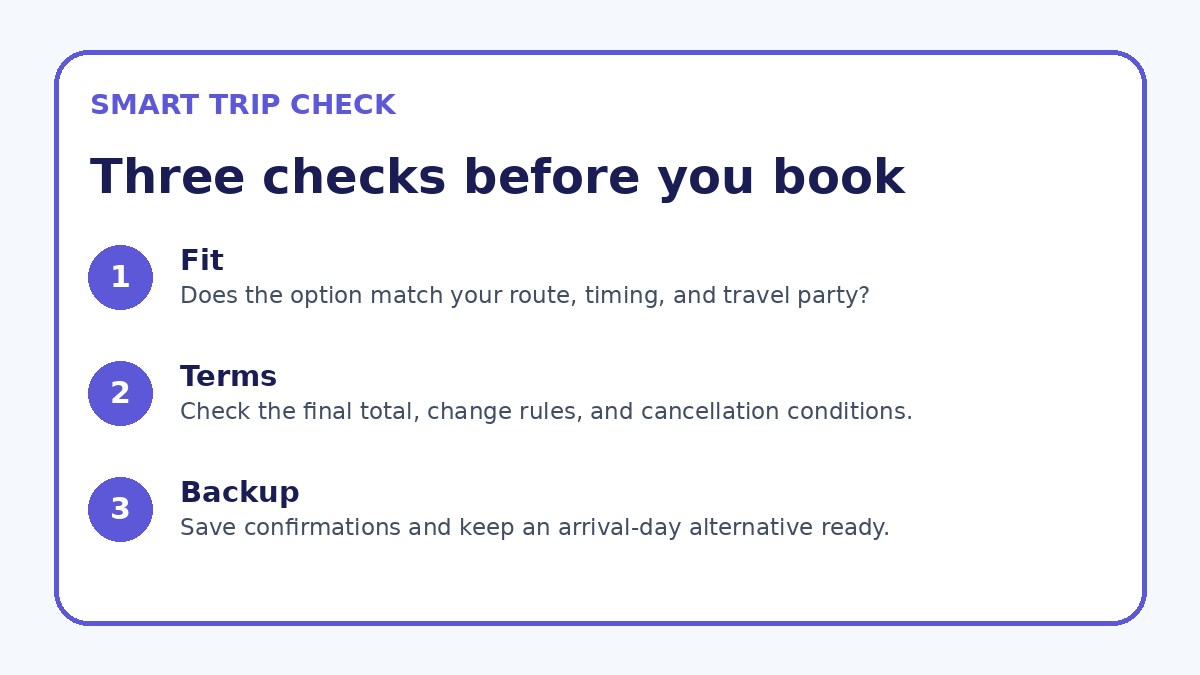
The final booking page and the electronic ticketing receipt are the authoritative sources for change and cancellation rules. Before you hit purchase, expand the fare rules and read the fine print. Items to verify include the exact change fee amount, whether fare differences apply, the refundability status, timelines for free cancellations (if any), and how taxes and third-party fees are handled on refunds. For couples sharing a payment method, check whether refunds are split or returned to the original card; if you paid separately, confirm how to claim your portion.
Also verify operational details that affect changes: if the itinerary uses multiple carriers or a codeshare, confirm which airline will issue the ticket and enforce rules. Look for statements about voluntary changes versus involuntary schedule changes; airlines often waive fees for significant schedule disruptions but define what qualifies. If you plan to purchase travel add-ons—seat assignments, extra bags, or flexibility bundles—confirm whether those add-ons are transferable or refundable when you change the ticket.
| Approach | Best for | Tradeoff to check |
|---|---|---|
| Buy fully flexible fares for both passengers | Couples with uncertain dates or medical risks | Higher upfront cost, but minimal administrative hassle and straightforward refunds |
| Mix flexible ticket for one partner and cheaper fare for the other | One traveller needs certainty, the other is flexible | Saves money but requires managing two rule sets and potential asymmetric reimbursements |
| Choose a cheaper single-ticket itinerary with connections | Couples seeking value and willing to accept controlled risk | Lower price but the most restrictive carrier’s rules may apply to the whole ticket |
| Split tickets or separate carriers to lower fare | Experienced travellers who can tolerate rebooking complexity | Higher risk of missed connections and no automatic protection across tickets |
Ready to check the option that fits your plan?
Use your exact dates and traveler details so the provider page can show the current total and conditions.
Comparing direct and connecting itineraries for change risk
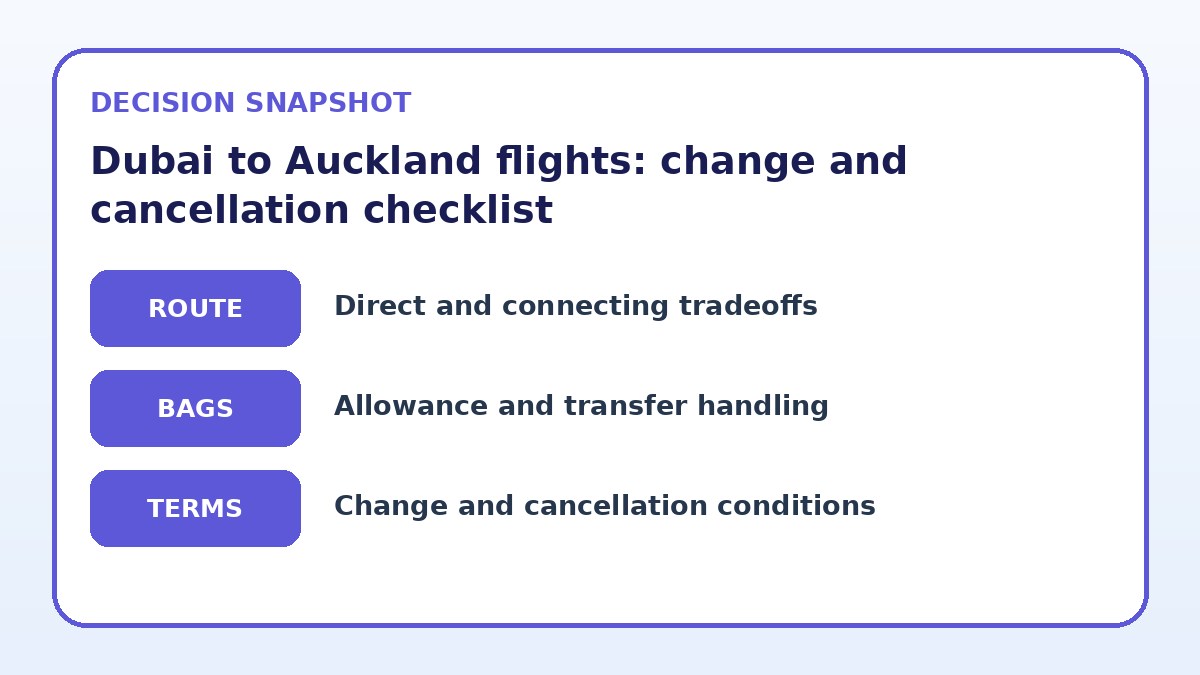
Direct legs (if available) simplify change and cancellation handling because a single carrier typically controls the entire ticket. That reduces the chance of conflicting policies and simplifies refunds or rebooking for both partners. However, direct flights between Dubai and Auckland may be limited; many itineraries involve at least one connection. When connections exist, evaluate whether the whole itinerary is on one ticket or booked as separate tickets. Single-ticket connections give better protection for missed connections and clearer reissue paths, but they may be governed by the most restrictive segment's rules.
If you choose connecting itineraries with separate tickets—perhaps to access lower fares—accept the higher risk: changes to one ticket may not automatically update the other, and a missed connection could leave you responsible for rebooking both legs. For couples, coordinate so one partner isn’t left on a separate ticket without the other. When researching options, compare the total risk-adjusted cost of a more flexible single-ticket itinerary versus a cheaper split-ticket plan plus potential change fees, missed-connection costs, or the expense of last-minute rebooking.
Before you book
- Open and read the full fare rules on the airline’s booking page before payment, noting change fees, refundability, and any time limits.
- Confirm whether the itinerary is on one ticket or multiple tickets and which carrier issues the electronic ticket.
- Check how refunds are processed—original card, airline credit, or claim form—and decide how to split refunds between you and your partner.
- If using a third-party agent, verify their change and refund processing policy and any additional service fees they charge.
- Compare the cost of airline flexibility add-ons against travel insurance that covers cancellations for covered reasons.
- Save screenshots and email confirmations of the fare rules and payment receipt so you can reference exact terms if a change is needed.
Using insurance, credit-card protections, and add-ons to reduce exposure
Travel insurance and some premium credit cards can reduce the financial impact of changes or cancellations. Look for policies that cover trip interruption, trip cancellation for covered reasons, and emergency medical issues; read excluded reasons carefully—work or change of mind is rarely covered. If you buy insurance, coordinate beneficiary and claim details so reimbursement is straightforward for both partners. Some policies reimburse nonrefundable fares, while others cover only documented emergencies; file claims promptly and keep receipts and communications.
Airlines sometimes sell refundable or semi-flexible bundles at checkout—these can be cheaper than fully refundable fares but still provide a safety net. Compare the cost of an airline flexibility add-on against the incremental cost of a higher fare class and against separate travel insurance. If a credit card offers trip delay, cancellation, or baggage protections, confirm the card’s coverage limits and whether you must pay for the tickets with that card to qualify. Always verify specific coverage details on the insurer’s or card issuer’s documentation before relying on them.
Frequently asked questions
If one partner needs to change dates, can we change only one ticket on a joint booking?
Usually you can change one passenger’s ticket without affecting the other if each has a separate ticket or if the airline allows per-passenger changes on a single booking. Some discounted fares or promotional group bookings may require changes for the whole booking or impose a per-booking fee, so verify whether change fees and fare differences apply per passenger. At the checkout and on the ticketing confirmation, check whether the airline treats the reservation as linked or independent. If you’re unsure, contact the airline directly before booking to ask how partial changes are handled.
How do partner-carrier rules affect refunds and rebooking when flying Dubai to Auckland?
When an itinerary includes multiple carriers, the ticketing carrier—the airline that issues the electronic ticket—usually enforces the fare rules, but partner or operating carriers may add conditions. The most restrictive applicable rule can govern rebooking and refunds for code-shared flights. Therefore, confirm on the final booking page which airline issued the ticket and read the associated fare conditions. Also ask the airline to explain how changes are processed across partners, and keep in mind that involuntary schedule changes may be treated differently from voluntary passenger-initiated changes.
Does travel insurance replace the need to buy flexible fares for a couple?
Not necessarily. Travel insurance can reimburse certain losses for covered reasons, but policies vary in what they consider valid claims and often exclude changes of mind. Flexible fares provide direct ticket-change options with the airline and avoid some claims processes. For couples, a combined strategy is common: buy at least one flexible ticket for the higher-risk traveller and purchase insurance that covers unexpected emergencies for both. Before relying on insurance, read its exclusions, required documentation, claim timelines, and whether pre-existing conditions or known events are covered.
Final planning note
For couples planning Dubai to Auckland travel, the practical decision is balancing cost against the real risk of change. If either traveller faces schedule uncertainty, flexible fares or refundable tickets simplify life and reduce the chance of complex claims. If both of you have fixed dates and can accept restrictive fares, you can save money but must carefully read who pays change fees and how refunds are issued. Always confirm the fare rules on the final booking page, verify which carrier issues the ticket, and consider insurance or credit-card protections to cover specific risks. Prepare documentation, coordinate who paid which ticket, and pick the option that minimizes the administrative burden you’re willing to accept.
Continue planning
Check current options and final conditions
Use the provider page to confirm live availability, the final total, cancellation terms, and every condition that matters to your trip.
This evergreen planning guide was created with AI-assisted drafting and a structured quality review. It does not display live prices, schedules, availability, visa guidance, or provider rankings. Verify current details before booking. Some links are affiliate links; we may earn a commission at no additional cost to you.