If you're booking Dubai to Sydney flights for a business trip, start with a focused pre-booking checklist that saves time and risk. Prioritize arrival window, total travel time including layovers, a seat and rest plan that supports the first meeting, and corporate policy compliance. Decide quickly whether a non-stop or one-stop itinerary is worth the trade-offs for productivity, cost allocation, and fatigue. Put verification steps—baggage allowances, change and refund rules, visa/ETA requirements, and frequent-flier credit—on a single page you can consult while comparing options. This article gives a compact, actionable checklist up front, then walks through the decision criteria and trade-offs so you can book Dubai to Sydney flights with confidence and a clear plan for the day you arrive.
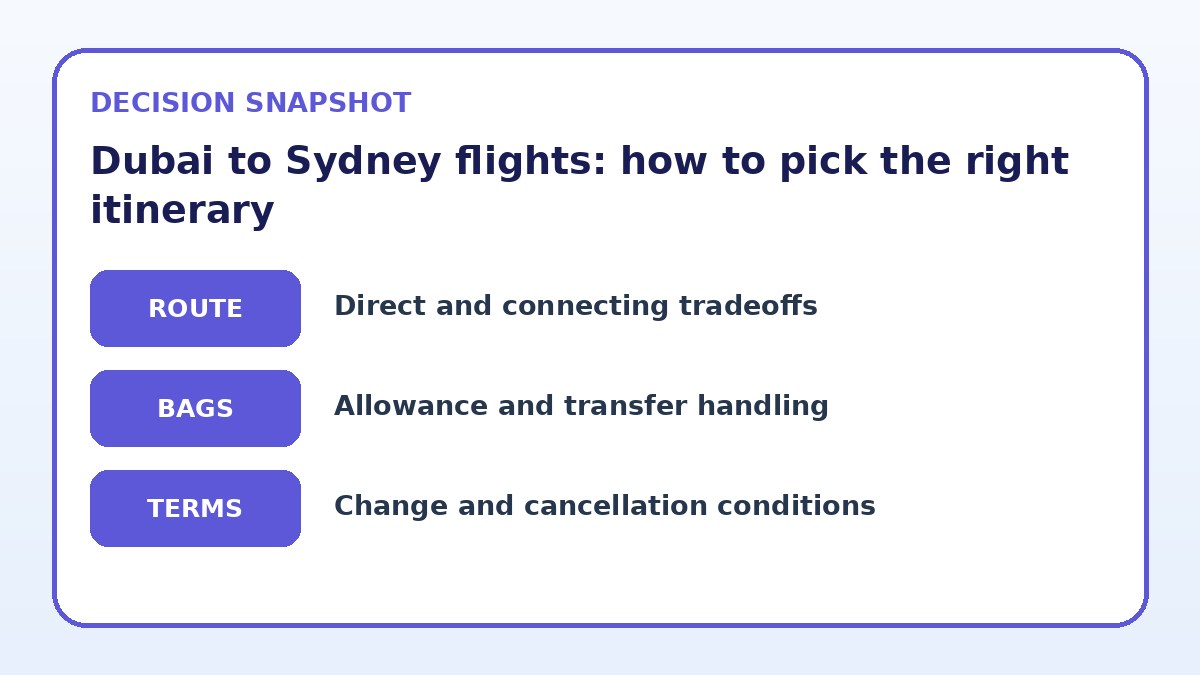
See current options before you compare the details
Availability and final conditions change. Open Trip.com now or keep reading for the practical comparison.
Set non-negotiables for timing and productivity
Before you search, list the absolute timing constraints for your trip: meeting start times, mandatory hotel check-in windows, and any events where lateness is unacceptable. For business travel, landing early morning or late evening can both be useful depending on whether you need rest or immediate city access. Also decide how much buffer you require for customs, immigration, and potential delays—one hour, two hours, or more—so you can evaluate itineraries consistently. Quantifying acceptable arrival windows makes comparing itineraries much faster and prevents last-minute schedule regrets.
With your timing non-negotiables set, score each itinerary against them. Give points for arrival windows that match your meetings, fewer total hours in transit, and comfortable connection margins. If you plan to work inflight, prioritize flights with reliable Wi-Fi and power; if rest is critical, prioritize overnight segments and a seat type that supports sleep. This structured approach turns subjective preferences into consistent booking decisions when evaluating Dubai to Sydney flights.
Understand connection strategies and trade-offs
Direct flights (if available) reduce complexity and connection risk, while one-stop options often offer more schedule flexibility and potentially better fares. For the Dubai to Sydney corridor you may see both nonstop and connecting choices depending on carrier and season—don’t assume either will be present on every date. When comparing, look at total elapsed time, number and length of connections, and minimum connection times at transfer airports. Long connections can be useful for splitting a long haul into restable segments, but they add unpredictability and more moving parts to your plan.
Also evaluate connection airports for practicality: single-terminal transfers, visa/arrival rules for transit, and transfer distance between gates matter. If your itinerary requires an overnight transit, factor in the cost and convenience of airport hotels versus extended layover in the terminal. Consider the business consequence of missing a connection—will you lose a day of meetings, or can you rebook the same day? Those trade-offs inform whether you prioritize speed, price, or schedule flexibility for Dubai to Sydney flights.
| Approach | Best for | Tradeoff to check |
|---|---|---|
| Nonstop flight (when available) | Minimizing connection risk and total travel complications | Fewer schedule options and sometimes higher fare or limited seat availability |
| One-stop with short connection | Faster door-to-door time while retaining some flexibility | Increased risk if delays occur and less buffer for missed connections |
| One-stop with long connection | Breaking the journey to rest or meet en route; potential cost savings | Longer total travel time and added unpredictability from extra segments |
| Multi-day split with overnight transit | Restorative strategy to avoid jet lag before important meetings | Requires extra lodging logistics and more days away from home or office |
Ready to check the option that fits your plan?
Use your exact dates and traveler details so the provider page can show the current total and conditions.
Seat, sleep and in-flight productivity choices
Seat selection is a business traveler decision with real impact. For overnight flights assess whether a window or aisle seat better supports sleep and mobility. If you plan to work, aisle seats near power outlets or bulkhead rows provide easier laptop access and restroom breaks without disturbing neighbors. On long sectors, consider paying for extra legroom or a seat with better recline; weigh that against corporate spend limits and whether the added rest will materially improve your meetings after arrival.
Also check the airline’s in-flight connectivity, entertainment options, and meal timing—these affect when you can realistically work, rest, or prepare for meetings. If you require uninterrupted work time, confirm on the provider’s final booking page whether Wi-Fi is available for purchase and whether there are power outlets at your seat. Small choices like seat location and meal timing can change the quality of your first day in Sydney, so make them deliberately rather than by default.
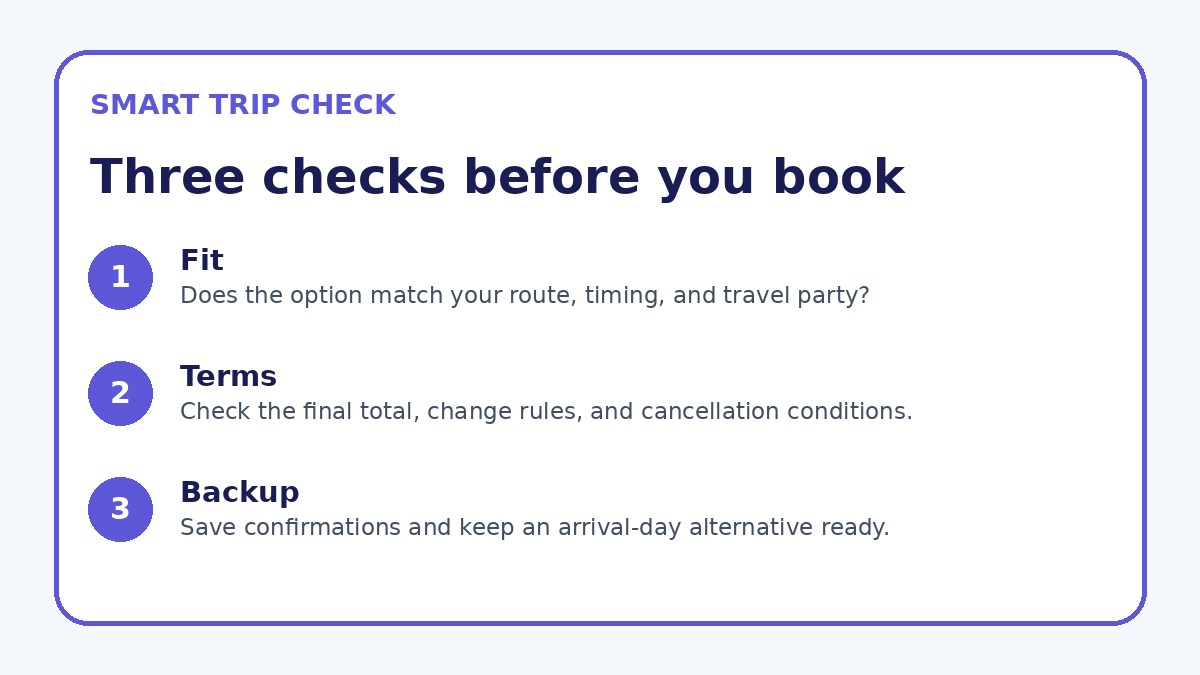
Before you book
- Choose your preferred arrival window and the maximum acceptable total journey time before searching fares.
- Set a maximum acceptable number of connections and minimum connection time to reduce missed-transfer risk.
- Verify fare rules, change/cancellation fees, and baggage allowance on the carrier’s or travel agency’s final booking page.
- Confirm visa/ETA requirements for Australia and any transit visas needed for connection points based on passport nationality.
- Select seat and meal preferences that match your work-or-rest priority and pay for upgrades only if they measurably improve arrival readiness.
- Log booking details, fare conditions, and corporate approval codes in your expense platform or travel file for quick future changes.
Policies, paperwork and corporate alignment
Verify change fees, refundability, and fare class rules before committing—these will determine how flexible you can be if meetings shift. Don’t rely on search results for the full policy text: always open the carrier or travel management company's final booking page and read the fare conditions, baggage allowances, and the procedures for voluntary or involuntary changes. If you book through corporate travel tools, confirm whether the fare codes earn frequent-flier credit and whether the travel policy requires certain carriers or fare buckets.
Also confirm entry requirements and ESTA/ETA/visa obligations for Australia well in advance; policy details can change and may depend on passport nationality. For connections, check whether you need transit visas at intermediate airports. Finally, align booking choices with corporate procurement rules—some companies require lowest logical fare, pre-trip approvals, or specific class of service for long-haul sectors. Document these verifications so you can justify choices during expense reconciliation or manager review.
Frequently asked questions
Should I always prefer nonstop Dubai to Sydney flights for business?
Not always. Nonstop flights cut connection-related risk and speed up journey time, which is ideal when you must arrive the same day. However, direct options may be limited in schedule and price, and seat availability in preferred classes can be constrained. If nonstop choices force an arrival time that disrupts your meeting schedule or pushes you into a tired state, a well-timed one-stop flight could be preferable. Decide based on arrival window, total travel time, and whether the nonstop option offers the seat and service you need to be effective on arrival.
How much connection time is safe when routing through a transit hub?
Safe connection time depends on the airport layout, whether you need to clear immigration, and if terminals require surface transfers. For same-terminal connections where you remain airside, shorter margins (around 60–90 minutes) can be workable; for transfers that require changing terminals or passing through security, budget more time—often 2–3 hours. Also factor in the historical punctuality of the carriers involved and minimum connection times listed on the provider’s booking page. When in doubt, choose a slightly longer connection to protect critical meetings at your destination.
What documentation should I verify before finalizing a Dubai to Sydney booking?
Confirm three categories: travel-entry paperwork, fare rules, and corporate compliance. For entry, check visa/ETA requirements and any health or arrival forms relevant to your passport nationality. For fare rules, read the carrier’s final booking page to confirm baggage allowances, refund/change penalties, and how to rebook if flights are disrupted. For corporate compliance, ensure the fare matches your company’s policy on carrier selection, cabin class, and pre-approval. Keep screenshots or saved confirmations so you have proof if plans shift.
Final planning note
Booking Dubai to Sydney flights as a business traveler becomes far less stressful when you work from a concise pre-booking checklist. Start with firm timing needs, then decide whether nonstop speed or a connecting strategy better supports your productivity and risk tolerance. Confirm fare conditions, seats, and visa requirements on the carrier’s final booking page before committing, and document approvals or corporate codes so changes are manageable. If you want current availability while comparing options, consider checking a leading travel site such as Trip.com as one of several sources, but always verify the binding terms with the airline or corporate travel tool you will use for payment.
Continue planning
Check current options and final conditions
Use the provider page to confirm live availability, the final total, cancellation terms, and every condition that matters to your trip.
This evergreen planning guide was created with AI-assisted drafting and a structured quality review. It does not display live prices, schedules, availability, visa guidance, or provider rankings. Verify current details before booking. Some links are affiliate links; we may earn a commission at no additional cost to you.