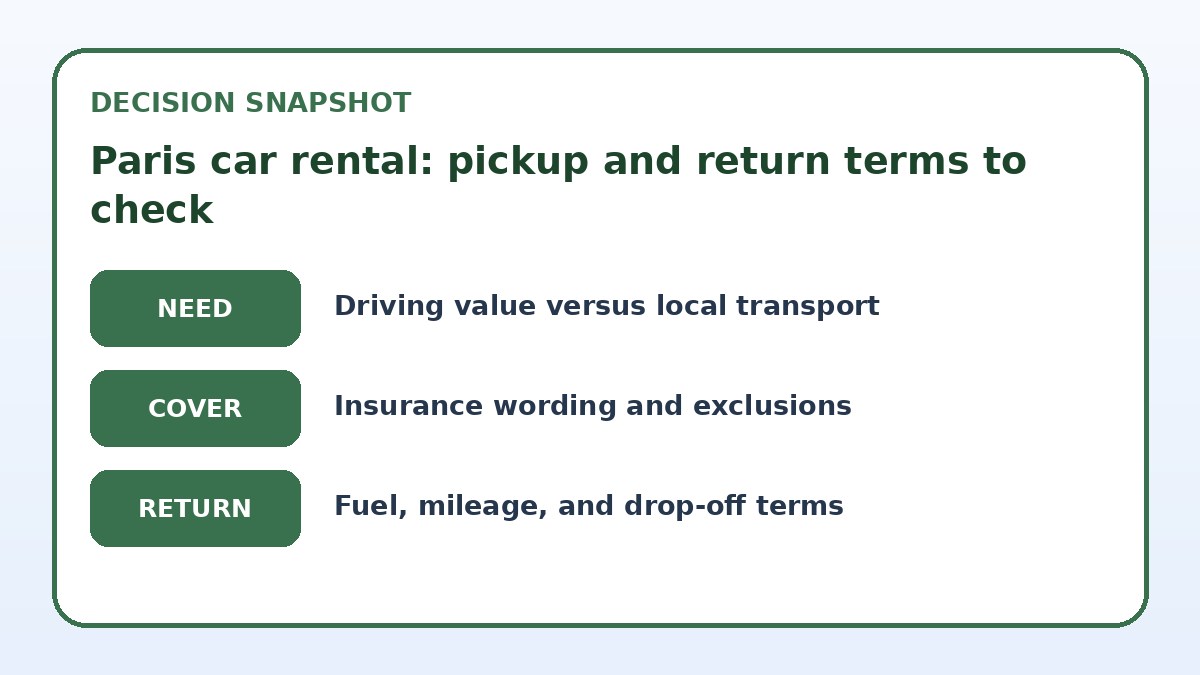
Practical answer first: when renting a car in Paris as a solo traveler, prioritize the pickup and return terms that affect timing, documentation, fuel and insurance liability, and any one-way or airport-specific charges. If you need to arrive late, select flexible pickup hours or an after-hours desk that explicitly allows key drop; if you plan to leave the car at a different location, confirm the one-way policy and any associated penalties. Read the provider’s final booking page for details on age limits, license requirements, credit card holds, and fuel policies—these are the items that create the most last-minute headaches. The rest of the article explains tradeoffs, how to compare options, and a checklist to use before you commit.
See current options before you compare the details
Availability and final conditions change. Open Trip.com now or keep reading for the practical comparison.
Pickup location and timing: airport, city, or train station
Where you pick the car in Paris matters more than many travelers expect. Airport counters (Charles de Gaulle, Orly) are convenient if you value immediate access after a flight and easier luggage handling, and they commonly offer extended opening hours. However, airport rentals can carry extra surcharges, longer lines, and heavier traffic when you exit the terminal. City center desks near major train stations may be cheaper and closer to central lodging, but check opening hours carefully—some offices close earlier in the evening or have limited weekend staffing.
For solo travelers, late arrivals are a frequent issue: confirm whether the supplier offers after-hours pickup or an automated kiosk. If after-hours service exists, read the exact procedure on the booking page—some require prior notice, others provide a sealed key envelope, and some explicitly transfer risk until the vehicle is inspected by staff the next day. If you rely on public transit to reach a city desk, allow extra time for connections and check the office’s stated closing time, not a third-party summary.
Documentation, age and payment hold: what to have ready
Paris car rental terms will specify required documents—usually a valid driver’s license in Latin script, an additional ID (passport), and the same credit card used for booking. Some agencies accept digital licenses; many do not. Age limits and young-driver surcharges are common: solo travelers in their early twenties should compare suppliers for age-related fees. Also check whether an International Driving Permit (IDP) is recommended or required for non-EU licenses; the final booking page or rental agreement is the authoritative source for that rule.
Credit-card holds are standard: providers typically place a security deposit on the card at pickup to cover potential damages, fines, or fuel charges. Debit cards are sometimes accepted but often require extra proof and larger holds. Verify the exact hold amount and whether pre-paid or virtual cards are acceptable before you book. If you plan to use a secondary card for deposit, confirm that the rental company allows it and that the named driver matches the cardholder to avoid refusal at the counter.
| Approach | Best for | Tradeoff to check |
|---|---|---|
| Airport pickup with after-hours desk | Arrivals on late flights; minimal transfer time to the car | Often higher fees and busier counters; confirm after-hours procedure and any surcharge |
| City-center pick up at a station desk | Staying near central Paris and avoiding airport traffic | Limited evening hours and potential difficulty with luggage or public transport connections |
| Full-to-full fuel policy | Avoiding refueling service charges and disputed tank levels | You must refill before return to avoid penalties and keep the fuel receipt |
| Zero-excess insurance from the rental firm | Peace of mind and faster resolution after minor damage | Higher upfront cost than relying on credit-card coverage or third-party policies |
Ready to check the option that fits your plan?
Use your exact dates and traveler details so the provider page can show the current total and conditions.
Insurance and liability: options and what they change
Collision damage waivers (CDW), supplemental liability insurance, and theft protection are commonly offered add-ons; each reduces your potential out-of-pocket exposure but varies by provider and country. Many credit cards include secondary collision coverage for rented cars, which may cover excess amounts but often require you to pay the bill first and claim reimbursement. Solo travelers should compare the rental’s excess (the amount you’d be liable for after insurance) with any credit-card or third-party insurance to decide whether to buy the rental company’s cover.
Read the policy wording on what counts as protected damage: tires, windscreens, underbody, and driving on certain roads are often excluded. Also confirm whether the insurer requires police reports for theft or vandalism and whether there are reporting windows. If you don’t want the hassle of claims, buying a zero-excess option from the rental firm reduces friction, but it’s typically costlier. Always verify exclusions, the process for damage claims, and any required documentation on the final booking page.
Before you book
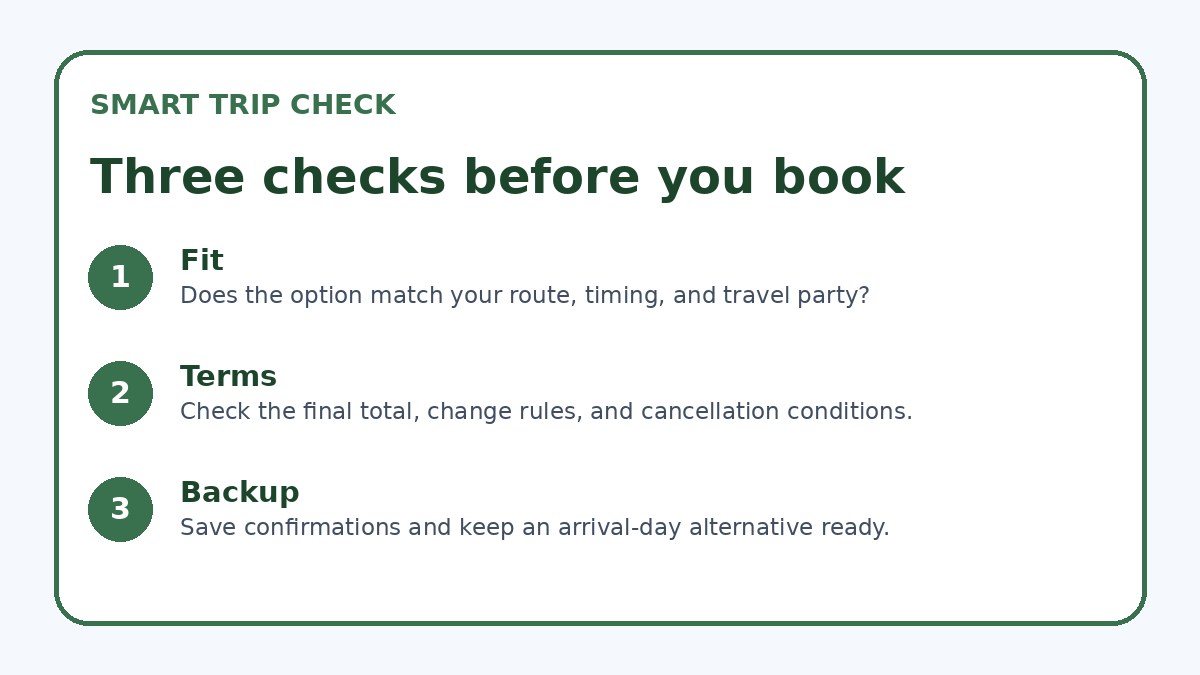
- Confirm the exact pickup and drop-off locations, opening hours, and after-hours procedure on the provider’s final booking page.
- Verify required documents: valid driver’s license in accepted format, passport, and whether an International Driving Permit is needed.
- Check the credit card hold amount, acceptable card types, and whether your card’s coverage affects available insurance options.
- Read the fuel policy and plan to return the car at the required tank level; keep fuel receipts when refueling before drop-off.
- Compare the rental’s excess amount with your credit-card or third-party insurance to decide whether to buy zero-excess cover.
- Take timestamped photos of the vehicle at pickup and drop-off, and request a signed or emailed return confirmation when you hand back the keys.
Return conditions and after-hours returns: minimizing disputes
Return terms cover the fuel level, cleaning, drop-off window, and where to leave keys after hours. A full-to-full fuel policy usually means returning the car with the same tank level to avoid refueling fees; get a receipt if you fill up before return. Inspect and photograph the vehicle at both pickup and drop-off, paying special attention to existing scratches, tire condition, and any interior marks—timestamped photos are strong evidence in disputes. If returning to a different location, confirm the one-way fee and whether the destination accepts the vehicle type you rented.
After-hours returns are convenient but can complicate damage disputes: if you use a key-drop box, the company may log the vehicle returned but won’t inspect it until staff are present, potentially shifting responsibility. Ask how the firm documents the time and condition at drop-off and whether they provide an emailed confirmation. Note the company’s stated late-return grace period and per-hour penalties; if your arrival into Paris is uncertain, choose a supplier with flexible or clearly stated late-return terms to reduce the risk of steep fees.
Frequently asked questions
Can I pick up a rental car late at night in Paris if my flight is delayed?
Some providers offer after-hours pickup or automated kiosks that let you collect keys outside normal office hours, but procedures vary. Before you book, check the final booking page for explicit instructions—does the company require prior notice, provide a sealed key envelope, or require an alternate meeting point? If after-hours pickup is not supported, plan to arrive during staffed hours or book a different supplier with confirmed late pickup. Also confirm whether delayed pickup changes your insurance start time or triggers a no-show penalty.
What should I do about the security deposit and my credit card while traveling solo?
Most companies put a hold on a credit card at pickup to secure potential charges. If you only have a debit card, verify the supplier’s policy—some accept it but will place a larger hold or require extra ID. Confirm the exact hold amount and how long it will take to release after return; the rental’s booking page should show this. If you prefer not to tie up a card, ask whether the company accepts a second card for the hold and whether that card needs to belong to the primary driver.
How do I avoid disputes over damage at return when I’m traveling alone?
Document everything: walk the car with staff at pickup and point out existing damage; take clear, timestamped photos or short videos of all sides, tires, and the interior. On return, repeat the process and request a staff member sign off, or at minimum obtain an emailed confirmation of the drop-off condition. If you use an after-hours key drop, follow the company’s specified procedure and keep photographic evidence of the vehicle and the key-drop location. Keep copies of the rental agreement and any correspondence until any potential charge windows expire.
Final planning note
For solo travelers in Paris, reading the pickup and return terms closely will save time and prevent stress. Focus first on location and hours, documentation and payment holds, insurance excesses, and the fuel and drop-off rules—these are the items that create the most friction. Use the checklist to confirm details on the provider’s final booking page before you commit. If you want to compare current availability and specific supplier terms, Trip.com is one optional place to check, but always rely on the rental firm’s official confirmation for binding conditions. A few minutes of careful reading at booking avoids many hassles on the road.
Continue planning
Check current options and final conditions
Use the provider page to confirm live availability, the final total, cancellation terms, and every condition that matters to your trip.
This evergreen planning guide was created with AI-assisted drafting and a structured quality review. It does not display live prices, schedules, availability, visa guidance, or provider rankings. Verify current details before booking. Some links are affiliate links; we may earn a commission at no additional cost to you.