
Practical answer up front: for most couples staying mainly in downtown Toronto with a mix of sightseeing, dining and nightlife, public transit plus occasional rideshares is usually the simpler choice. Choose a rental car if you plan day trips outside the city (Niagara, Prince Edward County, the Bruce Peninsula) or if mobility needs, luggage, or flexible countryside access matter more than downtown parking and traffic. This article compares the two approaches so you can decide before you book. Read the quick tradeoffs, then use the decision criteria to match your priorities—comfort, cost, convenience, and planned destinations. Where you stay changes the balance: a central neighborhood with easy transit access reduces the need for a car, while a suburban or lakeside base often makes a rental more practical.
See current options before you compare the details
Availability and final conditions change. Open Trip.com now or keep reading for the practical comparison.
Practical pros and cons for couples
Driving a rental in Toronto gives you independence to leave on your schedule, carry bulky gear, and reach nearby regions without transferring to trains or buses. For couples who prefer privacy, spontaneous detours, or who are traveling with children, pets, or significant luggage, a car reduces constraints. However, the practical downsides are real: downtown traffic at rush hours, one-way streets, limited curbside space, and the need to find and pay for secure parking can add stress. If either partner dislikes urban driving, that personal comfort factor matters as much as objective cost.
Using public transit keeps you out of traffic, lets you relax together without worrying about navigation, and often places you closer to the densest clusters of restaurants and cultural venues. Transit also makes evening plans easier when you don’t want to hunt for parking after dinner or a show. On the flip side, transit requires some walking between stops and attractions and may be less convenient for door-to-door trips at off-peak hours or to destinations not well served by lines. Consider how much walking you and your partner enjoy and whether evening safety and comfort are priorities.
Cost factors to weigh before booking
When comparing Toronto car rental against transit, tally more than the daily rental rate. Add mandatory items such as taxes and insurance options you may want, and estimate parking charges at hotels and attractions. Fuel costs and possible congestion or bridge tolls on day trips should be included. If your hotel offers parking, check whether the rate is flat, per night, or limited by height and reservation. For couples splitting costs, rounding up these line items often makes an initial rental quote look less appealing once all ancillary charges are included.
Public transit costs are simpler: single-ride fares, day or multi-day cards, and occasional ride-hailing for early mornings or late nights. Also factor the time cost—spending transit transfers or waiting can reduce sightseeing hours. If you plan frequent short trips inside downtown, transit passes often work out cheaper and eliminate parking hassles. If your couple values time together over minor cost savings, a mix of transit and a single day rental for a planned excursion might be the most cost-effective compromise.
| Approach | Best for | Tradeoff to check |
|---|---|---|
| Rent a car | Couples planning multiple day trips outside Toronto or needing door-to-door flexibility | Higher parking and incidental costs, plus urban driving stress and possible traffic delays |
| Public transit | Couples staying mainly in downtown Toronto who prefer walking and avoiding parking hassles | Less convenient for door-to-door trips outside transit corridors and late-night rural travel |
| Transit plus occasional rental | Couples who want downtown convenience but plan one or two full-day excursions | Requires juggling a separate rental booking and coordinating pickup/drop-off logistics |
| Rideshare-focused | Couples wanting door-to-door convenience in the city without parking or driving responsibility | Costs can add up for repeated trips; surge pricing and wait times may affect schedules |
Ready to check the option that fits your plan?
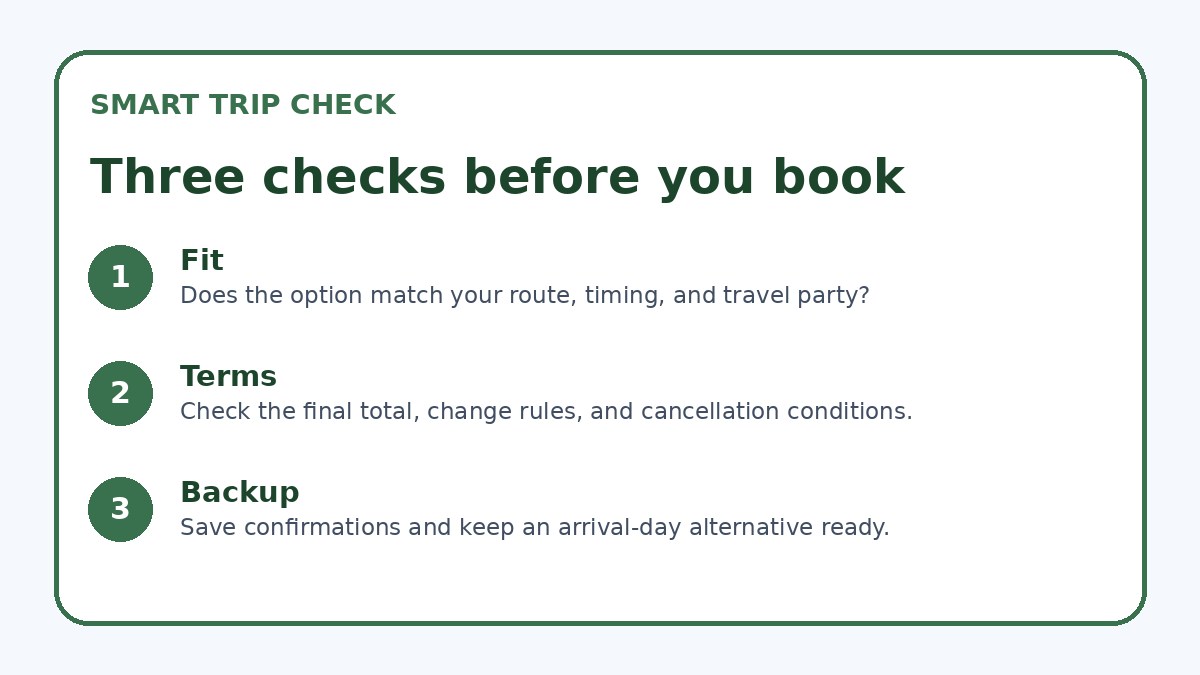
Use your exact dates and traveler details so the provider page can show the current total and conditions.
Where to stay depending on your choice
If you choose not to rent, prioritize neighborhoods within easy walking distance of subway stations or major streetcar corridors. Downtown cores such as the areas around Union, Queen, and Yonge streets place you near key attractions and nightlife, minimizing the need for taxis. Staying close to a frequent transit line means you can return late without paying for parking, and you’ll likely find more dining and entertainment options reachable on foot. Choose lodging that clearly advertises proximity to transit and includes directions for the nearest stops.
If a rental is part of your plan, broaden your search to include suburban neighborhoods and lakeside towns that offer calmer streets and easier access to highways for day trips. Ensure the accommodation has a secure parking option that accommodates a rental vehicle—check height restrictions, reservation rules, and any additional parking fees before booking. Even with a car, staying within easy transit reach of downtown saves time if you want to leave the vehicle at the hotel and explore the core by foot or transit for a day.
Before you book
- List every destination you plan to visit and mark which ones are outside transit service or require long transfers.
- Get a rental quote and then add estimated parking fees, fuel, insurance options, and any expected tolls to your total.
- Check your chosen accommodation for parking availability, rules, height restrictions, and whether a reservation is required.
- Map transit connections between your hotel and key attractions to estimate door-to-door travel time and walking distance.
- Decide who will drive and whether both partners are comfortable sharing navigation and city driving responsibilities.
- If mixing transit and a rental, compare pickup/drop-off locations and times to avoid losing sightseeing hours during handover.
Decision checklist: how to choose before you book
Start by listing your planned activities and marking which require a car: wineries, out-of-city parks, or rural stays are clear car wins. If your plans are mostly museums, theatre, dining, and waterfront strolls, lean transit. Talk with your partner about tolerance for urban driving, willingness to walk, and comfort using transit late at night. Also consider luggage and mobility needs—if either partner needs frequent rest stops or assistance, a rental gives control over pace and comfort.
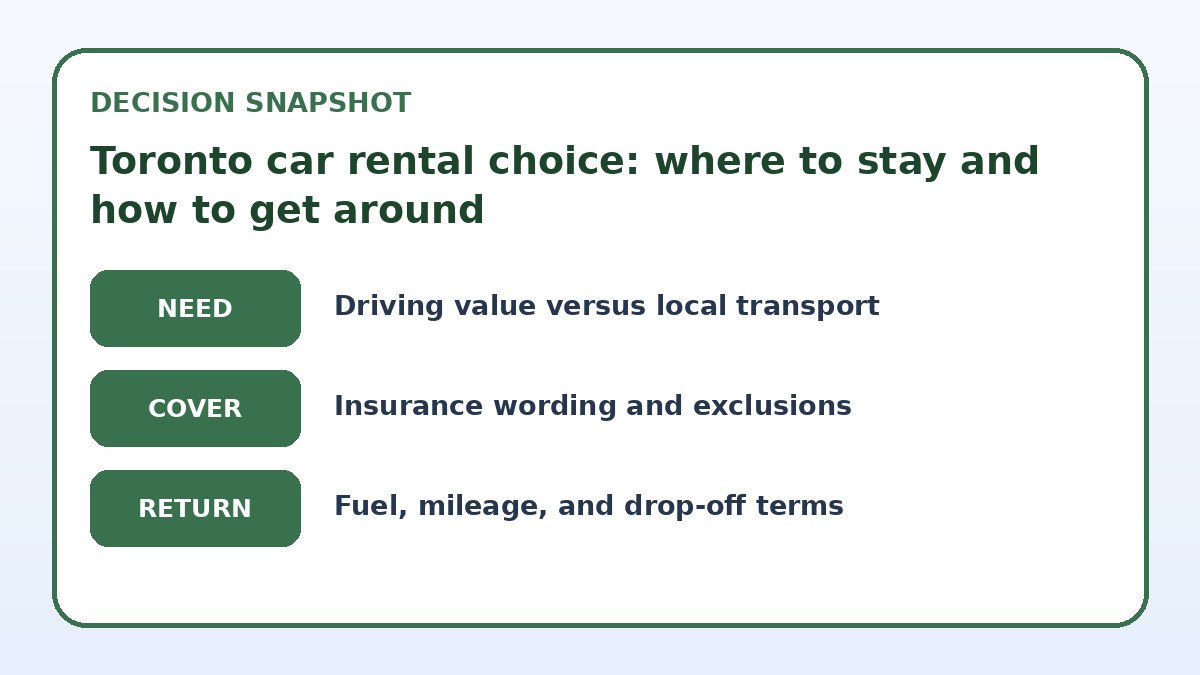
Next, get specific quotes and verify provider terms. For any rental, confirm what insurance and liability coverage is included and what you’ll need to add, and read the final booking page for fuel policy, mileage limits, and one-way restrictions. For transit-focused trips, check local fare options and whether your accommodation is on a frequent transit line. Trip.com can be used to compare availability and conditions but always confirm the final details on each provider’s official booking page before committing.
Frequently asked questions
Will a rental car save us time compared with Toronto public transit?
It depends on your itinerary. For trips that involve door-to-door travel outside the central core, a rental often saves time compared with multiple transit transfers. Inside downtown, transit and walking frequently beat driving because parking and slow street traffic add minutes. To decide, plot sample morning and evening journeys between your lodging and two priority attractions: compare estimated transit door-to-door time (including walking and wait times) with realistic driving time plus time to find and pay for parking. Use those comparisons to judge overall daily time savings.
Is it hard to park a rental in downtown Toronto?
Parking in downtown Toronto is available but can be costly, limited in some blocks, and subject to height or reservation constraints. Many hotels offer on-site parking but typically with extra charges and limited spaces; public garages exist but may require walking from your parked car to your hotel or destination. Street parking is often metered and time-limited. Before you book a rental, check your hotel’s parking policy and look up nearby garages; verify conditions on the provider’s final booking page so you know whether parking reservations or height restrictions apply.
Can couples rely solely on transit for evening plans and nightlife?
Yes—Toronto’s core neighborhoods are well served by frequent transit and are generally walkable for evening outings, but there are practical caveats. Check how late the specific transit lines you’ll use operate, and plan a backup (ride-hail or taxi) for late-night returns or if you expect to be at venues beyond typical service hours. If safety or walking comfort is a priority, choose lodging closer to nightlife or on a frequent transit line. Always verify schedules and service advisories on the transit provider’s official site before relying on late-night service.
Final planning note
For most couples who plan to stay mainly in Toronto’s downtown and want to focus on dining, museums and theatre, public transit with occasional rideshare offers the simplest, lower-stress option. Renting a car becomes more attractive when your plans include several day trips beyond the city, or when mobility, luggage, or privacy are top priorities. The correct choice depends on your itinerary, tolerance for driving in urban areas, parking needs, and how you value time together versus convenience. Use the checklist above to run the numbers, verify rental and parking terms on booking pages, and pick the combination that keeps your trip smooth and enjoyable.
Continue planning
Check current options and final conditions
Use the provider page to confirm live availability, the final total, cancellation terms, and every condition that matters to your trip.
This evergreen planning guide was created with AI-assisted drafting and a structured quality review. It does not display live prices, schedules, availability, visa guidance, or provider rankings. Verify current details before booking. Some links are affiliate links; we may earn a commission at no additional cost to you.