If you’re a solo traveler planning a Bangkok stay, the practical question is simple: do you want to be steps from nightlife, BTS/mrt stations, and markets, or would you rather pay slightly more for a calmer, larger room farther from the busiest hubs? The answer depends on your priorities—night safety, sleep quality, walking convenience, luggage handling, and budget. This guide gives a short practical recommendation up front and then walks through the tradeoffs, decision criteria, and the exact checks to make on the hotel’s booking page. Use it to pick an option that fits how you’ll spend your days and nights in Bangkok, whether you’re a first-timer eager to be in the thick of it or a repeat visitor who values rest after long walks and day trips.
See current options before you compare the details
Availability and final conditions change. Open Trip.com now or keep reading for the practical comparison.
Practical recommendation: where to aim and why
For most solo travelers who want a single recommendation, aim for a hotel within walking distance of a BTS (Skytrain) or MRT (subway) station but away from the busiest nightlife streets. That spot gives a solid compromise: convenient transit connects you quickly to attractions, airports by express train or airport link connections, and major shopping areas, while a short walk off the main strip reduces late-night noise and street activity. If you plan to return late often, prioritize proximity to a station with frequent service and a well-lit walking route.
If your top priority is sleep or workspace—say you’ll be working remotely, need longer rest, or carry a lot of luggage—lean toward neighborhoods that are one or two stops further out. These areas commonly offer larger rooms for the same money and quieter evenings. The small extra transit time is often balanced by calmer streets, less constant vendor noise, and hotels that invest in room insulation and bigger beds aimed at longer-stay guests.
Tradeoffs: cost, convenience, and comfort explained
Location convenience reduces time spent on transport but usually increases cost per night in Bangkok’s core areas. Hotels right next to BTS or MRT exits or in the middle of Sukhumvit, Silom, or Siam can command a premium because you save time and walking after dark. That premium often buys location rather than larger rooms or superior bedding. For a solo traveler who values quick access to nightlife, late dining, or short museum visits, location can feel worth the extra rate; for someone who favors restful nights, the extra cost may be better spent on room upgrades outside the most central zones.
Conversely, moving a station or two outward tends to improve room size and quiet at similar or lower nightly rates. The tradeoff is more time for each trip into the center and possibly fewer late-night options within easy walking distance. Consider how often you’ll be returning after midnight, what kinds of activities you’ll do each day, and whether you’re comfortable with tuk-tuks or rideshares for short last-mile legs. Also account for luggage handling: if you have large suitcases, being closer to transit or having a hotel with straightforward drop-off matters more than extra square meters of room.
| Approach | Best for | Tradeoff to check |
|---|---|---|
| Central location (near BTS/MRT) | Frequent short trips across Bangkok and late-night returns | Smaller rooms, more street noise, and higher nightly rates |
| Near nightlife hubs (Khao San/Sukhumvit Club Areas) | Very active evenings and being within walking party distance | Higher noise levels and fewer quiet pockets for rest |
| Quieter neighborhoods one or two stops out | Longer sleep, larger rooms, and better value for space | Extra transit time to major attractions and nightlife |
| Serviced-apartments or extended-stay hotels | Longer solo stays needing work space and laundry | Often farther from central tourist nodes and nightlife |
Ready to check the option that fits your plan?
Use your exact dates and traveler details so the provider page can show the current total and conditions.
How to evaluate rooms and listings before booking
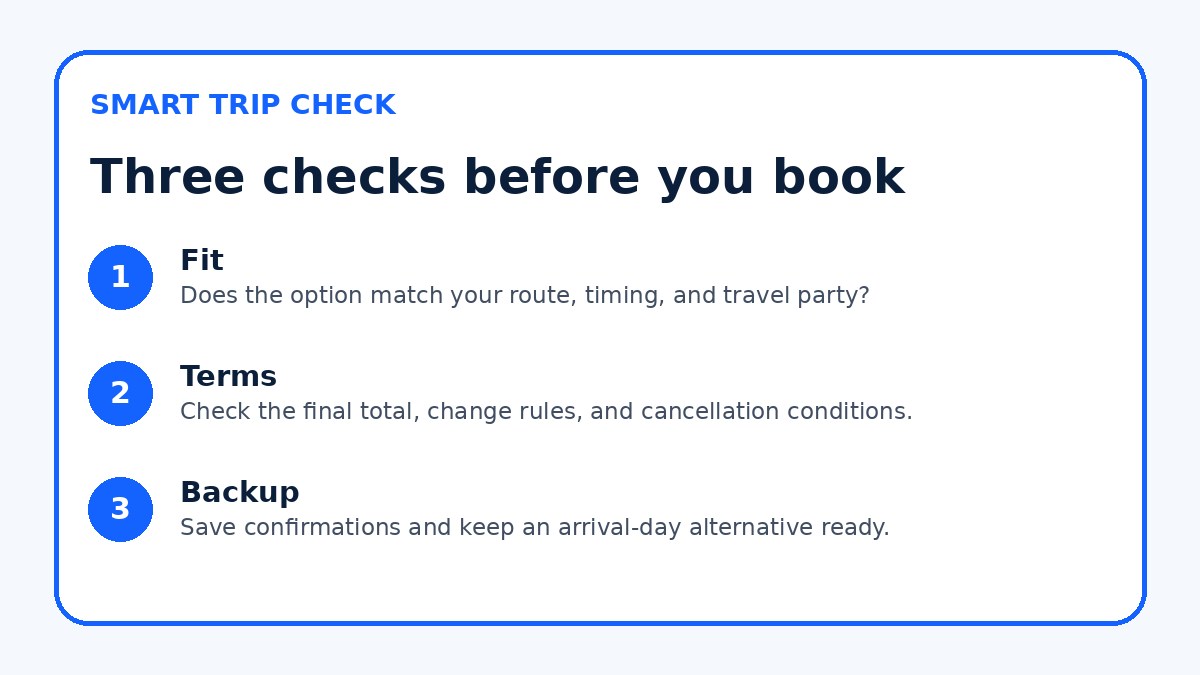
On any hotel booking page, focus on a few specific details that directly affect comfort: the listed room size (square meters), whether the room has a window and what kind (street-facing versus internal courtyard), bed width, and explicit mentions of soundproofing or quiet rooms. Look for photos that show the full room layout rather than just staged corners. If a room’s floor plan or specific bed size isn’t visible, use the booking platform’s questions tool or the hotel’s contact option to request exact measurements and whether windows can open safely.
Also check practical amenities that change solo-traveler experience: presence of a luggage rack or storage, a desk or comfortable table for work, reliable air-conditioning controls, and laundry options. Confirm on the booking page what is included versus optional paid extras—airport transfers, breakfast, or early check-in—and read the cancellation and payment terms carefully. When provider details might change, verify the final room description, cancellation window, and any resort or service fees directly on the hotel’s page or the booking provider at the time of purchase. Trip.com can be useful for comparing current availability and conditions, but always confirm on the hotel’s final booking page.
Before you book
- Open the map view and time a realistic walk from the nearest BTS/MRT to the hotel entrance at night.
- Confirm room square meters, bed size, and whether the listing shows a window with a street or courtyard view.
- Message the hotel to ask about soundproofing, 24-hour reception, and luggage storage if arrival is late.
- Verify cancellation terms and whether any resort or service fees are added on the final booking page.
- Check recent photos and guest comments for noise complaints, cleanliness, and actual room layout versus staged images.
- List transit options from the hotel to your planned anchors (airport link, main malls, and a favorite temple) and estimate travel times.
Practical checks for safety, last-mile, and neighborhood vibe
Safety and the feel of the neighborhood are everyday quality-of-life factors for a solo traveler. Use map view to walk the route from the station to the hotel and note street lighting, crosswalks, and whether the path passes busy food streets. Look for nearby convenience stores, 24-hour options, and emergency services. If you expect to return late, check reviews or map street imagery for well-lit entryways and whether the hotel has a staffed reception desk 24/7. Hotels with a secure main entrance and clear guest access procedures reduce friction when entering late.
For last-mile travel, note whether the hotel offers a short shuttle, public bus stops, or easy rideshare pickup spots. If you plan day trips, check ready access to tour departure points or coach terminals. When using taxis or rideshare apps, confirm the hotel’s preferred pickup area and whether there are any nearby traffic-restricted streets at certain hours. If you’ll explore by foot, measure realistic walking times to a couple of anchor points (station, major mall, or temple) rather than assuming linear distance equals convenience.
Frequently asked questions
Is it safer for a solo traveler to stay in a central Bangkok hotel?
Central areas with heavy foot traffic and lots of tourists tend to feel safer at night because there are more people, lighting, and transport options. However, safety also depends on street-level conditions: well-lit routes, staffed hotel entrances, and quick access to transit matter more than being in a specific district. If you prefer being steps away from nightlife for safety, choose a hotel close to a station and confirm 24-hour reception. Always verify recent guest reports and the hotel’s final booking page for security features such as key-card access or CCTV.
How much extra commute time should I accept for a larger, quieter room?
For most solo travelers, accepting a 15–30 minute transit or rideshare transfer each way is a reasonable tradeoff to gain a noticeably larger room and quieter nights. That range keeps you within easy day-trip distance of central attractions while opening up neighborhoods with better value for space. Evaluate how often you’ll make that trip: if you’ll be out all day and late at night frequently, shorter commutes may be worth paying more. Check real route options on a map and estimate travel windows at the times you’ll actually be traveling, then confirm local transport schedules when booking.
What room features matter most for solo travelers in Bangkok?
Prioritize bed size and mattress quality, a reliable air-conditioning unit with easy controls, adequate sound insulation, and a functional desk or table if you work. A window that opens or a balcony improves ventilation, but street-facing windows can increase noise; internal courtyards are quieter. Also consider laundry access, in-room safe, and luggage storage policies. When details are unclear on the listing, contact the hotel to confirm exact bed dimensions, room layout, and any extra fees for amenities—verify these on the hotel’s final booking page before payment.
Final planning note
Balancing location and room comfort in Bangkok is a personal tradeoff that depends on how you’ll spend your hours. If you plan many short trips, late-night returns, or want to minimize taxi dependence, prioritize a hotel near BTS or MRT stations and walkable hubs. If you value sleep, workspace, or larger rooms for longer stays, lean one or two stops out and spend transit time getting into the center. Use the checklist items and verification steps to confirm room size, window type, soundproofing, and final fees on the booking page. Combining a sensible neighborhood choice with careful room checks will give you the best solo-traveler experience for how you intend to explore Bangkok.
Continue planning
Check current options and final conditions
Use the provider page to confirm live availability, the final total, cancellation terms, and every condition that matters to your trip.
This evergreen planning guide was created with AI-assisted drafting and a structured quality review. It does not display live prices, schedules, availability, visa guidance, or provider rankings. Verify current details before booking. Some links are affiliate links; we may earn a commission at no additional cost to you.