If you’re traveling from Hanoi to Da Nang for the first time, the most useful thing you can do on the travel day is reduce uncertainty: lock in departure and arrival logistics, manage luggage, and set realistic transfer buffers. Start by deciding whether the comfort of an overnight or daytime train, the speed of flights, or the lower-flexibility bus or private car fits your priorities for time, cost, and mobility on arrival. This article focuses on preparing for the travel day itself — what to confirm before you leave, how to pack and time connections, and what on-the-ground checks you must make with providers. Where provider specifics matter (schedules, seat maps, baggage rules, or station access) I’ll tell you what to verify on the provider’s final booking page so you aren’t surprised at departure.
See current options before you compare the details
Availability and final conditions change. Open Trip.com now or keep reading for the practical comparison.
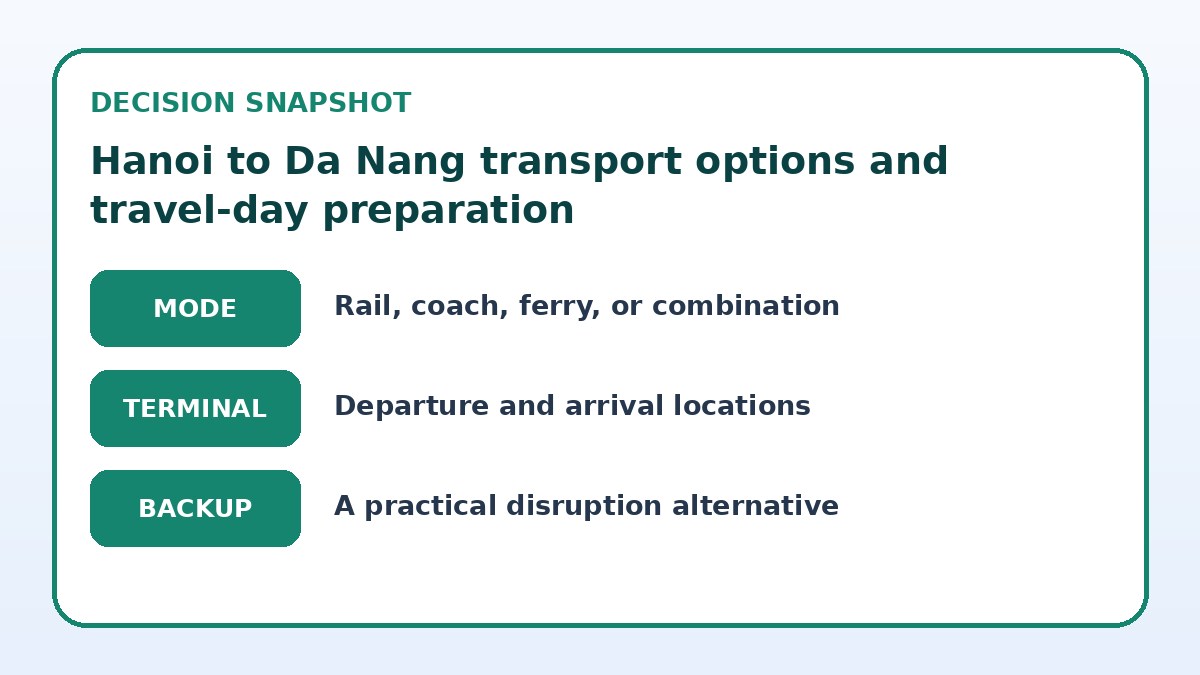
Picking the right transport mode for the travel day
Decide first how you want to arrive in Da Nang: downtown arrival versus airport arrival matters. Trains frequently serve central Da Nang stations, which reduces further transfers into the city, while flights arrive at Da Nang International Airport on the city outskirts, requiring a taxi or ride-share. Buses and private cars may deliver you to specific neighborhoods or hotels but vary by comfort and rest stops. Think about whether you prefer to travel overnight to save daytime hours or during the day to enjoy scenery and avoid late-night logistics on arrival.
Compare practical tradeoffs: a faster flight shortens door-to-door time if you’re close to Hanoi’s airport and have light luggage, but you must add time for check-in and airport transfers. Trains often offer more space to move, clearer luggage storage rules, and scenic routes, and can be a calmer travel day with fewer transfer risks. Whatever you choose, check the provider’s boarding windows, luggage allowances, and station versus airport addresses on their final booking page; those specifics determine how much actual time you need on the ground.
What to verify on the booking page before you leave
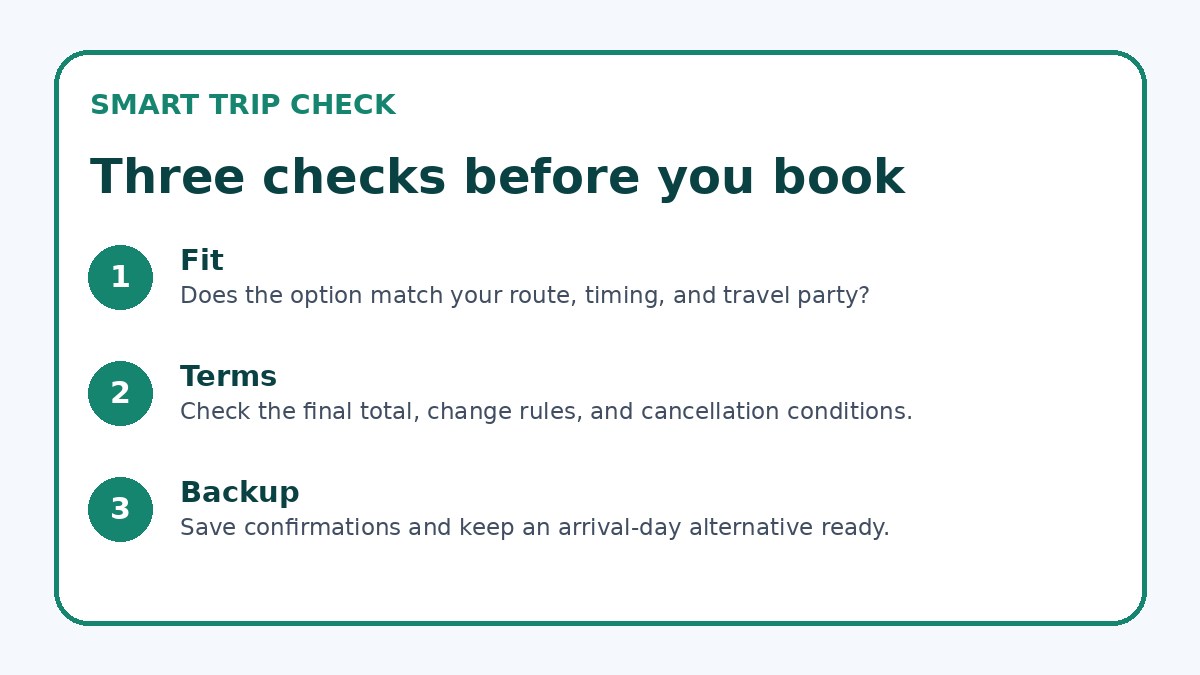
Before you confirm, check the provider’s exact departure point, boarding time or check-in window, and station/terminal entry rules. For trains, verify train number (if applicable), carriage or berth assignment, and station platform procedures; for flights, confirm terminal and whether online check-in is allowed. Also review baggage rules—what counts as checked versus carry-on—and any seat selection or berth confirmation options. If the company lists arrival addresses, note those precisely so you can plan transfers from arrival to your accommodation.
Look for any provider caveats about boarding time, ID requirements, and transfer services; if the listing mentions timed baggage storage or seat classes, compare what your fare actually includes. Where provider-specific facts can change, make it a habit to read the final booking page and any travel confirmation emails for departure instructions, boarding deadlines, and refund or change policies. If you want a single place to compare current availability or see multiple transport options, you can check Trip.com as one comparison tool, but always verify the final details on the operator’s official page before you travel.
| Approach | Best for | Tradeoff to check |
|---|---|---|
| Train (day or overnight) | Travelers who want central arrival and more space for luggage and movement | Longer travel time than flights and variable schedules depending on service |
| Flight | Those prioritizing shortest door-to-door time when close to airports | Requires airport transfers and stricter baggage and check-in timing |
| Long-distance bus | Budget-conscious travelers who need point-to-point hotel drop-offs | Less comfort on long journeys and potential for delayed arrivals |
| Private car or shared transfer | Groups wanting door-to-door convenience and scheduled pick-ups | Can be more expensive and dependent on road conditions |
Ready to check the option that fits your plan?
Use your exact dates and traveler details so the provider page can show the current total and conditions.
Packing and managing luggage for the travel day
Pack for the travel day with two layers: the main luggage you can check or stow and a reachable day bag with all in-transit essentials. In the day bag include identification, tickets or booking confirmations, a power bank, medication, a lightweight rain layer, and basic toiletries. If you plan to sleep on a train, bring a compact travel pillow, earplugs, and an eye mask. For flights, keep electronics and liquids accessible per airline rules; for trains, secure valuables in a lockable pocket and note where your carriage stores large suitcases.
Label all bags clearly and photograph luggage contents and tags in case of loss. Measure bags against the provider’s published size rules if you want to avoid unexpected fees or refusal to board with oversized items. Consider a luggage strap or a small lock for checked items and an easily reachable plastic bag for wet or dirty items. Finally, allocate time on the travel day to move between your accommodation and the departure point with more time than your mapping app suggests, especially during peak traffic or public transport strikes.
Before you book
- Confirm the exact departure station or airport terminal and note the nearest entrances and platform/terminal signage.
- Verify boarding or check-in windows and any required ID or booking confirmation you must present on the travel day.
- Measure and re-weigh luggage to ensure compliance with the provider’s published size and weight rules.
- Download or screenshot your booking confirmation, route maps, and arrival address in Vietnamese and English.
- Reserve ground transfer or taxi for arrival in Da Nang, and save the driver or company contact in your phone.
- Pack a small day bag with medication, chargers, power bank, travel documents, and a printed emergency contact.
Travel-day timing, transfers, and arrival planning
Plan transfers as separate mini-tasks: getting to the departure point in Hanoi, navigating the boarding process, and onward transit from Da Nang arrival to your final address. Allow extra time for unexpected traffic, security checks, or locating the correct platform or terminal entrance; urban transit in Hanoi and Da Nang can be slower at peak times. If you need a taxi or rideshare at arrival, have the address written clearly in both English and Vietnamese and consider a screenshot in case mobile data is unreliable. If you plan to collect a rental car on arrival, confirm opening hours and pick-up instructions in advance.
Decide what you want to do immediately on arrival: head to your hotel, visit a landmark, or pick up a local SIM and cash. That decision shapes whether you should prioritize a daytime arrival or an overnight travel option. If you’ll need local currency on the travel day, obtain some beforehand or confirm ATM availability near the station or airport. Make a simple arrival checklist and share your approximate arrival time with anyone meeting you in Da Nang so they can plan accordingly.
Frequently asked questions
Should I choose a daytime train or an overnight sleeper from Hanoi to Da Nang?
Choose a daytime train if you prefer to arrive refreshed in daylight and want to enjoy scenery or have flexible arrival plans. A daytime run also makes it easier to handle luggage at stations and can simplify finding onward transport in Da Nang. An overnight sleeper saves daytime hours and can be a good option if you can sleep well on trains and want to maximize daytime in Da Nang. Consider your comfort with sleeping in a moving carriage, and verify berth types and bedding options on the booking page before you finalize.
How much buffer time should I allow between Hanoi departures and local transfers?
Plan for at least 60–90 minutes buffer for typical city transfers within Hanoi, more during peak hours or if you’re traveling from the far side of the city. For flights, add extra time for airport check-in and potential security; for trains, build time for finding the correct platform and stowing luggage. If you have a meeting or tour scheduled on arrival, increase the buffer further. Always re-check the operator’s boarding deadlines and arrival guidance on the final confirmation to adjust your buffer accurately.
What should I do if my travel provider lists different baggage rules on different pages?
If you see inconsistent baggage rules, use the final booking page and the confirmation email as the authoritative source; these typically reflect the fare you purchased. If uncertainty remains, contact the provider directly and get written confirmation of what is included with your ticket. Keep a screenshot or PDF of the confirmed baggage allowance and any written response from the provider; present them at check-in or boarding if there’s a dispute. When in doubt, pack essentials in a carry-on to avoid being stranded without necessities.
Final planning note
Preparing well for the travel day between Hanoi and Da Nang turns what could be a stressful transit into a manageable part of your trip. Decide which mode of transport fits your priorities—speed, comfort, or downtown arrival—then verify the provider’s final booking details for departure points, boarding windows, and baggage rules. Pack strategically with an accessible day bag, label and photograph luggage, and build sensible transfer buffers. Double-check arrival logistics in Da Nang so you know how you’ll get from the station or airport to your accommodation. With these checks done, you’ll arrive ready to start exploring rather than sorting logistics on the fly.
Continue planning
Check current options and final conditions
Use the provider page to confirm live availability, the final total, cancellation terms, and every condition that matters to your trip.
This evergreen planning guide was created with AI-assisted drafting and a structured quality review. It does not display live prices, schedules, availability, visa guidance, or provider rankings. Verify current details before booking. Some links are affiliate links; we may earn a commission at no additional cost to you.