If you’re planning Seoul to Osaka flights for work, get a concise checklist before you open a booking page. Focus first on timing, airport pairs, and the flexibility you need around meetings: pick flights that leave margin for local transit, customs and any possible delays. Next, confirm baggage and seat policies, corporate fare rules or reimbursement requirements, and whether a checked bag or flexible ticket matters more for your trip. Finally, prepare the paperwork and tech you’ll need at immigration and onboard—think business-ready carry-on packing and power adapters. This article gives a prioritized, decision-focused checklist and explains the tradeoffs so you can choose the flight option that keeps your schedule and expense policy intact.
See current options before you compare the details
Availability and final conditions change. Open Trip.com now or keep reading for the practical comparison.
Choose airports and arrival timing with meetings in mind
Seoul and Osaka each have multiple airports; choosing the right pair affects ground travel time, customs queues and local transport options. For business trips prioritize the airport that gives the shortest and most reliable transfer to your meeting location or hotel. If you must be in central Osaka quickly, factor in the typical transfer time from each Osaka airport to your destination and how that matches local traffic patterns and public transit schedules.
When evaluating flight times, work backwards from the earliest meeting start. Build at least 90–120 minutes of buffer after your scheduled arrival for passport control, baggage claim and travel to the office or hotel. For departures from Seoul, allow extra time for morning rush-hour traffic or if you need to collect documents or meet a colleague before the flight. This timing buffer is a practical hedge against common day-of-travel disruptions.
Direct vs connecting flights: decision criteria and tradeoffs
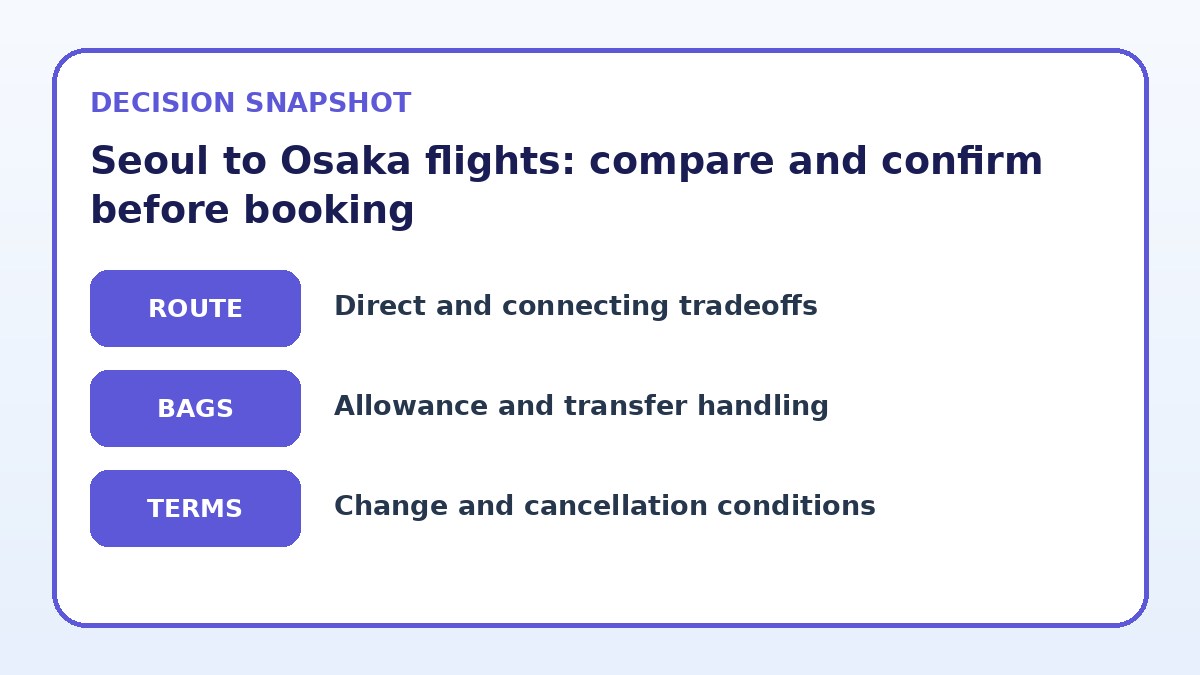
Direct flights minimize complexity and are often preferable when time is limited or schedules are tight. However, direct options may be less frequent, depart at inconvenient times, or cost more under some fare classes. When comparing routes, evaluate total door-to-door time, number of transfers, minimum connection times, and how missed-connection protection is handled. A single reliable connection with long transit waits can still be better if it aligns with your work schedule and is covered under your corporate travel policy.
Connecting flights can offer lower fares or better departure times but increase the chance of delays and baggage misrouting. For business travelers who can’t afford missed meetings, consider connections with generous layovers or use itineraries marketed as protected by the carrier for missed connections. If you choose a connection, check whether both flight segments are on the same ticket and what the airline’s policy is for rebooking on delayed connections—confirm these details on the carrier’s final booking page before purchasing.
| Approach | Best for | Tradeoff to check |
|---|---|---|
| Book the earliest direct flight available | Arrivals before meetings and minimal itinerary complexity | May limit fare options and could be more expensive or depart at inconvenient times |
| Choose a later direct flight with lower cost | Budget-conscious travelers who can accept tighter arrival windows | Smaller delay buffers increase risk of missing time-sensitive commitments |
| Select a connecting flight with generous layover | Lower fares and added delay protection between segments | Longer total travel time and more time spent in transit |
| Pick a connecting itinerary on a single ticket | Reduced risk of self-transfer problems and protected rebooking by carrier | May offer fewer schedule choices and still requires checking the carrier’s rebooking rules |
Ready to check the option that fits your plan?
Use your exact dates and traveler details so the provider page can show the current total and conditions.
Fare rules, corporate policy alignment, and flexibility
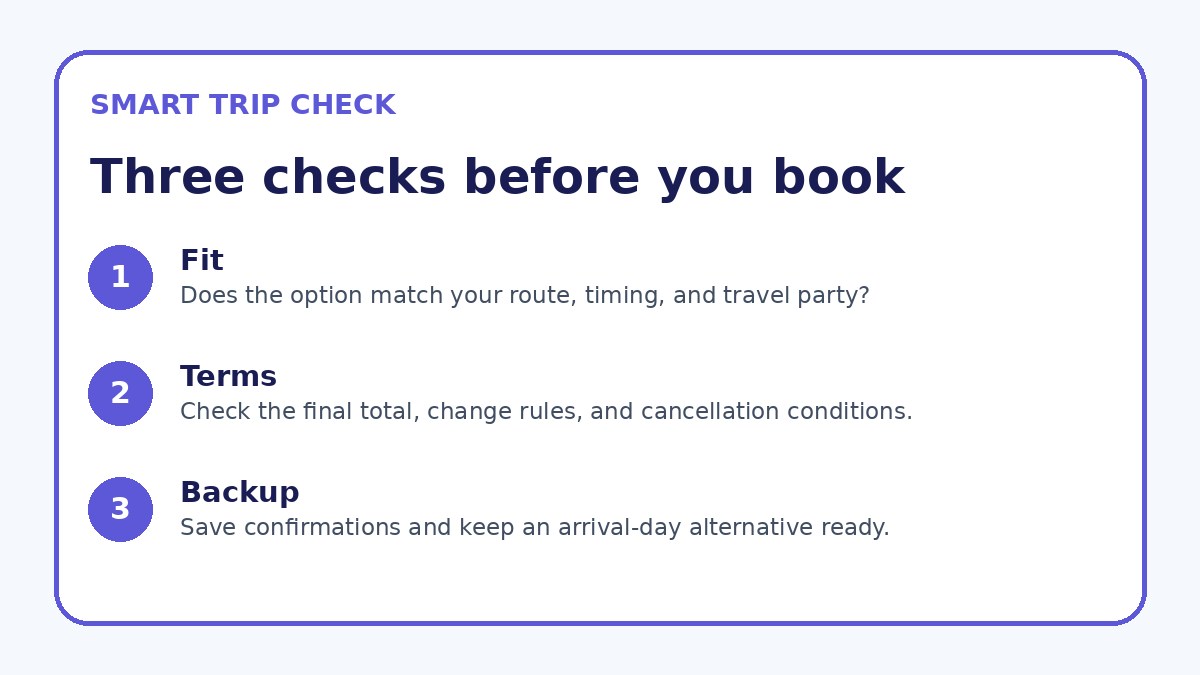
Before booking, read the fare rules for changes, cancellations, and rebooking fees, and compare them against your company’s travel policy. Business travel programs may require refundable or semi-flexible fares, specific booking classes, or pre-approval for certain carriers. If an itinerary looks attractive but restricts changes severely, weigh the risk against the likely need for schedule changes—sometimes paying a bit more for flexible change terms saves time and administrative hassle later.
Also verify how frequent flier benefits, upgrades and corporate discounts apply to the selected fare class. Loyalty perks can matter if you regularly travel between Seoul and Osaka, but don’t assume upgrade eligibility or baggage allowances—those vary by fare code. Always confirm the exact baggage allowance, seat selection policy, and any ancillary fees on the airline’s final booking page so expense reports and reimbursement requests are accurate and predictable.
Before you book
- Confirm which Seoul and Osaka airports best match your meeting locations, then estimate door-to-door transfer time using typical traffic or rail schedules.
- Decide whether direct or connecting flights better balance your time constraints and budget; calculate total travel time including layovers and transfer reliability.
- Review the exact fare rules on the airline’s final booking page for changes, cancellations, and rebooking conditions against your company travel policy.
- Verify baggage allowance, seat selection fees, and onboard amenities on the provider’s booking page; note any extra costs you must charge or claim.
- Ensure passport validity and check official immigration or health requirements from government or airline advisories before confirming the ticket.
- Prepare carry-on essentials for productivity and recovery (chargers, adapter, documents, lightweight change of clothes) in case checked luggage is delayed.
Documentation, transit logistics, and onboard productivity
For international business travel you’ll need to confirm passport validity, any entry requirements, and whether you must carry supporting documents for the visit. While this article doesn’t list current entry rules, make it a habit to check official government sources or airline advisories for immigration and health requirements before booking. Keep scanned copies of your passport and itinerary accessible, and consider travel insurance or corporate cover that includes trip interruption and luggage protection.
Onboard productivity is another business consideration: check whether the aircraft or cabin type offers inflight Wi‑Fi, power outlets and a comfortable seat for working during the flight. If you need a reliable workspace on arrival, prioritize flights that land early enough for office hours or allow time to freshen up at an airport lounge or hotel. Confirm amenity availability and any pay-to-use services on the airline’s final booking page or through your corporate travel manager.
Frequently asked questions
Should I always pick a direct Seoul to Osaka flight for business travel?
Direct flights reduce points of failure and simplify transfers, making them a strong choice when time is tight or when you must be in Osaka by a fixed appointment. However, direct options might not depart at convenient hours, could be costlier under some fare classes, or offer limited seats under corporate fare rules. Evaluate total door-to-door travel time and how the schedule fits your meeting plans; if a connection offers a much better match to your calendar and includes adequate layover time, it can be a practical alternative. Always confirm the carrier’s change and missed-connection policies on the final booking page.
How much buffer time should I leave between arrival and my first meeting?
A practical buffer is typically 90–120 minutes after scheduled arrival to cover passport control, baggage claim and travel to the meeting location, but this depends on the airport and time of day. If your meeting is centrally located and you’re arriving at an airport with fast rail links, you might reduce the cushion; if you expect heavy traffic, complex transfers, or need to freshen up before meetings, allow more time. If your schedule is inflexible, consider landing a day earlier or choosing a flight that arrives early enough to absorb unexpected delays.
What documentation and checks should I confirm before booking?
Before you buy a ticket, confirm passport validity and any visa or entry requirements through official government sources or airline advisories. Check whether you need additional documents for business visits, such as invitation letters or corporate contact details, and ensure you have digital and printed copies. Review your company’s travel policy for approved carriers, fare classes, and expense rules so bookings comply with reimbursement procedures. Finally, verify health advisories or testing requirements from authoritative sources prior to departure—do not rely on secondary summaries when finalizing tickets.
Final planning note
Booking Seoul to Osaka flights for business is a sequence of tradeoffs: airport choice, timing, directness of routing, fare flexibility, and onboard productivity each affect how well the trip supports your objectives. Start with meeting times and local transfers to set non-negotiable arrival or departure windows. Then compare direct and connecting options by door-to-door time and fare rules, and confirm baggage and corporate policy alignment on the airline’s final booking page. Use the checklist items to make a confident, compliant booking that minimizes day-of-travel risk and keeps you focused on work.
Continue planning
Check current options and final conditions
Use the provider page to confirm live availability, the final total, cancellation terms, and every condition that matters to your trip.
This evergreen planning guide was created with AI-assisted drafting and a structured quality review. It does not display live prices, schedules, availability, visa guidance, or provider rankings. Verify current details before booking. Some links are affiliate links; we may earn a commission at no additional cost to you.