If you need one practical rule for choosing Melbourne hotels as a solo traveler: prioritise the one thing that will make your trip easier — quick access to what you plan to do most (work meetings, nightlife, museums, or parks) — and then pick the best room available in that location. That means if your days are densely scheduled in the CBD, a smaller but well-located room will often save travel time and cost; if you want late nights or a restful retreat, a larger room in a quieter precinct is worth the extra trip into the centre. This article gives a short decision pathway, then walks through tradeoffs—location, room size and privacy, transport links, safety, noise and budget—so you can make the call based on how you actually travel. At booking time, double-check exact room dimensions, bed type, cancellation terms, and any transport access notes on the hotel’s final booking page.
See current options before you compare the details
Availability and final conditions change. Open Trip.com now or keep reading for the practical comparison.
Decide by your daily rhythm: location first or room first?
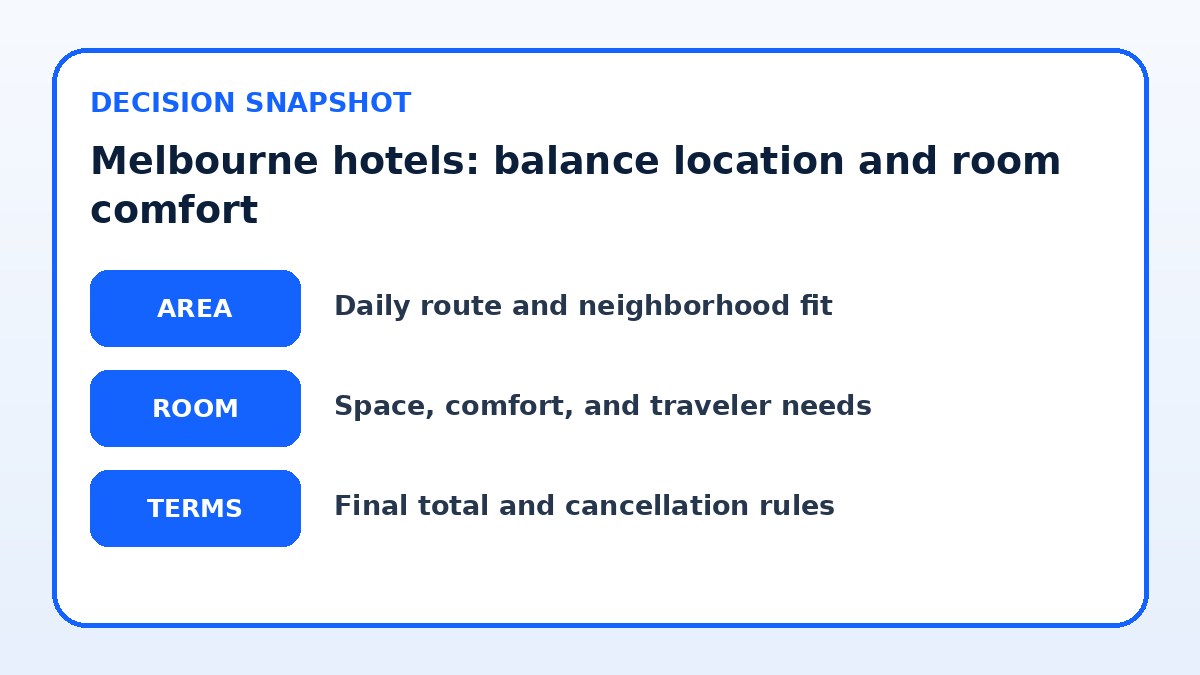
Start by mapping how you will spend each day in Melbourne. If your plans cluster in the CBD, Southbank, Docklands, or near Federation Square, a hotel within walking distance or a short tram ride reduces wasted time and late-night navigation. For meetings, tours, or theatre nights, proximity matters: the fewer tram changes and taxi calls, the more relaxed your day. Conversely, if your aim is to explore neighbourhoods like Fitzroy, Carlton, or St Kilda, staying there can add charm and reduce the daily back-and-forth.
Balancing that, think about how much comfort you need for downtime. A compact inner-city room might be fine if you’re out most of the day, but if you value space to work, stretch, or spend an evening in, choose a room with a comfortable desk, a larger bed, or a sitting area. Solo travellers who work remotely, have jet lag, or prefer winding down in-room should weigh room comfort heavily against walking distance to attractions.
Transport and safety: how they affect the choice
Melbourne’s public transport network—trams, trains and buses—makes many neighbourhoods reachable, but frequency and late-night coverage vary. When comparing hotels, check the nearest tram stops, rail stations, and typical evening services, then estimate door-to-door travel time rather than straight-line distance. Also consider how easy it will be to catch a ride share or taxi late at night if you plan to be out after public transport hours. At the booking step, verify the hotel’s statements about transport access on the provider’s page.
Safety should be a practical consideration: look for well-lit approaches, a staffed reception, secure key access, and positive comments about solo guests’ experiences in neighbourhood threads. If you arrive late or return alone at night, a staffed 24-hour reception or hotel with clear arrival instructions reduces stress. Don’t assume low-crime areas guarantee a quiet stay—industrial precincts can be safe but noisy—so read recent guest notes and confirm any safety features directly with the hotel before booking.
| Approach | Best for | Tradeoff to check |
|---|---|---|
| Stay in the CBD | Maximising time for museums, theatres, business and nightlife | Smaller rooms and higher noise levels; less space for long stays |
| Neighbourhood base (Fitzroy, St Kilda, Carlton) | Local character, quieter nights, and longer, relaxing stays | Longer transit times to central attractions and meetings |
| Budget inner-city room | Solo travellers who are out all day and prioritise location savings | Limited in-room storage, smaller bathrooms, and fewer amenities |
| Boutique or aparthotel with workspace | Remote workers or longer stays who need a comfortable room and kitchen | Often higher nightly cost and fewer central transport links |
Ready to check the option that fits your plan?
Use your exact dates and traveler details so the provider page can show the current total and conditions.
Room comfort tradeoffs: size, amenities, and cost
Room size is the most visible tradeoff: in central Melbourne, compact rooms are common because location is a premium. If you prioritize sleeping and showering only, a smaller room can free budget for experiences. For longer stays, working remotely, or carrying bulky luggage, a larger room or studio with an ergonomic workspace and extra storage is worth paying for. Check the room description for bed dimensions, workspace, and whether the bathroom is ensuite or shared—these details determine daily comfort more than the hotel’s star label.
Amenities matter differently for solo travellers. A secure luggage hold, laundry facilities, a small kitchenette, or in-room kettle can make a big difference to convenience and cost over several days. Prioritise what you will actually use—fast Wi-Fi and a quiet workspace beat a lobby bar if you plan to work afternoons. Before booking, verify on the hotel’s official page whether advertised amenities are currently available and if any require booking or extra fees.
Before you book
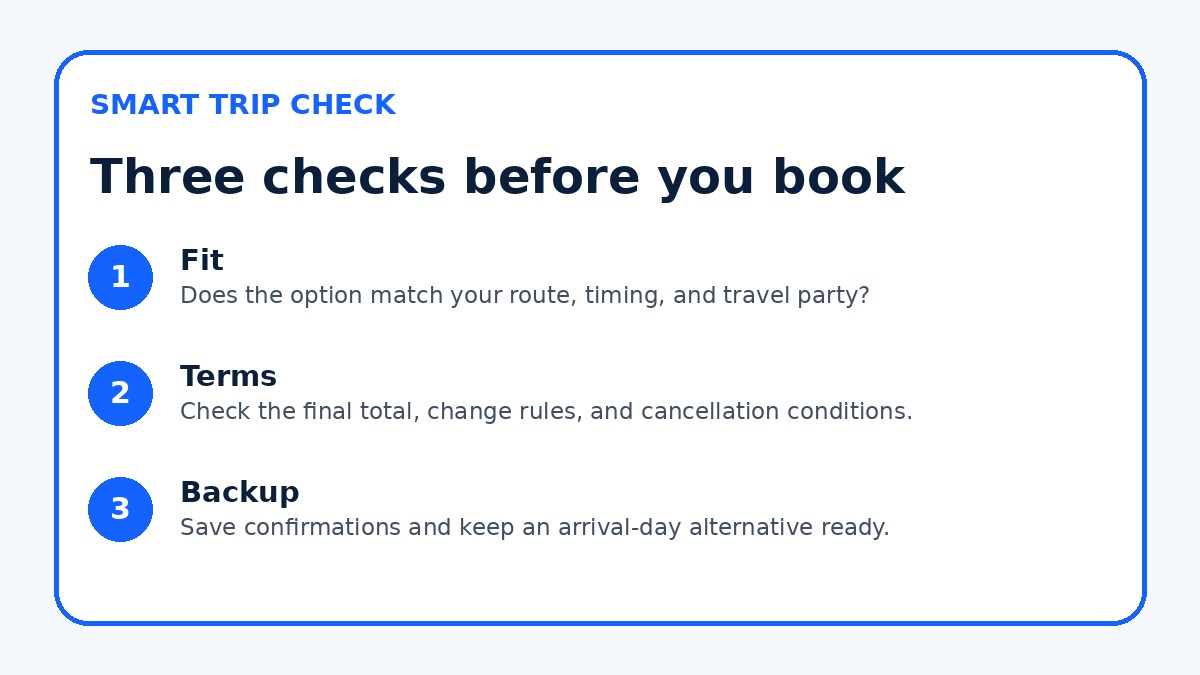
- Map your top three daily activities and pick hotels within 20–30 minutes door-to-door of most of them.
- Confirm exact room size, bed type, and whether the bathroom is ensuite on the hotel’s booking page.
- Verify public transport stops near the hotel and estimate evening return times before booking.
- Ask the hotel about noise: which direction rooms face and whether windows are double-glazed.
- Check for secure luggage storage and 24-hour reception if you have late arrivals or early departures.
- Compare cancellation policy, Wi‑Fi reliability, and any extra fees listed on the provider’s final page.
Noise, social spaces and solo-traveller perks
Noise can undo a good location choice. Streets near nightlife, late bars, or sports venues stay lively late—great if you plan to be part of the scene but poor for sleep. Ask which side of the building the room faces, whether windows are double-glazed, and if there are quiet-room options. Some hotels offer dedicated quiet floors or rooms with soundproofing; others can place you away from lifts and service areas if you request it at booking.
Solo travellers often benefit from social spaces: a friendly lobby, a communal kitchen, or a breakfast area makes meeting other visitors easier and can substitute for a pricier private room. If you want occasional company or local tips, check whether the hotel hosts morning breakfasts or has an onsite café where solo guests tend to gather. For privacy and calm, confirm reception hours and whether access to your floor requires a keycard—small operational details that should be checked on the hotel’s booking page.
Frequently asked questions
Should I prioritise a central location or a quiet room when travelling alone in Melbourne?
Decide by how you will spend most of your time. If your days are full of city-centre activities, a central location reduces travel time and lets you return quickly between commitments. If you value restorative evenings, work from your room, or have irregular hours, a quieter room in a nearby neighbourhood will improve sleep and comfort. Weigh the average daily door-to-door travel time against the benefit of a larger room; the choice depends on whether you prefer time saved or in-room comfort.
What transport considerations matter most for solo travellers booking hotels in Melbourne?
Look beyond distance: check tram and train frequency at the times you will travel, availability of night services, and the hotel’s proximity to the nearest stop. Also consider safety and lighting for late-night walks to transit, and whether ride-share pick-ups are easy nearby. When comparing options, estimate total travel time including waits and walking, and verify any transport claims on the hotel’s booking page.
How can I tell whether a room’s description matches what I’ll actually get?
Read the room description carefully for bed size, ensuite vs shared bathroom, workspace and storage. Look for floor plans or photos showing the layout and confirm whether photos represent the exact room type offered. If details are unclear, contact the hotel directly and request measurements or specific photos; confirm those answers on the final booking page before completing payment to avoid surprises.
Final planning note
Balancing location and room comfort in Melbourne is a personal tradeoff best guided by how you plan to spend your days and nights. Prioritise proximity when time is short and a compact room suffices; prioritise comfort when rest, remote work, or longer stays matter more. Use the checklist to confirm transport options, room dimensions, noise mitigation, and safety features on the hotel’s final booking page. Compare the decision approaches above to match a hotel to your rhythm: the right choice reduces transit stress and makes solo travel in Melbourne more enjoyable. Trip.com can be a place to compare current availability, but always verify the specific room details and policies on the provider’s page before confirming.
Continue planning
Check current options and final conditions
Use the provider page to confirm live availability, the final total, cancellation terms, and every condition that matters to your trip.
This evergreen planning guide was created with AI-assisted drafting and a structured quality review. It does not display live prices, schedules, availability, visa guidance, or provider rankings. Verify current details before booking. Some links are affiliate links; we may earn a commission at no additional cost to you.