If you need a practical answer: prioritize flight times that align with your kids’ sleep and meal schedules, then pick the most convenient airport and seat options that reduce stress on travel day. For most families, a slightly more expensive yet direct morning or early-afternoon flight that avoids overnight layovers will reduce disruptions and keep travel time predictable. That said, flexibility has value: if your dates can change, look for fares with free changes or low-change fees and refundable seat choices. Before booking, compare total door-to-door time (including transfers), baggage rules, and how each option handles infants and child seats. Check the airline’s final booking page for exact baggage allowances, change and cancellation terms, boarding group rules, and what’s included for children — these details often change and affect whether convenience or flexibility actually saves stress and money.
See current options before you compare the details
Availability and final conditions change. Open Trip.com now or keep reading for the practical comparison.
Schedule choices: morning, midday, or evening flights
Morning flights often work best for families because children tend to travel better when rested; a pre-breakfast departure can mean less time spent in airports and more predictable nap windows. If you can get an early direct flight from Manila to Cebu, you’ll likely arrive with an afternoon free for settling in rather than losing a whole day. But mornings mean earlier wake-ups and potentially longer pre-departure prep for parents, so factor in your family’s tolerance for early starts, commuting time to the airport, and whether childcare or an extra adult can help on departure day.
Midday flights give flexibility: they reduce the stress of pre-dawn logistics and still leave an evening at your destination, but they may conflict with nap times or mealtimes for younger children. Evening flights can work when kids sleep through travel, but red-eye or late departures risk overtired parents and messy arrivals if delays occur. When choosing a time, compare total travel time, likelihood of delays for that time of day at your departure airport, and how any connecting flights would fit into the family routine. If flexibility matters, choose fares with low change fees so a schedule swap is feasible without punitive costs.
Direct vs. connecting flights: convenience versus potential savings
Direct flights minimize handling, boarding, and the risk of missed connections — strong advantages when traveling with children, strollers, or lots of baggage. Even if a nonstop option costs more, the saved time and reduced complexity often make it worth the premium for families who prioritize a smooth trip. Consider seat map options on the booking page, whether the carrier allows pre-allocated seats for families, and how the airline treats families with young children at boarding; these policy details are important and can change, so verify them before purchase.
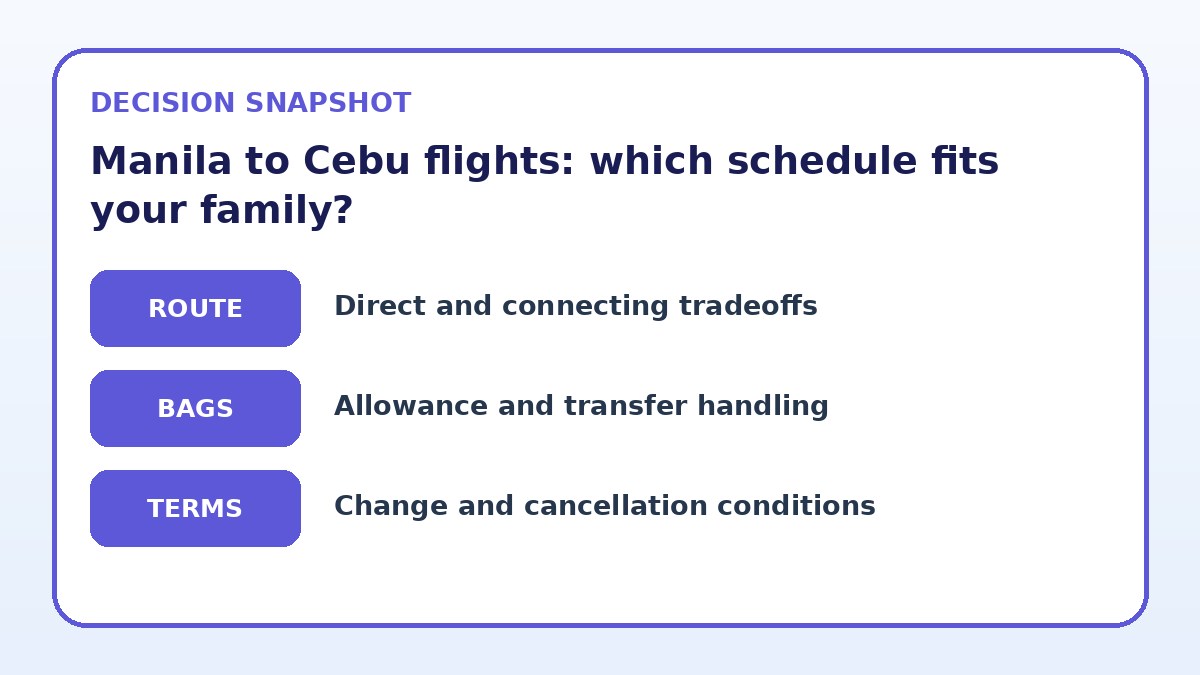
Connecting itineraries sometimes offer lower fares or better time windows, but transfers add complexity: extra security screenings, luggage rechecks, and the need to manage kids between gates. If you consider a connection, allow generous transfer time, especially if the connection requires a terminal change or bus transfer. Factor in the possibility of missed connections and whether the airline will rebook your family on the next available flight or require you to sort logistics yourself. For budget-conscious families, weigh the real cost of longer travel and added babysitting fatigue against the ticket savings.
| Approach | Best for | Tradeoff to check |
|---|---|---|
| Direct morning flight | Families wanting a predictable day with minimal transfers | Often higher fare but fewer logistical stresses and shorter total travel time |
| Midday flight with reserved seats | Families avoiding early starts while keeping naps and meals manageable | May require paid seat selection and careful timing to match kids' routines |
| Cheaper connecting itinerary | Price-conscious families who can handle extra transfer time | Increased chance of delays, more baggage handling, and longer overall travel |
| Flexible fare with change options | Families with uncertain dates or potential schedule changes | Higher upfront cost but lower risk of expensive rebooking later |
Ready to check the option that fits your plan?
Use your exact dates and traveler details so the provider page can show the current total and conditions.
Fare rules and family-friendly extras to check
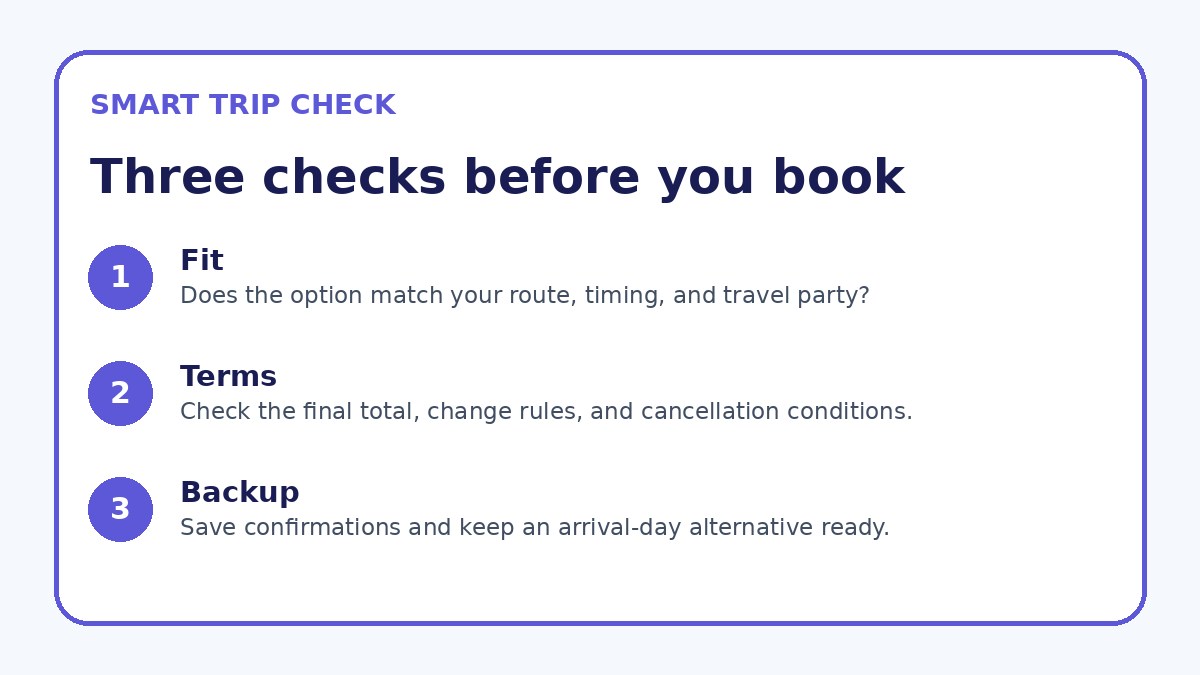
Fare headlines won’t tell the whole story. Before booking, inspect the final booking page to confirm baggage allowances for checked and cabin bags, the cost and rules for infant bassinets or lap infants, and what meals (if any) are included. Also check change and cancellation policies — look for fares that allow free or low-cost date changes if your plans could shift. If you need a specific seat together, confirm whether reserved seats are included or require a paid upgrade and whether the airline blocks seats for family groups during check-in.
Family-friendly extras can make a trip smoother: priority boarding for families, pre-boarding for those with small children, complimentary strollers at the gate, and in-flight entertainment options. These amenities vary by carrier and specific flight; list the features important to you (e.g., bassinet availability, child meals, or medical assistance) and verify them at booking. If you plan to bring a car seat or stroller, check exact dimensions allowed in the cabin versus gate-check policies so you aren’t surprised at the airport.
Before you book
- Match flight times to your child’s sleep and meal schedule and allow buffer time for delays.
- Confirm on the airline’s booking page the exact baggage allowance and fees for checked and cabin bags.
- Verify change, cancellation, and refund terms before payment so you know the true flexibility.
- Reserve seats together or choose a fare that includes family seating to avoid separation at boarding.
- Check infant and car-seat policies, including whether strollers are gate-checked or allowed in-cabin.
- Plan ground transfer at arrival: confirm taxi or shuttle capacity for luggage and child safety seats.
Logistics before and after the flight: door-to-door thinking
Consider door-to-door time — not just flight duration. Travel to and from both airports, typical security wait times with children, and the ease of public transit or taxis at each end affect how tiring the trip will be. For families, a slightly longer flight that lands closer to your hotel and avoids an awkward late-night transfer can be better than a cheaper option that leaves you stranded for an hour in transit. Assess parking or drop-off options at your departure airport and whether your destination transfer can accommodate car seats and luggage easily.
If your itinerary includes arrival at different airports (sometimes flights route through different terminals or airports), plan for baggage claim, immigration queues if applicable, and ground transportation. Confirm which terminals your flights use on the airline’s booking page and map the transfer options. If you’ll rely on taxis or ride apps at arrival, ensure drivers can carry your luggage and know local child-seat laws and availability; sometimes hotels offer airport shuttles that handle luggage and child equipment, which can simplify the first few hours.
Frequently asked questions
Should I always book the earliest direct flight for shorter travel days with kids?
Not always. While early direct flights can reduce on-trip time and avoid afternoon delays, they also require earlier wake-ups and longer pre-departure preparation. If your children are poor early risers or you face a long commute to the airport, a slightly later flight that fits naps and avoids a 4 a.m. wake-up might reduce stress. Balance the benefits of arriving earlier against the extra effort and consider refundable or changeable fares so you can adjust if the family needs it.
How much transfer time should I leave for a connecting flight when traveling with young children?
Allow significantly more transfer time than you would alone: factor in bathroom stops, snack changes, stroller gate-checking, and slower walking speeds. If the connection requires changing terminals or rechecking bags, add extra padding — at least double your usual minimum, and prefer connections with several hours over tight one-hour windows. Check on the booking page whether the airline marks the connection as protected (they’ll assist if you miss it) and whether minimum connection times are realistic for families.
What family-specific fees or rules should I verify before finalizing Manila to Cebu flights?
Look at baggage rules for children and infants, whether lap infants travel free or require a fare, and fees for checked baggage and seat selection. Also confirm policy on gate-checking strollers and using car seats on board, plus any priority boarding for families. Airline pages should show what is included in each fare class; verify these items at checkout because fees and inclusions often vary by fare and can change between booking and departure.
Final planning note
Balancing schedule flexibility and convenience for Manila to Cebu flights comes down to choosing what reduces stress for your family on travel day. Direct, well-timed flights cut handling and unpredictability but can cost more; flexible fares reduce risk when plans change but may add upfront expense. Focus on total door-to-door time, seat and baggage rules, and the specifics for infants and child seats shown on the airline’s booking page. Use the checklist to compare itineraries objectively, and if you want a quick availability comparison, you can check Trip.com as one place to view current options — then confirm all details on the carrier’s final booking page before you pay.
Continue planning
Check current options and final conditions
Use the provider page to confirm live availability, the final total, cancellation terms, and every condition that matters to your trip.
This evergreen planning guide was created with AI-assisted drafting and a structured quality review. It does not display live prices, schedules, availability, visa guidance, or provider rankings. Verify current details before booking. Some links are affiliate links; we may earn a commission at no additional cost to you.