If you’re travelling between Sydney and Melbourne with oversized bags, sports equipment, or several suitcases, the practical choice comes down to which stations and terminals you use and how you move between them. Start by deciding whether you’ll travel by train, plane, or a mix — each option changes where you arrive and what transfer choices make sense. This article gives the direct, practical steps to plan transfers that reduce hassle: pick stations or airports with suitable luggage access, choose door-to-door transfer modes you can manage with your load, and confirm luggage policies before you buy tickets. Tradeoffs matter: speed versus door-to-door convenience, the effort of hauling bags across busy interchanges, and what you’re willing to pay for assistance or a private transfer. Read on for clear decision criteria, comparison rows for common approaches, an actionable checklist, and answers to frequent planning questions.
See current options before you compare the details
Availability and final conditions change. Open Trip.com now or keep reading for the practical comparison.
Choosing between train and plane for luggage-heavy trips
When you travel with extra luggage, the most important early decision is whether to prioritise fewer handoffs or shorter travel time. Trains typically deliver you to central stations (Sydney Central, Southern Cross in Melbourne) where many hotels and transport links are within walking distance or a short taxi ride. That reduces the need to transfer terminals or cross-city airports with bags. Trains also let you keep luggage nearby for much of the journey, but you should plan where to store large items on board and whether you can lift them to racks or designated spaces.
Flying can be faster but introduces terminal logistics: check-in, security, baggage drop, and the airport-to-city transfer at the other end. Extra luggage may require special handling or checked-item rules, and airports can add steps such as long baggage reclaim waits. If you choose air travel, factor in the effort of moving between terminal areas and ground-transport options that can accommodate bulky items; sometimes a private transfer or taxi from the terminal is the simplest way to manage oversized gear.
Station and terminal selection: what to prioritise
Not all arrival points are equal for people with luggage. Prioritise terminals and stations with level access from street to platform, covered walkways, lifts or ramps, and available trolleys. Central stations reduce onward travel distance; city-centre train terminals often have easier short transfers to hotels. If using airports, choose flights that arrive at the airport terminal with the most convenient ground-transport options for large bags — some terminals have direct bus, coach, and taxi ranks right outside the doors.
Also consider the layout between platforms, concourses, and external pickup areas. Busy interchanges can mean long walks between platforms or from baggage claim to ground transport. Look at station maps and terminal layouts online before you book to confirm lift locations and step-free routes. If the operator’s page doesn’t clearly show access information, contact them to confirm trolley availability, wheelchair access (useful for large wheeled luggage), and restrictions on where bulky items can be stored.
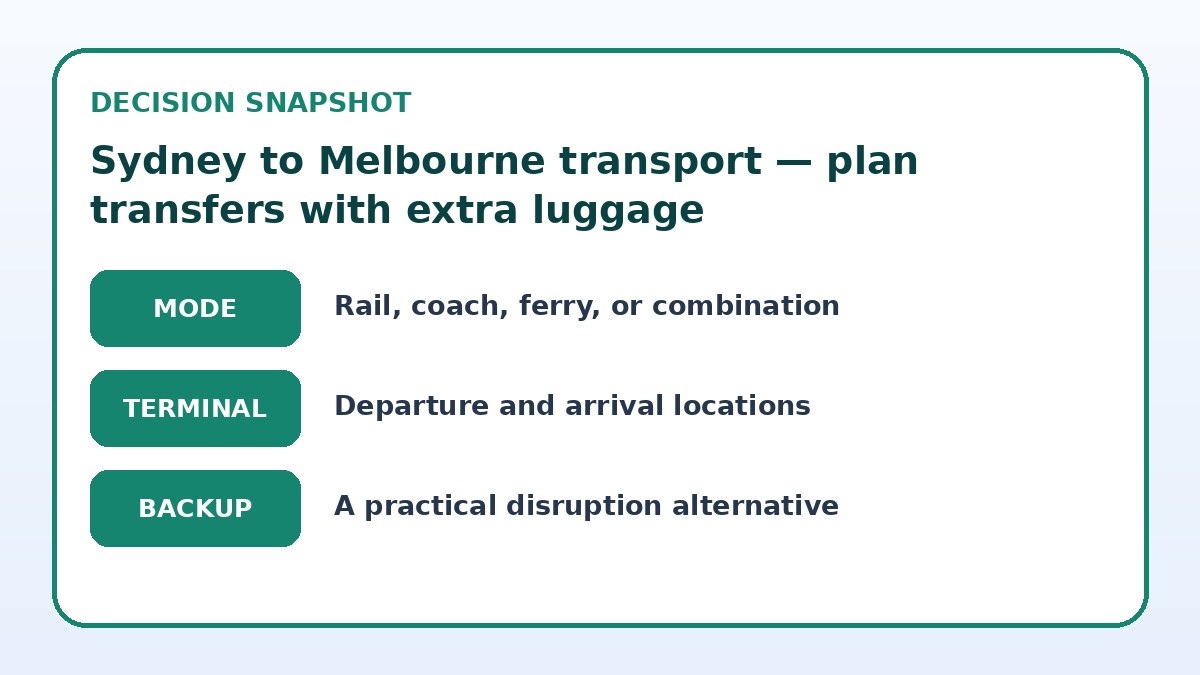
| Approach | Best for | Tradeoff to check |
|---|---|---|
| Direct train to city centre | Travelers wanting minimal transfers and easy access to central hotels | May need to manage lifting heavy bags onto trains and storing them onboard |
| Flight plus airport taxi | Those prioritising travel speed and willing to pay for door-to-door convenience | Adds baggage drop, reclaim, and a terminal-to-city transfer that can be time-consuming |
| Train to coach or shuttle for last mile | Travelers needing a balance of cost-efficiency and reduced walking with luggage | Requires careful coordination of schedules and possibly extra waiting time |
| Private transfer or hired van | Groups, families, or oversized equipment that won’t fit ordinary cars | Higher cost and the need to book vehicle size and pickup details in advance |
Ready to check the option that fits your plan?
Use your exact dates and traveler details so the provider page can show the current total and conditions.
Transfers and ground transport with bulky bags
For the station-to-destination leg, choose a ground-transport mode that matches your luggage volume and mobility needs. Taxis and private cars are the simplest for many bags or non-standard items because they load quickly and require minimal walking; verify that vehicles large enough for your luggage are available and book a larger vehicle if needed. Rideshares can work but confirm driver acceptance of bulky items and whether the app shows vehicle size options. Train-to-train or tram transfers inside cities will be cheaper but often involve stairs or narrow doors that complicate large cases.
If you need regular assistance, arrange an assisted transfer service at the station or airport — porters, meet-and-greet services, or hotel luggage delivery can remove the physical handling from your itinerary. These services vary by operator and require advance booking; always verify the provider’s current terms and what they handle (for example, weight limits and number of items). For multi-leg journeys, coordinate the timing so you don’t face a long wait with heavy bags between connections.
Before you book
- Confirm the luggage size, weight, and item-type rules on the carrier’s official booking page before you buy any ticket.
- Inspect station and terminal maps online to identify lifts, ramps, baggage claim exits, and nearest taxi/rideshare pickup points.
- Reserve a larger taxi, private transfer, or vehicle option when booking if you have multiple suitcases or non-standard gear.
- Allow extra connection time between arrival and onward departure points to account for baggage claim, security, and moving between terminals.
- Book any porter, meet-and-greet, or assisted-mobility service in advance and save the confirmation number with your travel documents.
- Pack a compact essential bag with valuables and documents to avoid opening checked luggage during transfers or on the move.
What to check and confirm before booking
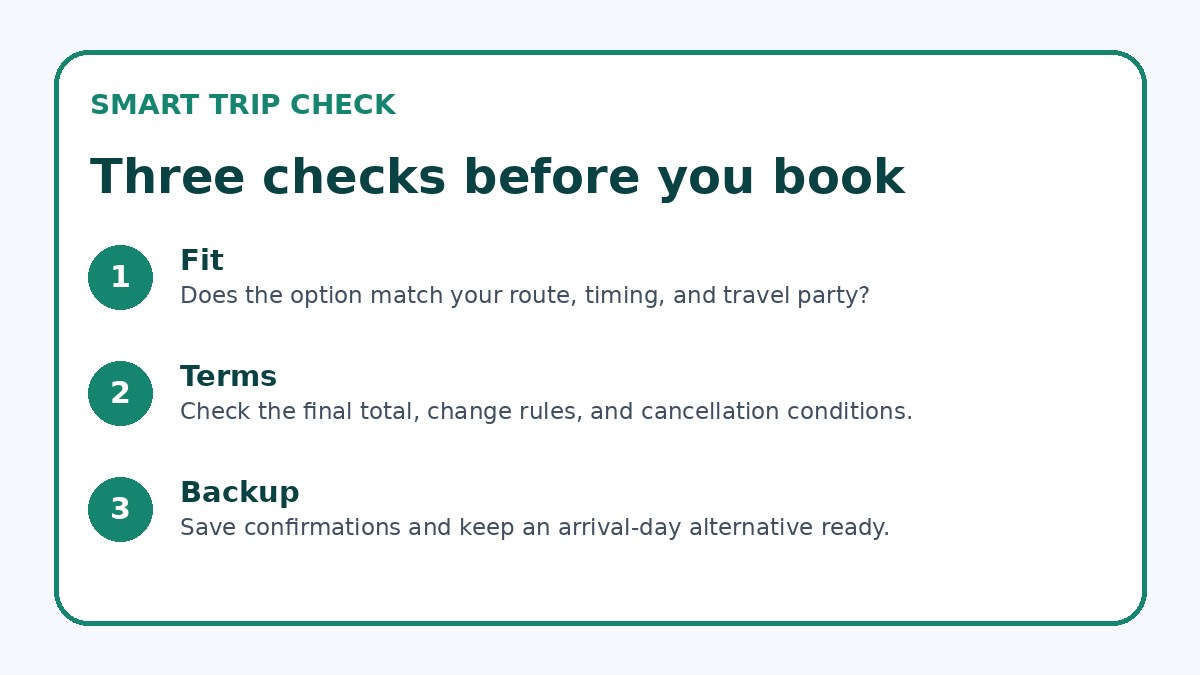
Before you commit, check these things on the provider’s final booking page: luggage allowances and any size or weight restrictions, whether you need to pre-book seat space or luggage reservations, and the terminal or platform arrival details. For mixed-mode trips, confirm transfer times between arrival and departure points and allow extra buffer for baggage claim or security. If the operator’s website lacks clear luggage or access information, call or email them to get written confirmation you can keep with your booking.
Also verify pickup points and the practicalities of collecting your bags — where baggage reclaim is and which exit leads to taxis or transfer shuttles. If you’re using third-party transfer services or a coach, check where they stop relative to station exits and whether they can take oversized items. Trip.com can be a quick place to compare schedules and availability, but always confirm specific luggage rules and terminal details on the carrier’s official booking page before finalising plans.
Frequently asked questions
Can I take oversized sports equipment (surfboards, bikes) between Sydney and Melbourne by train?
Policies vary by operator and can depend on item dimensions, booking class, and available storage on the train. Some intercity services allow bikes with advance notice or in designated storage spaces; others require folding bikes or special packaging. Surfboards and long items are often restricted unless booked as a special item. Before you travel, check the carrier’s luggage policy and special-item rules on their official booking page and ask whether you need to reserve space or pay an excess-allowance fee. If train options look tight, consider a private transfer or courier service for oversized gear.
How should I plan transfers if I arrive at one terminal and depart from another in the same city?
Treat terminal-to-terminal moves like mini-journeys: identify the quickest and most luggage-friendly options (airport shuttle, taxi, or pre-booked private car). Map the exits and pickup points so you don’t waste time searching with heavy bags. Allow a generous buffer to accommodate baggage reclaim, security processes, or traffic. If public transport is the only affordable option, check step-free access and peak crowding times; avoid routes requiring long stair climbs with heavy cases. Confirm exact pickup times with transfer providers and bring booking references for drivers.
Is it better to split luggage between travellers or consolidate into one shipment?
Splitting luggage can reduce the size and weight each person handles, making stairs and short walks easier. It also spreads risk if bags are delayed. Consolidating into one shipment simplifies tracking and may be cheaper if you can hire a single transfer vehicle to carry everything, but it creates a single point of failure and requires someone able to lift and move heavy consolidated loads. Decide based on the number of people available to help, the ease of arranging a suitable vehicle, and the carrier’s rules for oversized or excess luggage.
Final planning note
Planning station and terminal transfers for a Sydney to Melbourne trip with extra luggage is about making deliberate choices: choose the arrival point that minimises handoffs, pick transfer modes that match the volume and type of luggage, and verify access and baggage policies on official booking pages. Consider the tradeoff between time saved and convenience — a faster flight can cost more in terminal transfers, while a direct train into a city centre can cut onward handling. Use the checklist to confirm vehicle sizes, station layouts, and assistance options ahead of travel. When in doubt, arrange a booked transfer or porter service so you can move through connections with less stress and more confidence.
Continue planning
Check current options and final conditions
Use the provider page to confirm live availability, the final total, cancellation terms, and every condition that matters to your trip.
This evergreen planning guide was created with AI-assisted drafting and a structured quality review. It does not display live prices, schedules, availability, visa guidance, or provider rankings. Verify current details before booking. Some links are affiliate links; we may earn a commission at no additional cost to you.