
If you’re traveling from Los Angeles to Las Vegas with extra or oversized luggage, the most practical departure airport is often the one that minimizes handling, secondary transfers, and surprise fees for checked or oversized bags. For many travelers that means prioritizing an airport with straightforward ground access, compact terminals, and airlines that operate more predictable domestic schedules there. That choice can reduce the number of times bags are weighed, moved, or rechecked, and it can save time at check-in and security lines. This guide gives a clear practical recommendation, explains the tradeoffs between LAX, Hollywood Burbank, Long Beach, and Ontario, and lists the criteria you should check on the airline’s booking page before you buy. Read on to match airport strengths to your baggage profile, whether you have extra suitcases, sports gear, or a fragile item that needs simpler handling.
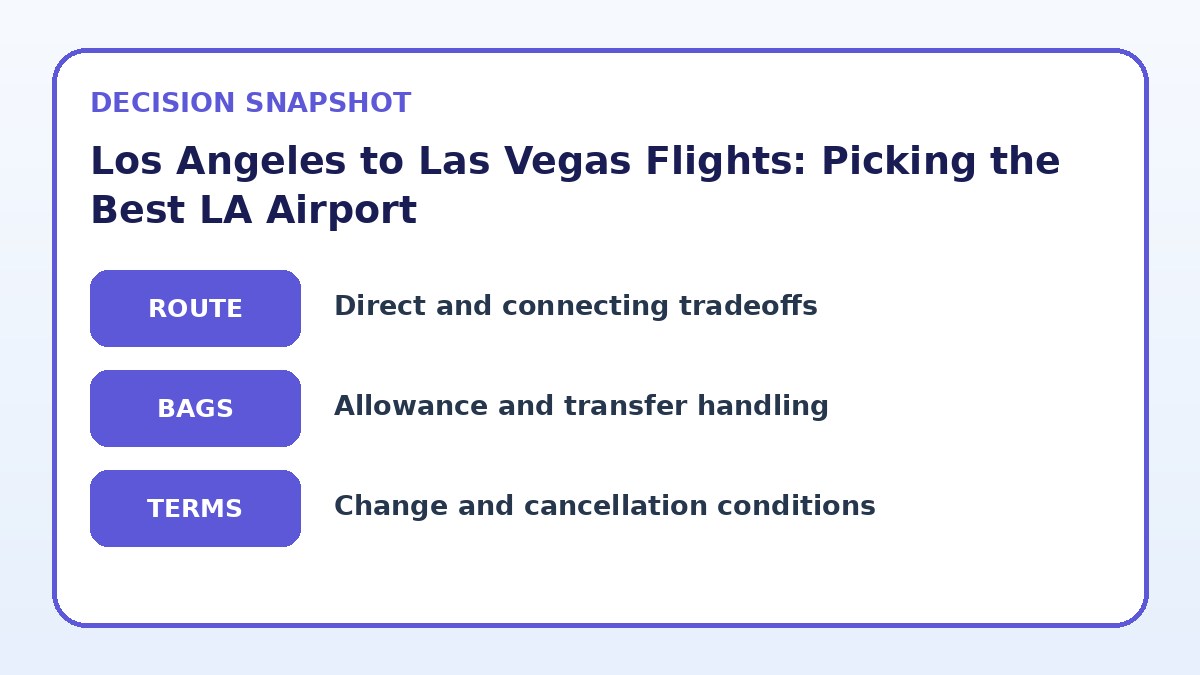
See current options before you compare the details
Availability and final conditions change. Open Trip.com now or keep reading for the practical comparison.
Practical recommendation up front
For most travelers with extra luggage, Ontario International Airport (ONT) is the most practical Los Angeles departure for flights to Las Vegas. Ontario combines relatively simple terminal layouts, a lower passenger density than LAX, and straightforward road access from the eastern and inland areas of Greater Los Angeles. If you’re driving in with several checked bags, ski/snowboard bags, or other oversized items, Ontario’s parking and curbside areas tend to be easier to navigate and less congested during peak times, which reduces the number of times luggage must be moved before check-in.
That said, the best choice still depends on where you’re starting in Los Angeles and the airline you plan to fly. If you live west of the city or near the coast, Burbank (BUR) or Long Beach (LGB) might shave driving time and keep handling simpler. If your priority is the widest choice of flight times and carriers, LAX offers more nonstop options but also typically means more walking, bus transfers, and crowded terminals — all of which can increase the handling and stress of extra luggage.
How luggage rules and fees affect the airport decision
Airline baggage allowances, size limits, and excess fees often matter more than the physical airport when deciding where to fly. Some low-cost or regional carriers operating from smaller airports have stricter size and piece limits or charge per bag, while legacy carriers at major airports may include larger allowance levels in certain fare classes. Before you commit to a departure airport, open the airline’s official booking page and confirm exactly what’s included with your chosen fare: the number of checked bags, maximum linear dimensions, any oversized or overweight surcharges, and whether a second bag has a different cost.
Also check handling services like curbside check-in, gate-check policies, and whether the airline offers an oversized-baggage counter. If a carrier requires oversized items to be processed at a special counter, a smaller airport with a single counter can be quicker; at a large hub that counter might be hard to find or located in a different terminal. When comparing airports, weigh both the carrier’s baggage policy and how that carrier operates at each airport — those operational details are what you must verify on the booking or the airline’s airport information page.
| Approach | Best for | Tradeoff to check |
|---|---|---|
| Fly from Ontario (ONT) | Travelers wanting simple curbside access and lower terminal congestion | Fewer flight frequencies and possibly longer drive for coastal residents |
| Fly from Hollywood Burbank (BUR) | Visitors from the Valley or west-side travelers seeking compact terminal layout | Smaller airport with fewer carriers and limited nonstop choices |
| Fly from Long Beach (LGB) | Those prioritizing minimal walking and easy parking | Very limited carrier options and infrequent flights to Las Vegas |
| Fly from Los Angeles International (LAX) | People who need many schedule options or specific airline services | Higher congestion, more terminal transfers, and longer walks with luggage |
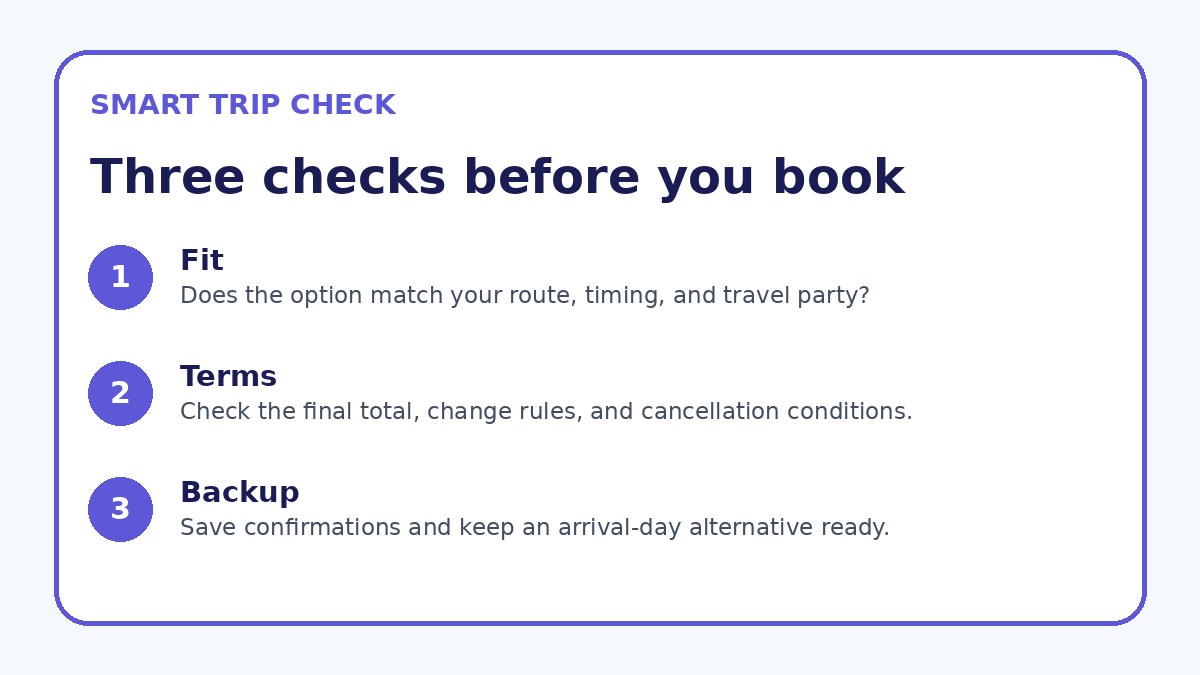
Ready to check the option that fits your plan?
Use your exact dates and traveler details so the provider page can show the current total and conditions.
Transfer and ground-transport tradeoffs
Think about how many transfers your luggage will face between home and aircraft. Driving and parking at your departure airport keeps the handling chain simple: you carry bags from car to curb to check-in and to security. Airports with compact, single-building terminals like Long Beach or Hollywood Burbank usually reduce walking and transfers, while sprawling hubs like LAX can add bus rides, shuttle transfers between terminals, or long walks to remote parking — each step increases the chance of heavy lifting or repeated baggage checks.
If you’re depending on a rideshare, look at where drop-off and pick-up points are located, and whether they add a shuttle ride that requires moving suitcases. For travelers using public transit, the number of mode changes matters: a single train or bus to an airport is preferable to multiple transfers. Ontario and Long Beach typically offer easier private-vehicle access and parking, while LAX has more public transit connections but also more complex terminal-to-terminal movement.
Before you book
- Check the airline’s exact checked-bag allowance, size limits, and overweight/oversize surcharges on the final booking page.
- Confirm whether curbside check-in, oversized-baggage counters, or special handling services are available at your chosen departure airport.
- Compare driving times, parking lot locations, and whether short-term curbside drop-off is convenient for moving multiple bags.
- If using rideshare or shuttle, verify pickup/drop-off points and any walking or shuttle rides required to reach the terminal.
- For sports or fragile equipment, contact the airline’s baggage service desk before booking to confirm packing, fees, and handling procedures.
- When considering a connection, confirm if bags transfer automatically or require recheck at the connecting airport and allow extra time if needed.
Operational tips and what to verify before booking
Before you press purchase, verify a short checklist on the airline and airport pages. Confirm your exact baggage allowance and any overweight/oversize fees for your chosen fare. Check whether curbside check-in, oversized-item counters, or special handling for sports equipment are available at the airport and whether you need to pre-register equipment. Look for airport maps showing the distance between drop-off, check-in, security, and gates so you can plan how far you’ll carry luggage.
Also compare possible flight routings: direct nonstop flights eliminate rechecking or transferring bags at an intermediate airport, but some nonstop options might be at the busiest terminals. If a connecting itinerary is the only option, compare total connection time and the terminals involved — a short connection at a different airport often means extra handling and rechecking. When in doubt, contact the airline’s baggage service center (use the phone numbers on their official pages) to confirm handling steps for your gear at the specific airport you plan to use.
Frequently asked questions
Do baggage fees differ between airports for the same airline?
Baggage fees are set by the airline and the fare class, not the airport; however, how those fees are collected and what services are offered can vary by airport. For example, an airline might charge the same overweight fee at every airport, but at a smaller airport you may have direct access to a dedicated oversized-baggage counter, while at a large hub you might need to find a special service desk. Always confirm the exact baggage charges and the specific handling location for oversized items on the airline’s booking page and the airport’s passenger services information before you finalize your reservation.
Should I prioritize fewer flight options or simpler ground logistics?
Prioritize based on what will cause the most stress or cost if something goes wrong. If you have bulky, fragile, or multiple checked items, simpler ground logistics (faster drop-off, minimal terminal walking, easier parking) usually reduce risk and physical effort. If your schedule is tight or you need a specific departure time, more flight options at a busier airport may matter more. Weigh the inconvenience and potential extra fees of a busier hub against the time savings and schedule flexibility; that balance will differ by traveler and by the exact luggage you’re bringing.
How do I compare connecting versus nonstop options for luggage handling?
If a nonstop is available, it typically reduces the number of times bags are handled and the risk of missed connections causing recheck or delayed luggage. For connecting itineraries, examine whether the connection requires transferring terminals or passing through another airport’s baggage claim to recheck bags; airlines will indicate this during booking. Allow additional connection time if baggage must be reprocessed, and verify on the airline’s site whether checked items are automatically transferred. When in doubt, choose a longer connection that keeps transfers within the same terminal or airline alliance to simplify baggage handling.
Final planning note
Choosing the most practical departure airport for Los Angeles to Las Vegas flights when you have extra luggage comes down to reducing handling steps and confirming carrier policies. Ontario, Hollywood Burbank, and Long Beach often offer quieter, shorter walks and easier curbside access that reduce the physical effort and chances of bag mishandling, while LAX provides more schedule options at the cost of complexity. Before booking, verify baggage allowances, oversized-item policies, and exact service locations on the airline’s final booking page and the airport’s site. Match the airport’s ground-access convenience to your luggage type and personal tolerance for transfers, and you’ll make the trip smoother and less stressful.
Continue planning
Check current options and final conditions
Use the provider page to confirm live availability, the final total, cancellation terms, and every condition that matters to your trip.
This evergreen planning guide was created with AI-assisted drafting and a structured quality review. It does not display live prices, schedules, availability, visa guidance, or provider rankings. Verify current details before booking. Some links are affiliate links; we may earn a commission at no additional cost to you.