Practical answer first: pick a neighbourhood that matches how you’ll spend days together — harbour-facing for short walks and attractions, Inner West for relaxed parks and cafés, Bondi or eastern beaches for sand-and-sea days, or North Shore for roomy apartments and quieter mornings. Couples travelling with a child or two should prioritize short routes between accommodation, daytime activities, and groceries, plus a room layout that supports napping, feeding and early bedtimes. This guide helps you translate parenting rhythms into an area shortlist, explains the daily frictions to expect in each zone, and tells you exactly what room features and booking terms to check before opening live hotel inventory. After reading you’ll be able to choose one or two neighbourhoods to search across booking sites and verify details like room configuration, cancellation policy, child amenities and public transport access.
Check live stays in the areas that fit
Use your dates and party size to compare current rooms after you narrow the neighborhood fit.
Neighbourhood fit: which area matches your family rhythm
Start by matching your daily tempo to a neighbourhood vibe. If you want easy sightseeing with toddlers or preschoolers, the Circular Quay and The Rocks side of the harbour keeps ferry rides, the Opera House and Botanic Gardens within brisk walking distance. These areas can be busy but they reduce transit time and make midday returns for naps realistic. For couples who want cafes, parks and a more relaxed pace, the Inner West suburbs like Pyrmont, Glebe and Newtown offer green spaces, family-friendly eateries and a community feel while still keeping central attractions reachable by short tram or light-rail rides.
If beach days and outdoor play are your priority, choose Eastern suburbs such as Bondi or Bronte where mornings and afternoons revolve around sand, playgrounds and coastal walks; note that beach areas often involve steeper walks and more spread-out services. For quieter mornings, the Lower North Shore — think Mosman or Neutral Bay — provides larger accommodations, playgrounds and ferry links that feel less hectic than central terminals. Each neighbourhood trades off time to major attractions against local convenience, so pick the one that aligns with how many daytime returns to your room you expect.
Choose an area-selection strategy
| Area approach | Best for | Tradeoff to check |
|---|---|---|
| Harbour-side (Circular Quay/The Rocks) | Minimising travel time to major attractions and easy ferry links. | Higher daytime crowds and typically fewer larger-family room options. |
| Inner West (Glebe, Pyrmont, Newtown) | Relaxed pace, parks, café culture and short tram or light-rail links. | Slightly longer commutes to beaches and some central sights. |
| Eastern Beaches (Bondi, Bronte) | Beach-focused days with playgrounds and outdoor activity. | Hilly streets and busier transfers for central attractions. |
| North Shore (Mosman, Neutral Bay) | Quieter mornings, larger apartment-style hotels and family space. | Further from central tourist hubs and some attractions. |
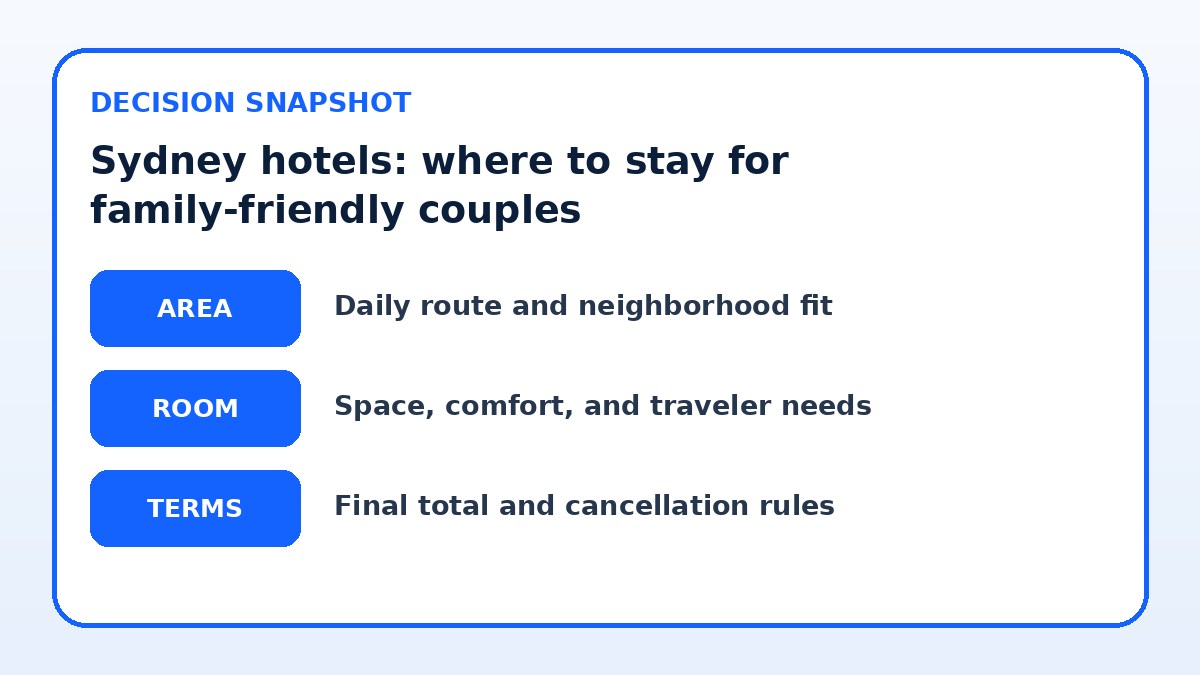
Daily-route friction: how transit, walking and ferries affect days
Map your typical day: morning coffee, a museum or playground, lunch, nap or quiet time, and an afternoon outing. In harbour-side and CBD areas, walking and ferries reduce transfers but can be crowded during peak tourist hours; factor that into nap schedules. Eastern suburbs require bus or ferry connections for central sights — buses are frequent but strollers can be tricky on steep streets. If you rely on a car, expect limited on-street parking and variable hotel parking policies; call the hotel or check their booking page to confirm parking availability and fees before you reserve.
Consider short transfer options: ferries are pleasant and stroller-friendly on many routes but check terminal access and ramp conditions at specific piers. Light rail and metro lines help bridge Inner West and CBD connections, making midday returns manageable; confirm nearest stops and walking distances from the hotel. For each shortlisted neighbourhood, sketch one sample day and time each leg between hotel and activity; if more than two legs require transfers with a child, that neighbourhood may add daily friction and stress.
Now compare like with like
Keep the same dates, guests, room needs, and cancellation preferences while you compare the final choices.
Room and party needs: what hotel features really matter
Prioritise room layout over luxury extras. Suites with a separate living area, interconnecting rooms, or family rooms with clear sleeping zones make feeding, bedtime and quiet time easier without disrupting your partner. Ask specifically about crib or cot models, linen arrangements, blackout curtains, and whether the property provides bottle-warming or microwave access. If one of you needs to work or rest while the child is awake, a room with a sofa bed or separate sitting area is far more practical than a single large bed.
Also confirm the hotel’s child policies: some properties charge per child, limit free cots to one, or count older children as adults for occupancy purposes. Check if housekeeping can be scheduled around naps, whether laundry services or onsite kitchens are available, and if the hotel offers kid-friendly menus or early dining options. When browsing inventory, filter for family rooms and read the room policy section on the provider’s final booking page to confirm exactly what’s included and what incurs an extra fee.

Hotel booking check before payment
- Choose one preferred neighbourhood and one backup based on how many daily returns to the room you expect.
- Confirm room configuration (interconnecting rooms, suite layout, or sofa bed) on the hotel’s official booking page.
- Verify crib/rollaway availability, any associated fees, and maximum child age for complimentary accommodation.
- Check transport links and map a sample daytime route to account for transfers and stroller access.
- Ask the hotel about early breakfast options, kid menus, and flexible housekeeping around naps.
- Confirm parking, late check-in procedures and luggage storage options directly with the hotel before paying.
Final booking terms: what to verify before you commit
Treat the hotel’s booking page as the final source for specifics you care about. Verify cancellation and change policies, the exact occupancy rules, whether cots and extra beds are complimentary or paid, and if parking is included. Don’t assume breakfast is family-friendly; confirm whether early breakfasts, children’s portions, or grab-and-go options are available. If you plan on arriving late or leaving early, check late check-in procedures and early check-out options so you avoid surprises.
Also confirm accessibility and vehicle drop-off logistics if you’ll be using taxis or rideshares with a child seat. For transfers that involve ferries, verify the nearest terminal’s distance and whether the hotel offers luggage storage for late departures. Finally, where possible, compare live availability and room details on the hotel’s official page and a travel booking site like Trip.com to see the same room type presented; always confirm the hotel’s stated rules and amenities on their own confirmation before booking.
Hotel Guide questions travelers ask
Which Sydney neighbourhood makes the most sense for a couple with a toddler who naps midday?
If short midday returns are a priority, harbour-side areas near Circular Quay and The Rocks are strong choices because many attractions, ferries and gardens are within walking distance, reducing transfers. Inner West suburbs like Pyrmont or Glebe also work if you prefer parks and cafés and can use light rail or short rides; both allow easy retreat to the room for naps. Beaches and North Shore options can still work, but plan for longer transfers or slower return times which can interrupt nap schedules.
What room features should couples prioritize when booking a family-friendly hotel in Sydney?
Look for a separate living area, interconnecting rooms, or suites with distinct sleeping spaces so one adult can rest while the other manages the child. Confirm blackout curtains, the hotel’s crib specifications, and whether they provide amenities like bottle warmers or microwaves. Also check if housekeeping can be scheduled outside nap times and whether the hotel’s child occupancy policy impacts the price or bedding arrangements.
How do I compare transport convenience across neighbourhoods before booking?
Sketch a typical day and map each leg from hotel to activity, counting transfers and walking distances with a stroller. Compare direct ferry or light-rail links versus multiple bus changes. Pay attention to terminal access and whether streets are stroller-friendly or steep. Use official transport maps and the hotel’s location on the booking page to measure walking times, then prioritise the neighbourhood with fewer transfers during your busiest hours.
Final decision note
For couples planning a family-friendly stay in Sydney, the smartest first step is choosing the neighbourhood that fits your daily rhythm — not the hotel brand. Harbour-side areas and the Inner West will suit different priorities: quick access to attractions or calm, park-centred days. Once you’ve shortlisted one or two areas, focus on room layout, crib and child policies, transit friction and the precise terms listed on the hotel’s booking page. Use that shortlist to open live inventory on hotel sites or a booking platform such as Trip.com, but always confirm the hotel’s stated rules, occupancy details and amenities on their official confirmation before finalising your reservation.
Continue planning
Check current options and final conditions
Use the provider page to confirm live availability, the final total, cancellation terms, and every condition that matters to your trip.
This evergreen planning guide was created with AI-assisted drafting and a structured quality review. It does not display live prices, schedules, availability, visa guidance, or provider rankings. Verify current details before booking. Some links are affiliate links; we may earn a commission at no additional cost to you.