
If you're traveling solo from New York City to Boston and want flexibility, safety, and a few intermediate stops, build a multi-city ground-transport plan before you book. Start by deciding whether you prioritize speed, comfort, or the ability to explore towns along the route; that single choice narrows the realistic transit options. Identify likely legs (e.g., NYC to Stamford or New Haven, then onward to Providence and Boston) and choose a primary mode for each leg: intercity train, scheduled bus, regional rail, or shared ride. For each leg, check current timetables, ticketing rules, luggage allowances, and refund/exchange policies on the provider’s final booking page. This guide gives a concise planning workflow, tradeoffs for each mode, and a checklist to keep your solo trip manageable and nimble.
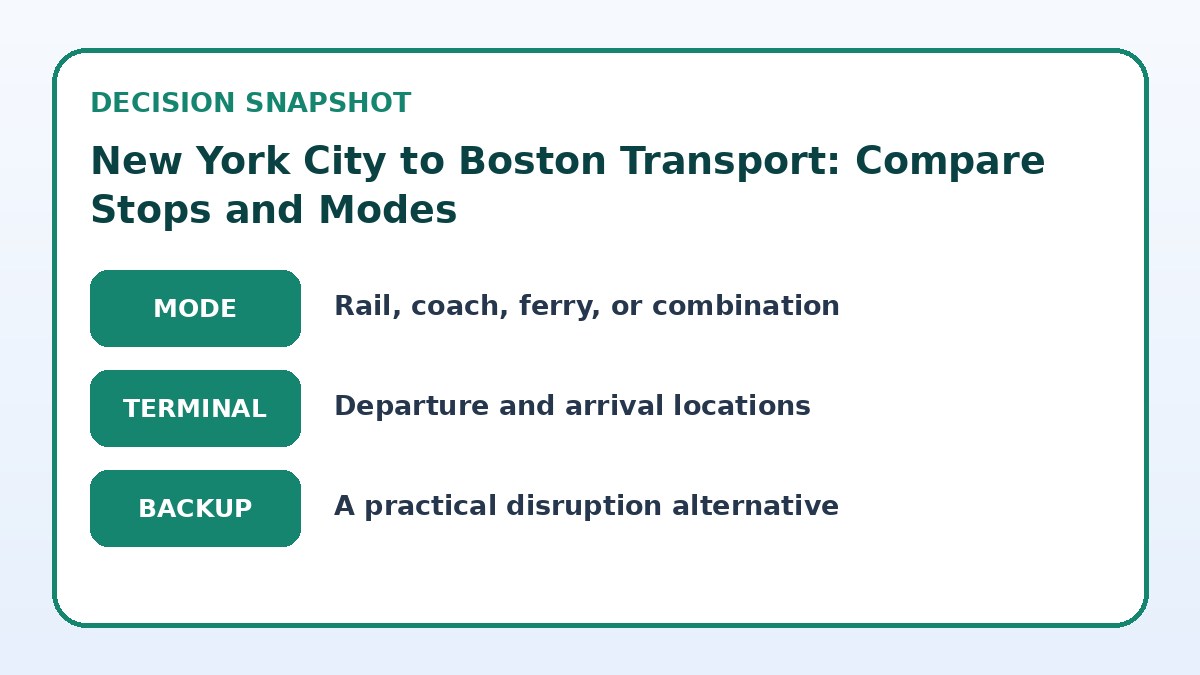
See current options before you compare the details
Availability and final conditions change. Open Trip.com now or keep reading for the practical comparison.
Choose your route framework and core priorities
Start by clarifying what you want from the journey. If your solo priority is speed and predictability, a straightforward direct service where available will reduce decision points and connections. If you want to explore smaller cities between New York City and Boston, plan distinct legs with reliable transfer windows—aim for at least 30–60 minutes between scheduled arrivals and departures to absorb minor delays. Finally, if comfort and workspace matter, prioritize services known for seats, power access, and quieter cars even if they add time.
Turn that priority into a simple route framework: identify one or two anchor stops that are natural transfer points—major regional hubs—and sketch the legs between them. For example, consider treating New Haven or Stamford as anchor hubs for train options and Providence as an anchor if you prefer a bus-plus-local-rail mix. With anchors selected, research which mode runs most frequently between each pair so you can combine schedules that leave flexible windows for solo traveler needs like bathroom breaks or quick sightseeing.
Compare modes: trains, buses, and shared rides
Intercity trains are often the easiest for solo travelers who want space to work or relax without frequent stops; stations are usually central and connect to local transit. Trains can require advance seat bookings or specific ticketing rules, so confirm cancellation and change policies on the provider’s final booking page. Trains may also have fewer daily departures on some legs, so you’ll need to align your multi-city plan with the available schedule frequency to avoid long waits at transfer points.
Scheduled buses generally offer higher frequency and more departure options, often at lower cost and with multiple curbside pickup points. They can be less predictable in city-center traffic and may stop at terminals farther from downtown, so add transfer time when building your itinerary. Ride-share or shared-ride services can bridge the first or last mile—useful for reaching suburban stations or accommodations—but verify pickup locations, surge pricing behavior, and driver acceptance of longer intercity trips on the provider’s app before committing them as primary legs.
| Approach | Best for | Tradeoff to check |
|---|---|---|
| Direct intercity train for whole route | Travelers prioritizing comfort, central terminals, and fewer hands-on transfers | May have fewer departures and less ability to stop in small towns en route |
| Bus-first plan with local rail connections | Those who want more departure choices and lower-cost flexibility | Potentially slower and subject to road traffic; terminals can be farther from downtown |
| Mixed-mode multi-stop plan (train + bus + shared ride) | Solo travelers who want to explore intermediate towns and maximize schedule options | Requires more time for transfers and tighter attention to timing and booking rules |
| Regional rail anchors with short last-mile rides | Travelers seeking predictable station facilities and frequent service on key legs | May need additional local transport at each end and more coordination for luggage |
Ready to check the option that fits your plan?
Use your exact dates and traveler details so the provider page can show the current total and conditions.
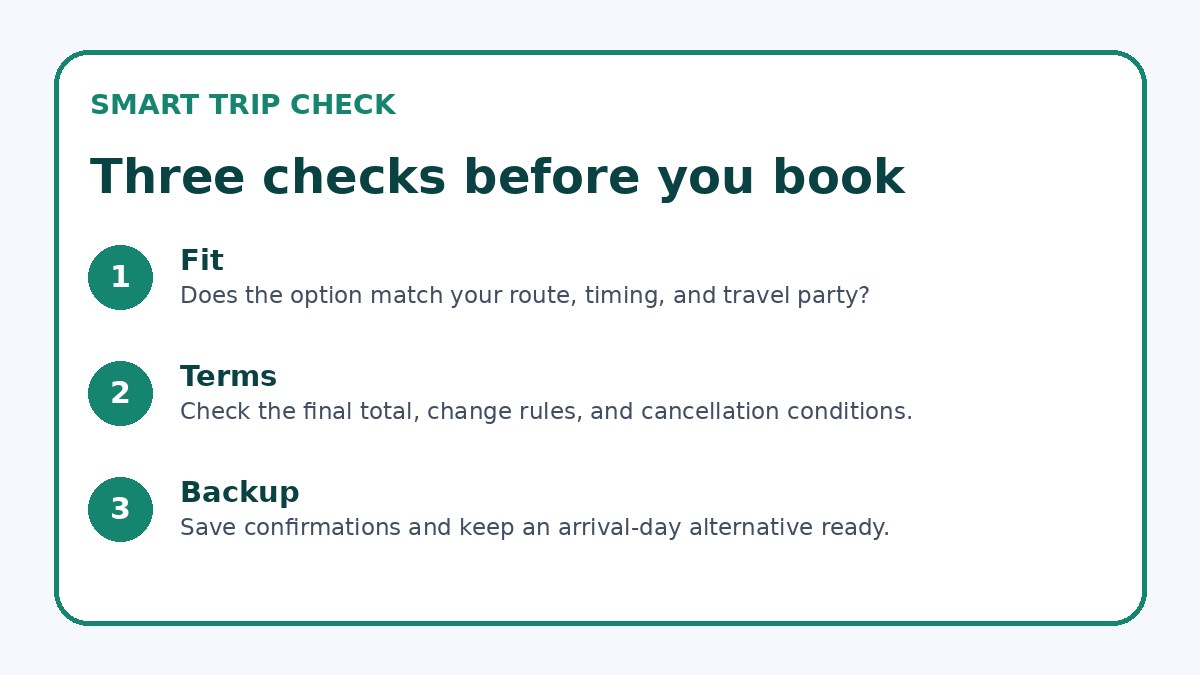
Safety, timing, and solo-traveler considerations
For solo travel, prioritize routes and times that keep you in populated stations and on services with staff presence when possible. Daylight travel reduces complexity for transfers and last-mile navigation. Keep digital and physical copies of tickets and identification, and set calendar reminders for departures and check-in windows. When you plan connecting legs, allow generous buffer time if a single missed connection would leave you without reasonable alternatives late in the day.
Think through how you’ll handle luggage, food, and restroom access between legs. Smaller regional stations may have limited amenities; map nearby cafés or convenience stores as backups. Share your real-time itinerary with a trusted contact and enable tracking features in your ride app if using a private car for any leg. Finally, confirm the exact pickup/drop-off addresses and station platforms on the provider’s final booking page—these details can change, and relying on a general station name can lead you to the wrong terminal.
Before you book
- Identify your top priority (speed, sightseeing, or comfort) and write it at the top of your plan document.
- List anchor hubs between New York City and Boston and map potential legs with at least 30–60 minute transfer buffers.
- Check each carrier’s final booking page for current timetables, ticket rules, baggage allowances, and change/cancellation policies.
- Confirm exact departure and arrival addresses or platform numbers before you leave for each leg and save screenshots of bookings.
- Pack a small daybag with charger, snacks, water, essential documents, and a printout or offline screenshot of your itinerary.
- Share your full itinerary with a trusted contact and enable location sharing during longer legs or unfamiliar transfers.
How to assemble and book a multi-city ground plan
Build your plan in tiers: primary plan (preferred mode and timetable), fallback plan (alternate departure within the same day), and rescue plan (overnight option or different route). Use a single document or app note to list each leg with carrier, departure time, arrival time, station names, transfer duration, and ticket/confirmation numbers. When you book, verify luggage rules, seat reservation requirements, and any mandatory identity checks; confirm these specifics on the provider’s final booking page before purchase.
Stagger bookings when it reduces risk: for example, secure your first long leg and leave shorter, flexible segments unbooked if options run frequently. Conversely, lock in scarce seats for high-demand train runs if they align tightly with your schedule. Keep payment flexibility in mind—use cards or booking platforms with clear refund or change policies, and consider Trip.com as one place to compare current availability and conditions but always verify details on the carrier’s official page before assuming rules or schedules.
Frequently asked questions
Should I book everything in advance or leave some legs flexible?
It depends on your priorities and the frequency of services. Book high-demand or infrequent legs in advance to secure seats and predictable timing. Keep legs that have multiple daily departures flexible if you value spontaneity or want to respond to weather and local events. For solo travel, a hybrid approach often works best: lock down the longest or most critical segments and leave frequent short hops open so you can adjust on the fly. Always check the provider’s final booking page for cancellation and change fees before deciding.
How much transfer time should I plan between different carriers or terminals?
Aim for at least 30–60 minutes between scheduled arrival and the next departure for solo travel, more if you need to change terminals, clear security, or move between curbside and station locations. If a connection requires taking a taxi or ride-share between stations, add extra buffer for traffic. In unpredictable traffic corridors or during peak travel times, consider extending your buffer or choosing an earlier arrival to reduce stress. Verify pickup locations and typical transit times for the local transfer on the provider’s site when possible.
What should I verify on the carrier’s final booking page before purchasing?
On the final booking page, check exact departure and arrival locations (terminal names, addresses, and platform numbers), luggage allowances and restrictions, seat reservation requirements, refund and change policies, and any ID or boarding requirements. Confirm whether the service has staff on-site, onboard power or Wi‑Fi if important to you, and whether transfers require separate tickets. If using a third-party aggregator, cross-check these specifics on the carrier’s official site because operating details can change between vendors.
Final planning note
Planning a multi-city ground-transport itinerary from New York City to Boston as a solo traveler becomes straightforward when you break decisions into priorities, anchors, and legs. Decide first whether you prize speed, comfort, or exploration; choose anchor hubs that fit that priority; and then map each leg with generous transfer buffers. Use a mix of booked and flexible segments depending on service frequency, and always verify specifics—departure locations, luggage rules, and change policies—on the provider’s final booking page before paying. With a simple checklist and a clear fallback plan, you’ll keep options open while minimizing the stress that can come with multiple connections.
Continue planning
Check current options and final conditions
Use the provider page to confirm live availability, the final total, cancellation terms, and every condition that matters to your trip.
This evergreen planning guide was created with AI-assisted drafting and a structured quality review. It does not display live prices, schedules, availability, visa guidance, or provider rankings. Verify current details before booking. Some links are affiliate links; we may earn a commission at no additional cost to you.