If you and your partner want the security of changeable plans while exploring Kyoto’s temples and neighborhoods, prioritizing flexible booking terms will save stress and money when plans shift. Focus first on two practical questions: do you need a fully refundable rate, or will a moderate-change policy (free date changes but limited refunds) be enough? Consider how long before travel you might change dates, whether you value add-ons like breakfast or late checkout, and how comfortable you are using travel protection or credit-card benefits as a backup. This article gives a compact decision path, explains the tradeoffs between cheaper advance rates and more flexible fares, and shows which booking details to verify on the provider’s final page before you commit.
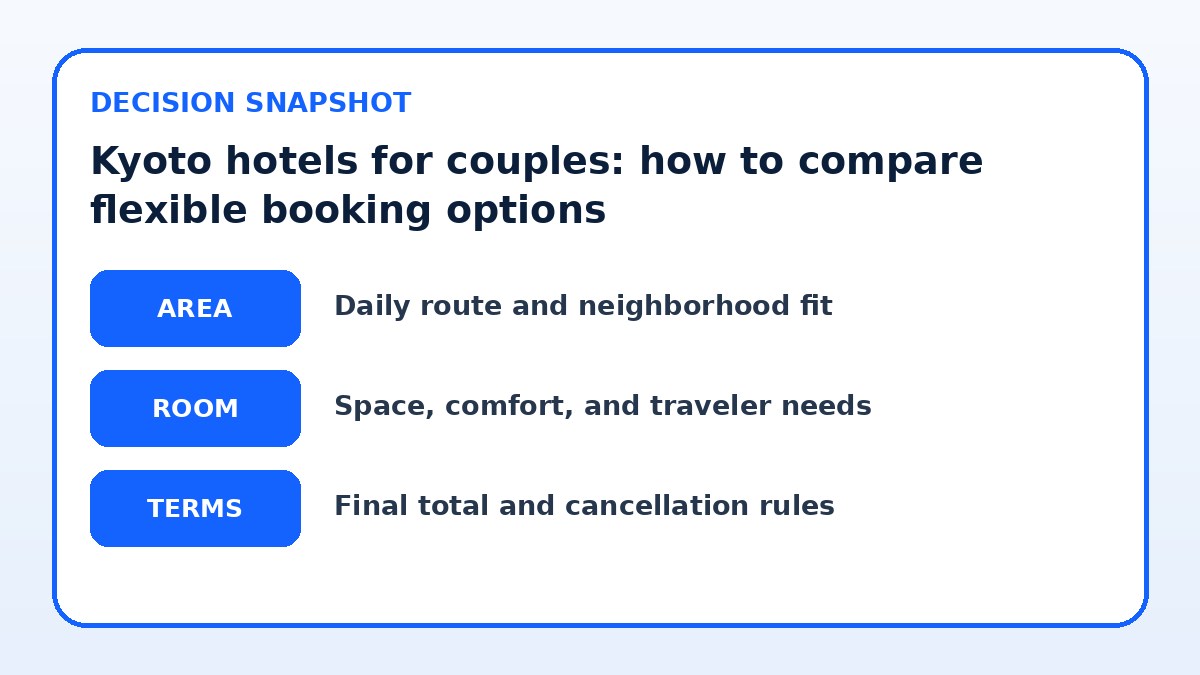
See current options before you compare the details
Availability and final conditions change. Open Trip.com now or keep reading for the practical comparison.
Decide how much flexibility you really need
Start with honest questions about your trip’s uncertainty: are you fixed to specific dates for events or simply aiming for a season? Couples coordinating family obligations, work commitments, or festival attendance should expect higher likelihood of change. If both schedules are stable and you’re booking months ahead to secure a preferred room category, a semi-flexible or nonrefundable advance purchase can be a reasonable gamble. But if either partner faces variable work shifts, potential travel restrictions, or health concerns, favor fully refundable rates or those that allow unlimited date changes without large penalties.
Also consider the length and purpose of your stay. For a short city-break of two or three nights, the financial penalty of changing plans may be smaller in absolute terms, so a cheaper nonrefundable rate might be acceptable. For weeklong or longer stays, losses compound and flexibility becomes more valuable. Think through realistic scenarios—minor schedule changes, one partner needing to cancel, or a delayed international connection—and pick terms that keep your out-of-pocket risk within your comfort range.
Compare what “flexible” actually covers
Hotels describe flexibility in several ways: fully refundable before a cancellation deadline, free date changes, credit toward future stays, or partially refundable rates with cancellation fees. Read the fine print: a “flexible” badge can mean free cancellation up to 48 hours before check-in but not later; it can also allow date changes only if the new dates have equal or greater rates. Check whether the flexibility applies to the entire booking cost or excludes extras such as breakfast, airport transfers, or special packages.
Verify provider-specific actions on the booking page before you finalize: exact cutoff times for cancellation or changes, whether refunds go to the original payment method or as hotel credit, and any administrative fees. If you plan to combine rates—such as a prepaid spa package plus a flexible room—confirm whether the package follows the flexible policy or is treated separately. These distinctions determine whether a booking labeled flexible truly solves your potential future needs.
| Approach | Best for | Tradeoff to check |
|---|---|---|
| Fully refundable room rate | Couples with uncertain dates or those who need maximum peace of mind. | Higher nightly rate but minimal financial loss if plans change. |
| Flexible rate with free date changes | Couples who may shift travel dates but can rebook similar nights. | Sometimes limited to equal-or-higher rates; may require last-minute availability. |
| Nonrefundable advance-purchase rate | Price-sensitive couples with fixed schedules and low cancellation risk. | Lowest posted price but full loss if you cancel or change dates. |
| Nonrefundable rate plus external insurance or card protection | Couples seeking savings while transferring some risk to a third party. | Insurance adds cost and requires claims documentation; not all reasons are covered. |
Ready to check the option that fits your plan?
Use your exact dates and traveler details so the provider page can show the current total and conditions.
How to weigh price savings against cancellation risk
A simple way to compare options is to calculate loss exposure: subtract the refundable rate from the nonrefundable rate, then divide by the number of nights to see per-night risk. Consider your likelihood of cancelling; if it's low, the savings may justify tighter terms. Couples who are price-sensitive and traveling during stable seasons often accept advance-purchase rates for the savings. However, if a cancellation would cause significant inconvenience or financial strain, choose the option with lower loss exposure even if the headline rate is higher.
Also layer in other protections before opting for nonrefundable rates. Check whether your credit card offers travel interruption or cancellation coverage for hotel stays; some cards provide automatic protections that effectively increase your flexibility. Separate travel insurance policies can also reimburse nonrefundable costs for covered reasons. When using external protections, confirm what documentation the insurer needs and whether the insurer accepts provider credits instead of cash refunds.
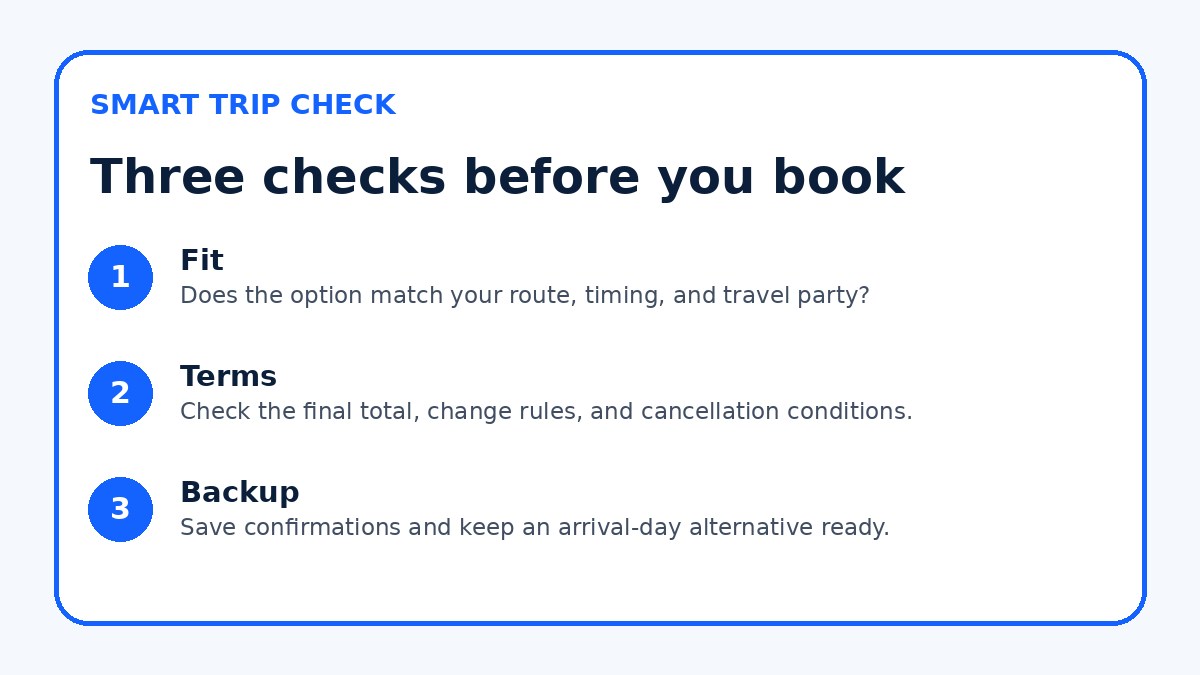
Before you book
- Read and save the exact cancellation and change deadlines including the time zone from the hotel’s confirmation page.
- Confirm whether refunds are returned to your original payment method or issued as hotel credit and save that wording.
- Check if included extras (breakfast, transfers, experiences) follow the room’s flexibility or have separate nonrefundable terms.
- Verify whether date changes are free and if they require paying any rate difference for the new nights.
- Review your credit card’s travel protections and note contact details and required documentation for claim filing.
- If using travel insurance, ensure covered reasons include your likely scenarios and keep the policy number and claims process accessible.
Practical steps to verify before you book
Before you click confirm, check five items on the booking page: exact cancellation deadline with time zone, whether date changes are free and how they’re processed, whether refunds are full or partial and how long refunds take, which extras are nonrefundable, and whether the rate includes any third-party restrictions. If the property or booking channel lists a contact number or email, save it for quick changes; sometimes hotels will accommodate late adjustments if contacted directly. Trip.com can be useful to compare availability and current conditions, but always confirm final terms on the hotel’s own booking confirmation.
Document the policy by saving screenshots or downloading the confirmation PDF, and note the full policy text or cancellation link. If you plan to use credit-card protections or external insurance, make a separate record of the card benefits or policy number and the claim process. Finally, decide how you will handle a change—who will call or email, and what deadlines to meet—so you can move quickly if plans shift and avoid penalties.
Frequently asked questions
Is it safer for couples to book a refundable rate in Kyoto or rely on travel insurance?
Both options reduce risk, but they work differently. A refundable hotel rate directly protects your prepaid lodging cost and is simple: cancel within the stated window and the hotel issues a refund (confirm exact timing and method). Travel insurance can cover nonrefundable costs, medical emergencies, and other disruptions, but policies vary in covered reasons and documentation requirements. For many couples, combining a lower flexible rate with insurance gives layered protection: the hotel policy handles straightforward changes while insurance covers medical or travel-disruption scenarios that hotels typically won’t accept.
If I book a flexible rate but need to change dates, should I contact the hotel or the booking platform first?
Check the booking confirmation to see who manages changes for your reservation. Direct bookings are usually handled by the hotel; third-party platforms often require that you request changes through their system. Contact the entity listed on your confirmation first and keep records of all communications. If the platform mediates, follow its prescribed process to avoid missed deadlines. In urgent situations, call the hotel directly while also messaging the platform so you have parallel records of the request.
How do added perks like breakfast or late checkout affect flexibility for couples?
Perks can have separate terms: a room rate may be refundable, while an included experience or package add-on could be nonrefundable or refundable with a different deadline. Some hotels advertise a flexible room rate but treat bundled packages as prepaid extras. Always expand the booking’s detailed policy section to see whether perks follow the main rate. If a perk matters to you—such as a special breakfast or spa voucher—confirm whether cancelling the room also cancels or refunds the perk, and note any separate cancellation window.
Final planning note
Choosing the right flexible booking terms for a couples’ stay in Kyoto is about matching the level of uncertainty in your plans to the financial exposure you can accept. Start by deciding whether you need full refunds, free date changes, or are comfortable with advance-purchase savings. Read the exact policy language on the provider’s final booking page—cancellation times, refund method, and how extras are treated—and document those details. Consider layering protections with credit-card benefits or insurance if you want to save upfront but limit downside risk. With a clear decision rule and the verification steps above, you and your partner can book with less stress and more confidence.
Continue planning
Check current options and final conditions
Use the provider page to confirm live availability, the final total, cancellation terms, and every condition that matters to your trip.
This evergreen planning guide was created with AI-assisted drafting and a structured quality review. It does not display live prices, schedules, availability, visa guidance, or provider rankings. Verify current details before booking. Some links are affiliate links; we may earn a commission at no additional cost to you.