
If you’re heading to Busan with extra bags—sports gear, gifts, or photographic equipment—flexible travel dates can be one of the simplest levers to reduce hassle and unexpected fees. The practical plan: widen your search ±3–7 days around your ideal travel window, compare fares with different baggage allowances, and check arrival options (airport to city) that accommodate oversized luggage. That quick approach helps you spot cheaper flights or trains that include more baggage or allow affordable paid add-ons. It also reveals hotel or guesthouse check-in flexibility and storage options that better fit your load. Below you’ll find how to trade time versus cost, what to verify before booking, and a decision checklist so you can pick dates that work for both pockets and suitcases.
See current options before you compare the details
Availability and final conditions change. Open Trip.com now or keep reading for the practical comparison.
How flexible dates change baggage costs and convenience
Shifting your travel by a few days can change what a fare includes and how much you pay to bring extra baggage. Airlines and some long-distance train services sell multiple fare classes with different baggage allowances; the cheapest seats often exclude checked bags or restrict weight. Around busy travel periods or weekends, inventory shifts and lower-cost fares that exclude luggage may sell out, pushing you into higher-cost options. By searching a flexible date range you may find midweek departures or arrivals that offer fares with more generous baggage allowances or cheaper paid add-ons, or simply shorter transfer windows in the city that make handling bags easier.
Flexibility also touches ground logistics: arriving at different times of day affects transfer options and whether taxis, shuttle services, or public transit can handle oversized items conveniently. Early-morning or late-night arrivals sometimes have fewer staffed desks at stations and airports, which can make checking oversized bags harder. Conversely, adjusting dates to arrive during staffed hours increases your options—hotel early check-in, luggage storage desks, or station services—so your extra luggage becomes a manageable factor rather than a travel constraint.
What to compare when searching Busan travel deals
When you run flexible-date searches, compare three things for each itinerary: the fare class and baggage allowance, the total journey time including connections, and the likely arrival logistics for bulky items. For flights, check whether the fare includes checked baggage or only carry-on; if not included, inspect the carrier’s add-on price on the final booking page. For trains, confirm weight and size limits on the operator’s site and whether staff assist with oversized items. For both, note how many connections are involved—each transfer increases the physical effort of moving bags.
Also evaluate accommodation details that interact with luggage: whether the property has elevator access, luggage storage, or late check-in options. A cheaper fare that saves on the ticket but forces you to haul bags through narrow stairs or wait for a storage counter may cost you time and stress. Balance transport savings against these on-the-ground costs when choosing dates. When in doubt, message the hotel or station service to confirm storage fees, elevator availability, and the recommended arrival entrance for travelers with heavy bags.
| Approach | Best for | Tradeoff to check |
|---|---|---|
| Travel midweek with included baggage | Travelers who prefer fewer transfers and lower add-on baggage costs | May require adjusting personal schedules; midweek fares may have less flexibility on rebooking |
| Weekend travel on the cheapest base fare | People prioritizing ticket price over convenience of luggage handling | Often excludes checked bags and may force higher transfer effort or overnight waits |
| Flexible-date direct arrival during staffed hours | Those with bulky items who value simpler on-the-ground logistics | Direct options can be more expensive; you may sacrifice lower fares available on other days |
| Pick dates for cheaper accommodation with storage | Travelers able to move some costs to lodging instead of transport | May save transport fees but requires confirming storage availability and potential fees |
Ready to check the option that fits your plan?
Use your exact dates and traveler details so the provider page can show the current total and conditions.
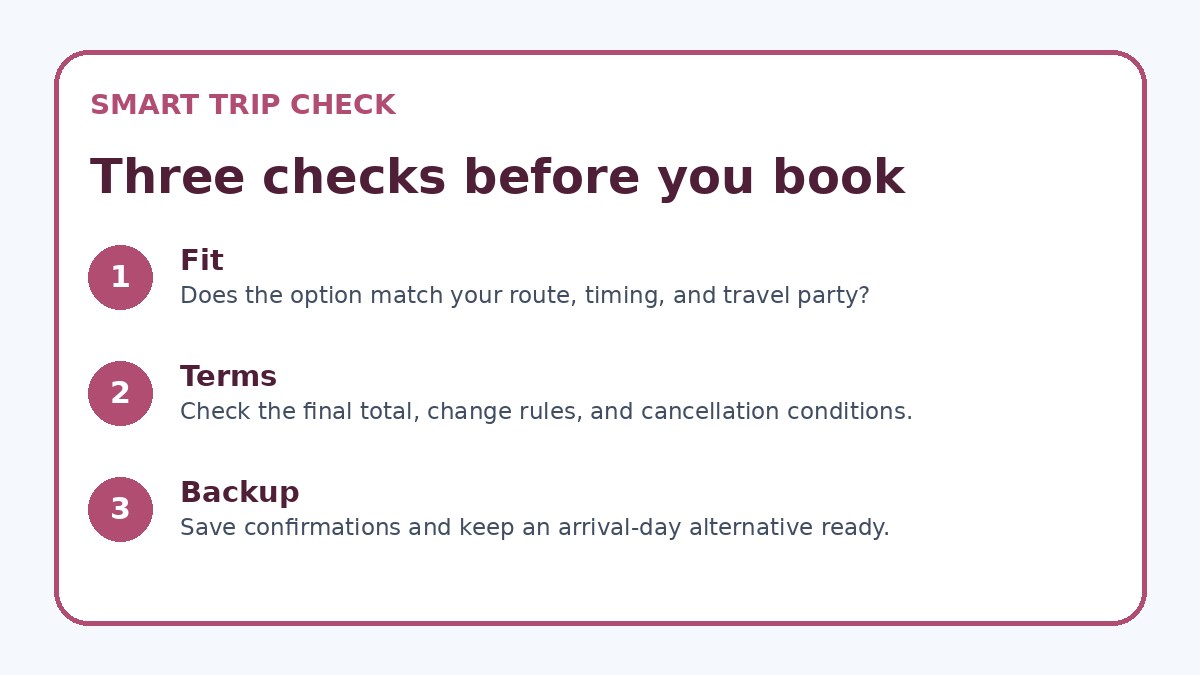
Tradeoffs: time, money, and how much you’ll carry
Choosing a midweek date to secure better baggage terms may save money, but it can mean adjusting work schedules or skipping events. If your luggage is unusually heavy or bulky, the convenience of a direct arrival during staffed hours could outweigh a lower fare that requires inconvenient transfers. Think about who’s traveling with you; an extra pair of hands makes transfers simpler, and paid porter services may be worth the price if your itinerary includes multiple legs. Calculate both the monetary add-ons and the value of your time and energy when comparing dates.
Packing decisions interact with date choices. If moving dates lets you take a cheaper fare with no checked bag, consider whether re-packing or shipping some items ahead to your accommodation is feasible and cost-effective. Shipping or courier services in Korea can be reliable, but you must verify delivery windows to your chosen dates. In short: more flexibility on dates gives you more ways to trade off actual ticket cost against the physical effort and logistics of moving extra luggage.
Before you book
- Run fare searches across a ±3–7 day window to compare baggage allowances and add-on prices for each date.
- Open each carrier’s final booking page and document the exact baggage weight, piece limits, and add-on costs before choosing dates.
- Confirm arrival time logistics: whether taxis, shuttles, or station staff are available when your luggage will need handling.
- Message or call your chosen accommodation to verify elevator access, luggage storage, and any storage fees tied to your dates.
- Compare the physical effort of transfers (number of connections, stairs, distance between platforms) against potential savings.
- If needed, research local courier or luggage-shipping services for your dates and confirm estimated delivery windows before booking.
Practical steps to book with confidence
Before finalizing a booking, always open the carrier or operator’s final booking page to confirm baggage policy details, add-on prices, and the size/weight limits for checked and carry-on items. Do not rely on summary screens or third-party copy alone—policies and fees change, and those details determine whether a flexible-date bargain is genuinely workable for your luggage. If connecting flights or trains are on different carriers, verify transfer allowances and whether separate tickets require re-checking bags at transfer points.
For accommodation and transfers, contact providers when possible: confirm early/late check-in options, luggage storage fees, elevator access, and the nearest station entrance for taxis or shuttle drop-offs. If you plan to use airport limousines, private transfers, or local couriers, check whether they accept oversized bags and the extra fees involved. Finally, build a buffer into your schedule: choosing dates that allow a day of slack reduces the pressure of strict arrival windows when moving heavy belongings.
Frequently asked questions
Can flexible dates really save money when I have extra luggage?
Yes—flexible dates can reduce the total cost if they let you book fares that include checked baggage or cheaper add-ons. Midweek departures often have a different mix of fare classes than weekends, and shifting by a day can avoid peak inventory that excludes baggage allowances. However, always check the carrier’s final booking page for exact baggage terms and total add-on prices; a slightly cheaper ticket with expensive baggage fees or more difficult transfers can end up costing more in time and money.
Should I prioritize direct journeys or cheaper fares with more transfers?
If you’re traveling with heavy or bulky items, a direct journey or one with fewer transfers is usually easier even if the ticket costs a bit more. Each connection adds physical handling and potential re-checking of bags, increasing stress and the chance of delays. That said, if flexible dates let you find a cheaper option that still has manageable transfer logistics (short, staffed transfers with elevators), the savings can be worth it. Compare the number of transfers, transfer times, and station facilities before booking.
What arrival times and accommodations make Busan easier with extra luggage?
Arriving during staffed daytime hours simplifies check-in, luggage storage, and finding taxis or shuttle services that can handle oversized items. Choose accommodations with elevator access, luggage storage, or flexible check-in to avoid hauling bags up stairs or waiting late for a desk. If your dates include early mornings or late nights, confirm the front desk hours and the best entrance for taxi drop-offs. Always contact the property to verify these details on the dates you plan to travel.
Final planning note
Flexible dates are a practical tool when you’re planning a Busan trip with extra luggage. Small date shifts can change fare classes, baggage allowances, arrival logistics, and accommodation options—sometimes turning an awkward, costly journey into a manageable one. The key is not just finding the lowest headline fare but checking the carrier’s final booking page, counting transfers, and confirming hotel amenities and storage for your specific dates. Use flexible searches, document baggage rules, and weigh the time-versus-cost tradeoffs. With a little planning, you can pick dates that reduce both fees and the physical strain of moving your belongings in Busan.
Continue planning
Check current options and final conditions
Use the provider page to confirm live availability, the final total, cancellation terms, and every condition that matters to your trip.
This evergreen planning guide was created with AI-assisted drafting and a structured quality review. It does not display live prices, schedules, availability, visa guidance, or provider rankings. Verify current details before booking. Some links are affiliate links; we may earn a commission at no additional cost to you.