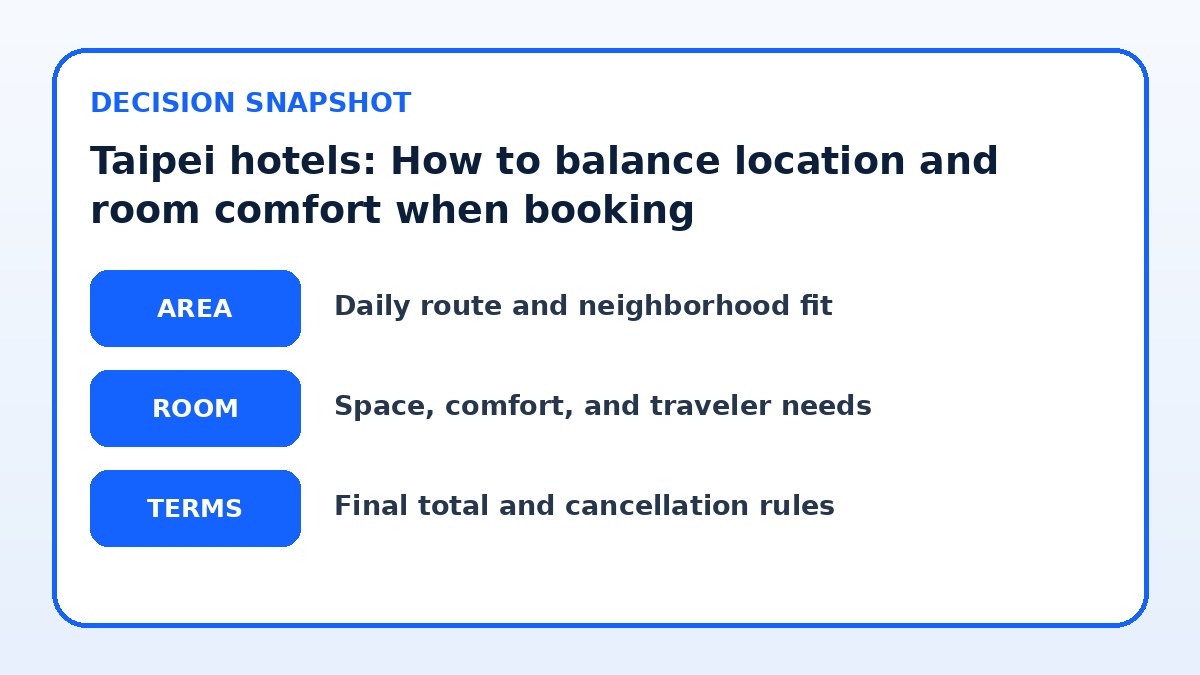
If you want to make smart choices about Taipei hotels as a solo traveler, start by deciding whether mobility or private comfort matters more for this trip. For short stays focused on museums, food and night markets, a room near Taipei Main Station or an MRT hub saves time and reduces taxi costs. If you're planning long work sessions, late-night rest after trekking Yangmingshan, or simply value a quieter room to recharge, opt for a hotel in a calmer neighborhood even if it costs more transit time. Think in terms of tradeoffs: location saves time and can lower incidental transport costs; room comfort affects sleep quality and how refreshed you'll feel exploring. Read hotel pages and reviews carefully for room size, noise policies, and exact transit links, and confirm the property's cancellation and check-in details on the booking page before you reserve.
See current options before you compare the details
Availability and final conditions change. Open Trip.com now or keep reading for the practical comparison.
Decide what your days will demand
Start by mapping how you plan to spend each day in Taipei. If most of your hours will be in central areas like Ximending, Zhongshan, or near Taipei Main Station, staying adjacent to an MRT line will shave travel time and let you return midday for a rest. For food-focused itineraries—night markets, street stalls, and late dinners—choose a location with nightlife nearby to reduce late-night travel. If your trip includes day trips (northern coast, Jiufen, or Yangmingshan), weigh proximity to bus terminals and MRT interchanges; sometimes a slightly further but better-connected hotel reduces total transit hassle.
If you expect to work from your room or need restful nights after long hiking days, itemize what you need from the room: a stable desk, reliable lighting, strong Wi‑Fi, blackout curtains and noise control. These are practical needs often missing in small city center rooms. Balance those needs against the extra time and taxi cost it might take to reach attractions. A clear daily plan makes it easier to choose a hotel that supports your rhythm rather than forcing you to adapt to the accommodation.
Neighborhoods: tradeoffs between buzz and tranquility
Neighborhoods around Taipei Main Station, Ximending and Zhongxiao East are energetic and convenient for public transport, shopping and food. Staying here means little time spent transferring and easy late-night returns. The tradeoff can be smaller rooms, louder streets and commercial activity that creeps into early morning. For solo travelers who prioritize easy access to transit and want to maximize sightseeing hours, a lively location often pays off—just verify the noise-reduction features the hotel offers and whether windows are double-glazed or face away from the street.
Districts such as Da’an, Songshan and parts of Beitou or Yangmingshan are calmer and better if you value larger rooms and quieter nights. These areas usually offer more residential-style hotels and boutique stays that prioritize privacy and spacious interiors. The downside is that you'll spend more time on transit when going to central attractions. Think through your late-night plans and how comfortable you are taking taxis or late MRT rides when choosing between buzz and tranquility.
| Approach | Best for | Tradeoff to check |
|---|---|---|
| Stay near an MRT hub | Maximizing sightseeing time and easy late-night returns | Smaller rooms and more street noise are common, may impact rest |
| Choose a quieter residential neighborhood | Better sleep, larger rooms and a local atmosphere | Longer transit times to major attractions and night markets |
| Book a compact central room | Travelers who spend daylight hours exploring and only need a bed | Limited workspace, storage and potential for noisy surroundings |
| Pay a bit more for upgraded room comfort | Solo travelers needing workspace, soundproofing, or extended downtime | Higher nightly cost and possibly further from main transit nodes |
Ready to check the option that fits your plan?
Use your exact dates and traveler details so the provider page can show the current total and conditions.

Room choices that matter to solo comfort
For solo travelers the obvious features are not luxury but functionality: adequate closet space, a comfortable bed, a desk and good lighting for work or planning, stable Wi‑Fi, and strong soundproofing. Smaller single rooms can be perfectly fine for restless travelers who spend most of their day out, but if you plan to be in the room for work, reading, or long rests, prioritize a larger room category or an upper-floor room facing away from the street. Request room orientation and confirm bed size and workspace details on the booking page to avoid surprises.
Also consider bathroom quality and in-room amenities that elevate a single traveler’s experience: a reliable hot shower, a place to dry or hang laundry, safety deposit options, and a kettle or coffee maker. Hotels sometimes show staged photos—ask the property or examine recent guest photos for realistic expectations. If you have specific needs—like stronger Wi‑Fi for video calls or hypoallergenic bedding—ask the hotel directly and make sure the booking confirmation includes any promised accommodations.
Before you book
- Map your daily itinerary and mark which MRT lines and exits you’ll use most when choosing hotel location.
- Request or confirm room orientation (street-facing or courtyard), exact bed size, and whether windows have shutters or double glazing.
- Ask the hotel to confirm Wi‑Fi speed and the availability of a dedicated desk or work surface if you plan to work from the room.
- Confirm the property’s official check-in and late-arrival policy on the booking page, and save any written confirmation about flexible check-in.
- Compare recent guest photos and noise comments in reviews for the exact room category you’re booking to avoid surprises.
- Check whether the hotel offers luggage storage, laundry options, and in-room amenities you need, then verify these on the booking page.
Practical booking checks and how to compare options
When comparing Taipei hotels, list three non-negotiables—such as location near a specific MRT line, a quiet room, and late check-in—and filter properties through them. Look for hotels that explicitly state proximity to MRT stations and which exit to use; transit convenience beats proximity claims without clear directions. If multiple properties meet your criteria, compare room size, bed configuration, and cancellation terms; these directly affect how comfortable your stay will be and how flexible your plans can remain.
Use recent traveler photos and detailed reviews to confirm noise levels and room layouts rather than relying solely on promotional descriptions. When provider-specific facts might change—like shuttle availability, check-in hours, breakfast service or room amenities—verify these items on the hotel's latest booking page before confirming. For an extra comparison, you can check current availability and conditions on Trip.com, but always trust the hotel's own booking page for final policies and specific room details.
Frequently asked questions
Is it better to stay near Taipei Main Station or in a quieter neighborhood for a solo traveler?
Choose Taipei Main Station or another MRT hub if you expect to move around a lot—museums, day trips, and markets are easier to reach with minimal transfers. If dependable sleep and a quiet room are crucial—because you’ll work from the room or need to recharge after trekking—favor a quieter neighborhood even if it adds transit time. Think about late-night plans, tolerance for street noise, and whether occasional taxis are acceptable; those practical factors usually decide which option fits your travel style.
How can I ensure the room I book will be quiet and comfortable?
Look for explicit hotel statements about soundproofing, request a higher-floor or courtyard-facing room, and check recent guest photos showing actual windows and street views. Ask the hotel directly about noise policy and whether rooms have blackout curtains and double glazing. Confirm the bed size, workspace availability, and Wi‑Fi on the booking page and save any written replies from the property so you have a record of the promises you relied on when choosing the room.
What transportation factors in Taipei should influence my hotel choice?
Prioritize proximity to an MRT line and a known exit for most sightseeing; exits often determine how long the walk is to your hotel. If you plan day trips to coastal towns or Yangmingshan, check bus terminal or transfer requirements. Consider how late you’ll be returning to the hotel—availability of taxis, 24-hour convenience stores nearby, and MRT late-night schedules matter. For any specific transit connections or shuttle services, verify the provider’s current details on the hotel’s booking page before you commit.
Final planning note
Balancing location and room comfort for Taipei hotels as a solo traveler comes down to being honest about how you’ll spend your time. If your days are tightly scheduled and you prioritize efficiency, choose a centrally located hotel with clear MRT access and validate exact station exits. If sleep quality, workspace, or a quieter environment will shape your enjoyment, accept extra transit time for a larger, better-insulated room. Always verify the specific room category’s photos and the hotel’s current check-in, amenity and noise policies on the booking page before booking. With a clear itinerary and these checks, you’ll pick the hotel that complements how you want to experience Taipei.
Continue planning
Check current options and final conditions
Use the provider page to confirm live availability, the final total, cancellation terms, and every condition that matters to your trip.
This evergreen planning guide was created with AI-assisted drafting and a structured quality review. It does not display live prices, schedules, availability, visa guidance, or provider rankings. Verify current details before booking. Some links are affiliate links; we may earn a commission at no additional cost to you.