Practical answer first: couples should pick stations and terminals based on where they’re staying, how much luggage they have, comfort with transfers, and whether they prefer fewer steps or more flexibility. For most, a single-city pickup (e.g., Manhattan departure) and a Boston arrival near central neighborhoods reduces taxi time and stress. If you value simplicity, choose a service that uses major, central terminals with straightforward connections; if you value cost or schedule options, expect at least one transfer or a walk between terminals. Before booking, confirm the exact terminal or platform shown on the carrier’s final booking page, understand how the transfer is made (shuttle, subway, taxi, walking), and check station amenities that matter to you as a couple—restrooms, waiting areas, and luggage storage.
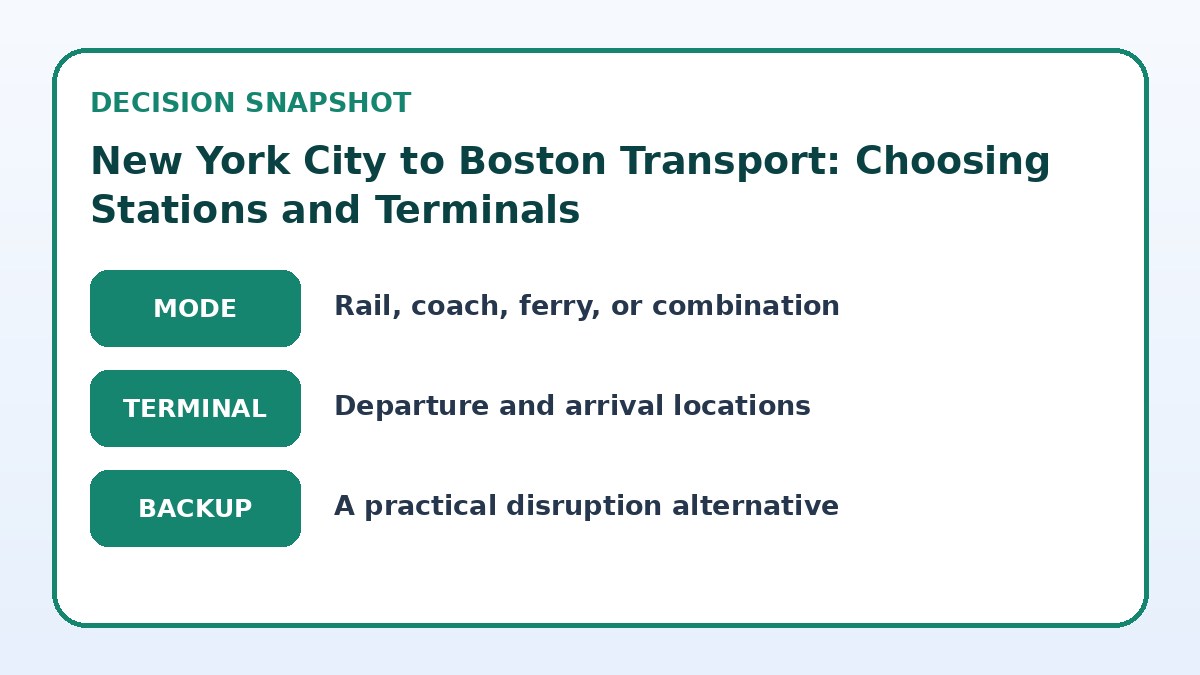
See current options before you compare the details
Availability and final conditions change. Open Trip.com now or keep reading for the practical comparison.
Decide by door-to-door time, not just vehicle duration
Couples often focus on travel time from train-to-train or gate-to-gate, but the real metric is door-to-door. That includes time to get from your NYC lodging to the departure station or terminal, time spent checking tickets and boarding, any transfer time between terminals or stations, and the final transit from your Boston arrival point to your accommodation. For instance, a slightly longer rail trip that drops you at a central Boston terminal could be faster overall than a faster flight that lands at an airport farther from your neighborhood.
When weighing options, map each leg on a timeline and add realistic buffers for security lines, luggage handling, and local traffic. Couples should also factor in how comfortable they feel navigating a new city together—if one partner prefers fewer logistical steps, prioritize options with simpler station transfers even if they take a bit longer on paper.
Choosing departure points in New York City
New York offers multiple departure points: central Manhattan terminals, bus stations, and airports. Which to use depends on where you’re staying, how you prefer to travel, and how much you want to carry. Manhattan terminals often mean shorter pre-departure transfers, saving time and stress. Bus terminals can be cheaper and offer later or earlier departures, while airports add security and early arrival requirements. For a romantic or relaxed trip, reducing pre-departure travel within NYC is usually worth a small schedule tradeoff.
If you plan to combine sightseeing and travel, think about how the departure location fits into your day. Leaving from a central train or bus terminal can let you squeeze in a morning coffee nearby and walk to the platform together. Always verify the exact terminal name and the recommended arrival time on the carrier’s final booking page, and check local subway or taxi options for the most efficient way to get from your lodging to the chosen departure point.
| Approach | Best for | Tradeoff to check |
|---|---|---|
| Central-to-central (major NYC terminal to central Boston station) | Couples prioritizing minimal transfers and quick arrival in Boston neighborhoods | Often fewer schedule choices and potentially higher fares |
| Airport departure or arrival (adds flight leg) | Couples seeking speed on the main leg or using airline loyalty benefits | Adds security time and longer door-to-door travel if airports are out of town |
| Bus-to-train or multi-modal mix | Budget-conscious couples who value flexible departure times | More transfers and handling luggage between modes can increase stress |
| Split journey with local transit connections | Couples combining sightseeing stops en route or saving on central terminals | More complex timing and higher risk of tight transfers |
Ready to check the option that fits your plan?
Use your exact dates and traveler details so the provider page can show the current total and conditions.
Transfers and arrival choices in Boston
Boston’s transport options concentrate around a few key stations and airports. Which arrival is best depends on your final neighborhood, comfort with public transit, and whether you want an easy step into sightseeing. Arriving at a central station that connects directly to the T (Boston’s subway) often gets you into most neighborhoods faster than landing at an outlying airport. If your plans include downtown restaurants or historic sites, prioritize terminals with direct transit links rather than peripheral airports.
Couples should also think about the transfer experience itself: a short walk between platforms is low-friction, but a transfer that requires a bus or taxi and navigating luggage can feel like a nuisance. If a transfer is unavoidable, plan it during daylight and leave extra time between connections. Confirm the carrier’s last-leg terminal or platform on the official booking confirmation, and if you have limited mobility or heavy bags, check for elevators, escalators, or available assistance at each station.
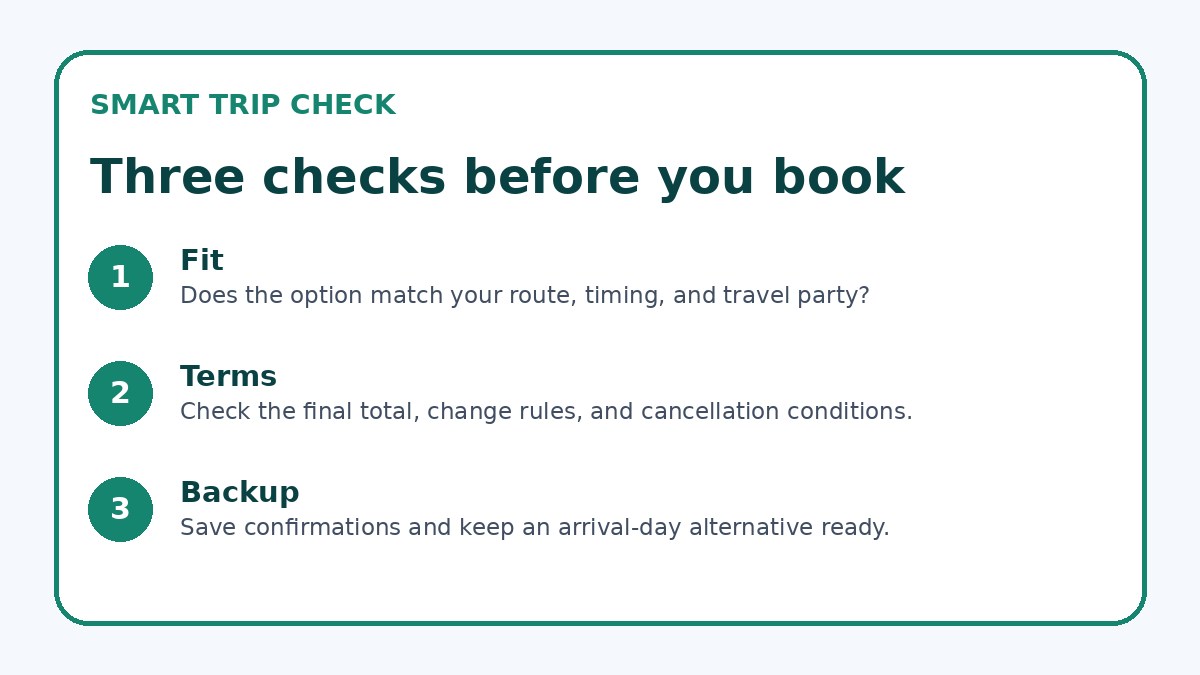
Before you book
- Check the exact departure and arrival terminal or station name on the carrier’s final booking page and screenshot or save it.
- Map door-to-door travel time from your accommodation to departure and from arrival station to your lodging, including likely transit or taxi options.
- If you have luggage or mobility needs, verify station accessibility (elevators, ramps) and look for luggage storage or assistance options at both ends.
- Reserve seats or buy reservations for trains or premium bus services if available to ensure you sit together and reduce stress during boarding.
- Plan at least a 45–90 minute buffer between connecting legs to allow for delays, security, and luggage transfer; increase buffer for airport flights.
- Pack an easily accessible small bag with essentials (phones, chargers, ID, a light jacket, snacks, any medications) to avoid rooting through checked luggage during transfers.
Tradeoffs: cost, convenience, schedules, and stress
More convenient departure and arrival terminals usually cost more or have fewer schedule options; the cheapest or most flexible tickets often require extra transfers or arrive at less central terminals. Couples should decide which tradeoff they’re comfortable with: saving money but managing more steps, or paying more for a simpler, single-connection experience. Also consider daily rhythm—early morning or late-night travel changes the value of a shorter pre- or post-transfer trip because public transit frequency varies.
Another tradeoff is predictability versus spontaneity. A direct, central-to-central route is predictable and lowers the chance of missed connections, which many couples prefer for a relaxing trip. If you enjoy exploring and are willing to allow extra time, choosing a less direct route can free up budget for experiences in Boston. Whatever you pick, verify terminal and station details on the carrier’s final booking page, check scheduled transfer times, and build realistic buffers into your plan.
Frequently asked questions
How do we choose between a central train station and flying when traveling from New York City to Boston?
Decide by door-to-door convenience, not just travel time. Trains that depart from central NYC terminals and arrive at central Boston stations often get you into the city faster overall because they avoid airport security and additional transfers. Flying can be faster in-flight but adds time for check-in, security, and ground transport at both airports. For couples who want a simple, lower-stress arrival near hotels and restaurants, a central train station arrival is usually the better choice; if you prioritize in-air speed or need frequent flyer perks, compare total transfer times carefully on booking pages.
What should couples verify on the booking page to avoid surprises at stations and terminals?
Always confirm the exact terminal or station name, platform or gate information if shown, baggage rules, recommended arrival times, and any required ID or check-in steps. For services with transfers, note whether the connection uses the same terminal or requires a shuttle, public transit, or taxi. If details like seat assignments, assistance availability, or last-mile transport are important, check those explicitly on the provider’s final booking page. Trip.com can be used to compare current options, but always cross-check the carrier’s official confirmation for operational details.
How much buffer time should we leave between connections when traveling together?
For surface-to-surface transfers (train to bus or train to train), a 45–60 minute buffer is a good baseline; this accounts for walking between platforms, ticket checks, and minor schedule variations. If you’re navigating unfamiliar stations, carrying heavy luggage, traveling during peak hours, or connecting to or from flights, increase the buffer to 90 minutes or more. Couples should also consider their personal tolerance for risk—if a missed connection would ruin your evening plans, choose longer buffers or direct options even if they cost more.
Final planning note
Planning station and terminal transfers for a New York City to Boston trip comes down to balancing convenience, time, and stress. Couples who want a smooth, romantic arrival should prioritize central terminals that minimize taxi time and connect easily to downtown transit. If cost or schedule flexibility matters more, expect extra transfers and plan realistic buffers. Before booking, verify exact terminals, transfer methods, seat assignments, and accessibility details on the provider’s confirmed booking page. Use a simple timeline to compare door-to-door options and pick the one that best matches your travel priorities as a couple—whether that’s fewer steps, lower cost, or the freedom to sightsee en route.
Continue planning
Check current options and final conditions
Use the provider page to confirm live availability, the final total, cancellation terms, and every condition that matters to your trip.
This evergreen planning guide was created with AI-assisted drafting and a structured quality review. It does not display live prices, schedules, availability, visa guidance, or provider rankings. Verify current details before booking. Some links are affiliate links; we may earn a commission at no additional cost to you.