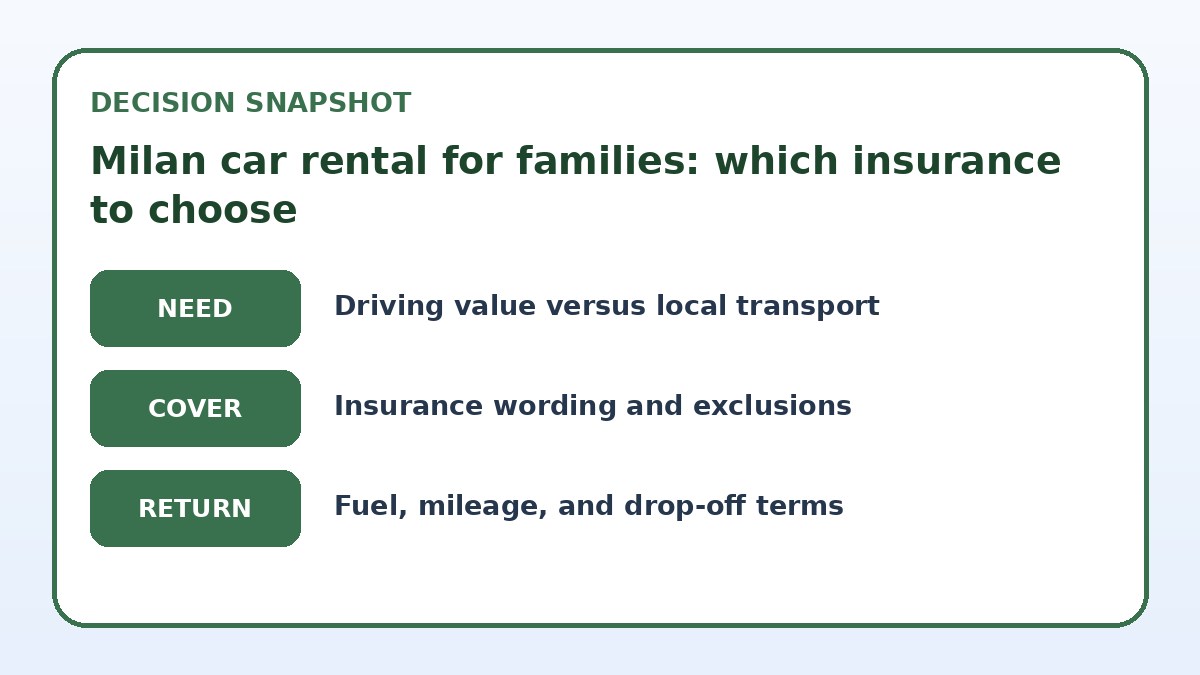
If you’re renting a car in Milan with family, focus first on three practical things: collision damage rules (CDW/LDW), liability coverage limits, and how deductibles or excesses are handled. Those items determine how much you might pay if something goes wrong and whether a third-party or credit-card benefit will actually reduce your out-of-pocket cost. Read the policy wording for who is an authorized driver, whether child seats and extra drivers are included or charged, and which locations (airport vs downtown) affect insurance conditions. Before you complete a booking, compare the rental company’s insurance language with any coverage your travel card or standalone insurer provides and verify final terms on the rental agreement and the provider’s booking page.
See current options before you compare the details
Availability and final conditions change. Open Trip.com now or keep reading for the practical comparison.
Understand core cover: CDW/LDW, theft, and liability
Collision Damage Waiver (CDW) or Loss Damage Waiver (LDW) is the phrase you’ll see most often. It usually limits the rental company’s claim against you after a crash or damage, but it rarely removes all financial responsibility by itself. The wording will specify an excess—also called a deductible—that you must pay up to a capped amount. Families should note exclusions such as damage to tyres, windscreens, undercarriage, and damage while using off-road routes or driving in restricted zones around Milan. Those exclusions change the effective protection level, so read the section that lists what is and isn’t covered.
Theft protection covers loss of the vehicle if stolen and often has its own excess. Verify whether theft cover is conditional on leaving keys in a secure place or locking the vehicle: seemingly small requirements can void protection. Third-party liability covers damage to other people and property; in Italy, minimums can be high for serious incidents, so rental contracts often supplement local liability levels. Double-check that the rental policy’s liability wording matches the minimums you expect and whether supplemental liability insurance is offered to raise those limits.
Excesses, refunds, and how claims are handled
The excess or deductible is the headline number many families spot first, but the claim process behind it matters equally. Wording will tell you whether the company takes a card imprint for the excess, whether they charge the full replacement cost and later refund, and how quickly refunds are processed. Look for phrases about pre-authorizations and charge windows—these indicate how long funds might be held on your card after pickup. For families traveling on a budget, a locked pre-authorization for a large excess can limit your available credit for other expenses.
Also assess how the company requires incident reporting and what proof is needed: police reports, photographs, or third-party statements. Some contracts impose strict timelines for reporting damage or theft; failing to meet them can void cover and leave you liable for the entire repair cost. If you plan to rely on a credit card or third-party insurer, check whether the rental firm wants you to accept their local handling for repairs or if you’ll need to pay and then claim reimbursement. The wording will clarify whether reimbursement is straightforward or contingent on local repair invoices and inspections.
| Approach | Best for | Tradeoff to check |
|---|---|---|
| Use rental-company CDW/LDW with excess reduction | Families wanting a single-supplier solution at the counter | Convenient pickup and immediate local handling, but potentially higher daily cost and unclear refund timelines |
| Rely on credit-card insurance (check terms first) | Families with eligible cards offering primary cover | Can avoid extra rental desk fees, but often requires strict compliance with cardholder conditions and local paperwork |
| Buy standalone excess-waiver insurance before travel | Families wanting lower exposure to large excesses | Often cheaper than desk waivers but may reimburse rather than prevent charges; check claim process speed |
| Combine minimal rental cover with local third-party policy | Families who want higher liability limits without inflating daily rental costs | Good liability protection but requires careful matching of policy wording and quick claims coordination |
Ready to check the option that fits your plan?
Use your exact dates and traveler details so the provider page can show the current total and conditions.
Additional drivers, young drivers, and child equipment
Contracts typically define who counts as an authorized driver. Many allow one or two named additional drivers free or for a fee; others require every driver to present a license and be listed to be covered. For families, that matters if both parents may share driving—make sure the wording confirms any spouse or partner is covered without surprise fees. Also inspect restrictions relating to age: drivers under 25 often face higher excesses or outright exclusions in the insurance wording, which directly affects families traveling with younger adults.
Child seats and boosters are safety essentials, but rental-company policies vary in wording about responsibility for their proper installation and whether damage to them is covered. Some agreements treat child equipment as hired goods subject to damage charges; others include them with liability or with separate waivers. If you plan to bring your own seat, the contract will say whether this affects insurance—some providers require evidence that installed seats meet local standards. Confirm these points on the booking page and at the counter to avoid surprises.
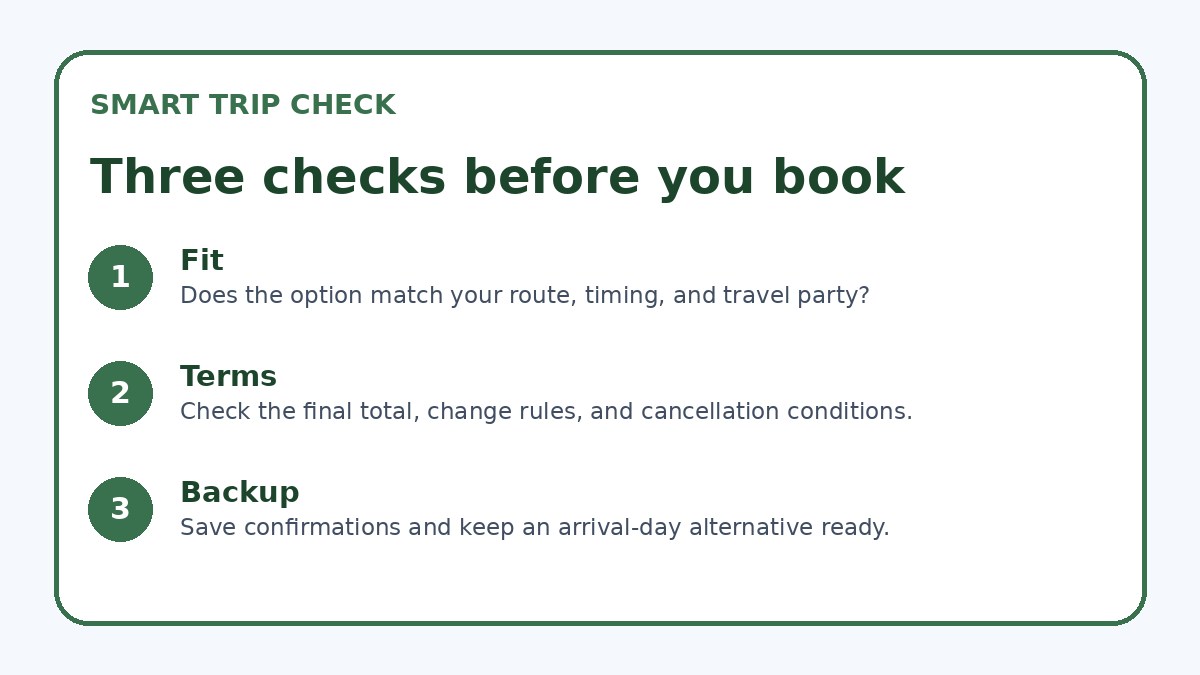
Before you book
- Read the rental agreement’s insurance sections thoroughly and note the stated excess amounts and exclusions.
- Confirm whether each family driver must be pre-registered on the contract to be covered by insurance.
- Check the policy wording for tyre, windscreen, undercarriage, and fuel-related exclusions before pickup.
- Verify age-related conditions and any additional fees for drivers under 25 or over specified ages.
- If using credit-card coverage, print or save the card insurer’s rental terms and confirm acceptance conditions with the rental company.
- Ask the desk how they handle pre-authorizations, refunds for repairs, and the required documents after an incident.
Third-party coverage: credit cards and supplemental policies
Many family travelers rely on credit-card rental insurance or buy standalone supplemental policies. The decisive factor is the exact wording about primary versus secondary coverage: primary cover pays first after damage, while secondary cover reimburses only after the rental company’s policy pays. If a credit card offers secondary coverage, the rental company’s CDW/LDW excess will still usually be charged to your card up front. Read both your credit card’s terms and the rental agreement phrasing to check whether using card benefits requires declining the rental firm’s extra waivers.
Standalone insurance products vary. Some advertise a waived excess, but the wording often contains conditions—such as mandatory collision reporting procedures, approved repair centers, or exclusions for certain vehicle classes. When comparing options, place the insurer’s claim process and timeframes against the rental company’s requirements: if the rental firm demands immediate payment and a local repair, a slow external insurer could leave you temporarily out of pocket. Always verify the final, current policy wording on the insurer’s and rental company’s booking pages before you book.
Frequently asked questions
Does the rental company’s CDW mean I won’t pay anything if the car is damaged?
Not necessarily. CDW or LDW often reduces your liability but commonly leaves an excess you must pay up front or via a card hold. The contract will list exclusions—like damage to tyres, windscreen, or undercarriage—that may not be covered. It also states whether you’ll be charged the full repair cost immediately and refunded later. For family trips, read the wording for ‘excess’, ‘exclusions’, and the incident reporting procedure so you understand immediate payment requirements and the timeline for any reimbursement.
Can my credit card’s rental insurance cover a family rental in Milan?
Possibly, but it depends on the card’s exact wording. Important points include whether the card offers primary or secondary cover, age limits for drivers, vehicle categories excluded, and whether the card requires you to decline the rental company’s waivers. The card issuer’s terms will also state required documentation and claim timelines. Before relying on it, verify those terms with the card provider and check the rental company’s booking page to confirm that using the card’s cover won’t void their contract conditions.
Should I accept the rental counter’s excess-waiver to simplify things for a family?
Accepting the counter’s excess-waiver can simplify claims handling and reduce immediate financial exposure, which many families appreciate. However, desk waivers are often more expensive per day than external alternatives and may include their own conditions. Check the contract wording for what the waiver actually removes and whether it covers common exclusions like windscreens and tyres. If cost is a concern, compare the waiver wording with standalone insurers and your credit-card policy, and verify final terms on the rental company’s booking page before purchase.
Final planning note
For family travelers in Milan, the most useful approach is to focus on the exact insurance wording—not marketing labels. Identify the excess amounts, exclusions, age and driver rules, and the incident-reporting steps that a contract demands. Match those specifics against any credit-card benefits or independent policies you plan to use, and be frank with the rental desk about who will drive and whether you want child seats included. Always save or capture the final booking-page insurance text and bring necessary proof (card terms, extra driver IDs, police-report process) to the counter. That preparation turns vague guarantees into clear expectations and keeps your holiday moving smoothly if the unexpected happens.
Continue planning
Check current options and final conditions
Use the provider page to confirm live availability, the final total, cancellation terms, and every condition that matters to your trip.
This evergreen planning guide was created with AI-assisted drafting and a structured quality review. It does not display live prices, schedules, availability, visa guidance, or provider rankings. Verify current details before booking. Some links are affiliate links; we may earn a commission at no additional cost to you.