
If you and your partner want peace of mind while planning a romantic stay in Gyeongju, prioritize flexible booking terms that match your travel risk tolerance. The practical approach is: decide how likely plans might change, then choose between refundable rates, free-cancellation windows, or prepaid nonrefundable options based on that likelihood. For many couples, a moderate free-cancellation window (several days before arrival) hits the right balance between price and flexibility. If your dates are fixed and you value a lower rate over change protection, a prepaid option can work — but only if you’re certain about plans. Before confirming any booking, check the final provider page for the exact cancellation policy, any blackout dates, fees for changes, and what constitutes a “no-show.”
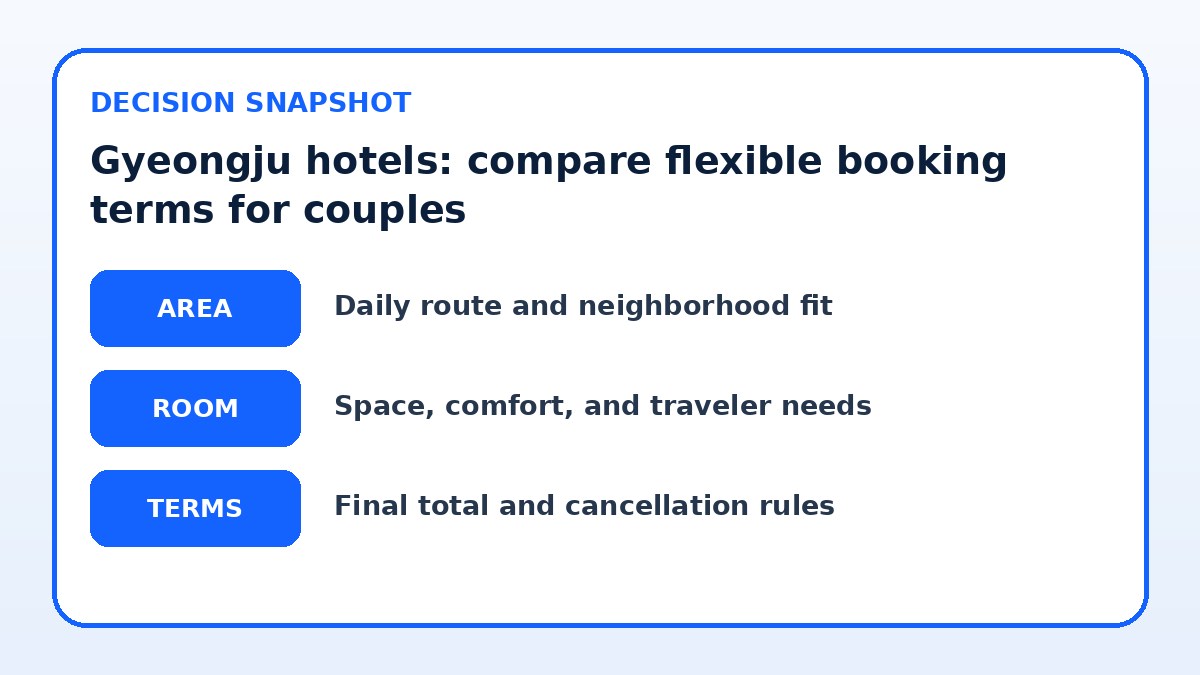
See current options before you compare the details
Availability and final conditions change. Open Trip.com now or keep reading for the practical comparison.
Why flexible terms matter for couples visiting Gyeongju
Couples planning a getaway to Gyeongju often juggle work schedules, family obligations, and seasonal events like festivals. Flexible booking terms reduce stress by letting one or both partners adjust travel dates without losing the full cost of a stay. For couples who prefer spontaneous detours—sightseeing at Bulguksa, strolling around Anapji Pond, or adding a day trip—flexible policies make it easier to extend or shorten a stay. They also protect against common hiccups such as sudden schedule changes, minor illnesses, or delayed transport that might otherwise force a forfeiture of the booking.
That said, flexibility comes with tradeoffs. Rates with generous cancellation windows are typically higher than prepaid alternatives, and some properties limit flexible offers to specific room types or refundable rate plans. For couples who are price-sensitive, comparing the difference between refundable and nonrefundable rates can reveal whether the extra cost for flexibility is worth the peace of mind. Ultimately, the decision should reflect how likely your plans are to change and how much uncertainty you’re willing to accept for a lower rate.
How to compare cancellation windows and penalties
When comparing cancellation terms for Gyeongju hotels, focus on three details: the cut-off time for free cancellation, the penalty structure (percentage, full night, or fixed fee), and how changes versus cancellations are treated. Providers may describe a 24-hour rule, but that usually refers to local hotel time; confirm the exact time zone and hour. Also check whether partial refunds are permitted and whether the penalty varies with how close you cancel to the arrival date. These specifics directly affect a couple’s risk exposure if one partner’s plans change at the last minute.
Read policy wording carefully for exceptions or special conditions. Some bookings allow free cancellation except during a peak-period blackout or within a certain high-season date range. Others offer credits for future stays instead of cash refunds, which can be useful if you plan to return to Korea but less helpful if you need immediate reimbursement. On the provider’s final booking page, verify how refunds are processed, how long they take, and whether taxes or third-party fees are refundable, too.
| Approach | Best for | Tradeoff to check |
|---|---|---|
| Fully refundable bookings | Couples with uncertain schedules or tight work commitments | Higher nightly rates and possible restrictions on specific room types |
| Free-cancellation until a cutoff date | Couples who expect moderate chance of change within a planning window | Need to monitor the cutoff date; penalties apply if you miss it |
| Prepaid nonrefundable rates | Couples with fixed plans prioritizing lower cost | Full loss if plans change; limited or no refund options |
| Flexible credit or changeable-date bookings | Couples who prefer value recovery over cash refunds | May receive property credit instead of cash and could face blackout dates |
Ready to check the option that fits your plan?
Use your exact dates and traveler details so the provider page can show the current total and conditions.

Balancing price and protection for romantic itineraries
Couples often trade flexibility for lower cost when planning intimate stays—think boutique guesthouses near Tumuli Park or hanok-style rooms near the historic center. To decide, estimate the likelihood and cost of a change: multiply the cost of losing a prepaid booking by the probability of needing to cancel. If that expected loss exceeds the premium for a refundable rate, buy flexibility. If not, accept the nonrefundable option and use travel insurance or a credit card with trip cancellation protections to mitigate risk.
Another tactic is hybrid booking: reserve a mix of flexible nights and cheaper prepaid nights depending on when your plans are most uncertain. For example, keep the first and last nights refundable in case of arrival or departure shifts, and use a lower-rate prepaid booking for middle nights if your itinerary stabilizes. Check if the property allows date changes without penalties, as that can be more valuable than a straight refund when your schedule shifts by a day or two.
Before you book
- Confirm the booking’s cancellation cut-off time and the property’s local time zone on the final provider page.
- Verify whether taxes, service fees, and deposits are refundable or retained as part of any cancellation penalty.
- Ask directly (and get confirmation) about name change, date-change, and late-arrival (no-show) policies.
- Compare the refundable rate premium to expected loss if you must cancel, and calculate which is cheaper.
- Save screenshots or PDFs of the booking terms and any written confirmation from the property or agent.
- Check whether your credit card or travel insurance will cover cancellations and what documentation they require.
Practical checks to do before you confirm any reservation
Before you hit confirm, verify four concrete points on the final booking page: the cancellation cut-off time (including time zone), the method and timing of any refunds, whether deposits or taxes are refundable, and the policy for name or date changes. Also check whether the rate includes breakfast, parking, or other amenities that might affect perceived value. If you’re booking through an agent or aggregator, confirm whether the agent’s policy differs from the property’s direct policy, and where you must request cancellations to ensure they are processed correctly.
If special circumstances apply—honeymoon packages, anniversary requests, or accessibility needs—communicate them in writing and get written confirmation of any promised flexibility. Keep screenshots or PDFs of the confirmed policy and the reservation page. Finally, consider whether your credit card offers any cancellation coverage or whether a travel insurance policy would cover the specific kinds of interruptions you worry about; if so, compare that protection to the hotel’s refundable rate premium.
Frequently asked questions
Should couples always book refundable rates when visiting Gyeongju?
Not always. Refundable rates are a sensible default when schedules are uncertain or you’re traveling around busy periods, but they cost more. If both partners have fixed, approved time off and travel plans are unlikely to change, a prepaid nonrefundable rate can be a rational cost-saving choice. Evaluate the likelihood of change, the financial exposure if you cancel, and whether your credit card or insurance provides overlapping protection. Make the decision that minimizes your expected loss, not just the upfront cost.
If I book through an online travel agency, who handles cancellations and refunds?
It depends on the booking terms. Some properties require cancellations be processed through the OTA, while others instruct you to contact the property directly. Check the booking confirmation and the OTA’s help pages for the required process. When in doubt, follow the confirmation instructions and keep records of communications. On the final booking page, verify who issues refunds, how long refunds take, and whether the OTA or the property retains any administrative fees.
How can couples insure themselves against last-minute changes for a Gyeongju stay?
Consider travel insurance that explicitly covers trip cancellation and interruption for reasons relevant to you—illness, family emergencies, or schedule changes. Read policy exclusions carefully: some basic plans won’t cover changes of heart or work-related cancellations. Alternatively, some credit cards include trip cancellation coverage when you use the card to pay; check your card’s benefit guide for covered reasons and documentation requirements. Keep clear records of supplier policies and any medical or employer documentation needed to file a claim.
Final planning note
Choosing the right booking terms for a couple’s trip to Gyeongju comes down to balancing risk tolerance and cost. If uncertainty is likely, opt for refundable or flexible options even if they cost a little more; if dates are locked in, a prepaid rate can reduce expense. Always inspect the final booking page for exact cancellation cut-offs, refund mechanics, taxes and fees, and whether credits are offered instead of cash. Keep confirmation records, compare the refundable premium to expected cancellation losses, and consider card or insurance protections for extra peace of mind. For a quick availability check, you may compare current offerings on Trip.com, but rely on the hotel’s confirmed policy before accepting any terms.
Continue planning
Check current options and final conditions
Use the provider page to confirm live availability, the final total, cancellation terms, and every condition that matters to your trip.
This evergreen planning guide was created with AI-assisted drafting and a structured quality review. It does not display live prices, schedules, availability, visa guidance, or provider rankings. Verify current details before booking. Some links are affiliate links; we may earn a commission at no additional cost to you.