If you’re flying from Dubai to Sydney solo, the two decisions that change the stress level of the trip are what you bring and when you arrive at the airport. Pack for a long-haul flight and for any short connections at the destination while keeping transit immigration and cabin baggage limits in mind. Decide whether to check bags or travel carry-on only by weighing convenience versus the need for checked items and potential transfer times. For airport timing, balance extra time for check-in, security and possible long immigration queues with the fatigue of a long wait. Below I give a clear practical plan up front, then explain the tradeoffs and what to verify before finalizing bookings.
See current options before you compare the details
Availability and final conditions change. Open Trip.com now or keep reading for the practical comparison.
Decide carry-on only or checked luggage
The simplest, least stressful choice for solo travellers is carry-on only: you avoid waiting at baggage reclaim and reduce the chance of lost luggage complicating a transcontinental trip. To make this work, choose a bag that meets the airline’s long-haul cabin dimensions and brings only the essentials. Prioritise compact toiletries in travel-sized containers, quick-dry clothing, a layered outfit for varying cabin temperatures, and a reliable power bank. That way you can freshen up on arrival and handle short layovers without needing access to checked items.
On the other hand, checked luggage may be necessary if you need specialist gear, bulky items, or more than a week of clothing. If you check a bag, pack a small personal carry-on with the essentials in case your main bag is delayed. Also consider packing heavier or bulky items in checked luggage to stay within carry-on size and weight limits. Before you finalize the booking, verify the airline’s published baggage allowances and any transfer baggage rules on the booking page so you understand fees and whether your luggage will be transferred automatically during stops.
How airport arrival time affects your day
Arrive too close to departure and you risk stress from long lines and tighter security checks; arrive too early and you might face long waits at the gate, which can be tiring before a long-haul flight. For most solo travellers on international services from Dubai, a 3 to 4 hour window before departure balances these risks: it allows time for bag drop, passport control, security screening, and a buffer for unexpected delays like traffic to the airport. If you’re checking a bag, err on the later side of this window if the airline allows it, but never shorter than the minimum advised by the carrier.
Use the extra time proactively: check flight status on the airline app, complete any pre-flight immigration steps if the airport offers them, and find a quiet place to rest or eat. If you’re connecting in Sydney or another hub, factor in the arrival processes you’ll face there — for example, international arrivals often require immigration and customs clearance that can add substantial time to onward plans. Where possible, time your arrival to match official airline and airport guidance and build in a cushion for peak periods or known delays.
| Approach | Best for | Tradeoff to check |
|---|---|---|
| Carry-on only | Solo travellers who prioritise speed and minimal handling | Limited clothes and no bulky items; strict size/weight rules must be followed |
| Checked luggage with short arrival window | Those needing larger items who accept faster pre-flight processing | Higher risk if queues or traffic delay arrival; possible stress if bags miss the flight |
| Checked luggage with extra airport time | Travellers who value a relaxed pre-flight experience and need checked items | More waiting time at the airport and greater exposure to pre-flight fatigue |
| Connecting itinerary with long layover | Passengers who want cushion for transfers or cheaper routing options | Longer total travel time and potential need to re-clear security or immigration |
Ready to check the option that fits your plan?
Use your exact dates and traveler details so the provider page can show the current total and conditions.
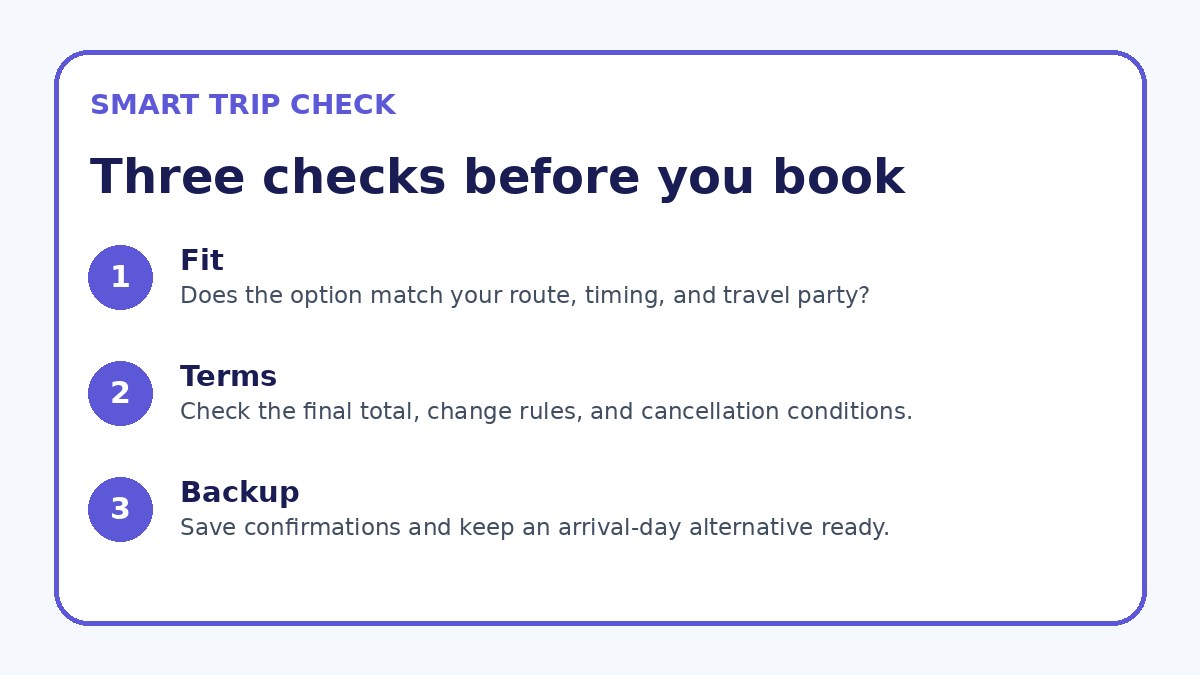
Managing connections and baggage transfers
If your Dubai to Sydney travel involves a connection, compare itineraries not just on total duration but on connection structure. A single direct flight removes transfer risk entirely; connecting itineraries require attention to minimum connection times, whether baggage will be checked through to Sydney, and whether you need to re-check luggage or clear immigration during the layover. Solo travellers should favour longer, reasonable connections when baggage must be re-checked or when two separate tickets are involved, since a missed connection means handling rebooking alone.
Ask directly on the airline booking page whether bags are tagged to final destination and whether transfer assistance is provided. If your itinerary requires changing airports or terminals, add at least double the usual transfer cushion. For self-transfer itineraries where carriers do not interline baggage, pack a full change of clothes and essentials in your carry-on and carry clear copies of travel documents to smooth transfers and any required visa checks during connection.
Before you book
- Confirm the airline’s cabin and checked baggage size and weight limits on the final booking page
- Weigh and measure your luggage at home to avoid surprises at bag drop
- Pack a carry-on with passport, boarding pass, medication, chargers, and a spare outfit
- Plan to arrive at the Dubai airport three to four hours before departure unless your carrier advises otherwise
- If connecting, verify whether bags are checked through to Sydney and note minimum connection times
- Download the airline app, enable flight alerts, and screenshot boarding documents in case of connectivity issues
Practical packing and airport routines for solo travellers
Create a small pre-flight routine: check your airline’s baggage size and weight rules, weigh your suitcase at home, and arrange a simple carry-on layout with items you’ll use in the cabin grouped for easy access. Important items—passport, boarding pass, wallet, medication, phone charger, and a lightweight jacket—should live in an easily reachable pocket. Consider comfort items that reduce in-flight stress: noise-cancelling earbuds or earplugs, an inflatable travel pillow, compression socks, and hydrating skin-care items to counteract cabin dryness.
At the airport, follow a set sequence to save time: confirm gate and status, drop bags if needed, complete passport control, and then clear security. If you anticipate long waits, identify a comfortable spot near your gate and set alarms for boarding. Use mobile check-in and digital boarding passes where possible to skip counters; confirm on the airline’s final booking page how early check-in opens and whether automated bag drop is available. Trip.com can be used to compare current availability and conditions, but always verify baggage and timing specifics on the carrier’s own booking pages.
Frequently asked questions
How much time should a solo traveller allow for immigration and security when leaving Dubai?
Processing times vary by time of day and terminal, but allowing three to four hours before an international Dubai departure gives a comfortable buffer for check-in, bag drop, security screening and any passport control. If you have pre-cleared or fast-track options included with your fare, you can often reduce the buffer, but verify those benefits on the airline’s booking page. For late-night or early-morning flights, staffing and queue lengths can differ, so check recent passenger feedback or the airport’s published guidance to refine your timing.
Should I pack a change of clothes and essentials in my carry-on for Dubai to Sydney travel?
Yes. Whether you plan to check a bag or not, keeping a small change of clothes, basic toiletries in travel sizes, essential medications and copies of travel documents in your carry-on reduces disruption if checked luggage is delayed. For connecting itineraries where bags might not be checked through or for tight transfers, these items allow you to continue on schedule and remain comfortable. Also consider packing a compact toothbrush and wet wipes for freshening up after long flights.
How do I decide between a direct flight and a connecting option for Dubai to Sydney?
Compare total travel time, transfer complexity, and baggage handling policies rather than just ticket price. A direct flight removes transfer risk and simplifies baggage, but a connecting itinerary can offer lower cost or different departure times. If the connection requires changing carriers or terminals, choose longer transfer windows and confirm if your luggage is checked through. Always check the final booking pages for details about minimum connection times, whether baggage is interlined, and any ground transfer requirements before committing to a fare.
Final planning note
For solo travellers between Dubai and Sydney the key choices are straightforward: carry-on only for speed and simplicity, or checked baggage when you need more items. Plan airport arrival time around the airline’s guidelines and your baggage decision, favouring a three- to four-hour window for international departures in Dubai. When comparing routes, treat connection structure and baggage transfer rules as decision drivers rather than total flight time alone. Before you book, verify baggage allowances, check-in opening times and transfer policies on the airline’s final booking page. That final verification prevents surprises and lets you travel with confidence.
Continue planning
Check current options and final conditions
Use the provider page to confirm live availability, the final total, cancellation terms, and every condition that matters to your trip.
This evergreen planning guide was created with AI-assisted drafting and a structured quality review. It does not display live prices, schedules, availability, visa guidance, or provider rankings. Verify current details before booking. Some links are affiliate links; we may earn a commission at no additional cost to you.