
If you’re traveling from Seoul to Gyeongju with oversized bags, multiple cases, or equipment, the single most useful decision is where you want to change modes: stick to rail (fewer transfers) or accept a station-to-terminal move that simplifies last-mile logistics. This article gives a clear working plan—two straightforward transfer paths, luggage-handling tips, and a checklist you can use at booking time. I focus on real choices you’ll face: which Seoul departure point to use, how to approach transfers in Daegu or nearby hubs, and how to move heavy bags between stations and bus terminals. Tradeoffs—cost, number of hand carries, and time versus convenience—are explained so you can pick the option that matches your physical limits and tolerance for carrying or paying for extra handling. Confirm schedules and luggage policies on the operating provider’s final booking page before you commit.
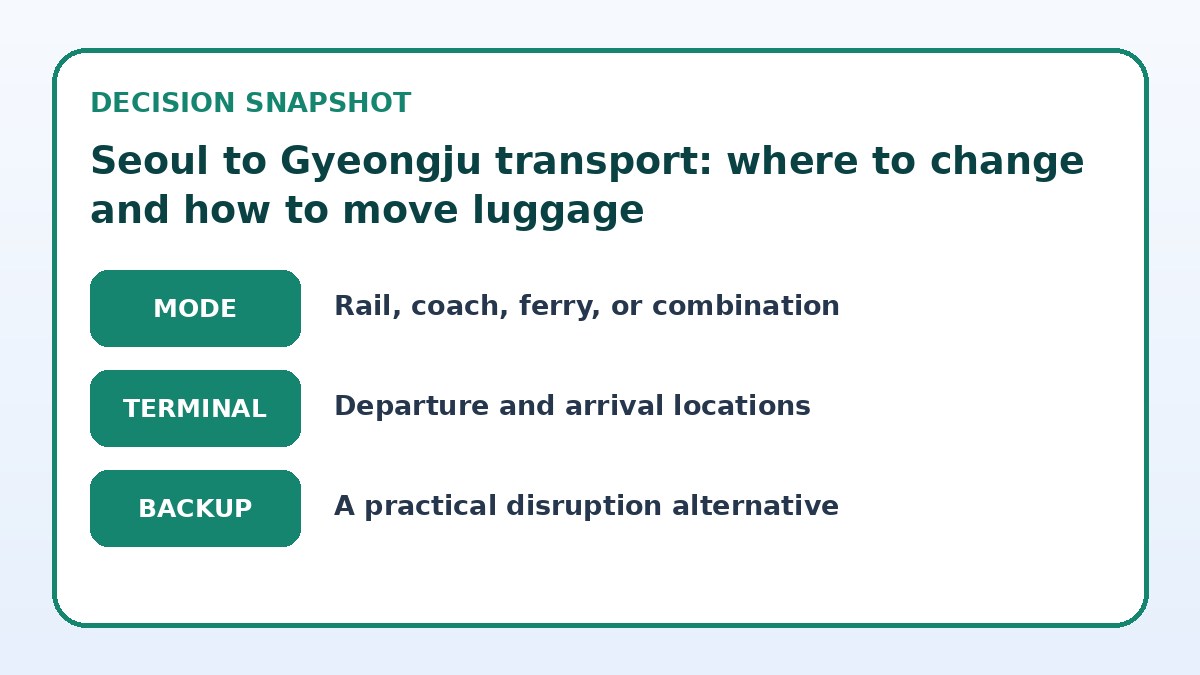
See current options before you compare the details
Availability and final conditions change. Open Trip.com now or keep reading for the practical comparison.
Pick your Seoul departure with luggage in mind
Seoul offers several major departure points; your choice should reflect how much you want to carry at transfer points. A departure station with level access, escalators, elevators, and staffed luggage areas will make a heavy-gear start easier than one with many stairs or long platform walks. Look for origins that connect to simpler onward options (for example, fewer connections or direct services toward southeastern Korea) so you avoid multiple platform changes inside busy stations.
When selecting a departure, check the station map and accessibility features before you book. If you rely on elevators or need a station porter, confirm on the provider’s final booking or customer service page whether assistance is available and whether any reservation is required for special-handling. If your journey starts from an airport terminal or a central city station, plan the ground transfer—taxi drop-off points and curbside regulations differ, so note where to load and park when you set out with heavy bags.
Choosing transfer hubs between Seoul and Gyeongju
Most travelers choose a single intermediate hub to change trains or transfer to a bus for Gyeongju-area terminals. The practical question is whether you prefer fewer transfers with a longer local taxi at the end, or more public-transfer legs that might be cheaper but involve hauling bags across platforms and concourses. Think about your physical stamina: a single short taxi ride from a major station to your final address can be worth the extra cost compared with a multi-step public transfer that requires repeatedly lifting luggage.
When you compare hubs, factor in station layout and proximity to bus terminals if you need a bus for last-mile access. Some hubs place long-distance bus terminals closer to the rail station platform, reducing the hand-carry distance; others require a short shuttle or a walk through crowded streets. Always confirm the exact transfer route and walking distances on official station maps or transit apps, and verify whether station staff or local taxis can assist with bulky items on arrival.
| Approach | Best for | Tradeoff to check |
|---|---|---|
| Direct long-distance rail to a single station plus taxi last mile | Travelers who prefer fewer handlings and quick, private transfers at the end | Higher taxi costs and dependence on available pick-up zones at busy stations |
| Rail to a hub then short public-bus link to the terminal | Lower-cost transfers with limited taxi use | Extra transfers mean more lifting and longer walking between platforms and stops |
| Ship bulky items ahead and travel light by rail and local transit | Those with very heavy or oversized baggage who want minimal carrying | Requires scheduling, trust in a courier, and possible waiting for delivery at destination |
| Reserve station porter or on-demand porter services where available | Travelers who need hands-on help moving luggage through busy stations | May require bookings in advance and additional fees; not available everywhere |
Ready to check the option that fits your plan?
Use your exact dates and traveler details so the provider page can show the current total and conditions.
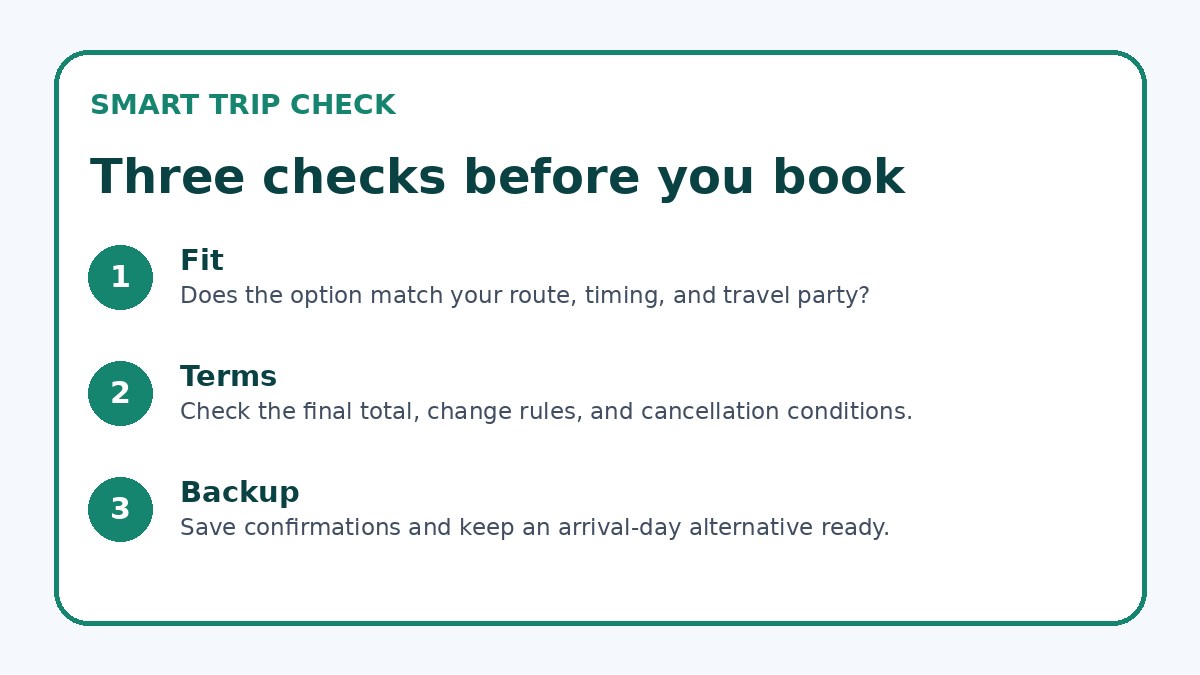
Luggage handling options and tradeoffs
You have several ways to handle oversized or extra luggage: carry everything yourself, hire taxis for door-to-door portions, use station luggage storage for short waits, or ship items ahead through a delivery service. Carrying your own bags keeps flexibility but increases physical strain during transfers; taxis reduce carrying but add out-of-pocket cost and can face curbside restrictions at busy stations. Station storage is convenient for short layovers but requires you to reclaim items within operational hours and usually demands some effort loading and unloading.
Shipping luggage ahead can be the most convenient for bulky items or long stays, but it requires arranging pickup and delivery windows and trusting a third party with valuable items. If you plan to ship, confirm delivery timing and insurance options on the shipping provider’s booking page before paying. For same-day continuity, many travelers combine one piece of carry-on essentials with shipping larger suitcases so they still have immediate access to necessities during transfers and upon arrival.
Before you book
- Check the official luggage policy on the rail operator’s booking page for size, weight, and item limits before buying tickets.
- Review station maps and elevator/escalator locations for every transfer point you plan to use.
- Decide whether to book taxis in advance for terminal-to-door segments, and note the designated pick-up curb at each station.
- If shipping luggage, confirm pickup and delivery windows, tracking, and declared-value coverage with the courier.
- Build at least one extra connection margin in your timetable when you must move heavy bags between platforms.
- Pack an accessible day bag with essentials (documents, meds, charger) so you won’t need checked items during transfers.
Booking and on-trip checks to avoid surprises
Before you finalize any ticket or transfer, confirm luggage policies for each segment on the transport provider’s official booking pages: permitted dimensions, number of free items, and whether extra-large items require advance notice or a supplemental booking. If you rely on station staff for assistance, call or message customer service in advance to confirm that help is available on your travel date. Use live booking pages for up-to-date schedules and any advisory notices that could affect connections or station access.
At every transfer, keep essential items with you: travel documents, any medications, and things you’ll need if bags are delayed. Build extra slack into connection windows if you’re handling heavy luggage or booking separate suppliers for rail and local transport. If you use third-party comparison platforms like Trip.com to check availability, treat the result as a starting point and verify final terms on the carrier or station operator page before you commit to purchase.
Frequently asked questions
Can I bring oversized luggage on intercity trains between Seoul and Gyeongju?
Policies vary by operator and can change, so always check the carrier’s official booking page to confirm permitted dimensions and any required advance notice. Some services allow large items as part of your ticket while others may require you to reserve additional space or pay an extra fee. If your baggage is unusually bulky, contact customer service ahead of travel to explain the item and request guidance on handling or special loading procedures.
Is it easier to use taxis or public transit for the final leg into Gyeongju if I have heavy bags?
Taxis reduce the number of times you must lift or move luggage and often save time when carrying heavy items, but they can be more expensive and curbside access rules at stations may limit where you can load. Public transit is cheaper but typically involves more walking, staircases, and repeated bag handling. Choose taxis when convenience and minimizing physical strain matter; choose public transit if cost saving and manageable carrying are higher priorities.
How should I plan transfers if I book rail and bus separately for the Seoul–Gyeongju route?
When booking separate segments, leave larger connection buffers than the timetable suggests, and confirm both suppliers’ arrival and departure points—some bus terminals are a short ride from main stations. Note station layouts and whether you must cross streets or use shuttles between facilities. Keep contact details for both operators and consider a backup taxi booking option in case connections are delayed or you cannot move heavy bags quickly enough.
Final planning note
Traveling from Seoul to Gyeongju with extra luggage requires upfront choices about transfers and handling: prioritize fewer handlings if you have heavy items, or choose cost-saving multi-leg public options if you can manage lifts. Use station maps and carrier booking pages to confirm accessibility features, luggage rules, and staff assistance before purchase. Decide whether shipping bulk items ahead or arranging taxis for the last mile matches your comfort and budget, and always keep a small day bag of essentials with you during transfers. With a clear plan, a realistic buffer for connections, and the right mix of transport and handling services, your route can be efficient and far less stressful.
Continue planning
Check current options and final conditions
Use the provider page to confirm live availability, the final total, cancellation terms, and every condition that matters to your trip.
This evergreen planning guide was created with AI-assisted drafting and a structured quality review. It does not display live prices, schedules, availability, visa guidance, or provider rankings. Verify current details before booking. Some links are affiliate links; we may earn a commission at no additional cost to you.