If you and your partner are weighing how to get from Taipei to Kaohsiung, the practical choice comes down to door-to-door time, how much you want to move around, and how flexible your schedule must be. For many couples, the high-speed rail option gets you closest to minimizing travel time, while conventional intercity rail and coaches win on cost and frequency. Ferry travel between northern and southern Taiwan is uncommon as a mainland-to-island link for this route, but you might see coastal or combined island-hopping services as part of a longer itinerary. Driving or private transfer gives total control over stops and luggage but increases fatigue and requires parking planning. Read on for a focused comparison of terminal fit, luggage and transfers, timing flexibility, and disruption backups so you can pick the best combination for your trip goals and pace.
Terminal fit: where you start and finish matters
Consider how each mode connects to the neighborhood where you will be staying. City-center rail stations and major coach terminals usually link directly with urban transit, taxi ranks, and ride-hail pickup points. For couples who prefer walking or a single short transit hop with luggage, choose departures and arrivals located inside or very near the neighborhoods you plan to explore. If you have an early or late arrival, factor whether the terminal is served by night transport or if a private transfer will be needed.
When driving, your actual origin and destination addresses define convenience: a car drop-off at a hotel door beats any station walk if parking is sorted. Ferries that run coastal or island services may use ports farther from city centers; add the extra transfer time to your calculations. Before booking, check the terminal address and map the nearest subway or taxi options to ensure the station-to-hotel leg is as realistic as the advertised ride time.
Choose the end-to-end journey plan
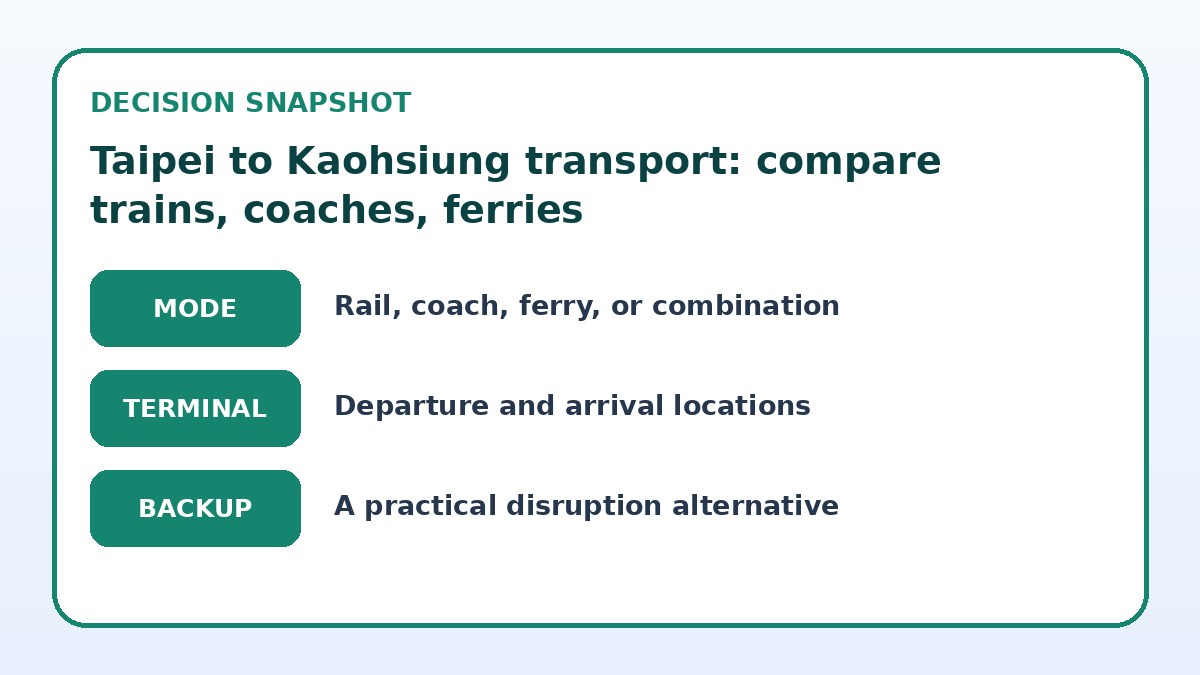
| Journey approach | Best for | Friction to check |
|---|---|---|
| High-speed rail focused plan | Couples wanting the fastest city-to-city travel with easy urban transfers. | Less flexibility for spontaneous schedule changes and tighter luggage space per passenger. |
| Conventional rail or frequent coaches | Pairs who prefer many departure choices and a balance of cost and comfort. | Longer in-vehicle time compared with high-speed rail; terminal fit matters for transfers. |
| Drive or private transfer | Couples valuing privacy, scenic stops, and door-to-door convenience. | Requires parking plans and can increase fatigue; costs and traffic variability affect total time. |
| Multimodal combination (train + taxi/ferry short legs) | Travelers who want efficiency plus curated local detours or coastal segments. | More transfers mean more coordination; verify connections and luggage handling between legs. |
Check live intercity options
Look beyond the ride itself and compare terminals, transfers, luggage, and arrival fit.
Luggage, transfers and couple-friendly comfort
How much you bring should influence the mode of transport. Trains and coaches usually have allocated luggage areas and easy onboard access, which is convenient for two travelers sharing bags. High-speed services tend to have slightly stricter luggage space per passenger and quicker embarkation — an advantage when you want to minimize time in stations. If one of you prefers to keep a small carry-on at your seat, verify seating and baggage allowances before you board.
A private car or hire gives the simplest luggage experience: bags stay in the trunk until you reach your hotel. However, if you’ll be moving between different neighborhoods or taking multiple legs, a compact, well-packed set is easier to manage on public transport. For any intermodal plan (for example, train plus taxi), map the transfer route and estimate door-to-door time rather than relying on individual leg durations.
Timing flexibility and pacing your trip
Couples often value either a timed, efficient travel day or a relaxed journey with sightseeing stops. Frequent conventional trains and coach services give you the freedom to change plans on the fly, while scheduled high-speed departures encourage a fixed itinerary. If you prefer to maximize daytime hours at both ends, pick the departure that balances morning/afternoon activity rather than the absolute fastest single-ride time.
Driving opens the widest window for flexible stops—breaks, photo ops, and unscheduled detours are simple to add, but this also lengthens total travel time. If you plan to combine modes (for example, a morning train and an afternoon taxi to a nearby attraction), factor in potential wait times for transfers and choose service times that reduce idle waiting together.
Compare the practical alternatives
Use the final page to confirm what is actually offered on your dates and save a workable fallback.
Intercity travel checklist
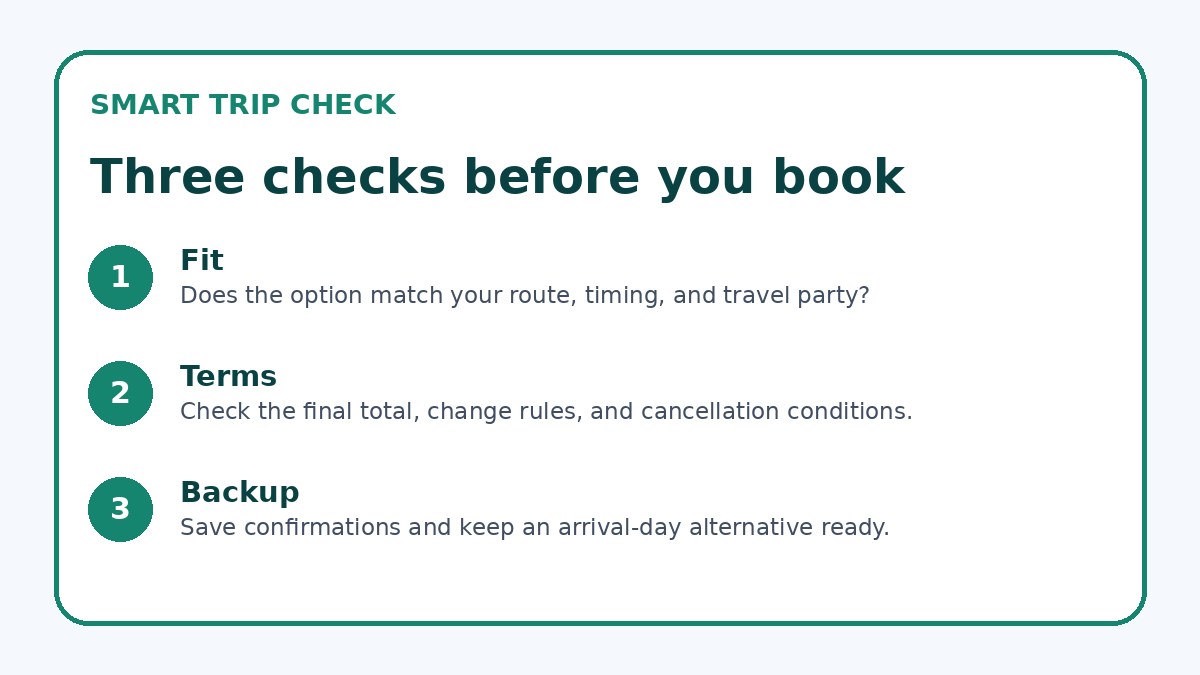
- Map the exact station/terminal addresses and the nearest transit, taxi, or ride-hail pickup to your accommodation.
- Confirm luggage allowances and carriage rules on the provider’s final booking page before you reserve.
- Compare door-to-door time estimates, not just in-vehicle duration, when choosing a departure.
- Have at least one alternate departure time saved in case your preferred service is full or delayed.
- Plan a simple communication and meeting point if you split briefly to handle tickets, bags, or car parking.
- Check rebooking and cancellation rules on the carrier’s official page and note any penalties for changes.
Disruption backup: plans if things go wrong
Always identify a practical backup in case of delays or cancellations. For public transport, look at the next several departures on services you would realistically take and know station customer service or ticket office procedures for rebooking. Couples should agree on a fallback meeting point and a simple communication plan if one person goes ahead to arrange alternate transport or accommodation.
For driving, have contingency directions and a list of safe paid parking or pickup zones. If you rely on multiple legs, make sure you can change plans without extra penalties; read the final booking page for change or refund policies before paying. Use a travel app or the provider’s official site to check live availability and disruption notices—Trip.com is one place to compare current options, but confirm details on the carrier’s own pages.
Rail & Intercity Transport questions travelers ask
Is high-speed rail the best way for couples to travel Taipei to Kaohsiung?
High-speed rail is often the quickest single-vehicle option between major city stations and suits couples who want to minimize transit time and maximize time in each city. However, “best” depends on your priorities: if many departure choices or a lower-cost plan matter more, conventional trains or coaches may be preferable. For a relaxed trip with scenic stops, driving or a multimodal approach can be better. Always check station locations relative to your lodgings and confirm luggage policies on the operator’s booking page before purchasing.
How do I decide between driving and taking public transport as a couple?
Decide by weighing control versus hassle: driving offers privacy, scenic flexibility, and easy luggage management but brings parking, fuel and potential traffic stress. Public transport removes driving fatigue and often connects directly to city center hotels, reducing overall navigation. If you plan several stops or have specific rural destinations, driving may save time; if you want to relax and not navigate, trains or coaches are easier. Before committing, compare door-to-door timing and how each mode links with your planned activities.
What should couples check about transfers and luggage for a multimodal trip?
For each segment, note the time needed to exit one terminal and reach the next pickup point, including likely wait times for taxis or buses. Verify baggage allowances and any size limits on the final booking pages so you aren’t surprised at the transfer. Choose seats or service classes that allow an accessible carry-on if you want to keep a bag nearby. Finally, give yourselves buffer time between connections—unexpected delays or slow luggage retrieval are common, and couples can use that buffer to regroup.
Final decision note
Choosing how to travel from Taipei to Kaohsiung as a couple is about matching priorities: speed, flexibility, comfort, and how you want to spend time together. High-speed rail reduces time on the move, conventional trains and coaches offer frequent departures and simpler last-minute changes, driving gives control and photo-op flexibility, and multimodal combinations let you balance speed with local exploration. Before you book, map terminals to your hotels, verify luggage rules and change policies on the provider’s final booking page, and pick a realistic door-to-door schedule. With that groundwork, you and your partner can select the transport mix that fits your pace and makes the journey part of the trip.
Continue planning
Check current options and final conditions
Use the provider page to confirm live availability, the final total, cancellation terms, and every condition that matters to your trip.
This evergreen planning guide was created with AI-assisted drafting and a structured quality review. It does not display live prices, schedules, availability, visa guidance, or provider rankings. Verify current details before booking. Some links are affiliate links; we may earn a commission at no additional cost to you.