Practical answer first: for most solo travelers in Da Nang, public transport and app-based taxis or motorbike taxis will cover central sightseeing and short day trips with far less hassle than self-driving. Rent a car if you plan multiple full-day excursions beyond the city—especially to remote beaches, countryside, or flexible multi-stop itineraries where public options are infrequent. Both choices have real tradeoffs: convenience and autonomy versus cost control, parking and local driving culture. This guide helps you weigh time, safety, budget predictability, luggage needs, and comfort so you can pick the approach that matches your trip style. Follow the decision criteria below, then use the checklist to confirm practical details before booking a vehicle or mapping public routes.
See current options before you compare the details
Availability and final conditions change. Open Trip.com now or keep reading for the practical comparison.
How Da Nang feels to get around
Da Nang’s city center is relatively compact and walkable in many neighborhoods, with major attractions, riverside promenades and beaches clustered close enough for short taxi or motorbike rides. App-based taxis and local motorbike taxis are commonly used for point-to-point travel and can be more time-efficient than waiting for scheduled buses. For solo travelers unfamiliar with the language, smartphone apps reduce friction for payments and route confirmation. That convenience often outweighs the higher per-ride cost compared with fixed-route public buses when trips are under an hour.
Traffic patterns change between the city core and rural roads; urban speeds are slower and more stop-start while regional routes can be faster but less predictable for overtaking and lane discipline. If you prefer door-to-door control and worry about fitting equipment or multiple bags, a private car can remove those logistical headaches. However, driving yourself introduces responsibilities—route planning, parking and interpreting local road behavior—that many solo travelers avoid by relying on local drivers or public options for the majority of city-based activities.
When renting a car makes sense
Choose a rental when your itinerary includes multiple distant sites in a single day, when you’ll carry bulky gear like surfboards or photography equipment, or when traveling on a flexible schedule that public transport cannot accommodate. Cars become appealing for solo travelers who favor privacy, a controlled environment for breaks, and the ability to detour spontaneously to lesser-known beaches or rural viewpoints. A vehicle is also sensible if your plans push into late evening or very early morning hours when public services and standard taxis may be limited.
Remember that renting does not remove all planning: check what the rental contract covers for insurance, what documentation is required to drive legally, and whether roadside assistance is included. Learn where secure parking is available at hotels and attractions, and factor time to pick up and return the vehicle. If you are not confident navigating local driving styles, consider hiring a car with a driver—this gives flexibility without the responsibility of handling traffic and local rules yourself.
| Approach | Best for | Tradeoff to check |
|---|---|---|
| Rent a car | Solo travelers needing flexibility, space for gear, and multi-stop full-day trips. | More planning, parking decisions, and responsibility for navigation and paperwork. |
| Public transport and buses | Short stays, budget-focused travelers, and those preferring low planning overhead. | Less schedule flexibility and potential waits for connections to remote sites. |
| App-based taxis and motorbike taxis | Quick city hops, nightlife transfers, and door-to-door convenience without driving. | Higher per-ride cost than buses and limited capacity for large luggage. |
| Private driver or day tour | Solo travelers who want remote-site access without driving responsibilities. | Less privacy and set itineraries compared with driving yourself, and you must verify inclusions. |
Ready to check the option that fits your plan?
Use your exact dates and traveler details so the provider page can show the current total and conditions.
When public transport and hires are smarter
Public buses, app-based taxis, and motorbike taxis are usually best for short trips, transfers to and from the airport, and moving around the main tourist districts with minimal fuss. For solo travelers on a tighter budget or those who intend to stay mainly within the city and nearby highlights, this option removes parking worries and the stress of negotiating local traffic patterns. It also leaves you free to enjoy the city streets, stop for photos, and save on the administrative tasks of a rental contract and vehicle pick-up.
If your trip includes a single long excursion, consider booking a private day driver or joining an organized day tour rather than renting a car. That gives access to outlying spots with fewer logistics to manage and a local driver with route knowledge. Always verify the final booking page for any driver or tour—confirm what’s included, cancellation rules, meeting points, and whether tolls, fuel, or entrance fees are handled separately.
Before you book
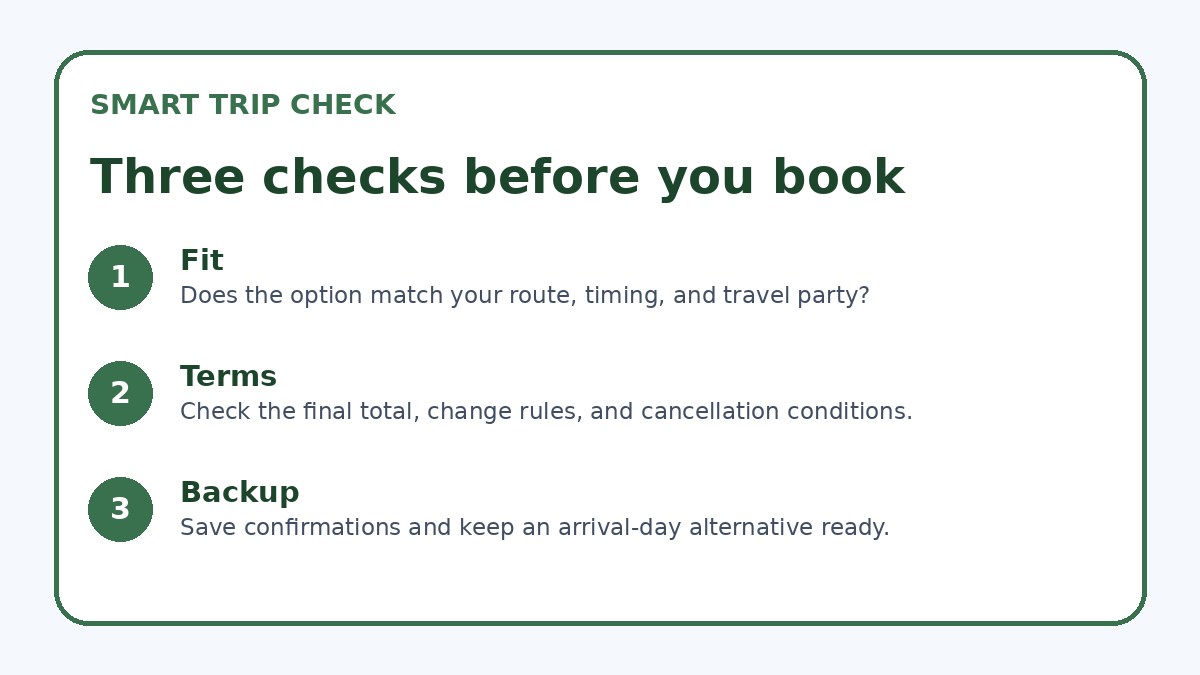
- Draft your day-by-day itinerary and highlight any long-distance or multi-stop days that favor a rental car.
- If renting, verify drive-license acceptance and required documents on the rental’s official booking page before payment.
- Confirm insurance coverage details, deductibles, and whether roadside assistance is included with the rental provider.
- Compare travel time options: map public transit routes and check if a private driver or tour covers the same locations more conveniently.
- Identify secure parking at your accommodation and main attractions, and plan where you’ll safely stop for fuel or breaks.
- If using app taxis, download local apps, set up payment methods, and check driver pickup points at your hotel or meeting spot.
Practical decision criteria solo travelers should use
Start by mapping your core itinerary: list daily destinations, luggage needs, and whether you need airport transfers. Score each day by distance from your base and the number of stops; high-distance, multi-stop days favor a car. Add non-negotiables—equipment to carry, mobility needs, or late-night travel—and weigh them against your comfort driving in unfamiliar traffic. If solo flexibility and privacy are top priorities, that leans toward renting; if simplicity and lower planning overhead matter more, public options usually win.
Next, compare intangible costs: time spent navigating, stress levels around parking and breakdowns, and the potential for spontaneous changes. Check the availability of local drivers or tours for specific long-day excursions so you can compare price and convenience against the total effort of self-driving. Finally, confirm safety and legal requirements before making a final booking—verify license acceptance, insurance coverage, and any local driving regulations on the provider’s booking page or a reliable travel platform such as Trip.com if you want to compare current options.
Frequently asked questions
Can I legally drive a foreign rental car in Da Nang with an international license?
License rules vary by nationality and often change; do not assume an international driving permit (IDP) or your domestic license will be accepted. Before booking, check the rental company’s official terms and the Vietnamese authorities’ guidance where available. If the rental page or provider lists accepted documents, confirm whether translation, notarization or a specific permit is required. If you have any uncertainty, consider hiring a car with a driver or using local transport to avoid potential fines or insurance issues.
Is parking easy to find in Da Nang if I rent a car?
Parking availability depends on neighborhood and time of day; central tourist areas and beaches may have paid lots or hotel parking, while quieter streets are more variable. Don’t assume free on-street parking will be secure—look for official parking areas or ask your accommodation about long-term parking options. When comparing rentals, check whether the provider has recommended parking guidance and whether your itinerary includes sites with limited vehicle access that might complicate using a personal car.
How do I decide between a rental car and booking a private driver for a day trip?
Compare total effort and control: a rental gives complete autonomy to stop and change plans, while a private driver reduces navigation and parking stress and offers local route knowledge. Get final quotes for both options and confirm what they include—fuel, tolls, waiting time, and entrance fees—on the provider’s booking page. Factor in your comfort with driving abroad, the length of the excursion, luggage or gear needs, and whether you prioritize privacy over convenience when making the choice.
Final planning note
For many solo travelers in Da Nang the simplest approach is a hybrid: use public transport, app taxis and motorbike taxis for city travel and book a private driver or day tour for specific longer outings. Rent a car only if your plan includes many distant stops, large equipment, or a preference for complete schedule control—accepting the extra planning, parking and local driving responsibilities that come with it. Before you commit, map your itinerary, verify legal and insurance requirements on the rental or provider’s booking page, and use the checklist to confirm practical details. That preparation makes whichever option you choose fit your travel priorities with far less stress.
Continue planning
Check current options and final conditions
Use the provider page to confirm live availability, the final total, cancellation terms, and every condition that matters to your trip.
This evergreen planning guide was created with AI-assisted drafting and a structured quality review. It does not display live prices, schedules, availability, visa guidance, or provider rankings. Verify current details before booking. Some links are affiliate links; we may earn a commission at no additional cost to you.