If you’re solo and renting a car in Osaka, prioritize pickup and return convenience: choose a pickup location with straightforward access (airport or city office), confirm evening and weekend hours, check ID and license requirements, and pick a return option that matches your last-day schedule. These steps prevent late-night surprises, extra driver hassles, and costly penalties that can complicate travel plans alone. After that, weigh tradeoffs: airport counters might be open longer but add shuttle or toll complexity; city offices can save time if you’re staying centrally but often close earlier. This guide walks through what to verify on the provider’s final booking page, how different pickup/return terms affect solo itineraries, and which practical decisions minimize stress when you’re traveling without a companion.
See current options before you compare the details
Availability and final conditions change. Open Trip.com now or keep reading for the practical comparison.
Pickup location and hours: matching your arrival style
Where you pick up the car changes the first hour of your solo trip. Airport counters are convenient when you land and want to get on the road quickly; they often have luggage handling and clear signs but may require a shuttle from remote lots. Downtown or station offices can be faster if you’re staying in central Osaka and prefer to drop bags at accommodation first. When booking, verify on the provider’s final page the exact office address, opening hours, whether late pickup requires a fee or prior notice, and any shuttle or transfer steps—these operational details vary and can change.
If your flight or train arrives late, look specifically for 24-hour desks or out-of-hours arrangements; many companies offer key-drop or pre-authorized late pickup but require notification. Solo travelers should plan buffer time for immigration, baggage, and commuting between terminals and rental offices. Also confirm peak-time queuing—some central counters close earlier or have limited staff. The provider’s terms will state how to handle no-shows, late arrivals, and after-hours handover; read those clauses carefully and consider a small schedule cushion to avoid renegotiating terms alone late at night.
Driver eligibility and documentation: what you must bring
Before you arrive at the counter, compile every document the rental company will expect. Standard items usually include your passport, home-country driving license, proof of reservation, and a credit card in the primary driver’s name for deposit. Many providers in Japan expect an International Driving Permit (IDP) based on the 1949 Geneva convention or a certified Japanese translation for certain countries. Because rules can differ by company and office, check the provider’s final booking page to confirm which forms are acceptable and any restrictions on drivers under or over certain ages.
Also confirm additional driver rules if you plan a short swap during the trip; adding another driver can mean extra fees and an identity check that takes time. Solo travelers should ensure their credit card has sufficient available limit for the security hold and understand whether debit cards or prepaid cards are accepted. If you rely on digital copies, verify whether paper originals are required at pickup. Finally, review cancellation and modification windows so you can adapt plans if travel delays affect your eligibility or arrival time.
| Approach | Best for | Tradeoff to check |
|---|---|---|
| Airport pickup with airport return | Solo travelers arriving or departing by air who want minimal transfers. | May involve longer queues and parking or shuttle logistics; airport counters sometimes close earlier than expected. |
| City office pickup and return | Staying centrally in Osaka and avoiding terminal congestion. | Often shorter hours and less baggage handling; may require a short taxi or train ride from stations. |
| One-way pickup and return between different locations | Linear itineraries ending at a different transport hub. | Convenient routing but usually adds a one-way fee and more administrative requirements. |
| After-hours pickup with key drop return | Late arrivals or very early departures when countermanned service isn’t available. | Less immediate inspection and potential uncertainty about damage claims or final charges. |
Ready to check the option that fits your plan?
Use your exact dates and traveler details so the provider page can show the current total and conditions.
Return options and inspections: avoid last-minute disagreements
How and when you return the car matters more for a solo trip than you might expect. Standard returns during office hours usually include an in-person inspection and a final bill; this process gives you an opportunity to discuss any scratches or fuel discrepancies immediately. If your schedule requires a late-night drop-off, many companies accept key drops but will process the inspection later—which can create uncertainty about charges. Always check whether the provider photographs the vehicle on return and how damage disputes are handled; the booking page should explain the inspection process and claim window.
One-way returns between airports and city offices are handy for linear routes, but they commonly attract administrative fees. If you plan a one-way drop, verify drop-off address, hours, and whether the vehicle must be returned to a staffed counter. Also confirm the fuel policy at return—some firms expect you to refill to a specified level, while others charge a flat refueling fee. For solo travelers, choosing returns that align with confirmed flights or trains reduces the risk of missed transfers and the hassle of resolving penalties alone.
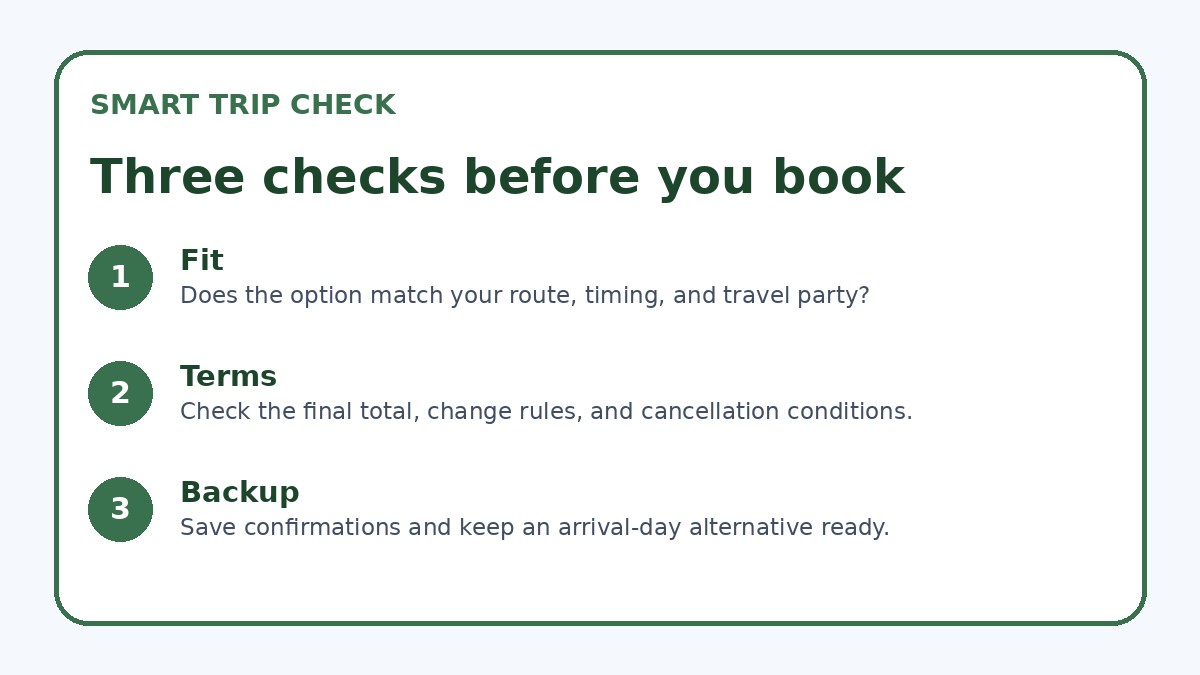
Before you book
- Confirm exact pickup address, office hours, late-arrival policy, and shuttle requirements on the provider’s final booking page.
- Verify accepted identity documents and whether an International Driving Permit or translated license is required for Osaka pickup.
- Ensure your credit card has the required available limit for the security hold and note whether debit or prepaid cards are rejected.
- Decide on fuel policy in advance—fill to the required level or accept the provider’s refueling option and understand its cost method.
- Take time-stamped photos of the car from multiple angles and record mileage and fuel level at pickup and return.
- Check the provider’s damage dispute window and contact method so you can follow up quickly if a charge appears after return.
Liability, deposits, and dispute resolution for solo travelers
Understand how deposits, insurance excesses, and damage assessments work before you hand over your credit card. Providers usually hold a security deposit or pre-authorization on arrival; the amount and release timeframe vary. Check whether the company offers collision damage waivers (CDW), theft protection, or supplemental liability coverage, and how these reduce the excess you’d pay after an incident. Because solo travelers handle disputes without a companion to corroborate events, keep a record: photos of the vehicle at pickup and return, timestamps, and copies of receipts or inspection forms.
If a disagreement arises after return, the rental terms should specify how long you have to contest charges and what evidence is required. Some companies settle disputes via an online portal; others require follow-up calls. Verify refund and dispute timelines on the provider’s final booking page so you know the contact path and expected response window. For peace of mind, consider taking photos from multiple angles at pickup and drop-off and noting mileage and fuel level in writing; that documentation is your best protection if a post-rental claim appears on your card.
Frequently asked questions
Can I pick up an Osaka rental car late at night if my flight arrives after counters close?
Some rental companies offer after-hours pickup or key-drop arrangements, but availability varies by location and provider. If you expect a late arrival, confirm on the provider’s final booking page whether late pickup is allowed, whether you must notify them in advance, and whether a fee or alternative key collection process applies. Also ask how the company documents the car’s condition for after-hours pickups—for example, whether they provide photos or a checklist to reduce post-rental disputes.
What documents do I need to show at pickup in Osaka, and is an international driving permit mandatory?
Typical requirements include a passport, your valid home-country driving license, the rental confirmation, and a credit card for the security hold. Many Japanese rental companies require an International Driving Permit (IDP) based on the 1949 Geneva convention for holders of certain foreign licenses, or an official Japanese translation for specific countries. Because rules differ by company and office, verify the exact document list on the provider’s booking page before travel to avoid being turned away or delayed at the counter.
How should I handle fuel and damage checks as a solo traveler to avoid surprises at return?
Before you drive away, agree on the fuel policy and have the staff note fuel level and mileage on the contract. Photograph the vehicle from several angles with timestamps and keep those images until any potential charge window expires. At return, inspect the car with staff when possible; if you must use a key drop, take return photos immediately and request a written confirmation or reference number. Keep all receipts and document the return time—this helps challenge any later claims efficiently.
Final planning note
For solo travelers in Osaka, pickup and return terms determine how smoothly your rental fits into the rest of your day. Prioritize an office that matches your arrival or departure plans, confirm hours and late-arrival policies, and verify documentation and deposit requirements on the provider’s final booking page. Photograph the vehicle at handover and on drop-off, understand fuel and damage procedures, and choose one-way returns only when the convenience outweighs added fees. If you want to compare current availability and booking conditions, you can check Trip.com alongside provider sites, but always rely on the final rental terms shown at checkout before you commit.
Continue planning
Check current options and final conditions
Use the provider page to confirm live availability, the final total, cancellation terms, and every condition that matters to your trip.
This evergreen planning guide was created with AI-assisted drafting and a structured quality review. It does not display live prices, schedules, availability, visa guidance, or provider rankings. Verify current details before booking. Some links are affiliate links; we may earn a commission at no additional cost to you.