Practical answer first: if you’re traveling alone but want to organize transport for a small group arriving or departing Jeju, choose between a private shared transfer (van or minibus), a metered taxi split between passengers, or coordinated public transport with luggage-friendly bus routes. Start by confirming passenger count, luggage volume, exact arrival/departure times, and pick-up/drop-off points. Request a clear, written quote that lists vehicle size limits, waiting time rules, and cancellation terms before collecting any deposits. For on-arrival flexibility, combine a pre-booked transfer for the first leg with local taxis or buses later. Below I explain how to compare cost vs convenience, safety and luggage needs, booking checks to insist on, and a checklist you can use before you commit.
See current options before you compare the details
Availability and final conditions change. Open Trip.com now or keep reading for the practical comparison.
Choose the right vehicle for your group's needs
Start by matching group size and luggage to vehicle type. A regular sedan or standard taxi works for two people with carry-on bags, but anything beyond three travelers or several large suitcases pushes you toward a van or minibus. Consider child seats, mobility equipment, and any awkward items like surfboards or bicycles—these often require larger vehicles or a separate luggage trailer. Ask prospective drivers or companies for the vehicle model and how many standard-sized suitcases they can carry; a written confirmation prevents surprises at pickup.
Think about comfort tradeoffs. A private minibus gives door-to-door convenience and saves time when stopping at multiple hotels, but it’s more expensive per person than shared public buses. Taxis are flexible but can become costly if your group splits journeys or takes long trips across the island. If you anticipate sightseeing before check-in, a driver willing to do short stops can be a good compromise; confirm whether waiting time is included or billed separately so you know how costs scale.
When to pre-book and when to wait
Pre-booking is best when you have a fixed arrival time, are working with a group on a tight schedule, or need a specific vehicle size. Written confirmation provides a point of reference if a driver is delayed, and it locks in pickup logistics so you can coordinate everyone’s arrivals. If you opt to pre-book, verify the provider’s policy on flight delays and waiting time—ask how they track your flight and whether they will adjust pickup windows without extra fees. Also check how they handle multiple arrivals close together if your party doesn’t land on the same flight.
Waiting to book on arrival can work when your group is flexible, you want to compare offers in person, or you travel during low-demand periods. This approach gives you room to negotiate with taxi drivers or see vehicle condition first-hand. The downside is that you risk longer waits at the curb and less predictability if flights are delayed or buses are infrequent. If you choose to wait, agree on a fallback plan—an identified bus route or a common nearby landmark where everyone can gather if communications fail.
| Approach | Best for | Tradeoff to check |
|---|---|---|
| Pre-booked private minibus | Groups who want door-to-door service and fixed pickup times | Higher cost per trip but predictable logistics and luggage space |
| Shared public airport bus | Budget-conscious travelers with flexible schedules and small luggage | Less convenient for multiple hotel stops and tight arrival windows |
| Metered taxi split between riders | Short distances or varied itineraries requiring flexibility | Costs can rise quickly on longer trips; must manage payment split |
| On-arrival negotiation with local drivers | Travelers comfortable bargaining and seeking last-minute options | Unpredictable availability and variable vehicle condition |
Ready to check the option that fits your plan?
Use your exact dates and traveler details so the provider page can show the current total and conditions.
Practical checks to make before you confirm any booking
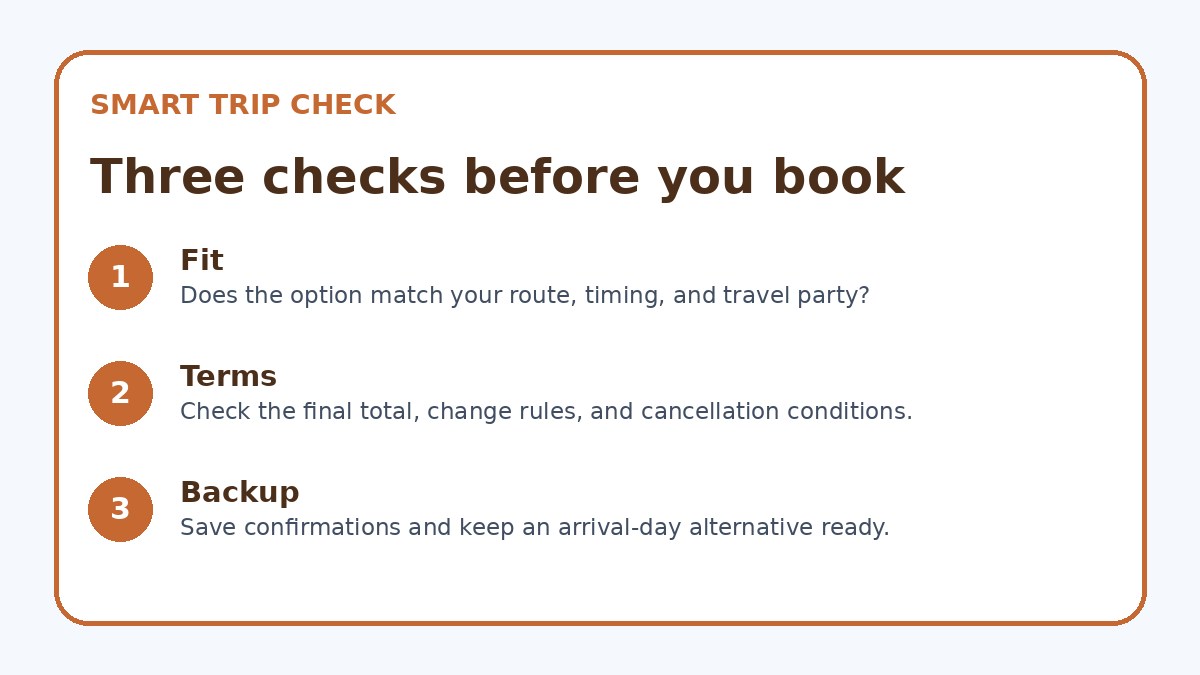
Always ask for these specifics in writing: vehicle size and model or type, passenger and suitcase capacity, final pickup point (terminal exit or curb number), waiting time allowance, cancellation terms, and whether the fare includes tolls or parking. If you’re paying or splitting the fare online, save screenshots of the booking page and the payment confirmation. When a provider references schedules or fees that could change, verify those exact details on their final booking page before payment—this helps you spot discrepancies later and gives you evidence if you need to contest a charge.
Check driver identification and company credentials on arrival: ask for the driver’s name and the booking reference, compare the license plate to the booking if provided, and confirm the agreed price one more time before loading luggage. For safety and convenience, request the driver’s phone number and a backup contact. If your group uses multiple devices or messaging apps, create a small group chat so everyone sees real-time updates about arrival times, delays, and pickup points.
Before you book
- Confirm final passenger count, arrival/departure times, and total luggage pieces before requesting quotes.
- Ask each provider for vehicle capacity, model or type, and a written statement of luggage limits.
- Get the driver’s name, contact number, and a clear pickup landmark or curb number after booking.
- Verify waiting time policy and how flight delays are handled—request this in the booking confirmation.
- Agree on a payment method and who collects or sends money; secure a single receipt listing total charges.
- Create a group chat with arrival flight numbers and backup meeting points in case plans change.
Splitting costs and coordinating communication
Decide how you’ll handle money before the journey starts. Some groups prefer one person to pay and collect cash later; others use mobile payment apps that work in Korea, or split fares in cash. Clarify whether the driver accepts card payments or local mobile wallets and, if not, how much cash you should bring. When splitting fares, calculate the per-person share including tolls and waiting fees so no one is surprised. Keep one person designated as the payment coordinator to reduce confusion, and ask for a single receipt listing the total fare and any extra charges.
Good communication is essential for multi-arrival groups. Share a precise meeting point with landmarks and photographs, include the driver’s expected waiting zone, and exchange phone numbers ahead of arrival. If members land on different flights, agree whether the driver will wait for all passengers (and for how long) or whether the driver will meet the first arrivals and shuttle the rest later. Use a messaging app so everyone can update arrival times; this real-time coordination reduces missed pickups and helps the driver adjust routes efficiently.
Frequently asked questions
Can I legally split a taxi fare among strangers in Jeju?
Yes, splitting a taxi fare between passengers is a common practice, but it relies on everyone agreeing to the payment method and amounts. If you plan to divide a single metered ride among multiple people who don’t all arrive together, confirm with the driver whether they’re comfortable making multiple stops. Decide in advance who will pay the driver and how others will reimburse them—cash or a mobile transfer are usual. Always get an itemized receipt when available so the division of costs is transparent, and confirm the driver accepts your preferred payment method because some rural drivers may not take cards.
How do I handle pickups when group members arrive on different flights?
Choose between a flexible driver who will wait for late arrivals (confirm the maximum free waiting time) or staging the plan so one member meets the driver first and collects the others. If you expect staggered arrivals, specify this when booking and ask whether the provider charges incremental fees for extra waiting or multiple pickups. For reliability, set a firm latest arrival time after which the group will split into taxis or buses rather than waiting indefinitely. Share real-time flight updates in a group chat so the driver can adjust arrival time without guesswork.
What should I verify on a transfer provider’s final booking page?
Before payment, verify vehicle type and passenger/luggage capacity, explicit pickup location and fallback instructions, included waiting time, cancellation and delay policies, and the full price including any surcharges or tolls. If the page lists time-based rules—like when waiting fees start—or limits on suitcase size, save screenshots of those terms. Also confirm contact details for the driver or the company and whether the booking is refundable or changeable. If the provider links to a partner site or aggregator, check the original operator’s page too, and you can compare availability on Trip.com as one optional reference.
Final planning note
Organizing a Jeju airport transfer as a solo traveler for a small group is mainly about matching vehicle capacity with luggage and agreeing clear communication, payment, and waiting-time rules upfront. Pre-book when you need predictability and specific vehicle sizes; consider taxis or buses when plans are flexible or budgets are tight. Insist on written confirmations for pickup points, luggage limits, and delay policies—these protect you and your fellow travelers if flights change. Use a single payment coordinator and a group chat to smooth arrivals, and verify the provider’s final booking page for the exact terms before paying. With those steps, you’ll reduce stress and keep your group moving efficiently around Jeju.
Continue planning
Check current options and final conditions
Use the provider page to confirm live availability, the final total, cancellation terms, and every condition that matters to your trip.
This evergreen planning guide was created with AI-assisted drafting and a structured quality review. It does not display live prices, schedules, availability, visa guidance, or provider rankings. Verify current details before booking. Some links are affiliate links; we may earn a commission at no additional cost to you.