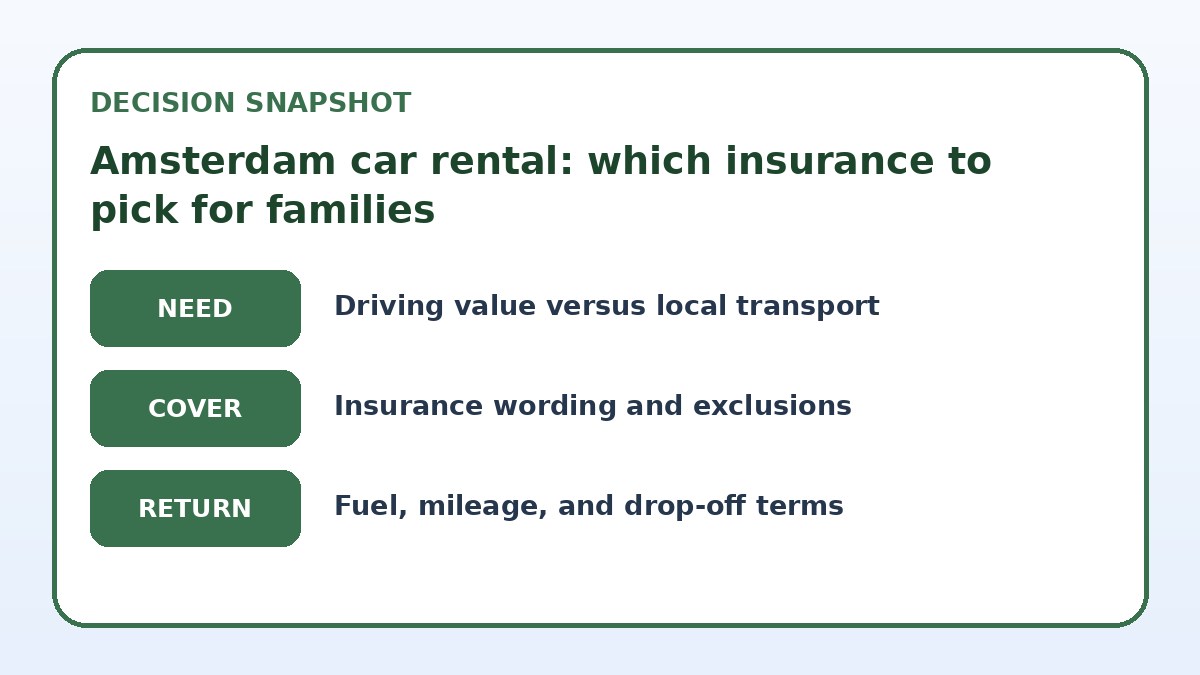
Practical answer first: for most families renting a car in Amsterdam, take the rental company’s Collision Damage Waiver (CDW) with the lowest deductible you can afford, add third-party liability to match Dutch minimums, and consider either full-cover excess protection from a reputable insurer or a credit-card secondary policy only if you confirm it covers Dutch rentals. Why? Amsterdam’s narrow streets, cyclists, and parking garages increase the chance of small scrapes that trigger the excess. Before you finalize a booking, check the rental contract for the excess amount, whether glass/tyre/undercarriage are excluded, and what paperwork the agency requires at pickup (driver ID, credit card, and proof of cover). If you want another pricing check, compare availability and terms on Trip.com but verify all final policy wording on the car company’s booking page.
See current options before you compare the details
Availability and final conditions change. Open Trip.com now or keep reading for the practical comparison.
Key insurance words and what they mean for families
You’ll see terms such as CDW (Collision Damage Waiver), SCDW (Super CDW), TP (Theft Protection), and third-party liability. CDW reduces the amount you pay if the rental car is damaged, but it typically leaves an excess (deductible). SCDW or “zero-excess” options lower or remove that excess at a higher daily rate. TP covers loss if the car is stolen; combined products like LDW bundle theft and collision coverage. For families, a low-excess or zero-excess option can be worth the premium because it reduces stress and out-of-pocket costs after minor collisions or scrapes common in busy urban driving.
Always confirm which parts of the car are included. Many basic CDW policies exclude tyres, wheels, windscreen, and underbody damage — areas commonly affected in Amsterdam by tram tracks, city kerbs, or fallen bicycles. If the rental company’s contract excludes these, you’ll either need a separate tyre/glass cover or an SCDW that explicitly includes them. Also note whether third-party liability limits meet Dutch legal requirements; inadequate liability cover could leave you exposed to claims from other road users, so know the numeric limits stated in the policy.
How to compare the real cost: excess, extras, and family needs
Look beyond the headline daily price. Compare the excess amount, and convert it into a hypothetical worst-case charge so you understand potential exposure. Multiplying the excess by the number of drivers or applying it to multiple incidents can matter if you plan heavy driving. For families, factor in child seats, GPS, or extra drivers — these often have daily charges and some insurers will void cover if an unlisted driver is behind the wheel. Ask whether the quoted price includes local taxes and city parking restrictions that may influence where you can leave the car safely.
Decide what’s negotiable based on your tolerance for small claims. If you prefer to avoid out-of-pocket headaches over scrapes and minor dents, a lower excess or SCDW is attractive despite higher rental fees. If you’re comfortable handling small repairs and have strong travel-credit-card coverage or a European personal policy, a higher excess with independent excess-waiver insurance might save money. Whichever route you choose, have digital copies of policy wording and claim steps accessible on your phone so you can act quickly after any incident.
| Approach | Best for | Tradeoff to check |
|---|---|---|
| Rental company CDW with low excess | Families who want minimal hassle and predictable out-of-pocket costs | Higher daily rental rate versus lower financial exposure after damage |
| Zero-excess (SCDW) bought from provider | Short city trips where minor scrapes are likely | Most expensive upfront but reduces claim complexity and paperwork |
| Independent excess-waiver insurance | Budget-conscious families with time to manage claims | May require you to pay rental firm first then claim reimbursement |
| Rely on credit-card or personal auto insurance | Travelers with strong, verified rental cover who accept higher excess | Coverage restrictions and proof requirements vary; verify in writing |
Ready to check the option that fits your plan?
Use your exact dates and traveler details so the provider page can show the current total and conditions.
What to verify with the provider at booking and pickup
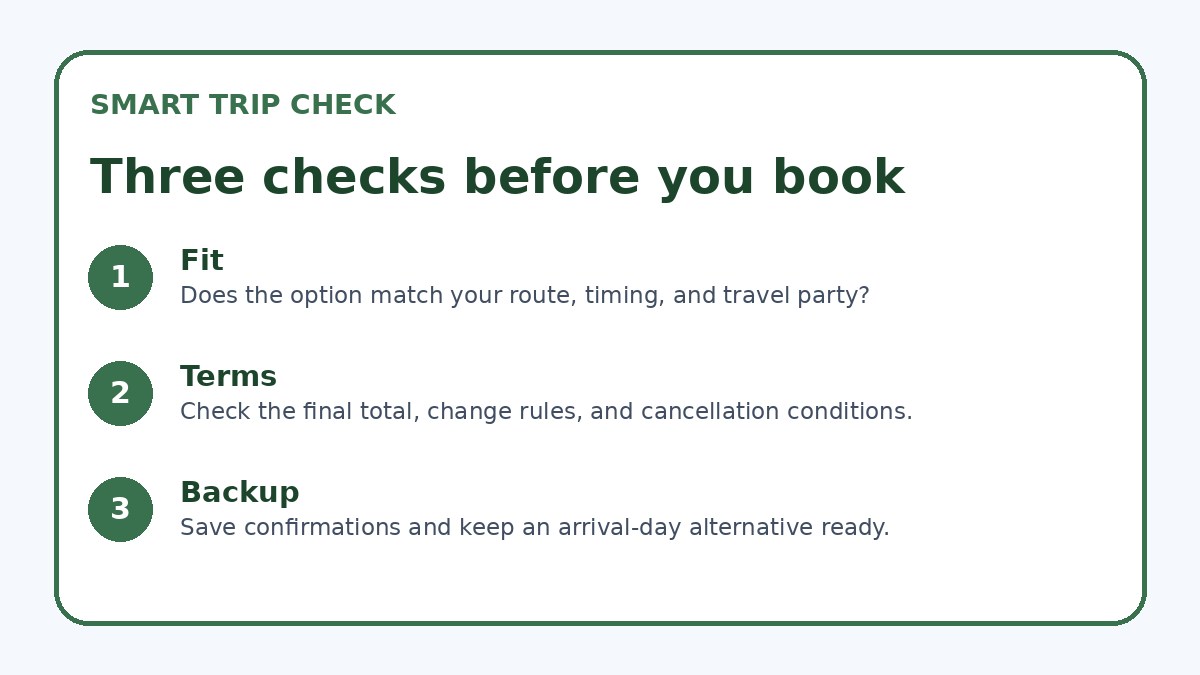
Before you book, get the exact contract language: the precise excess amount, listed exclusions (glass, tyre, undercarriage), whether theft cover requires the vehicle to be locked and keys to be with you, and the insurer’s claim contact details. If you plan to use a credit-card benefit, confirm with the card issuer that Dutch rentals are covered, that they are primary or secondary as you need, and whether the card requires you to charge the whole rental to that card. Keep screenshots or PDF copies of the final rental conditions and your policy for easy reference at the desk.
At pickup, go through the vehicle carefully with staff and document every existing scratch or dent on the rental agreement and with timestamped photos; don’t rely on cursory checks. Verify the listed fuel policy and how refuelling claims are handled — disputes about fuel can delay claims. Ask staff to confirm whether child seats supplied by the company are insured or if you should cover them under your policy. If anything in the signed contract disagrees with the pre-booked terms, resolve it then before driving away.
Before you book
- Obtain and save a PDF screenshot of the rental contract showing excess and exclusions before booking.
- Confirm in writing whether tyres, windscreen, and undercarriage are covered by your chosen policy.
- Call your credit-card issuer to verify Dutch rental coverage, primary/secondary status, and required documentation.
- Document every existing vehicle mark with timestamped photos and ensure they are recorded on the rental agreement.
- Ask the rental desk to confirm which paperwork triggers theft cover (keys, locked doors) and note the insurer contact.
- Compare the provider’s final policy wording on their booking page against any third-party insurance documents.
Making a decision: scenarios and recommended approaches
If you’re driving mainly in Amsterdam’s center with short hops, choose a low-excess or zero-excess option and include glass/tyre cover. Narrow streets, parked bikes, and tram tracks raise the chance of minor damage. The peace of mind of not dealing with an excess claim can outweigh the extra daily cost for family trips where time and stress matter. Also add a named extra driver if you’ll trade driving responsibilities, and make sure child seats meet Dutch safety marks and are documented in the contract.
For longer road trips around the Netherlands or neighboring countries where you’ll be on motorways more, you might accept a higher excess if you have strong third-party coverage via your credit card or private insurer. In that case, check whether independent excess-insurance policies reimburse the rental firm directly or require you to pay first and claim later. Whichever scenario fits you, plan to verify final policy wording on the booking page, and consider comparing terms on Trip.com before you commit, then confirm the supplier’s terms as authoritative at checkout.
Frequently asked questions
Does CDW cover damage to child seats or items left in the car?
CDW typically covers physical damage to the rental vehicle itself, not personal belongings or child seats you bring. Company-supplied child seats may be covered under certain rental contracts, but policies differ. Check the wording: look for statements about personal effects, passenger property, and accessory cover. If the child seat is provided by the rental company, ask whether incidents involving the seat are included in the CDW or if you must buy separate liability or contents cover. Always store valuables out of sight and follow local guidance to reduce theft risk.
Can I add multiple drivers on the insurance and how does that affect claims?
Yes, most rental contracts allow additional drivers but the rental firm usually requires each driver’s details and a valid licence on the agreement. Some companies charge a daily fee per extra driver; others include one additional driver for free — check the booking terms. All named drivers are covered under the rental’s insurance, but an unlisted driver driving the car can void cover and lead to denied claims. Keep a copy of the signed agreement showing the listed drivers; that proof is often required in the event of an incident.
If I use my credit card’s rental benefit, what proof will I need after an incident?
Credit-card insurers typically require that the entire rental be charged to the card and will ask for specific documentation to process a claim. Expect to supply the rental agreement, the vehicle return report, police or incident reports if applicable, itemized invoices from the rental company, and the credit-card statement showing the charge. Time limits for filing a claim and evidentiary standards vary by issuer, so call your card provider ahead of travel to understand requirements and keep digital copies of all paperwork. Without required proof, the card benefit may be denied.
Final planning note
Families planning to rent a car in Amsterdam should prioritize clarity over perceived savings. Start by checking the exact excess, which parts of the vehicle are excluded, and whether additional drivers and child seats are explicitly covered. If you value stress-free travel in tight city conditions, a low-excess or zero-excess option with glass and tyre cover usually saves time and worry. If you prefer to reduce upfront rental cost, verify strong external cover from your credit card or a reputable independent insurer and understand reimbursement steps. Whatever you choose, keep all final policy wording and pickup paperwork on hand and confirm the rental company’s terms on their booking page before you drive away.
Continue planning
Check current options and final conditions
Use the provider page to confirm live availability, the final total, cancellation terms, and every condition that matters to your trip.
This evergreen planning guide was created with AI-assisted drafting and a structured quality review. It does not display live prices, schedules, availability, visa guidance, or provider rankings. Verify current details before booking. Some links are affiliate links; we may earn a commission at no additional cost to you.