If you’re booking Seoul to Jeju flights with children, the practical choice is usually a direct flight for the shortest door-to-door travel time and fewer changes. Direct services reduce the risk of missed connections, make luggage and stroller logistics simpler, and are easier to coordinate around nap and mealtime schedules. However, connecting options can sometimes save money, open different departure times, or allow combining visits to another city en route. Families should weigh total journey time, airport transfer complexity, and the likelihood of schedule disruption rather than looking at fare alone. Below you’ll find clear decision criteria, scenarios where a connection might make sense, and a checklist of exactly what to verify on booking pages and at the airport.
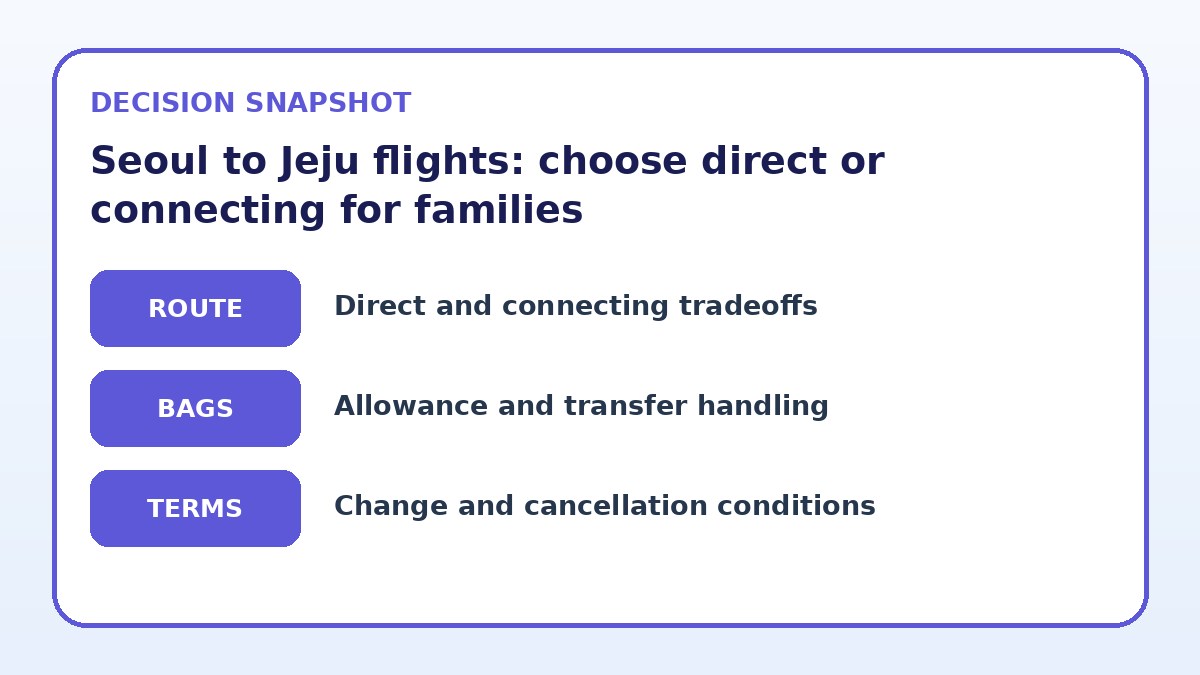
See current options before you compare the details
Availability and final conditions change. Open Trip.com now or keep reading for the practical comparison.
Direct flights: why families often prefer them
Direct Seoul to Jeju flights remove the need to change aircraft, which simplifies nearly every logistical challenge parents face. With no intermediate airport, you avoid rechecking luggage, rushing through unfamiliar terminals, or coordinating two separate boarding processes. That reduces the cognitive load while managing car seats, strollers, snacks, and antsy children. Direct services also preserve nap schedules better because total travel time tends to be shorter and more predictable, which can make the difference between a relaxed start to a holiday and a stressful beginning.
Choosing direct does not mean ignoring other factors: consider airport access and check-in time at your Seoul departure airport, available family seating options, and whether the carrier provides child amenities such as priority boarding or bassinets. Also verify the airline’s checked-bag rules and stroller policy so you won’t face unexpected fees or last-minute gate checks. On the booking page, confirm the flight’s exact routing and aircraft type if that matters for cabin layout or extra-legroom seats.
Connecting flights: when a stopover can make sense
A connecting itinerary can be worth considering for families when it offers a favorable balance of cost, timing, or an intentional stop that fits your trip plans. For example, if a connection shortens a long wait at the airport by matching school schedules or pairs two short sectors that are both comfortable for your kids, it might work. Connecting can also open more flexible departure times from Seoul or provide opportunities to combine travel with a brief visit to another city, as long as the connection window accommodates unloading and reassembling family gear without rush.
Be realistic about the added steps: you will likely need to pass through another security checkpoint, possibly transfer between terminals, and manage hand luggage, passports, and boarding passes for each leg. If connection times are tight, factor in the likelihood of delays and the stress of rushing with children. On booking pages, check whether both legs are on one ticket (which usually protects you if the first leg is late) or separate tickets (which places more risk on you to make the onward flight).
| Approach | Best for | Tradeoff to check |
|---|---|---|
| Direct flights | Families with young children or tight schedules seeking minimal transfers | Often fewer timetable options and potentially higher fares compared with connecting routes |
| Single-ticket connecting flights | Families wanting lower disruption risk if the first leg is delayed | Longer total travel time but carrier usually rebooks missed connections |
| Separate-ticket connections | Travelers chasing lower fares or mixing carriers deliberately | Higher risk: you are responsible for missed second legs and handling baggage transfers |
| Planned overnight stopover | Families who want to break the journey or add a short stopover experience | Adds accommodation cost and logistics but reduces rushed transfers and stress |
Ready to check the option that fits your plan?
Use your exact dates and traveler details so the provider page can show the current total and conditions.
How to compare total travel time and convenience
When comparing direct and connecting Seoul to Jeju options, always calculate door-to-door time rather than comparing flight durations alone. Start with the time to get to your Seoul departure airport from home or your hotel, add recommended check-in and security buffers (which are larger with children), then include airborne time and transfer times at the arrival end. For connecting itineraries, add time to change terminals, recheck bags if required, and any extra security or immigration steps. This full timeline shows the real difference in family time and will often reveal that a slightly longer airborne route with fewer transfers is preferable.
Also account for predictability and comfort: consider how each option fits with your children’s routines and whether airports on the route have family facilities like play areas, nursing rooms, or child-friendly restrooms. Look at scheduled connection buffers—too short risks missed flights; too long means extra waiting in airports. If you are comparing fares, factor in extras such as baggage fees, seat selection, and the cost of an extra night if a connection forces an overnight stop.
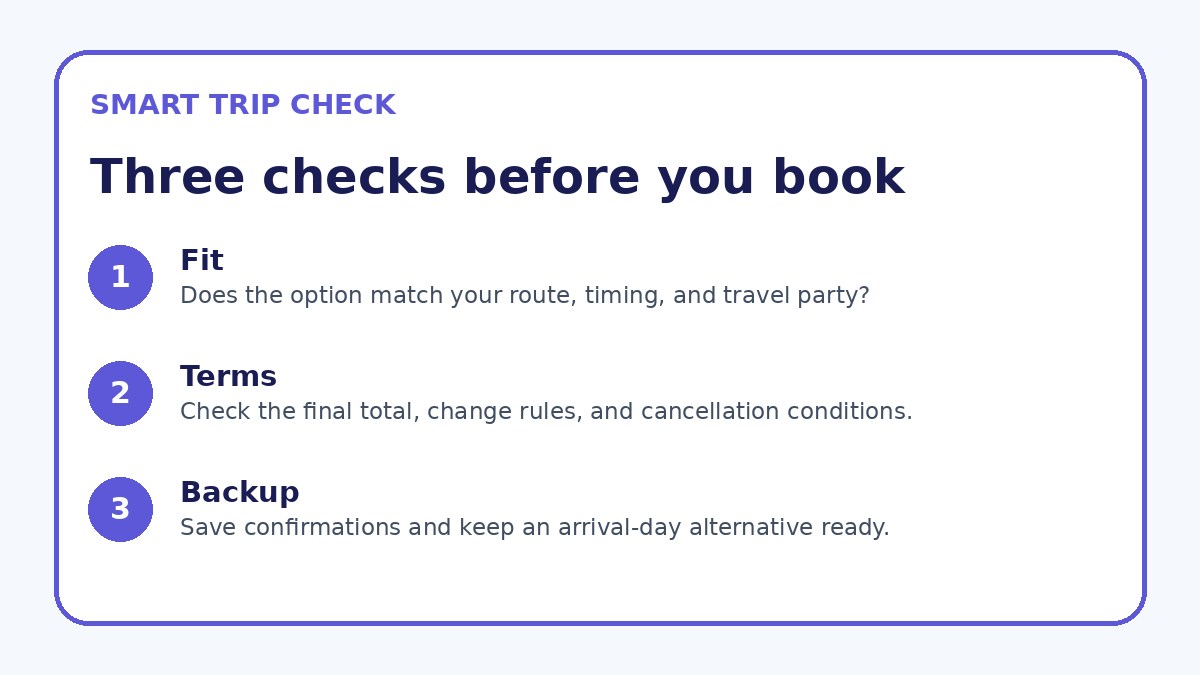
Before you book
- Check whether both legs are on a single ticket or separate tickets and what protection each offers for missed connections.
- Verify baggage rules and whether checked luggage transfers automatically during a connection.
- Confirm minimum connection times at the transfer airport and practical transfer distances between gates or terminals.
- Reserve family seating, bassinets, or bulkhead seats in advance and note any carrier-specific rules on the booking page.
- Plan arrival and departure times to match your child’s sleep and meal routines, including realistic buffers for delays.
- Pack an easy-to-reach carry-on with snacks, change of clothes, medicines, and entertainment for every child.
Decision criteria and booking checks for families
Use a simple decision checklist: prioritize minimal transfers for very young children or tight schedules; consider a connecting itinerary if it offers substantial savings and comfortable transfer times; choose one-ticket itineraries when possible to reduce risk. Before you finalize any booking, verify critical details on the airline’s final booking page: whether both legs are on the same ticket, baggage transfer policies, minimum connection times, and what happens to your seat assignments if you change flights. If a particular carrier provides family services like early boarding, check how to request those on the booking page.
Also check practical on-the-day details: gate layouts at the transfer airport, stroller gate-check policies, and whether you need to pick up checked bags and pass through immigration or customs during the connection. For added comparison shopping, you may look at Trip.com as one place to view current availability and conditions—but always confirm the operative rules and final fare on the airline’s or booking agent’s confirmation page before paying.
Frequently asked questions
Are direct Seoul to Jeju flights more expensive for families?
Direct flights can sometimes have higher base fares than connecting options, but that isn’t always the case. For families, total cost should account for extra charges that a connecting itinerary may trigger—such as additional checked-bag fees, the price of a cheap overnight stay if connections are spaced over different days, or the value of your time and stress. Compare total door-to-door costs, including transport to and from airports, potential accommodation, and incidental fees. Always confirm fare rules, baggage allowances, and optional extras on the airline’s final booking page before purchasing.
How much connection time is enough when traveling with kids?
Allow more buffer than the minimum connection time shown by carriers—especially when moving between terminals or if you must collect and recheck luggage. A comfortable family connection often needs extra time for restroom breaks, stroller handling, and calming children between flights. Consider the layout of the transfer airport and whether transfer services are available. If the itinerary is on a single ticket, carriers typically protect reasonable connections, but you still want to avoid tight turns. Check the airline’s recommended family transfer times on their site and add personal padding based on your children’s needs.
What should I do if a connection is delayed and I’m traveling with children?
If you’re on a single-ticket itinerary, contact the operating carrier immediately—airlines usually rebook onward flights when delays are their responsibility. Keep essentials in your carry-on and know your rights regarding meals or accommodation if the delay becomes lengthy. If on separate tickets, inform the next carrier but be prepared to make alternate arrangements yourself. For all situations, have a digital and printed copy of confirmations, know where assistance desks are located, and prioritize calming and caring for your children while you manage rebooking. Check the airline’s assistance policies on the booking page so you know what support to expect.
Final planning note
For most families traveling Seoul to Jeju, a direct flight simplifies logistics and reduces the chance of stress during travel days. Connecting options can be practical when they meaningfully improve scheduling or cost, but they demand careful scrutiny of total journey time, baggage rules, and whether legs are ticketed together. Use the checklist above to verify the booking details that matter for families—ticketing, baggage transfer, connection buffers, and family services. When in doubt, favor predictability and fewer transfers to preserve energy and patience for the start of your trip.
Continue planning
Check current options and final conditions
Use the provider page to confirm live availability, the final total, cancellation terms, and every condition that matters to your trip.
This evergreen planning guide was created with AI-assisted drafting and a structured quality review. It does not display live prices, schedules, availability, visa guidance, or provider rankings. Verify current details before booking. Some links are affiliate links; we may earn a commission at no additional cost to you.