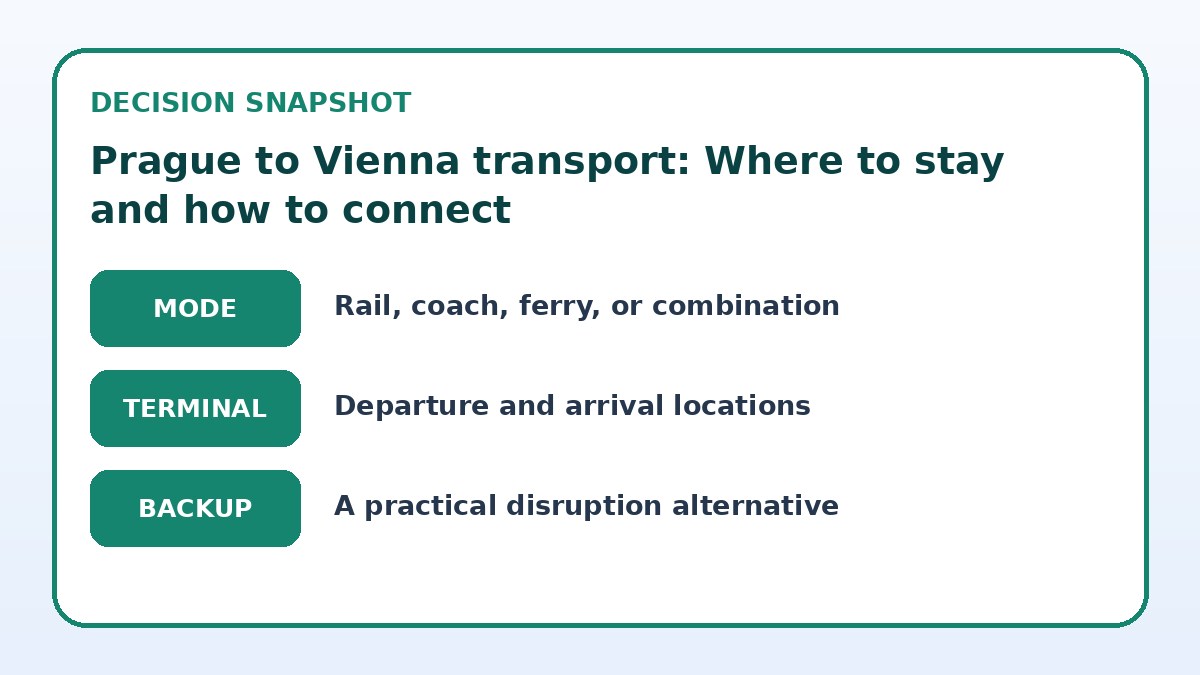
If you’re a first-time visitor linking Prague and Vienna by ground, start by choosing the travel spine (train, bus, or car) and then layer in stops, accommodation, and luggage options. For many travelers, a high-speed or intercity train spine gives the easiest balance of comfort and city-center endpoints; buses can save money and offer flexible schedules; driving opens rural detours and timetable freedom. Whatever you choose, lay out each city-to-city segment with precise station or terminal names, planned departure windows, and backup transfers. Early planning should answer: how many overnights do you want en route, which neighborhoods to stay near for expedient arrivals, whether you need reserved seating or car hire with cross-border insurance, and which provider pages to verify final schedules, seat availability, and current terms before booking.
See current options before you compare the details
Availability and final conditions change. Open Trip.com now or keep reading for the practical comparison.
Choose the travel spine: train, bus, or car
Start by deciding the main mode that will carry you between Prague and Vienna—this is your travel spine. Trains tend to connect city centers directly and let you work or rest on board; buses can have more frequency and slightly different city-access points; renting a car changes the trip into a self-directed itinerary where you control stops and schedule. Think about how much time you want for sightseeing en route, how comfortable you are handling longer driving days, and whether you prefer arriving at central stations for easy access to your hotel.
Once you select the spine, list a handful of realistic daily segments and potential overnight towns. For trains and buses, note the main stations and whether you need seat reservations or luggage fees. For driving, research crossing paperwork, typical parking in each city, and sensible daily distances. This spine decision affects lodging neighborhoods: choose hotels near the arriving station if you prefer minimal transfers, or pick a charming historic neighborhood if you don’t mind a short taxi or tram ride.
Compare direct and connecting options and how to evaluate them
Do not assume every train or bus is direct: some services run non-stop between capitals, others require a change. When comparing options, look at total door-to-door time, number of transfers, and the quality of transfer windows. A slightly longer itinerary with an easy 10–20 minute platform change is often less stressful than a single short-connection option that risks missed links. For drivers, connecting options translate to planned detours or ferry crossings; account for traffic peaks and rest stops.
Evaluate convenience tradeoffs: direct trains usually minimize decision points and luggage handling, while cheaper indirect buses might require a transfer at a regional hub. If a connection is necessary, prioritize transfers that occur in major stations with clear signage and frequent onward services. Always verify transfer platform assignments, minimum recommended connection times, and whether the same ticket covers both legs—check the provider’s final booking page for those concrete details before purchase.
| Approach | Best for | Tradeoff to check |
|---|---|---|
| Train spine with central hotels | Travelers who value comfort, city-center access, and minimal hand-carry transfers | May require seat reservations and often higher base fares than buses; fewer rural detours |
| Bus spine with flexible stops | Budget-conscious travelers who want frequent departure windows and different route options | Longer door-to-door time in some cases and variable onboard space for luggage |
| Self-drive itinerary | Travelers seeking scenic detours, independent timing, and rural stops between cities | Driving increases planning for parking, insurance, and border paperwork; fatigue risk on longer days |
| Mixed spine (train plus local car/bus segments) | Travelers who want the reliability of trains for long legs and flexibility for local exploration | Requires careful scheduling and possible multiple bookings that may not protect missed connections |
Ready to check the option that fits your plan?
Use your exact dates and traveler details so the provider page can show the current total and conditions.
Where to stay and how to align accommodations with transport
Plan your accommodation around the planned arrival/departure points to reduce wasted time. In Prague and Vienna, central neighborhoods near main stations or tram stops save transit time but can be busier; quieter districts may require a 10–25 minute tram or metro trip. If you have an early departure or late arrival, staying in a district with convenient late-night transport or taxi access matters more than sightseeing proximity. For overnight stops in between, prioritize towns with convenient evening dining and clear transit links the next morning.
Use your transport spine to narrow neighborhoods: if arriving by train, choose hotels within walking distance of the station or a short tram ride; if you plan to drive, verify hotel parking and any length-of-stay restrictions. When booking, confirm on the provider page whether check-in times, luggage storage, and late-arrival procedures suit your travel plan. This reduces friction on travel days and makes multi-city transit feel manageable rather than rushed.
Before you book
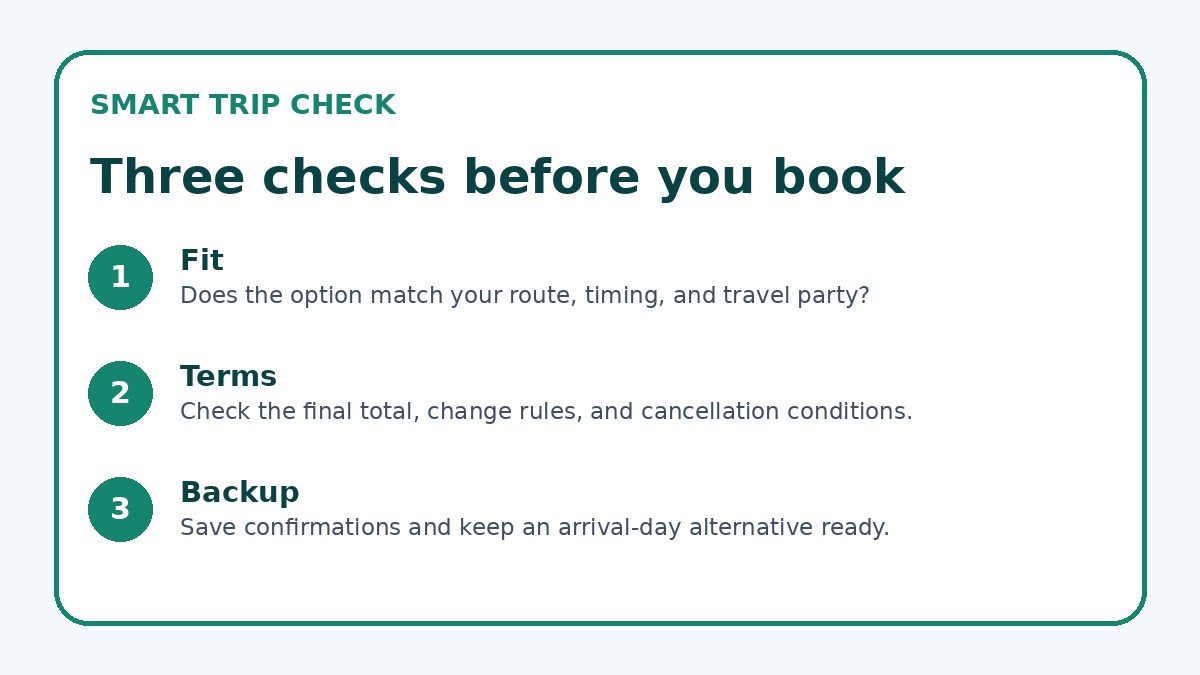
- List exact departure and arrival stations or terminals for every leg (include platform/garage names if known).
- Confirm seat reservation rules, baggage allowances, and whether a single ticket covers connections on provider pages.
- Choose hotel locations based on proximity to your planned arrival point and check for luggage storage options.
- If renting a car, verify cross-border permission, insurance coverage, and one-way drop-off rules before booking.
- Build buffer time for transfers and local transit; allow at least 30–90 minutes depending on connection complexity.
- Save screenshots or PDFs of confirmations and note emergency contact numbers and local transport strike or disruption pages.
Booking strategy and final checks before you commit
Build each segment on a single itinerary document listing departure locations, arrival locations, planned departure windows, and alternatives. For trains and buses, compare booking pages for seat reservation rules, baggage allowances, and how ticket changes or cancellations are handled. If you’re mixing providers, verify transfer minimums and whether separate tickets leave you responsible for missed connections. For car hire, confirm cross-border permission, fuel policy, excess insurance, and one-way drop-off rules if you don’t return the vehicle to the pickup location.
Before pressing buy, check provider-specific details: platform assignment policies, seat-class descriptions, boarding procedures for luggage, and the exact pickup/drop-off address for buses or car hires. Trip.com can be one place to view current availability and conditions, but always confirm final terms on the supplier’s official booking page. Save or screenshot confirmations, and keep digital and printed copies of key booking references during your trip.
Frequently asked questions
Should I take a direct train or split the trip with overnight stops between Prague and Vienna?
If you prize simplicity and want to maximize sightseeing time in each capital, a direct daytime train or a single-day bus transfer keeps travel straightforward. Splitting the route with overnight stops works well if you want to explore smaller towns or reduce long-day fatigue—this creates more packing and accommodation changes but turns travel into part of the trip. Decide based on how many full sightseeing days you allocated per city and whether you prefer relaxed days with shorter travel or compact travel days and more time in each capital.
Can I mix different providers on the same travel day, and what should I verify?
Mixing providers is common but increases risk: if the first leg is delayed, the second provider typically won’t cover missed connections unless you booked a through-ticket. Verify minimum connection times, platform interchange ease, and whether the providers have synchronized schedules. If possible, leave generous buffers between independently booked legs or use a single-ticket solution that covers connections. Always check the supplier’s final booking page for change and refund terms before purchasing mixed-provider legs.
What luggage and accessibility considerations matter for ground travel between Prague and Vienna?
Trains usually offer generous luggage space but check whether large suitcases are stored in specific cars or racks; buses can limit carry-on and may charge for large items. If mobility support is necessary, confirm station accessibility, step-free boarding, and whether you must request assistance in advance on the provider’s booking page. For driving, secure roof storage or a larger vehicle if you have bulky gear, and factor in how you’ll move luggage between hotels and stations.
Final planning note
Planning Prague to Vienna ground travel boils down to three decisions: choose a primary transport spine, align accommodations with arrival and departure points, and set a clear booking and backup strategy. Trains offer city-center convenience and comfort; buses give frequency and budget options; driving provides freedom for detours. For mixed plans, prioritize connection buffers and verify each provider’s rules on the booking page—especially reservations, baggage allowances, and refund terms. Build an itinerary document with alternatives, confirm neighborhood logistics for each overnight, and carry digital copies of all bookings. Doing this small legwork before you book will turn a multi-city ground trip into a smooth, familiar rhythm rather than a series of last-minute choices.
Continue planning
Check current options and final conditions
Use the provider page to confirm live availability, the final total, cancellation terms, and every condition that matters to your trip.
This evergreen planning guide was created with AI-assisted drafting and a structured quality review. It does not display live prices, schedules, availability, visa guidance, or provider rankings. Verify current details before booking. Some links are affiliate links; we may earn a commission at no additional cost to you.