If you need to book London to Paris flights for business, focus on time, reliability, and how each option affects your door-to-door journey. Start by deciding whether flight time plus airport transfers beats rail or multimode options; then check frequency, baggage rules, and flexible ticket terms that match your company’s travel policy. Practical verification—airport terminals, transfer time between terminals, and whether a chosen fare includes flexible rebooking—matters more than nominal flight duration. Use the checklist below to compare direct and connecting flights, confirm arrival logistics in Paris, and flag items your finance or travel manager will want on the receipt. When provider-specific details could change, verify them on the airline’s final booking page (or a comparison site such as Trip.com) before you commit.
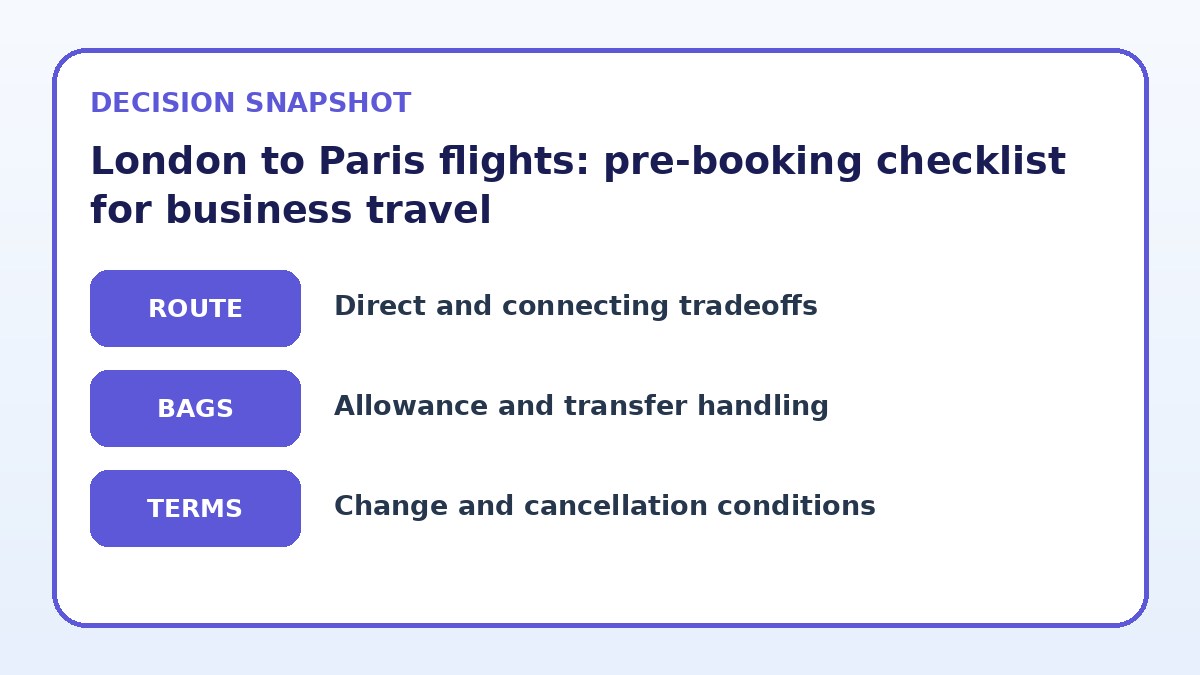
See current options before you compare the details
Availability and final conditions change. Open Trip.com now or keep reading for the practical comparison.
Choose the right airport and arrival plan
London and Paris each have several airports that differ substantially in distance from central business districts, public transport links, and terminal services. For London, your practical choices often include airports with fast rail links to central London and smaller airports that may save airborne time but add road transfer delays. In Paris, note whether arrival is at an airport with efficient train or RER access to the city center or at one that typically needs a longer shuttle or taxi. For a business trip, prefer the airport combination that reduces overall transit time and minimizes risks of missing meetings.
When comparing airports, look beyond advertised flight time and verify connection options to your final destination in calendar time. Check scheduled frequency around your preferred departure and arrival windows—higher frequency can reduce the impact of delays and offer backup same-day alternatives. Confirm which terminal your flight uses and whether you’ll need to change terminals for return flights or connections. Finally, map typical transfer times during your travel window (rush hour vs off-peak) and build a buffer into your meeting schedule.
Evaluate direct versus connecting options
Direct flights reduce complexity but may come at different prices or limited schedules; connecting flights can widen choices and lower fares but add transfer risk. For business travelers, weigh the value of a nonstop route that keeps you productive aboard against a cheaper itinerary that requires a tight connection or an overnight layover. Examine the minimum connection times at intermediate airports and whether the same carrier or alliance issues both legs—single-ticket itineraries typically provide better protection if delays force rebooking.
When comparing options, check how long total travel, including transfer time and potential waiting, compares to alternatives such as high-speed rail or combined rail+flight plans. If a connection crosses different carriers, verify baggage transfer rules and whether you must recheck luggage through security. Also consider the predictability of each option: frequent short flights with many daily departures reduce risk compared with a single daily nonstop that’s your only choice that day.
| Approach | Best for | Tradeoff to check |
|---|---|---|
| Direct flights | Minimizing complexity and total travel stages | May have fewer daily departures or higher fare classes |
| Connecting flights | More scheduling choices and potential cost savings | Adds transfer risk and longer total journey time |
| Multimodal (rail+flight or rail-only) | City-center to city-center travel with predictable times | May take longer overall and limits late-night options |
| Flexible/refundable fares | Frequent last-minute changes and corporate approval ease | Higher upfront cost compared with restricted tickets |
Ready to check the option that fits your plan?
Use your exact dates and traveler details so the provider page can show the current total and conditions.
Ticket rules, corporate policy and expense handling
Before you click buy, match the fare’s change and cancellation terms with your company’s approval and expense rules. Some fares allow free date changes or carry small fees, while others are restricted or nonrefundable; these details determine whether advance purchase savings are worth the risk. Ensure the booking platform or airline issues an invoice that meets your finance department’s requirements and that the fare class allows accrual or redemption of corporate travel points if your policy requires it.
Also confirm refundability and insurance options—will your employer permit a refundable fare or require specific travel insurance? If you habitually need last-minute changes, prioritize fares with flexible rebooking or purchase a fare upgrade that includes free modifications. Where a travel manager or booking tool handles approvals, collect the exact fare code, ticketing deadline, and any ancillary service costs (seat selection, extra baggage, priority boarding) so your expense claims and pre-trip approvals align with the booking.
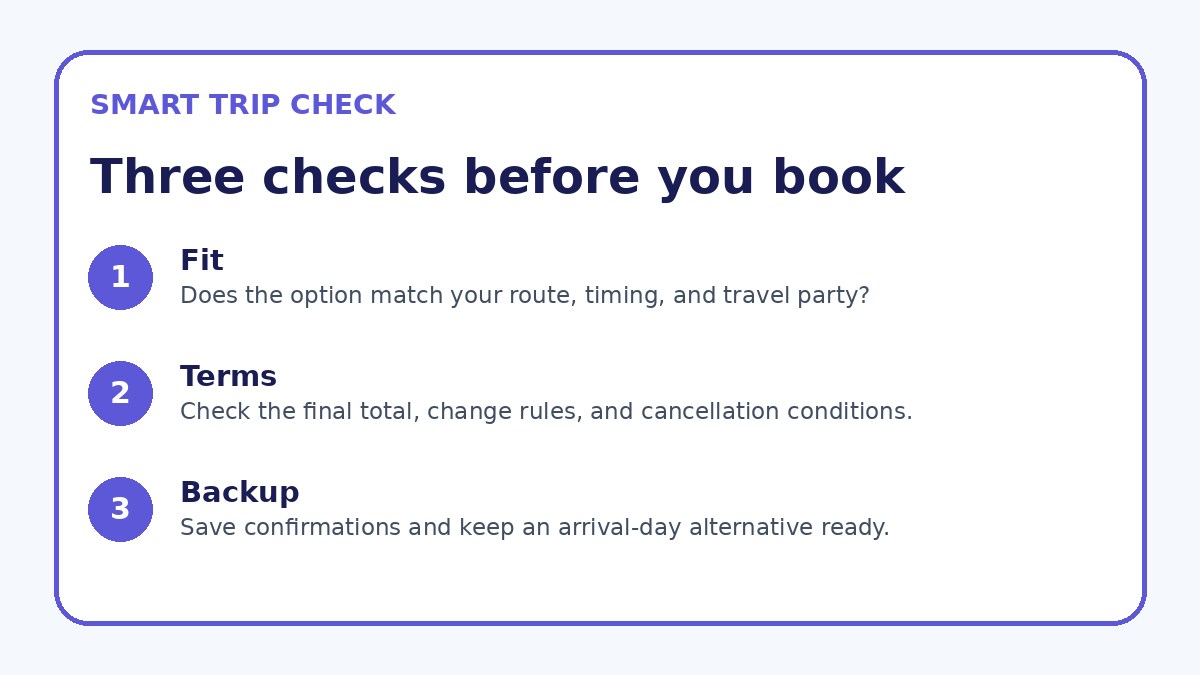
Before you book
- Confirm which London and Paris airports fit your meeting locations and estimate door-to-door transfer time including rush-hour buffers.
- Compare direct and connecting itineraries by total travel time, number of transfers, and likelihood of same-day alternatives.
- Verify fare rules on the airline’s final booking page: change fees, refundability, minimum stay, and whether the fare issues an invoice acceptable to finance.
- Check baggage allowance and whether carry-on-only keeps you meeting-ready or if checked luggage is required for your trip needs.
- Confirm seat options, onboard connectivity, and lounge access availability that affect in-transit productivity.
- Document booking codes, ticketing deadlines, and any ancillary fees to include in your travel approval and expense submission.
Productivity and comfort considerations that matter
For business travelers, seat type, onboard Wi‑Fi availability, and lounge access can directly affect productivity. Decide whether flying during working hours means you need guaranteed power outlets, a quieter cabin class, or access to an airport lounge to prepare for meetings. Check whether the fare includes priority boarding or fast-track security; these services can substantially reduce pre-departure stress and lost time on short trips.
Don’t forget last-mile details: whether the airline partners with transport apps, whether mobile boarding passes are supported, and if there are meeting-ready facilities at the arrival airport. For short business trips, a slightly more expensive ticket that offers a stable seat assignment, a generous carry-on allowance, or a predictable arrival time may be more cost-effective than the cheapest available fare once the value of time and productivity is counted.
Frequently asked questions
Should I choose a direct flight or accept a connection on London to Paris routes?
Choose direct flights if you prioritize minimizing complexity and reducing the chance of missed meetings—directs usually shorten the number of travel stages. If schedules, costs, or departure times matter more, a connection can open earlier or later departure windows and more carrier options. When evaluating a connecting itinerary, verify minimum connection times, whether both legs are on one ticket, and if baggage will transfer automatically. Compare total door-to-door time rather than airborne time alone to make the best decision for your business commitments.
What ticket flexibility should I buy for a routine business trip to Paris?
Buy flexibility that matches your real change risk: if meetings often shift, select fares that permit free or low-cost changes rather than nonrefundable advance fares. Check specific change fees, the process for name or date changes, and whether refunds are permitted on the airline’s final booking page. If your company reimburses higher fares for flexibility, document the fare class and the terms in your travel approval. Purchasing refundable fares or a commercial travel insurance policy can be worth the extra cost when schedule uncertainty is high.
How do I handle transfers between Paris airports and city-center meetings?
Plan transfers by checking which arrival airport offers the most reliable, time-efficient route to your meeting location—train or RER connections often beat long road transfers in peak traffic. Factor in time for immigration, baggage, and potential delays when booking arrival times close to meetings. If you need a private car or meet-and-greet service, confirm pickup logistics and precise meeting points with the provider. Always verify terminal details and recommended transfer times on the airline or airport’s official page before finalizing a tight schedule.
Final planning note
For business travelers, booking London to Paris flights is a short decision with long consequences for schedule reliability and productivity. Prioritize total door-to-door time, fare flexibility that matches your likelihood of changes, and airport choices that reduce ground transfer risk. Use the checklist to collect decisive facts—airport convenience, total travel time, fare rules, baggage, and onboard services—then verify provider-specific terms on the airline’s booking page. Keeping a small time buffer and documenting ticket codes and ancillary fees will smooth approvals and reduce the chance of costly last-minute disruptions.
Continue planning
Check current options and final conditions
Use the provider page to confirm live availability, the final total, cancellation terms, and every condition that matters to your trip.
This evergreen planning guide was created with AI-assisted drafting and a structured quality review. It does not display live prices, schedules, availability, visa guidance, or provider rankings. Verify current details before booking. Some links are affiliate links; we may earn a commission at no additional cost to you.