Practical answer first: if you’re traveling solo from Seoul to Osaka, aim to travel with a well-balanced carry-on plus small personal item and arrive at the departure airport with enough buffer for check-in, security, and immigration. For most solo travelers, packing through a roomy carry-on (with essentials accessible) shortens queues and removes the risk of delayed luggage. If you need extra clothing or bulky items, check a bag but factor an extra 30–60 minutes at the airport and at least one extra buffer hour into your schedule for Tokyo-style airport processing steps. Compare direct versus connecting flights by adding the expected transfer time in Japan or Korea to your door-to-door plan: a short direct flight can save time even at a slightly higher fare, while a connecting itinerary may require longer minimum connection times and tighter coordination.
See current options before you compare the details
Availability and final conditions change. Open Trip.com now or keep reading for the practical comparison.
Choosing carry-on versus checked baggage
The right choice depends on the length of your stay, what you plan to do, and how comfortable you are managing bags through trains or buses. Carry-on-only travel gives you a faster exit in Osaka: no waiting at baggage claim and fewer chances of lost luggage. If you’re staying a few nights and can rewear items or use laundry services, a single carry-on plus a small daypack usually covers everything. However, if you need formal wear, sports equipment, or bulky souvenirs, checking one piece might be unavoidable. Weigh comfort and convenience—carry-on saves time and stress but limits what you can bring.
If you decide to check a bag, plan the extra steps that adds to your airport time. Arrive earlier to allow for drop-off, and keep valuables and travel documents with you. Use a packing list to avoid last-minute stuffing that can create delays at check-in. Also check the airline’s allowance and size restrictions on the booking page: oversized or overweight bags can mean unexpected handling time or charges. Consider luggage with tracking or using distinctive tags so it’s easier to spot and identify on arrival.
Timing your arrival at Seoul airports
Seoul has multiple airports and terminals; the correct arrival timing depends on which one you use and whether the flight is direct. For solo travelers, a practical rule is to give yourself more buffer than the nominal recommendation: arrive at least 90 minutes before departure for carry-on-only and two hours if you’re checking a bag or traveling during peak times. Account for local transport to the airport—subway, AREX, or bus—and the time of day. Morning and evening peaks can add unpredictable delays to your ground travel, so plan a margin you can tolerate without stress.
When you plan your arrival, include time for passport control and any airline-specific processes. Some carriers open check-in counters early for international flights, but others may gate-check or redirect passengers differently. If you’re connecting in Seoul within the same ticket, confirm whether bags transfer automatically or need re-checking through immigration. Always check the airport and airline guidance on the booking page or the airport website rather than relying on memories or third-party summaries, and give yourself extra time if you must print documents, exchange cash, or visit customer service counters before security.
| Approach | Best for | Tradeoff to check |
|---|---|---|
| Carry-on only | Short stays, light packers, and travelers prioritizing speed after landing | Limited wardrobe and less room for souvenirs; must follow strict size/weight rules |
| Checked bag plus carry-on | Longer trips, formal clothing, or bulky items that won’t fit in a carry-on | Longer airport processing and baggage claim wait times; more to manage |
| Direct flight | Those who want the simplest, fastest door-to-door travel experience | Potentially fewer schedule options and sometimes higher fares |
| Connecting flight | Travelers seeking lower fares or specific departure/arrival times | More complexity, greater chance of missed connections or rechecking baggage |
Ready to check the option that fits your plan?
Use your exact dates and traveler details so the provider page can show the current total and conditions.
Navigating arrival procedures in Osaka
Arrival in Osaka typically involves disembarkation, immigration, baggage claim (if applicable), and customs. Solo travelers should keep travel documents and customs forms ready to speed the process. If you travelled carry-on-only, you can usually skip baggage claim and head straight to immigration or onward transport, which shortens total arrival time. If you’ve checked luggage, expect additional time at the carousel and an extra step at customs. Have your accommodation details handy and any receipts or forms requested by Japanese authorities available as you approach the desks.
Think through onward travel from the Osaka airport to your final destination. If you’re taking public transit, check schedules and station access at the airport; some connections require a shuttle or a short bus. If you’re using a prepaid rail card or need to buy tickets, factor in the time to purchase and orient yourself. Solo travelers often benefit from planning their first leg in advance (buying a ticket or noting the train platform) so they can leave the airport quickly. Verify any airport transfer options on the operator’s official page before you travel.
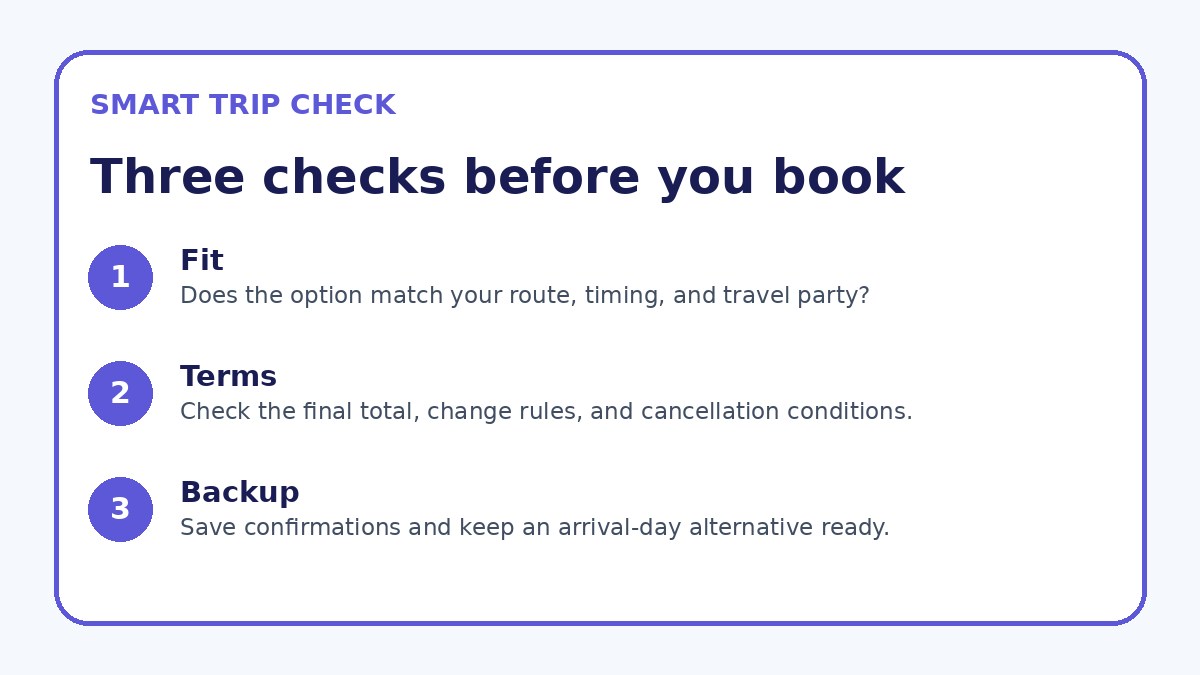
Before you book
- Confirm which Seoul airport and terminal your carrier uses, then check recommended arrival times on the airline’s booking page.
- Verify carry-on size and weight limits on the final booking page and repack accordingly to avoid gate checks.
- Pack travel documents, medication, a change of clothes, and chargers in your carry-on for quick access.
- If checking luggage, attach an external ID and note the airline’s baggage tagging and tracking options.
- Plan ground travel at both ends: estimate time to the airport in Seoul and the transfer time from Osaka airport to your accommodation.
- Save key booking confirmations and the airline’s contact info offline and screenshot any boarding passes or e-tickets.
Comparing direct and connecting flight options
Direct flights minimize the number of touchpoints—fewer transfers, less risk of missing connections, and often more predictable total travel time. For a short international hop like Seoul to Osaka, direct services can be time-efficient even if the ticket costs a little more. Connecting flights can open up different departure times or lower fares, but they introduce transfer complexity: you may need to collect and recheck bags, clear immigration in a transit country, or move between terminals. Evaluate whether the savings are worth the coordination and the possibility of tight layovers.
When comparing itineraries, calculate door-to-door time rather than only looking at flight durations. Add ground transfer times at both airports, estimated check-in and security time, and a comfortable margin for delays. For connecting itineraries, look at minimum connection times listed by the airline and check whether a single ticket protects your transfer in case of delay. If you book separate tickets, understand you may not have protection for missed connections; if unsure, choose a longer layover. Always verify the connection rules and baggage transfer arrangements on the airline’s final booking page.
Frequently asked questions
How early should I arrive at the Seoul airport for a flight to Osaka?
Aim to arrive with enough time to handle check-in, security, and immigration comfortably: for carry-on-only solo travelers, a 90-minute pre-departure arrival is a practical baseline; add extra time (about 30–60 minutes more) if you’re checking luggage, traveling during peak hours, or need to complete airline-specific procedures. Verify the airline’s recommended arrival window and any terminal advisories on the booking page, because some carriers and airports have different opening times for international check-in counters. Also factor in your transport to the airport and possible traffic or transit delays.
Should I check a bag if I’m only staying a few days in Osaka?
If your trip is short and you can reuse clothing, it’s often faster and less risky to travel carry-on-only—this bypasses baggage claim and reduces the chance of delays. But if you need bulkier items, special equipment, or many outfit changes, checking a bag can be more convenient despite the time cost at the airport. Consider local laundry options, what you can wear multiple times, and whether you’ll need space for purchases. Before deciding, check the airline’s checked-baggage fees and size limits on the booking page so there are no surprises.
How do I compare direct and connecting Seoul to Osaka flights effectively?
Don’t compare only flight time or price—build a door-to-door estimate that includes time to reach each airport, check-in and security buffers, possible baggage handling, and onward ground travel at arrival. For connecting flights, add the minimum connection time and consider whether a single-ticket itinerary covers missed connections. If you value simplicity and fewer risks, a direct flight usually wins; if you need a specific schedule or a lower fare, a connecting route may be acceptable but requires a longer buffer. Always verify baggage transfer rules and connection protections on the carrier’s final booking page.
Final planning note
For solo travelers, organizing baggage and airport time for Seoul to Osaka flights boils down to balancing speed against flexibility. Carry-on-only travel shortens your airport time and reduces stress on arrival in Osaka, while checking luggage gives you more packing freedom at the cost of extra processing. Factor in which Seoul airport you’ll use, your ground transport time, and whether you prefer a direct or connecting itinerary. Before you finalize a booking, verify airline baggage rules, check-in windows, and connection policies on the carrier’s official booking page; you can also compare live options on Trip.com if you want a quick snapshot, but always rely on the airline’s pages for final details.
Continue planning
Check current options and final conditions
Use the provider page to confirm live availability, the final total, cancellation terms, and every condition that matters to your trip.
This evergreen planning guide was created with AI-assisted drafting and a structured quality review. It does not display live prices, schedules, availability, visa guidance, or provider rankings. Verify current details before booking. Some links are affiliate links; we may earn a commission at no additional cost to you.