
If you’re traveling solo from Seoul to Jeonju with medium-to-large luggage, the practical choice is to take a direct intercity train or express bus and pick what matters most: comfort, cost, or door-to-door convenience. Trains typically offer roomy storage, a calmer ride and easier station navigation if you can manage stairs or elevators with a single bag. Buses can be cheaper and drop you closer to Jeonju’s bus terminals, but handling large cases on and off the bus is more physical. Taxis and private transfers are the simplest for door-to-door travel but cost more and may be limited by luggage space in smaller vehicles. Before booking, check seat reservation rules, luggage allowances, station-to-destination transfers, and whether a luggage delivery service is available; verify those details on the provider’s booking page or on Trip.com if you want a quick comparison.
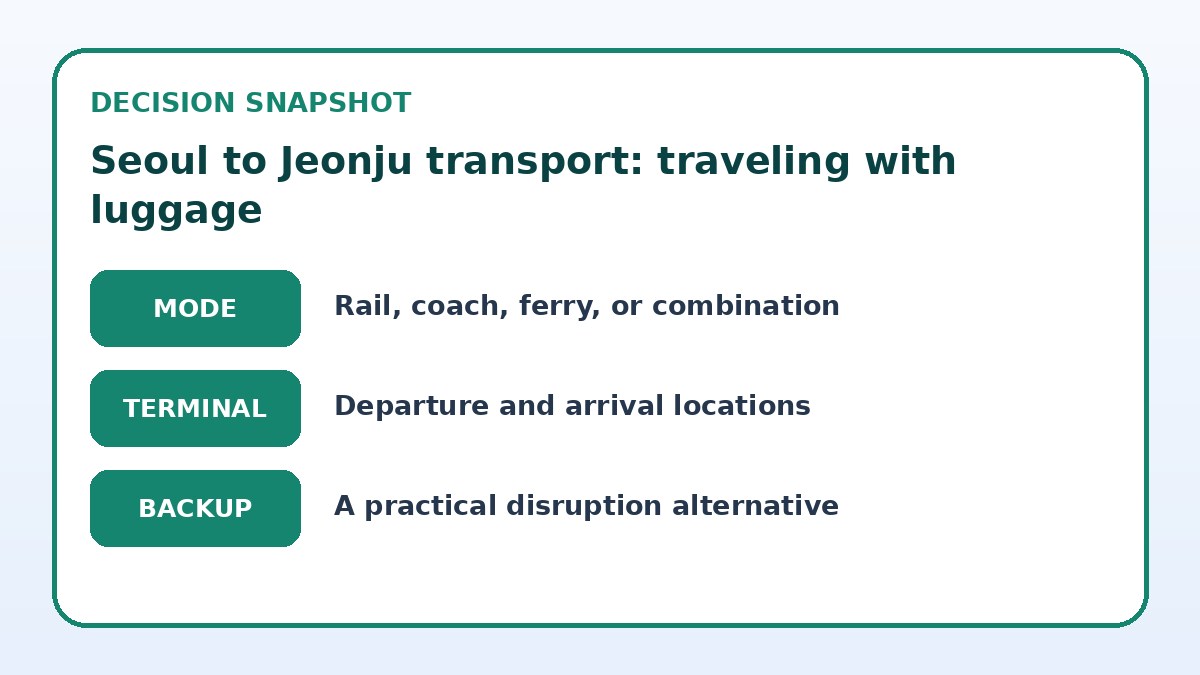
See current options before you compare the details
Availability and final conditions change. Open Trip.com now or keep reading for the practical comparison.
Compare the main transport choices and luggage realities
For Seoul to Jeonju transport you’ll find three practical choices: intercity trains, express buses, and private cars or taxis. Trains generally have dedicated overhead racks, open areas near doors for larger suitcases, and a steady ride that reduces luggage shifting. However, not all stations have elevators or step-free access at every platform entrance; if you have very heavy or multiple suitcases, check station accessibility in advance. Buses typically load luggage into a cargo hold beneath the passenger compartment, which keeps the cabin uncluttered but requires loading and unloading handled by drivers or porters, meaning you won’t supervise your cases during the ride.
Private transfers and taxis are the most straightforward if you prioritize door-to-door delivery and minimal handling—particularly useful late at night or when you have awkward items. The main trade-off is vehicle size: many standard taxis have limited trunk space and might not accept several large suitcases together. For large or numerous bags, prebook a larger vehicle or a dedicated airport/long-distance transfer that specifies luggage capacity. No matter the mode, factor in how you’ll get from the arrival station or terminal to your final address in Jeonju; local buses, short taxis, or a final-mile luggage delivery service may be part of the plan.
How to decide based on your luggage and mobility
Start by listing what you’re carrying: number of suitcases, weight, fragile items, and whether you can lift bags into overhead racks or trunks. If you travel light with one medium suitcase and a daypack, trains and buses are equally workable. If you have heavy or multiple suitcases, or mobility concerns, prioritize options that minimize stairs and manual handling—look for stations with elevators or prebook a transfer that confirms trunk capacity. Remember that moving between platforms, entrances, and ticket gates can add steps even when the ride itself is comfortable; allow extra time to navigate stations.
Also consider the structure of your itinerary in Jeonju. If you’ll be staying near the bus terminal, an express bus could be more convenient. If your lodging is near Jeonju Station or requires a short taxi from the rail station, a train may be preferable. Think about walking distance with your baggage from the drop-off location to your accommodation and whether you want to avoid public buses with luggage during peak hours. If your plan includes onward day trips, choose the arrival point that minimizes re-handling and aligns with how you’ll move around locally.
| Approach | Best for | Tradeoff to check |
|---|---|---|
| Intercity train | Comfortable ride, easier aisle storage, fewer bumps with luggage | Station access and steps may be challenging; verify elevators and platform access. |
| Express bus | Direct terminal-to-terminal routes and potential proximity to final address | You hand luggage to staff and can’t supervise during transit; cargo access varies. |
| Taxi or private transfer | Door-to-door convenience and minimal handling for solo travelers | Higher cost and limited trunk space unless you prebook a larger vehicle. |
| Luggage delivery service | Hands-free travel across stations and easier local mobility on arrival | Requires coordination and adherence to pickup/delivery windows; check size limits. |
Ready to check the option that fits your plan?
Use your exact dates and traveler details so the provider page can show the current total and conditions.
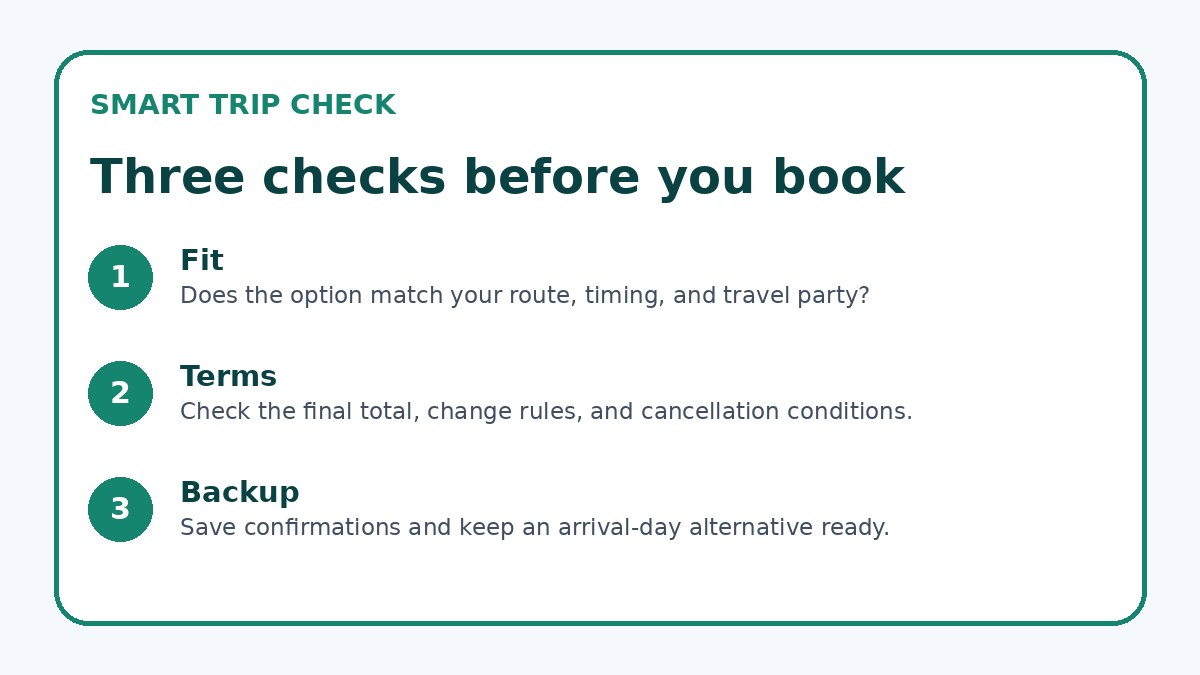
Practical packing and transfer options for solo travelers
Pack strategically to make single-person handling realistic: use wheels on suitcases, distribute weight evenly, and secure fragile items inside clothing layers. A lightweight daypack for documents, phone charger, medications, and a change of clothes means you won’t need to open your main bag while in transit. If you have bulky photography gear, sports equipment, or souvenirs, consider a collapsible wheeled duffel rather than rigid cases for easier maneuvering onto buses and into taxis. Add luggage straps and a lock with an ID tag so bags are identifiable at a glance.
Consider third-party luggage delivery or station-to-station courier services if you want to travel hands-free within South Korea. These services pick up from your Seoul address or a chosen station and deliver to your Jeonju hotel or a selected address, letting you ride a train or bus with only a daypack. When using delivery or storage options, verify pickup/drop-off windows and any size or weight restrictions on the provider’s booking page. If you prefer to carry everything yourself, plan for extra time at each transfer point to avoid rushing with heavy bags.
Before you book
- Measure and weigh your luggage; confirm it fits standard train or bus allowances on the booking page.
- Reserve seats or tickets that state luggage rules and platform access, saving confirmation details for reference.
- If station elevators or ramps matter, check station maps and accessibility notes before choosing train or bus.
- Pack a daypack with essentials and valuables to keep on board and avoid opening checked luggage during transit.
- If door-to-door convenience matters, request a larger taxi or prebook a private transfer with confirmed trunk size.
- Consider booking a luggage delivery service and confirm pickup/dropoff windows and package restrictions before departure.
Booking, verifying rules, and arrival logistics
When you book, check the provider’s luggage allowance and reservation rules on the booking page before you finalize payment. Train providers may allow full-size suitcases but require seat reservations for certain services; bus operators usually include one or more checked items in the fare but may charge for excess or oversized baggage. Verify whether the platform you use—official operator site, national rail portal, or Trip.com—shows luggage limits, platform access info, and refund or change policies. Keep screenshots or confirmation emails that list those details until you complete the trip.
Before arrival in Jeonju, plan the last mile: identify a taxi rank, bus stop, or walking route from the station or terminal to your accommodation. If your hotel offers a free shuttle, confirm pickup location and luggage capacity with the property. If you expect to arrive late or with heavy bags, pre-book a taxi or private transfer option with stated trunk dimensions. Finally, have a backup plan such as a luggage locker or short-term storage spot near the arrival point so you can explore unencumbered if your accommodation isn’t ready at check-in time.
Frequently asked questions
Can I bring large suitcases on trains between Seoul and Jeonju?
Yes, many intercity trains accommodate large suitcases, but policies and practicalities vary. Some trains have overhead racks and open areas near doors for large bags, while station layouts can require steps or long ramps. Always check the operator’s luggage policy and the specific train service’s seat reservation rules on the booking page you use. If station accessibility or lifting capability is a concern, look for stations with elevators or consider a private transfer or luggage delivery service as alternatives.
Is it safer to hand luggage to a bus driver’s cargo hold?
Using the bus cargo hold is common and generally safe, but it means you don’t supervise your bags during the journey. Inspect luggage tags and keep a list of contents and identifying details before handing items over. For fragile or high-value items, carry them on board in a daypack or choose a transport mode where you retain control. Also verify with the bus operator what constitutes allowed size and weight, and whether additional charges apply for oversized items on the booking page.
How do I choose between a train and a taxi for door-to-door convenience?
Decide based on luggage quantity, budget, and how close your accommodation is to the station. A taxi delivers you exactly to your door, helpful with heavy or awkward bags, but can be costly and trunk space varies. Trains offer a smoother ride and are often cheaper, but you must handle luggage through stations and any last-mile transfer. If minimizing handling is essential, consider a private transfer or a luggage delivery service; otherwise, weigh travel comfort versus final-mile effort when booking.
Final planning note
For solo travelers moving from Seoul to Jeonju with luggage, the right choice depends on what you value most: comfort, cost, or minimal handling. Trains offer a smooth ride and reasonable luggage accommodation if you can manage station access; buses bring you close to certain neighborhoods but require trusting staff with your checked bags. Taxis and private transfers remove most handling but require verifying vehicle size when you book. If you want hands-free travel, a luggage delivery service can bridge the gap between convenience and cost—just confirm pickup and delivery rules before you pay. Whatever you pick, verify luggage allowances, station accessibility, and last-mile options on the provider’s final booking page so you arrive in Jeonju with your plans and luggage intact.
Continue planning
Check current options and final conditions
Use the provider page to confirm live availability, the final total, cancellation terms, and every condition that matters to your trip.
This evergreen planning guide was created with AI-assisted drafting and a structured quality review. It does not display live prices, schedules, availability, visa guidance, or provider rankings. Verify current details before booking. Some links are affiliate links; we may earn a commission at no additional cost to you.