
Practical answer first: for most couples planning a flexible, stress-free trip to Taipei, aim to start watching fares and room rates about 8–12 weeks before travel, then lock in once a preferred combination of flight times, refundable or flexible rules, and a hotel location you both like appears. If you travel on fixed dates (celebrations, local holidays, or booked time off), begin searching earlier—12–20 weeks—to secure specific seats and adjoining rooms. For last-minute getaway couples who prioritize spontaneity over specific times, a 2–3 week window can work but expect fewer ideal choices. Use this article to weigh tradeoffs—flexibility vs cost, how seasonal patterns affect availability, what to verify at checkout, and which decision approach matches your travel style.
See current options before you compare the details
Availability and final conditions change. Open Trip.com now or keep reading for the practical comparison.
Understand your priorities before you start searching
Couples make different tradeoffs: some want the cheapest headline fare, others want seats together, specific departure times, or a central hotel room with two beds. Start by agreeing on three non-negotiables—examples include refundable fares, arrival time window, and neighborhood. These priorities determine how aggressively you should hunt deals and how much flexibility to tolerate in dates or carriers. If you value peace of mind, aim for offers with clear cancellation and change policies; if you want the lowest outlay, accept stricter rules. Writing down priorities prevents last-minute disagreements when a tempting but unsuitable deal appears.
Knowing priorities also shapes the booking window. If your priorities are rigid—fixed celebratory dates, preferred hotel category, or a rare event—begin earlier and monitor inventory at 12–20 weeks. If priorities are looser—any time in a low season month, flexible arrival times—watching 6–10 weeks may be enough. For couples who only travel on weekends or public holidays, expect higher demand and consider expanding your monitoring period. Clear priorities make it easier to judge whether a current offer is a good compromise or a deal you should pass on.
How seasonality and events change the booking clock
Taipei’s demand fluctuates with festivals, school holidays, and business travel. During peak cultural events and major conferences, both air seats and hotel rooms fill earlier, so the realistic booking window extends. Conversely, shoulder seasons or midweek travel often yield more flexibility and shorter lead times. Couples should research the timing of local festivals or trade shows that might overlap their trip; if your dates intersect a busy period, treat the trip like a fixed-date booking and move your start-of-search earlier.
Also consider weekday versus weekend stays. Couples targeting weekend city breaks may find Friday–Sunday slots fill faster than midweek stays, so adjust your search horizon accordingly. If you can travel midweek or shift your trip by a few days, you’ll widen available options and potentially reduce stress around finding contiguous seats or a specific room type. Use a simple calendar comparison—scan several date ranges to see where inventory is thin and where it’s plentiful before deciding how soon to commit.
| Approach | Best for | Tradeoff to check |
|---|---|---|
| Book early and lock in fares | Couples needing fixed dates, specific rooms, or stress-free planning | Less ability to benefit from price drops; may pay premium for flexibility unless you choose refundable options |
| Monitor and buy when value appears | Couples balancing cost and certainty who can act within a few days | Requires time to watch alerts and quick decision-making when a good combination surfaces |
| Last-minute booking | Spontaneous couples who prioritize experience over schedule precision | Narrower choice of times and rooms; higher risk of inconvenient connections or locations |
| Hybrid: book flexible fares, wait on hotels | Couples who want flight certainty but want to shop hotel deals closer in | Potentially higher flight cost up front; hotel availability may still narrow later |
Ready to check the option that fits your plan?
Use your exact dates and traveler details so the provider page can show the current total and conditions.
Comparing flexibility, cost risk, and peace of mind
There are three practical booking approaches: lock early for peace of mind, monitor and book when a clear value appears, or book last-minute for spontaneity. Locking early reduces stress and secures specific rooms and seats, but can mean missing later lower fares unless you buy flexible/changeable tickets or room rates. Monitoring and setting price alerts balances time and risk—if alerts are set for both flights and hotels you prefer, you can act when both align. This middle path suits many couples aiming for good value without sacrificing specific needs.
The last-minute approach rewards spontaneity but raises the risk of compromised choices—longer layovers, rooms in less central neighborhoods, or fewer adjoining-room options. It can work well if you prioritize experience over schedule and can accept variable arrival times. Whichever approach you choose, always check the provider’s final booking page for cancellation and change penalties, seat assignment rules, and how refunds are handled. Confirm fees for changes and whether the fare or rate is refundable before you finalize payment.
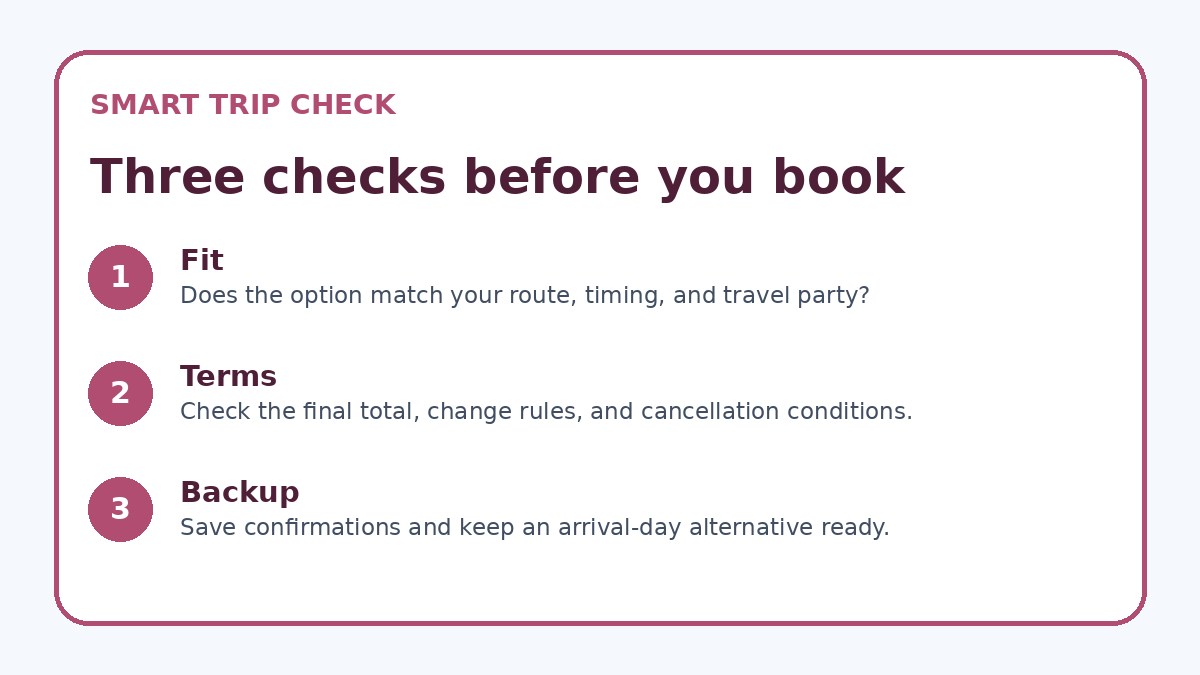
Before you book
- Agree on three non-negotiables (dates, refundability, neighborhood) before searching to speed decisions.
- Set price and availability alerts for both flights and preferred hotels across at least two platforms.
- When you find a viable option, open the provider’s checkout page and confirm cancellation and change rules.
- Compare total trip time, number of connections, and seat-pairing options—don’t assume a direct routing.
- Verify hotel room configuration and deposit or incidental hold policies on the property’s final booking page.
- If booking components separately, download and store each provider’s confirmation and their change/cancellation policy.
Practical tactics for couples to find and confirm the right deal
Use a short list of trusted neighborhoods and flight time windows to quickly filter options. Set fare and hotel alerts from multiple sources and compare matches against your non-negotiables. For flights, compare itineraries by total travel time, number of changes, and any seat pairing options; do not assume a direct routing unless the search tool explicitly shows it. For hotels, compare room type descriptions, bed configuration options, and the supplier’s cancellation rules on the final checkout page before booking.
When you find a combination you both accept, act decisively: the inventory you want may not last. Before hitting purchase, verify the refundability, change fees, baggage rules, seat assignment policies, and whether the hotel charges incidental deposits. If booking separate components from different providers, note each one’s change and cancellation rules and how they interact. Trip.com can be used as an additional place to compare current availability and conditions, but always verify rules and totals on the provider’s final booking page before you commit.
Frequently asked questions
How far ahead should couples book Taipei flights to balance price and certainty?
For most couples, beginning active monitoring 8–12 weeks before departure balances choice and cost. If your trip has fixed dates—celebrations, public holidays, or events—start earlier, around 12–20 weeks, to secure specific seats and preferred flight times. If you need refundable fares, factor that into timing because fully flexible tickets can sell out sooner. Last-minute planners can find options 2–3 weeks out but should accept more limited schedules and possibly less ideal seating arrangements.
Should couples book hotel and flight together or separately for Taipei travel deals?
There’s no single correct answer—booking together can simplify customer service and package protections, while separate bookings may allow better mixing of airlines, schedules, or boutique hotels. Choose based on your priorities: if you want a single point of contact and combined protections, a package can be attractive; if you need specific flight times or a particular hotel room, book the most constrained element first and secure flexible options where possible. Always review cancellation rules on each provider’s final booking page.
What signals should couples watch to know it’s time to commit to a deal?
Commit when a combination of flight times, seat availability, hotel room type, and cancellation terms matches your non-negotiables. Useful signals include limited remaining rooms of your preferred type, a fare increase after a recent dip, or dwindling available seats in your preferred cabin. Use alerts to spot these shifts, then confirm rules and fees at checkout. If you require specific seats or refundable options, don’t delay once those are present in a price you both accept.
Final planning note
Choosing a realistic booking window for Taipei travel deals comes down to matching your couple priorities with market rhythms. If your dates are fixed, start earlier and accept that you may pay a premium for certainty or flexibility; if you can be flexible on travel days or neighborhoods, you can wait longer and sharpen your deal-hunting. Use clear non-negotiables, set alerts, and verify cancellation and change rules on the provider’s final booking page before committing. With a short list of must-haves and a shared decision rule—when two of three priorities align—most couples can find a comfortable balance between cost, convenience, and confidence.
Continue planning
Check current options and final conditions
Use the provider page to confirm live availability, the final total, cancellation terms, and every condition that matters to your trip.
This evergreen planning guide was created with AI-assisted drafting and a structured quality review. It does not display live prices, schedules, availability, visa guidance, or provider rankings. Verify current details before booking. Some links are affiliate links; we may earn a commission at no additional cost to you.