
If you’re arriving in Jeju with oversized suitcases, sports equipment, or several pieces of luggage, your top priority is reducing dragging, transfers, and time spent unloading. The practical choice is a hotel located within a short walk or single-transfer connection to the place you’ll arrive or the transport you’ll use most: Jeju Airport, the main ferry piers, or major intercity bus stops. Look for properties that advertise luggage storage, easy ground-floor access or elevators, and clear arrival instructions. Booking a hotel close to the transport node you’ll use most often saves time and stress, but it comes with tradeoffs—price, neighborhood vibe, or fewer scenic options. Below I explain how to evaluate those tradeoffs, what to compare on booking pages, and the specific hotel features and transport links to check before you finalize your reservation.
See current options before you compare the details
Availability and final conditions change. Open Trip.com now or keep reading for the practical comparison.
Start with your arrival and departure nodes
Begin by mapping exactly where you will arrive in Jeju and how you will depart. Most travelers land at Jeju Airport or arrive by ferry to one of the island’s ports. If you prioritize a frictionless arrival with heavy luggage, choose a hotel that makes the first or last transfer as short and simple as possible. That might mean a hotel within walking distance of the airport or by a main ferry terminal. For those who will hop between bases on the island, center your stay near the transport node you’ll use most often rather than the geographic center of Jeju.
When comparing hotels near each node, look beyond advertised distance. Ask whether the walking route involves stairs, long corridors, or steep slopes; verify whether a shuttle, elevator, or covered walkway exists; and check whether taxis queue outside the property at typical arrival times. These specifics determine actual effort when you have multiple bags. If you plan to transfer to a rental car, confirm where to pick up the vehicle and whether the hotel offers temporary curbside loading or parking that simplifies moving luggage.
What hotel features help with heavy luggage
Certain hotel features make life dramatically easier for travelers with bulky bags. Elevators that serve all guest floors are essential if you aren’t on the ground level. A step-free or ramped main entrance avoids lifting bags up stairs. Luggage storage or a left-luggage desk allows flexible check-in and check-out if your arrival time and hotel room availability don’t align. If you’ll arrive late, check whether the property has 24-hour reception or clear after-hours instructions so staff can assist with luggage handling.
Other useful but less obvious features include ground-floor rooms, bell service, on-site parking right beside the entrance, and wide doorways or ramps to accommodate wheeled suitcases. If you’re transporting sports gear, musical instruments, or other unusually shaped items, message the property in advance to confirm they can store or handle those items. Always verify these details on the hotel’s booking page or by direct contact because policies and available services may change without notice.
| Approach | Best for | Tradeoff to check |
|---|---|---|
| Stay next to the airport or ferry terminal | Minimizing transfer time on arrival and departure | Less scenic neighborhood and potentially more noise; fewer leisure walking options |
| Stay near main bus stops in central towns | Balancing public transport access with local services | May require a short walk with luggage or a taxi for door-to-door transfers |
| Choose a coastal or scenic neighborhood | Enjoying views and relaxed atmosphere during your stay | Longer transfers to arrival nodes and more effort handling luggage |
| Pick hotels with on-site parking | Travelers using rental cars who want to load/unload easily | Some properties with parking are farther from public transport hubs |
Ready to check the option that fits your plan?
Use your exact dates and traveler details so the provider page can show the current total and conditions.

Neighborhood tradeoffs: convenience versus experience
Hotels right next to transport hubs give convenience but might be in busy, less scenic areas with more noise and fewer local cafés or beachfront views. Conversely, lodgings in quieter coastal or volcanic landscape neighborhoods deliver atmosphere and strolling access to attractions but increase the effort of moving luggage each time you depart. Decide how many times you will move between bases on Jeju. For single-base, week-long stays where you rent a car, staying slightly farther from the airport can be worth it for a calmer setting. For short trips or island-hopping plans, prioritize minimal transfers.
Also weigh public transport frequency and taxi availability in each neighborhood. A hotel a bit farther from the airport but next to a frequent bus or a convenient taxi stand can still be highly practical. If you rely on ferries to reach other islands or coastal attractions, staying near the relevant pier reduces the need to manage bags across multiple transfers. Whatever you choose, check recent guest comments for mentions of noise, street access, lift reliability, and neighborhood amenities to anticipate daily comfort and luggage handling challenges.
Before you book
- Map your arrival and departure points and note the exact walking route from each hotel candidate to those nodes.
- Message the hotel to confirm elevators, step-free entrances, luggage storage availability, and 24-hour reception or after-hours arrival procedures.
- Verify parking options and whether the hotel can reserve or hold a space if you rent a car.
- Check recent guest comments for mentions of elevator reliability, long corridors, steps, or bicycle ramps that affect bag handling.
- Ask the property about bell service or porter availability and whether there are charges for help with oversized or heavy items.
- Save written confirmations from the hotel about any special arrangements (late check-in, early check-out luggage storage) before finalizing your booking.
How to compare options and confirm details before booking
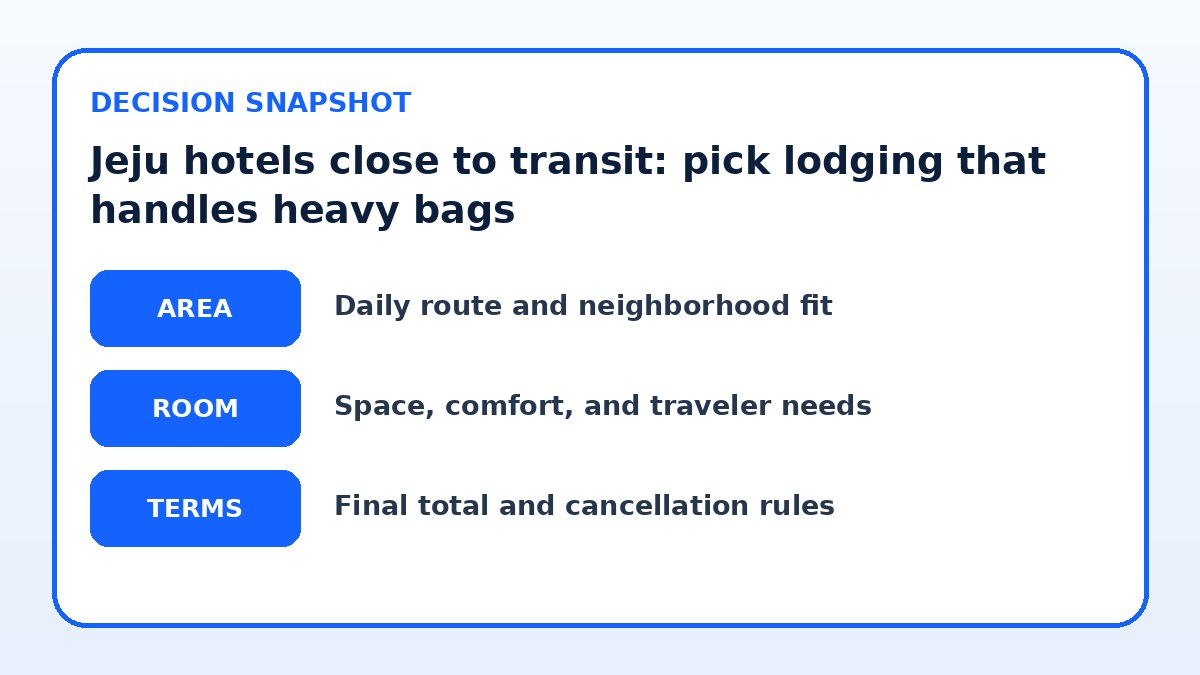
When comparing hotels, structure your search around three questions: How close is the hotel to my arrival/departure point and the main transport I’ll use? Does the hotel have step-free access, elevators, luggage storage or bell service? What is the neighborhood like for loading/unloading and finding taxis? Use map views to measure walking routes and read property descriptions for accessibility notes. Contact the property by phone or message to confirm specifics that are not listed; staff answers are often the most reliable indicator of whether a hotel can meet your needs.
On the booking page, verify cancellation policy, arrival procedures, and how late check-in is handled—especially important if your flight or ferry arrives outside standard check-in hours. If you plan to compare availability across sites, Trip.com can be one place to view current options, but always check the hotel’s direct page or contact them to confirm luggage-related policies and any extra charges for parking or early/late arrival assistance. Save screenshots or written confirmations of any promises staff make about handling bags.
Frequently asked questions
Is it better to stay near Jeju Airport or in Jeju City when I have heavy luggage?
If your trip is short or your schedule centers on arrivals and departures, a hotel near Jeju Airport usually reduces the hassle of handling heavy luggage. You’ll cut transfer time, avoid extra taxi costs, and have a simpler route if flights are early or late. If you plan a longer stay with many day trips based from Jeju City and can use a rental car, staying in town can be more pleasant and still practical, but you should confirm parking and loading access so you’re not struggling with bags on narrow streets.
How can I tell whether a hotel really offers luggage storage and help with heavy bags?
Don’t rely solely on a checklist icon on a booking site: message the hotel and ask specifically how luggage storage works (hours, security, any size limits) and whether bell service or staff assistance is available for heavy or oddly shaped items. Ask about fees and where items are stored. If the response is vague, request the policy in writing or confirmation on the booking page. If you need guaranteed assistance, consider hotels that clearly state 24-hour reception and porter or bell services.
Should I book a ground-floor room if I have many suitcases?
Booking a ground-floor room reduces elevator dependence and the effort of carrying bags through corridors and staircases, so it’s often worth requesting if moving luggage matters. However, ground-floor rooms can be noisier or less private depending on location. If a ground-floor option isn’t available, verify that the hotel’s elevator serves your floor and that there are no narrow doorways, internal steps, or long service corridors between the entrance and rooms. Ask the hotel for photos or a brief description of the route to your room.
Final planning note
Traveling to Jeju with extra luggage is mainly a logistics decision: reduce transfers, confirm accessibility, and choose the neighborhood that matches your priorities. A hotel close to the airport, ferry, or main bus stops will cut handling time; a property with elevators, luggage storage, and on-site parking eases the physical burden. Balance convenience against atmosphere—sometimes a short taxi or shuttle to a quieter, scenic area makes sense if you’ll stay put for several days. Before you book, contact the hotel to verify specific luggage services and save written confirmation of any arrangements. Use map tools and direct hotel replies to make the final decision that keeps your trip comfortable and simple.
Continue planning
Check current options and final conditions
Use the provider page to confirm live availability, the final total, cancellation terms, and every condition that matters to your trip.
This evergreen planning guide was created with AI-assisted drafting and a structured quality review. It does not display live prices, schedules, availability, visa guidance, or provider rankings. Verify current details before booking. Some links are affiliate links; we may earn a commission at no additional cost to you.