
If your family is planning a trip from Toronto to Vancouver, prioritize what matters most: flexible schedules that absorb disruptions, or a convenient itinerary that minimizes time and transfers. For families with young children or tight connections, flexibility often means refundable or change-friendly tickets, later departure windows, and buffer time around connections. For families who prefer less hassle, a convenient option emphasizes fewer connections, straightforward airport layouts, and arrival times that align with ground transport to your accommodation. Use your priorities to guide comparisons: similar fares can hide very different change fees, seat availability, baggage rules, and airport transfer times. Read provider terms closely on the final booking page for change, cancellation, and baggage rules. You can check current availability and conditions on sites like Trip.com, but confirm details with the airline or booking agent before committing.
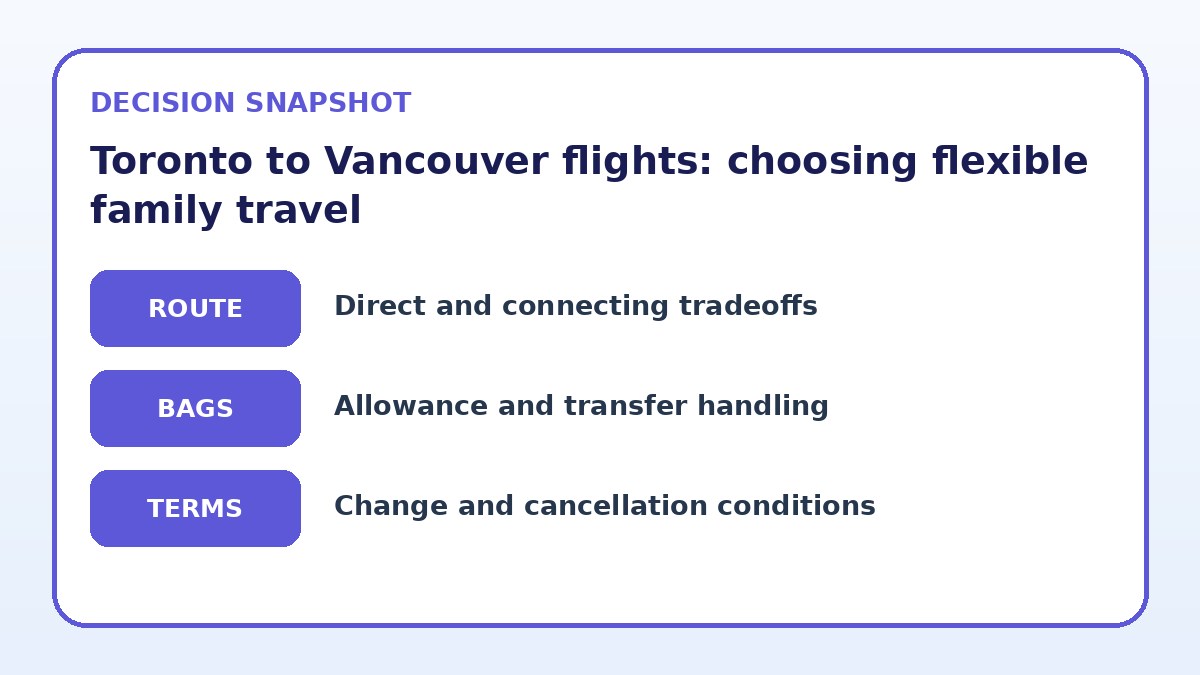
See current options before you compare the details
Availability and final conditions change. Open Trip.com now or keep reading for the practical comparison.
Clarify your family’s tolerance for schedule changes
Begin by asking how much schedule uncertainty your family can accept. If you travel with infants, toddlers, or members who need predictable medication or routines, prioritize fares and tickets that allow easy date or time changes without punitive fees. Look for fare classes showing flexible change or refund policies and confirm the provider’s rules on the final booking page: specifically, how much a same-day change or a date change costs, whether a waiver applies for family emergencies, and how refunds are processed.
If your family prefers to lock in fixed dates because you’re coordinating with events, school breaks, or pre-booked activities in Vancouver, you can lean toward lower-cost, less-flexible fares but add buffer days where possible. Consider travel insurance that explicitly covers trip interruptions, illness, or schedule changes for family members — read policy exclusions carefully. Also plan for contingencies at the airport: snacks, entertainment, and a small medical kit can turn an unexpected delay into a manageable inconvenience.
Weigh direct versus connecting itineraries for convenience
Direct flights offer the clearest convenience benefit: fewer takeoffs and landings, no plane changes, and less logistics for families moving luggage and children between gates. But do not assume a direct flight is always faster door-to-door; factor in departure airports, transfer times to and from the airport, and typical wait periods for family check-in and security lines. When comparing, calculate total travel time from your home to your Vancouver accommodation and consider whether a direct schedule aligns with nap and meal times for children.
Connecting itineraries can sometimes lower the price or open better departure times, but they introduce risk and extra effort. If you choose a connection, look for reasonable connection windows (long enough to clear security and transfer with strollers or checked bags) and, where possible, book through-ticketed itineraries so the airline handles missed connections and rebooking. Always verify whether you need to recheck baggage or pass through customs at the connection point, as this materially affects convenience with family gear.
| Approach | Best for | Tradeoff to check |
|---|---|---|
| Flexible refundable fares | Families needing to change plans with minimal stress | Higher upfront cost and sometimes limited seat choice |
| Non-refundable direct flights | Families prioritizing shortest door-to-door time | Less ability to alter plans and potentially higher rebooking fees |
| Cheaper connecting itineraries | Families prioritizing lower ticket cost over nonstop convenience | More transfers, higher risk of missed connections, and extra effort with luggage |
| Hybrid approach (flex fare one-way + cheap return) | Families wanting flexibility on outbound travel and savings on return | Requires careful planning and can be more expensive overall if both legs change |
Ready to check the option that fits your plan?
Use your exact dates and traveler details so the provider page can show the current total and conditions.
Choose airports and schedules that minimize stress
Toronto has multiple major airport options and Vancouver’s airport has specific arrival logistics; pick airports that reduce ground travel and complexity. A shorter drive to the departure airport may mean you can choose a more relaxed departure time, avoiding the stress of leaving far earlier. For arrival, consider flights that land before evening if you want time to collect luggage, arrange airport transfers, and settle children into accommodation without rushing into bedtime.
Flight times also shape in-flight and ground routines: morning departures often align with children’s natural awake periods and can reduce the chance of mid-flight meltdowns, while later flights might be cheaper but risk disrupting sleep schedules. If your family travels with gear like car seats or strollers, confirm each airport’s curbside drop-off and family assistance services. On the booking page, verify whether airport assistance, family lanes at security, or priority boarding for families are offered and whether you need to reserve such services in advance.
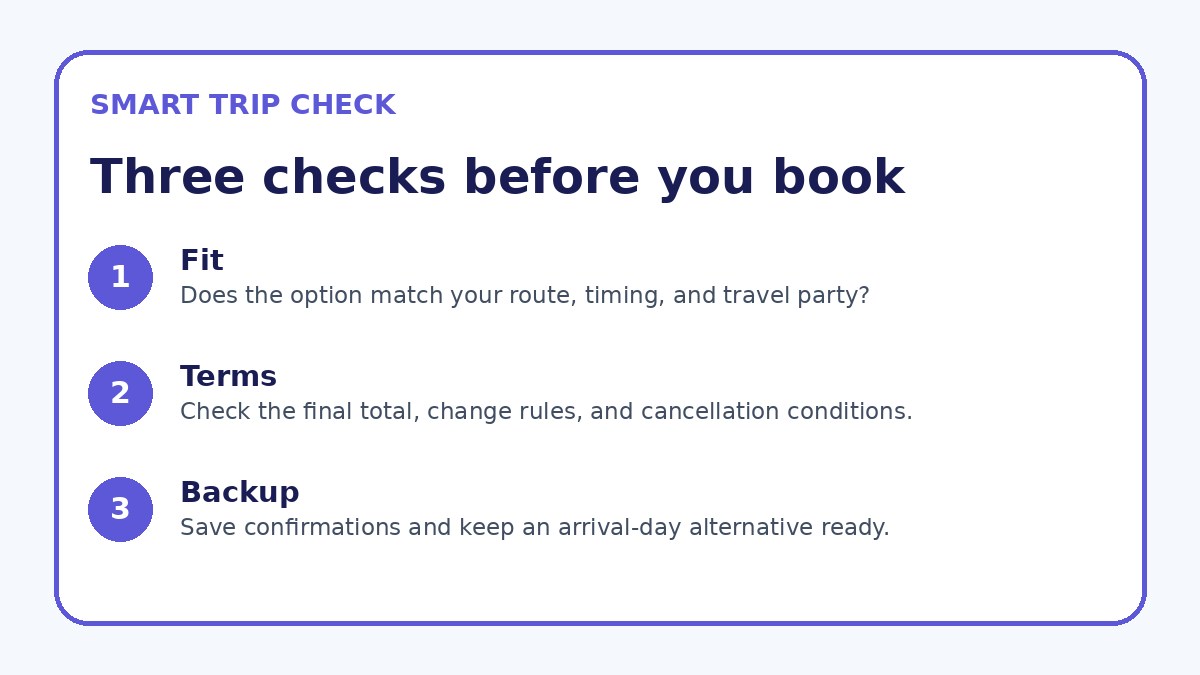
Before you book
- Decide whether flexibility or convenience is the priority, and write down two nonnegotiable needs (e.g., refundable changes, direct flight, specific arrival window).
- Compare total door-to-door travel time for each itinerary, including airport transfer estimates and likely security wait times with children.
- On the airline or booking agent’s final page, verify change and cancellation fees, same-day change rules, and any family-specific policies.
- Confirm baggage allowances, stroller and car-seat policies, and whether these items count as checked, gate-checked, or carry-on.
- Reserve seats that keep family members together and check boarding groups or priority family boarding options before travel day.
- Pack a compact delay kit (snacks, activities, chargers, basic meds) and bring documentation needed to access family assistance or priority lanes at the airport.
Budgeting for flexibility and convenience: tradeoffs to expect
Expect to trade money for more flexibility or convenience. Flexible fares often cost more upfront or require a slightly higher fare class, but they reduce the stress and potential added expense of last-minute changes. Decide whether that insurance-like expense is worth it compared with the possibility of saving now and accepting the cost and hassle if plans change. When comparing fares, total the likely costs including checked bags, seat assignments, and family-friendly extras — these can quickly erase an apparent fare advantage.
If you prioritize convenience over strict flexibility, allocate budget to services that make travel easier: direct flights, seat selections that keep children together, early boarding, or airport transfers that avoid public transport. Conversely, if flexibility is essential, invest in refundable fares or flexible tickets and a comprehensive travel insurance plan that covers family-specific interruptions. Always confirm final fare conditions, baggage rules, and family service availability on the airline or agent’s booking page before paying so you are not surprised at check-in.
Frequently asked questions
Should I always pick a direct flight from Toronto to Vancouver for my family?
Not always. Direct flights reduce transfers and simplify logistics, which benefits families, but they may not align with your ideal departure or arrival times, or they can be more expensive. Compare direct options against connecting itineraries by calculating total door-to-door time, cost after adding baggage and seat fees, and how the schedule fits children’s routines. If a connecting option gives a better departure time and still provides a comfortable connection window, it can be the more practical choice. Always verify layover details and whether baggage is checked through at booking.
How much connection time should families allow when booking flights?
Allow more buffer than a typical solo traveler: aim for connections that provide extra time to deplane, move between gates, manage any stroller or baggage transfer, and use restrooms or snack areas. The ideal window depends on the airports involved and whether you must re-clear security or customs; for domestic connections within Canada you generally need less time than an international transfer, but with family gear allow ample margin. Check the airline’s minimum connection times and add at least 30–60 minutes extra for family needs, and confirm baggage recheck rules on the booking page.
What practical services should I verify before booking a family flight?
On the final booking page, confirm seat selection options that keep your group together, family or priority boarding policies, and any available pre-boarding assistance for strollers or mobility needs. Verify baggage allowances and fees for checked items, policies for bringing car seats or bassinets, and whether airport lounges or family areas are accessible with your ticket class. If you expect to need special assistance, check how to request it in advance and whether documentation or advance notice is required; these details can change, so rely on the airline’s current terms before you pay.
Final planning note
Balancing schedule flexibility and convenience on Toronto to Vancouver flights comes down to your family’s tolerance for change, the age and needs of travelers, and how much time you can afford in transit. Flexible fares reduce stress when plans shift, while direct or well-timed flights save hours and simplify airport logistics. Compare total door-to-door time, read rules for changes and baggage on the airline’s final booking page, and weigh whether paying a bit more upfront is worth saving time and hassle. Use the checklist to make concrete comparisons, and consult current availability on Trip.com or the airline before finalizing your booking.
Continue planning
Check current options and final conditions
Use the provider page to confirm live availability, the final total, cancellation terms, and every condition that matters to your trip.
This evergreen planning guide was created with AI-assisted drafting and a structured quality review. It does not display live prices, schedules, availability, visa guidance, or provider rankings. Verify current details before booking. Some links are affiliate links; we may earn a commission at no additional cost to you.