
Short practical answer: for most couples staying within Melbourne’s inner suburbs and visiting the central attractions, public transport is usually simpler and less stressful; for couples planning day trips to regional areas, coastal drives or wanting privacy and flexible schedules, renting a car makes more sense. Which option fits you depends on where you’ll sleep, how independent you want to be, whether you’re comfortable driving in an unfamiliar city, and how important convenience versus cost is. Read on for clear tradeoffs and decision criteria so you can weigh comfort, time, and logistics rather than abstract claims. I’ll explain when a car is worth the hassle, when public transport wins for couples, and the exact checks to make before you click “book.”
See current options before you compare the details
Availability and final conditions change. Open Trip.com now or keep reading for the practical comparison.
Practical pros and cons for couples
Public transport in Melbourne is extensive in the inner city: trams criss-cross the CBD and suburban trains and buses cover most residential areas. For a couple who likes to stroll between cafés, museums and nightlife, the network reduces the need to find parking or pay for a car each day. It’s often more relaxing after a night out because you don’t have to hunt for a spot or focus on driving. Also consider that using public transport means one less thing to manage on holiday—no refuelling, toll accounts or extra insurance conversations in a foreign rental contract.
Driving offers privacy and itinerary flexibility. With a car you can start day trips early, carry more gear, and stop at viewpoints or small towns on a whim. For couples who enjoy scenic drives or who want to reach coastal or rural spots outside regular bus services, a rental unlocks options that can be awkward by scheduled transit. Balance this against the downsides: parking in popular areas, unfamiliar traffic patterns, and the mental load of route choices. For short stays focused on central Melbourne, those tradeoffs can tip in favour of public transport.
Costs, hidden hassles, and what to check before booking
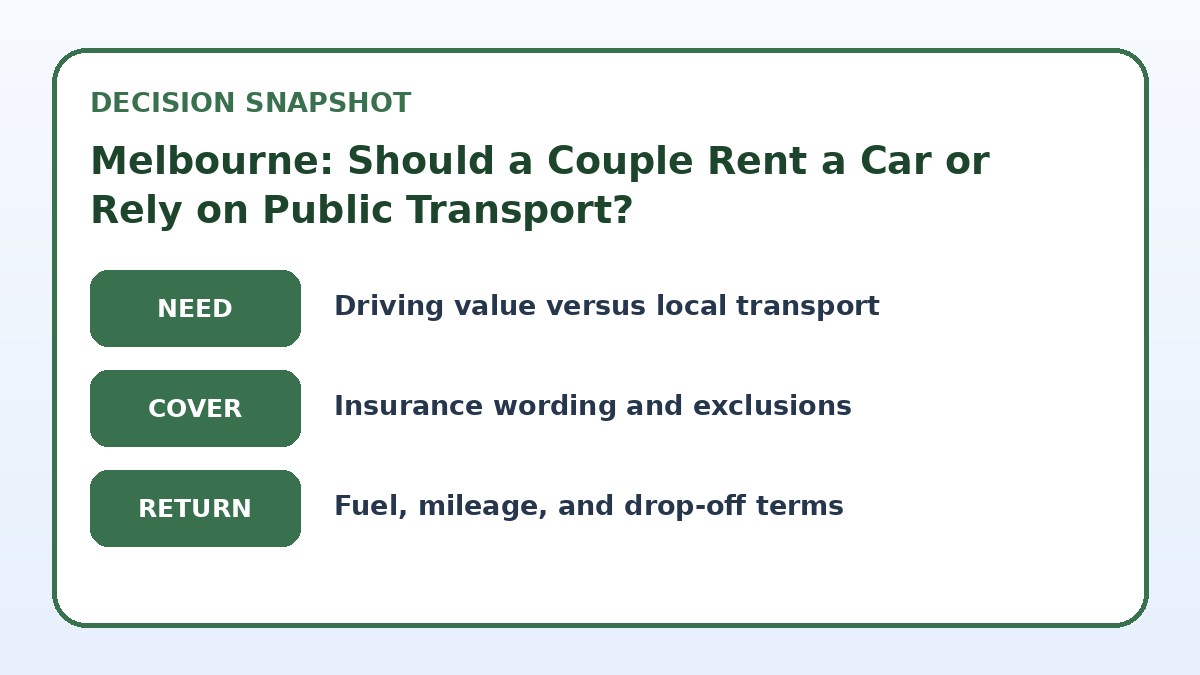
Don’t compare headline rental rates to a single tram ticket and stop there. Add the extras: compulsory insurance cover levels, fuel, parking charges, airport collection fees, and potential tolls. For public transport, count return fares for two, any multi-day passes that could bring per-trip savings, and occasional rideshares for late-night returns. Couples should also consider opportunity cost: time spent hunting for parking or waiting for a timed connection can make a cheaper option feel more expensive. When checking a rental provider, verify the booking page for exact insurance inclusions, excess amounts, one-way fees, and the provider’s fuel policy.
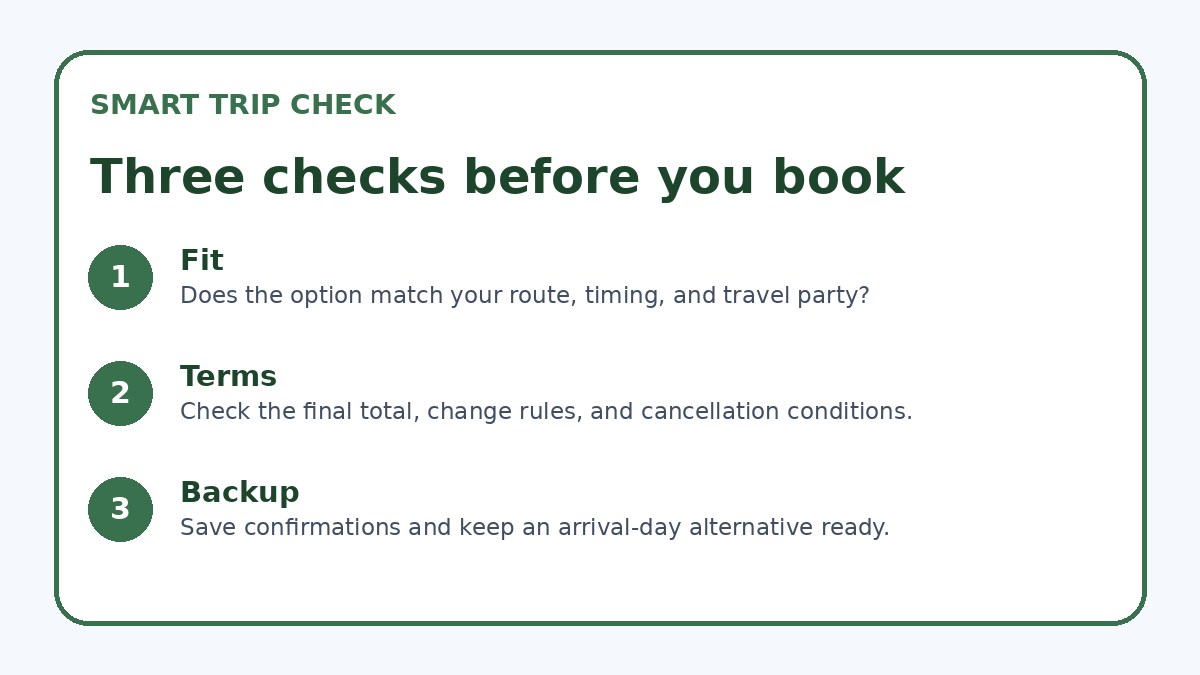
Make a checklist of practical concerns: where you’re staying and whether it has secure parking, how many long day trips you plan to take, and whether you’ll be comfortable driving on unfamiliar roads. If you’re considering renting from the airport, confirm whether airport surcharges apply and whether pick-up requires shuttles. For transit users, check the locations of tramlines and train stations relative to your accommodation and the attractions you value most. Use a current trip planner or a site like Trip.com to compare available cars and public transport options, but always confirm final terms on the provider’s booking page before committing.
| Approach | Best for | Tradeoff to check |
|---|---|---|
| Public transport | Couples staying centrally who prefer low logistics and no parking or fuel worries | Less flexibility for spontaneous regional day trips and fixed schedules |
| Car rental | Couples planning multi-stop regional drives, remote beaches or off-schedule outings | Extra costs, parking hassles, and the stress of navigating unfamiliar roads |
| Mixed approach (transit + occasional rental) | Couples wanting city convenience plus one or two flexible day trips | Requires two separate bookings and coordination of pick-up/drop-off logistics |
| Rideshare and day tours | Couples who want flexibility without driving or long-term rental commitments | Can be expensive for frequent long trips and less private than a personal car |
Ready to check the option that fits your plan?
Use your exact dates and traveler details so the provider page can show the current total and conditions.
How to make the decision by itinerary type
Short-city-break couples who plan to stay in the CBD, Southbank, Fitzroy, or St Kilda and visit museums, laneways, restaurants and a few suburbs, usually benefit from public transport. Trams and trains cover most inner-city routes and you’ll avoid parking and the stress of city driving. Consider occasional rideshares for late nights or early starts. Also evaluate whether any mobility needs or heavy luggage would make a car more practical; even in a central stay a single day rental for a day trip can be a good compromise.
If your trip includes day trips that are difficult to complete by scheduled services—vineyards, long coastal drives, or national parks—a car is likely the more efficient choice. Renting also suits couples who value spontaneity, want to explore at their own pace, or carry equipment such as bikes or surfboards. For mixed itineraries, splitting choices works well: use public transport while in the city, then pick up a car for one or two planned day trips. That hybrid approach limits driving time while giving you the flexibility you need for regional excursions.
Before you book
- Map your overnight locations and mark the nearest tram stops, train stations and parking options for each night’s accommodation.
- List your planned day trips and check whether they are well served by trains, buses or organised day tours; note any gaps.
- If renting, verify insurance excess, fuel policy, airport collection fees and whether the provider charges one-way or additional driver fees.
- Estimate total door-to-door time for typical days using public transport versus driving, including walking, transfers, parking search, and tolls.
- Confirm late-night return options for your neighbourhood—frequency of services, rideshare availability, or 24-hour taxi numbers.
- Decide who will drive; if both, add the other driver to the rental agreement and confirm any extra driver charges on the booking page.
Safety, comfort and romance considerations
Couples often weigh romance and comfort alongside cost: a relaxed tram ride through the city or a riverside walk can feel more intimate than navigating traffic. Public transport allows you to share coffee, plan the evening together, or nap without making one partner responsible for driving. If either partner is anxious about left-hand driving, busy intersections or freeway merging, public transport reduces stress and lets you enjoy the city without that tension. Consider late-night safety: check transit frequency for your preferred districts and have a rideshare or taxi fallback for late returns.
Driving can enhance the romantic quality of a trip when the journey itself is part of the experience—a scenic coastal drive, a sunset lookout outside the city, or a private picnic accessible only by car. Comfort factors include climate control, private conversation, and the ability to stop spontaneously. If you choose to rent, verify child-seat availability or other comfort extras if relevant. Also plan for driver rotation so one person isn’t stuck driving every day; sharing responsibility keeps the trip relaxed and lets both partners enjoy the scenery.
Frequently asked questions
Is it easy to park in Melbourne if we rent a car as a couple?
Parking conditions vary widely across neighbourhoods. Inner-city areas, popular dining strips and tourist precincts often have metered or timed parking with limited availability; many apartments and hotels advertise on-site parking, which may be included or charged separately. Suburban streets can offer free parking but check local signs to avoid fines. For long stays, look for accommodation with guaranteed secure parking. If you plan to park near major attractions, compare the convenience of parking versus walking from a nearby tram stop—sometimes a short tram ride eliminates the hassle of finding and paying for a space.
Can couples rely on public transport to reach places like the Yarra Valley or Great Ocean Road?
Major regional attractions can be reached by a mix of train, coach services and organised day tours, but frequency and directness vary. The Great Ocean Road is a long coastal route with limited public transit options along many stretches; the Yarra Valley has some coach and tour connections but many wineries and lookouts are easier reached by car. If those regions are central to your plans and you value independent timing, renting a car or joining a small-group tour is often the simplest option. Always check current service timetables or tour availability for exact routing and departure points before planning.
How should we weigh cost differences between renting a car and using transit for two people?
Compare total trip costs rather than single elements. For a car, add the rental rate, insurance excess or reduction cover, petrol, parking fees, tolls and any airport collection surcharges. For public transport, total up daily or multi-day fares for both people, occasional rideshares or taxis, and the time cost of transfers. Also factor in non-monetary costs: driving fatigue, navigation stress and the convenience of door-to-door travel. Use sample days from your itinerary to estimate cumulative costs and choose the option that balances your budget with how much time and autonomy you want.
Final planning note
There is no single right answer for every couple. If your trip is compact and centred on Melbourne’s inner neighbourhoods, public transport usually reduces hassle and keeps your days relaxed. If you prize independence, scenic drives or need to reach remote coastal or rural spots on your own timetable, a rental car can unlock the experience you want—just be sure to factor in insurance, parking and fuel. For many couples a mixed strategy works best: enjoy trams and trains while in the city, then rent a car for specific day trips. Before booking, map your nights, list must-visit day trips, and confirm the exact rental terms or transit tickets on the provider’s booking page so there are no surprises.
Continue planning
Check current options and final conditions
Use the provider page to confirm live availability, the final total, cancellation terms, and every condition that matters to your trip.
This evergreen planning guide was created with AI-assisted drafting and a structured quality review. It does not display live prices, schedules, availability, visa guidance, or provider rankings. Verify current details before booking. Some links are affiliate links; we may earn a commission at no additional cost to you.