If you have a business trip between Seoul and Busan, the most practical step before booking is to run a short checklist that compares schedule fit, total door-to-door time, cancellation/refund flexibility, and baggage/seat rules. These items determine whether a flight actually saves you time and stress compared with alternatives. Start by identifying your meeting windows, then map the total travel time from your office or hotel to the airline’s departure and arrival terminals. Note whether you need flexibility for last-minute schedule changes, and check seating and carry-on allowances if you must travel with presentation kits or equipment. Below, you’ll find the checklist items and decision criteria, plus tradeoffs to weigh when you compare direct versus connecting flights, airport choices in Seoul, and premium versus economy options.
See current options before you compare the details
Availability and final conditions change. Open Trip.com now or keep reading for the practical comparison.
Define your trip priorities before searching
Start by clarifying the non-negotiables for this business trip: fixed meeting times, required arrival buffer, luggage and equipment needs, and how much flexibility you require if travel plans shift. For many business travelers the top priority is minimizing total travel time from office to appointment; for others it might be a low risk of disruption or the ability to change tickets without heavy penalties. Write down your absolute latest arrival time and the earliest departure you can accept. That will immediately filter out flight options that look good on paper but fail to meet your schedule constraints once transfers and security lines are included.
Also decide what you’re willing to trade for convenience. A slightly earlier flight with a single transfer might cost less but adds uncertainty; paying more for a direct service could simplify logistics. If you routinely bring bulky presentation materials or secure equipment, factor in checked-baggage policies and handling procedures. Finally, consider how comfortable you are with tight connection windows—if missing a connection would derail a meeting, choose options with robust rebooking policies or built-in slack times to absorb delays.
Compare airport and transfer logistics
Seoul has multiple air gateways and Busan’s airport layout and local transfers affect the total journey time. Before booking, map the full transfer route: travel time from your starting point to the Seoul departure airport, time to clear security, and expected transfer time from Busan’s airport to your final meeting location. For each flight option, estimate taxi, subway, or bus durations at the scheduled departure and arrival times—rush hour can dramatically change transfer times. Use local transit maps and up-to-date schedules to gauge realistic door-to-door durations rather than optimistic estimates.
When comparing flights, treat airports as part of the transit cost. A slightly cheaper flight from an airport that is an hour further away can be worse than a pricy flight from the most convenient airport. Also verify whether ground transportation options (express trains, shuttle buses, or reliable taxi services) are available at the arrival terminal at the time you land. If you rely on public transit to reach a downtown meeting, confirm the last departures and predict the additional buffer time you’ll need if flights arrive late.
| Approach | Best for | Tradeoff to check |
|---|---|---|
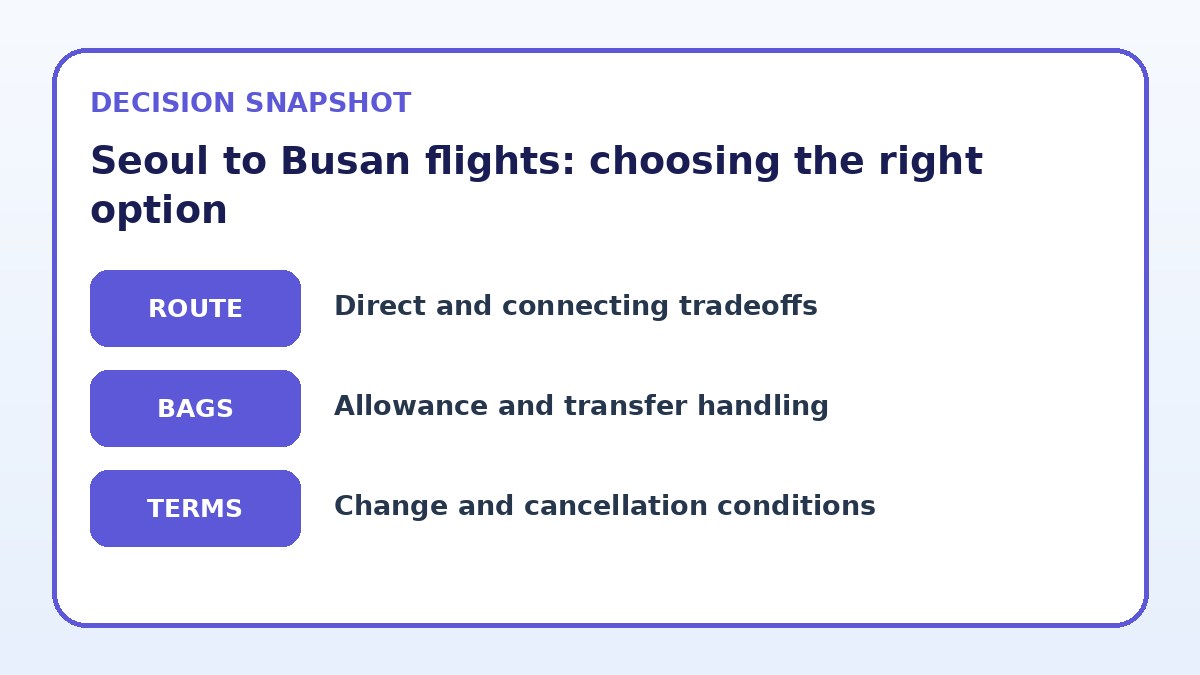
| Direct flights | Travelers prioritizing simple logistics and minimal transfer risk | May offer fewer departure times and sometimes higher fares compared with connecting itineraries |
| Connecting flights | Those needing more schedule options or lower base fares | Adds transfer complexity and increases the chance of missed connections or baggage delays |
| Flexible fare (higher fare class) | Travelers requiring last-minute changes or cancellations | Higher upfront cost, but reduces change fees and provides rebooking options |
| Basic/economy fare with add-ons | Cost-conscious travelers who can commit to fixed plans | Saves money initially but may incur fees for seat selection, baggage, or schedule changes |
Ready to check the option that fits your plan?
Use your exact dates and traveler details so the provider page can show the current total and conditions.
Understand fare rules and what you must verify
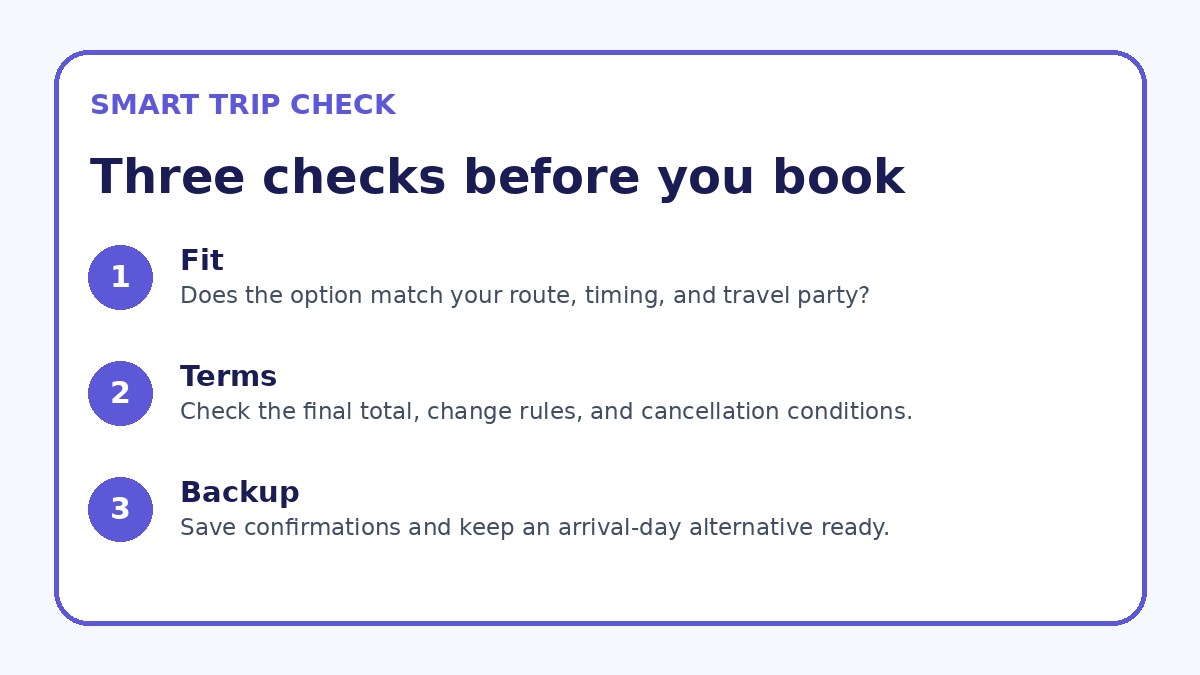
Fare classes differ significantly in how they handle changes, cancellations, refunds, and upgrades. Don’t assume flexibility; instead, when you find a promising option, click through to the airline’s final booking or fare rules page and confirm the change and cancellation terms that apply to that exact fare code. Check whether changes create vouchers, require paying fare differences and fees, or allow same-day rebooking. Also verify whether any corporate or travel agency policies you use affect how refunds or credits are processed.
Beyond change fees, examine baggage allowances, seat selection rules, and any extras that could add cost for business essentials. For instance, some fares include priority boarding or an extra checked bag; others charge per item. Confirm whether your preferred seat (aisle for working, near power outlets for device charging) is available and whether the carrier allows advance selection without penalties. If your company issues a travel card or has negotiated corporate terms, validate how those are applied during the final booking flow.
Before you book
- Confirm departure and arrival airports and estimate door-to-door transfer times during your actual travel hours, including expected traffic or public transit schedules.
- Check the exact fare rules on the airline’s final booking page for change, cancellation, and refund conditions tied to the specific fare code.
- Verify baggage allowances and whether your equipment requires an extra checked item or special handling; confirm any related fees on the checkout screen.
- Compare seat selection options and power/outlet availability for in-flight work; reserve a seat that matches your meeting-prep needs before payment.
- If considering a connecting itinerary, ensure connection windows are realistic and that both segments are on the same ticket or that you have a recovery plan.
- Document contingency options: earlier or later flights, corporate travel contacts, and the carrier’s rebooking policy so you can act quickly if plans change.
Direct versus connecting flights: tradeoffs to weigh
Direct flights reduce transfer risk and simplify logistics, but they can be less frequent or at times that don’t fit your schedule. Connecting flights might offer more departure times and lower base fares, yet they introduce extra movement, potential baggage transfers, and the need for adequate connection windows. Evaluate whether the time saved by a direct flight justifies any price premium or less convenient schedule. For short domestic routes, the difference in time spent in the air may be small compared with total transit and airport procedures.
When a connecting itinerary is the only practical option, build in buffer time between flights and confirm whether the same ticket covers both segments with protective rebooking in case of delay. If you must book separate tickets, be aware that missed connections could leave you responsible for alternate arrangements. For business trips where a meeting is fixed, prioritize itineraries with clear recovery options—either the carrier’s rebooking policy, an earlier backup flight, or enough slack to absorb routine delays.
Frequently asked questions
Should I always choose the earliest flight to avoid delays when flying Seoul to Busan?
Choosing the earliest flight can reduce exposure to late-day cascading delays, but it’s not always the best option. Earliest flights may require very early departures from your office or hotel, which adds commuter risk and potentially increases total door-to-door time. Balance the flight time against your ability to arrive at the airport on time and your need for rest and preparation before the meeting. Also confirm airport check-in and security timelines at your airline to ensure an early flight still meets your practical arrival buffer.
How do I decide whether to pay for a more flexible fare for a short domestic business trip?
Decide based on the cost of a fare upgrade versus the potential cost of having to change plans. If your schedule is firm and changes are unlikely, a basic fare plus confirmed seat and baggage may be fine. If meetings are tentative or the cost of missing a connection is high—lost time, reputational impact, or expensive rush alternatives—a more flexible fare that allows free or low-fee changes can be justified. Always compare the carrier’s published change terms for the specific fare before purchasing.
What should I verify on the booking page to avoid surprises at the airport?
On the carrier’s booking page, verify the airport terminals for departure and arrival, the exact baggage allowances (both carry-on and checked), and any optional fees for seat selection or priority services. Confirm the fare code and read the linked fare rules for change and cancellation policies. If your company uses a corporate booking tool, ensure the fare is eligible under your corporate profile and that any travel policy approvals are recorded. Finally, check payment, ticketing timelines, and whether mobile or printed boarding passes are accepted.
Final planning note
For business travelers on the Seoul to Busan route, an efficient decision starts with clear priorities: schedule fit, transfer logistics, fare flexibility, and baggage/seat needs. Use the pre-booking checklist to filter options quickly and click through to the carrier’s final booking page to confirm the exact fare rules and fees that apply to your chosen itinerary. Weigh whether a direct flight’s simplicity is worth any schedule or cost tradeoff, or whether a connecting option provides useful timing flexibility. With the checklist items completed and contingency plans noted, you can book with confidence and focus on the meeting itself rather than travel uncertainties.
Continue planning
Check current options and final conditions
Use the provider page to confirm live availability, the final total, cancellation terms, and every condition that matters to your trip.
This evergreen planning guide was created with AI-assisted drafting and a structured quality review. It does not display live prices, schedules, availability, visa guidance, or provider rankings. Verify current details before booking. Some links are affiliate links; we may earn a commission at no additional cost to you.