
If you’re traveling solo from Dubai to Abu Dhabi and managing luggage, the most practical approach is to match transport mode to how much you’re carrying and how mobile you want to be on arrival. Compact carry-on only? You can comfortably use buses or shared shuttle services and avoid vehicle loading hassles. Two medium bags or bulky items? Consider a private taxi or rideshare that allows curb-to-door drop-off. For those balancing cost and convenience, compare express bus routes against direct private transfers while verifying baggage allowances and pickup/drop-off locations. Before booking, confirm luggage rules and vehicle size on the provider’s final page; Trip.com can be used to compare current availability, but always verify specifics directly with the operator to avoid surprises.
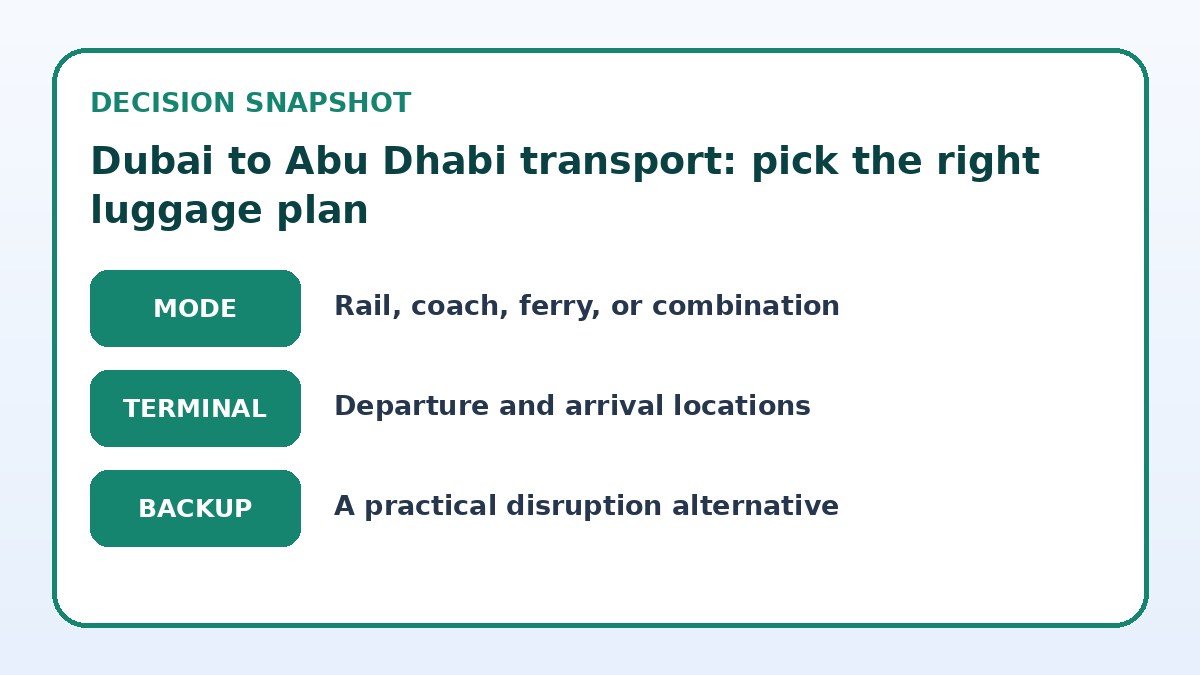
See current options before you compare the details
Availability and final conditions change. Open Trip.com now or keep reading for the practical comparison.
Choose transport based on your luggage and comfort
Start by assessing your baggage: a single carry-on backpack, a checked-size suitcase, or bulky sports gear demand different solutions. Light, compact luggage is easiest on public buses and shared shuttles because you’ll likely handle steps and put bags in overhead racks or small bays. Buses and scheduled shuttles are generally the most wallet-friendly and can be straightforward if you’re traveling from major hubs in both cities. For solo travelers who prefer a predictable door-to-door experience with luggage handled for you, private taxis and transfers reduce physical strain and the need to lift bags on and off communal storage.
Consider how many transfers you’ll make after reaching Abu Dhabi. If you have to cross the city or reach a hotel without elevators or with narrow entrances, a private vehicle that pulls up to the door saves time and effort. On the other hand, if your final stop is close to a major bus or shuttle terminal, the savings and frequency of services can offset the inconvenience of handling your luggage yourself. Finally, evaluate safety at pickup points—well-lit, staffed terminals are easier places to manage luggage alone than unmarked roadside pickups.
Packing and luggage choices that make intercity travel easier
Pack for carryability: use a backpack or soft-sided suitcase with sturdy wheels and a comfortable handle for single-person handling. If you expect to use buses, take bags that can fit in overhead racks or small compartments under passenger seats. Use compression cubes or packing organizers to keep items compact, and attach a visible tag or ribbon to identify your bag quickly. Keep essential items—documents, medication, a phone charger, and a small toiletry kit—in an easily accessible bag so you won’t have to dig through a large suitcase while boarded or during transfers.
For heavier or unusual items, consider a travel checklist that includes a lightweight folding trolley or strap to help move a second bag. If you must bring bulky sports equipment, photographic gear, or musical instruments, measure them against typical car boot dimensions and check with transport providers about special handling requirements. Also plan where you’ll stow them onboard: if a bus operator requires luggage to go into a hold, that may add handling steps when boarding and arriving, which is important to anticipate when traveling alone.
| Approach | Best for | Tradeoff to check |
|---|---|---|
| Express bus or scheduled shuttle | Solo travelers with light carry-on who prioritize cost and predictability | Limited assistance and fixed stops; larger or multiple bags can be awkward to stow and carry. |
| Private taxi or rideshare | Travelers with heavy or bulky luggage who want door-to-door service | Higher cost; must confirm vehicle size and trunk space before booking to avoid surprises. |
| Pre-booked private transfer (van or SUV) | Solo travelers with multiple bags needing guaranteed vehicle capacity and minimal handling | Less flexible pickup times and potentially longer booking lead time; verify cancellation terms and luggage limits. |
| Combination: bus plus local taxi | Cost-conscious solo travelers who can handle short last-mile transfers | Extra handling and coordination required; not ideal with heavy or bulky items. |
Ready to check the option that fits your plan?
Use your exact dates and traveler details so the provider page can show the current total and conditions.
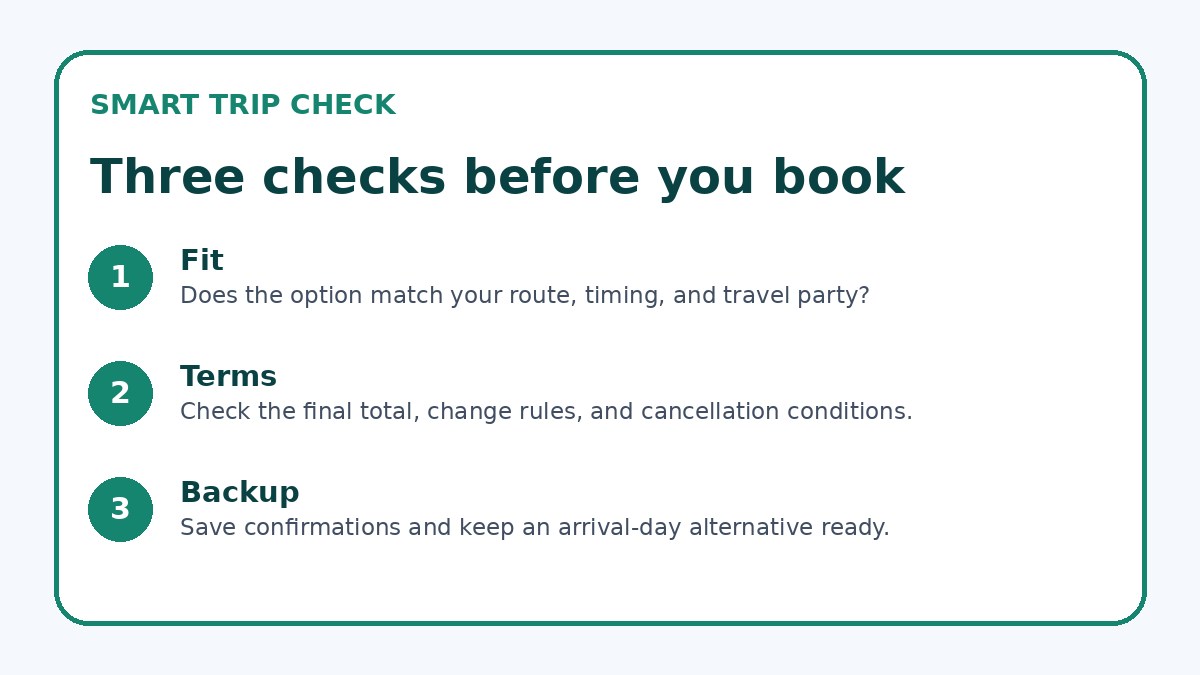
Booking and verifying luggage policies before you go
Before you book, check the provider’s final booking page for explicit luggage rules: permitted number and size of bags, fees for oversized items, and whether the vehicle can accommodate large pieces. Many bus and shuttle operators have clear limits; taxis and ride-hailing vehicles vary by vehicle class. If you book a private transfer, confirm the vehicle model or at least its category (sedan, SUV, van) so you can judge trunk space. For shared services, verify pickup and drop-off locations and whether drivers will help with luggage—some strictly enforce no assistance to keep schedules tight.
When comparing options, factor in time of day and traffic patterns—late-night services may be less frequent and staff assistance at terminals may be reduced. If your plan depends on a precise arrival time, consider adding buffer time for unexpected handling of bags or for finding a vehicle that fits all items. Always save or screenshot the booking confirmation and any luggage policies; if the provider’s website is unclear, call or message them to ask specifically about bag dimensions and how oversized items are handled.
Before you book
- Measure and weigh each bag; compare dimensions with vehicle trunk space descriptions before booking.
- Screenshot booking confirmation and the provider’s luggage policy, then save contact details for quick questions.
- Pack a day bag with essentials and valuables so you can access them without opening larger suitcases.
- Choose a vehicle category explicitly (sedan, SUV, van) when booking to ensure sufficient space for your bags.
- Allow extra time for boarding, baggage stowage, and potential assistance when scheduling onward connections.
- If carrying specialized equipment, contact the provider in advance to arrange handling and confirm any extra fees.
Practical on-the-ground tips for solo travelers moving luggage
At pickup, position yourself where vehicles enter the terminal to avoid carrying luggage across long pedestrian zones. Use luggage with smooth-rolling wheels for pavements and ramps; a compact foldable trolley can be invaluable for short walks between stops. Keep valuables on your person and secure smaller items inside a hidden pocket. If you expect to be tired after travel, book a vehicle that allows doorstep drop-off so you won’t need to haul bags up stairs or across long lobbies—this is especially helpful if you’re carrying a suitcase and a backpack.
For last-mile help, look for staffed counters or porter services at major terminals; where those don’t exist, ask drivers politely for assistance with loading and unloading—many drivers are willing to help, but don’t assume assistance is included. If you must change vehicles, try to consolidate items into a single bag to avoid juggling multiple cases. Finally, leave a short time buffer between arrival in Abu Dhabi and any onward commitments to cope with luggage delays, queuing, or vehicle searches that can take longer when you’re handling everything yourself.
Frequently asked questions
Can I take large suitcases on the bus between Dubai and Abu Dhabi?
Many scheduled buses and intercity shuttles allow checked luggage placed in a hold beneath the passenger area, but sizes and rules vary by operator. If you rely on a bus, check the specific provider’s luggage policy on the booking page; note whether assistance with loading and unloading is included or if drivers expect passengers to manage their own bags. If your suitcase is oversized or unusually shaped, contact the operator in advance to confirm they can carry it or consider booking a taxi or private transfer that guarantees sufficient trunk space.
Is it easy to get a taxi in Abu Dhabi if I arrive by bus with bags?
Taxis are usually available at major terminals, but availability can fluctuate depending on time and location. Terminals with staffed counters or official taxi ranks are the simplest places to get immediate help loading luggage. If you arrive at a smaller stop, you may need to walk to a main road or use a rideshare app; in those cases, choose a vehicle size suitable for your baggage when requesting a ride. Always confirm the driver is comfortable carrying your bags into the taxi and be ready to fold or consolidate items if trunk space looks tight.
Which option is safest for a solo traveler with expensive or fragile luggage?
For fragile or high-value items, a private taxi or pre-booked transfer minimizes handling and reduces the number of times bags change hands, lowering the risk of damage. Keep fragile items in a carry-on bag when possible so you can supervise them during transport. If a bus is the only feasible option, use protective cases or padding and clearly label the luggage; try to board early to secure a spot near the storage area and keep valuables in a personal bag you carry. Regardless of mode, check the provider’s liability terms on the booking page for lost or damaged items.
Final planning note
Choosing how to travel from Dubai to Abu Dhabi with luggage as a solo traveler comes down to balancing ease against cost. Light packers will find buses and shuttles efficient and straightforward, while anyone with heavy, multiple, or fragile items will value a private taxi or pre-booked transfer for door-to-door convenience. Always verify luggage rules, vehicle category, and pickup/drop-off points on the provider’s booking page before you commit, and keep an emergency buffer in your schedule for handling delays. With measured packing and a clear plan for how to board and stow your bags, solo travel between the two cities can be both manageable and comfortable.
Continue planning
Check current options and final conditions
Use the provider page to confirm live availability, the final total, cancellation terms, and every condition that matters to your trip.
This evergreen planning guide was created with AI-assisted drafting and a structured quality review. It does not display live prices, schedules, availability, visa guidance, or provider rankings. Verify current details before booking. Some links are affiliate links; we may earn a commission at no additional cost to you.