If you and your partner are planning Tokyo, the practical short answer is this: for most central Tokyo-based itineraries, public transport is the smoother, faster choice; rent a car only if your plans extend into rural or multi-site day trips where flexibility matters. Tokyo’s rail and subway networks are dense, frequent, and built for short transfers between neighborhoods; they remove parking stress and let you use narrow streets and pedestrian areas easily. Driving gives privacy, door-to-door convenience, and better access to some outlying attractions, but it brings unfamiliar driving rules, parking logistics, and potential delays in heavy traffic. Start by listing the neighborhoods and day trips you want, then compare door-to-door travel time, luggage needs, and comfort with transfers. The rest of this article breaks down the decision factors, practical tradeoffs, and the exact checks to make before you book a car or finalize train-friendly accommodation.
See current options before you compare the details
Availability and final conditions change. Open Trip.com now or keep reading for the practical comparison.
When public transport is the smarter pick for couples
Public transport in Tokyo is designed for short hops and tight connections, which benefits couples who prefer to relax and explore on foot between stations. If your days will revolve around dining, museums, shopping districts, and nightlife within central wards, trains put you close to destinations without the hassle of finding and paying for parking. For couples who enjoy wandering neighborhoods, the frequent departures mean less scheduling stress: you can change plans spontaneously, hop off at an attractive street, and resume your route without rerouting or circling for a parking space. Combined with the compact layout of many attractions, this often makes transit plus walking the fastest way to experience Tokyo together.
Another advantage is rhythm: public transport frees the driver from constant navigational attention, so both travel partners can share planning, rest, and conversation. Trains and subways also reduce the unpredictability of traffic congestion during peak hours, which can significantly lengthen car journeys in urban centers. For couples traveling light, with little need to haul bulky gear, public transport also avoids the additional time and cost of parking and tolls. If accessibility or mobility concerns are present, check station layouts and elevator availability before choosing transit—some stations require longer walks between lines or exits.
When renting a car makes sense for couples
Rent a car if your itinerary includes multiple day trips to places that are hard to reach by transit: regional coastlines, rural hot springs, mountain passes, or a chain of sights where transfers would be time-consuming. Driving gives you control over departure times and routes, which is valuable for catching sunsets, moving between dispersed attractions, or transporting sports equipment or picnic supplies. For couples who value privacy—singularly tuned playlists, impromptu conversations, or stopping at roadside viewpoints—a car can make the journey itself part of the shared experience. If you plan on staying overnight in small towns or countryside ryokan where taxi service and late trains are limited, a rental car can be much more practical.
That said, renting amplifies planning tasks: you must choose a vehicle size that fits both of you plus luggage, read rental terms carefully for insurance and cross-prefecture travel, and confirm what ID and driver documentation are required. Driving in unfamiliar, densely built neighborhoods can be stressful; narrow streets and limited signage require constant attention. If you decide to rent, prioritize pick-up and drop-off locations that minimize city driving—airport or suburban branches often reduce time spent maneuvering through central Tokyo to reach your hotel.
| Approach | Best for | Tradeoff to check |
|---|---|---|
| Public transport only | Couples staying in central wards who prefer walking and fewer logistics | Less flexibility for remote day trips and limited trunk space for large luggage |
| Rent a car for whole trip | Couples doing multiple rural or dispersed-site day trips, or traveling with bulky gear | Higher parking and navigation stress in the city; must manage tolls and insurance |
| Hybrid: transit plus short car rental | Couples who want urban ease with occasional private day trips outside Tokyo | Requires extra planning for pick-up/drop-off logistics and split bookings |
| Park-and-ride: rent outside city, use trains inside | Couples aiming to avoid central driving but still access countryside easily | Needs coordination of station parking rules and may add transfer time |
Ready to check the option that fits your plan?
Use your exact dates and traveler details so the provider page can show the current total and conditions.
Practical tradeoffs: time, cost, and comfort
Compare time by thinking door-to-door rather than just in-vehicle minutes. A 30-minute train ride from your hotel’s nearest station plus a 5–10 minute walk can be faster than a 20-minute drive that includes 15 minutes of searching for parking. Conversely, a long rural leg with no direct train could take several hours by public transport with transfers, making a car far quicker. Cost tradeoffs include parking fees, expressway tolls, and fuel versus transit fares. For couples, split the perceived cost burden by valuing saved time, convenience, and the driver’s comfort—not only the ticket price.
Comfort depends on how you like to travel together. If one partner needs frequent breaks, privacy, or a place to rest between stops, a car offers that environment, while trains offer ease for walking-centered days and the ability for both partners to relax without one person driving. Also weigh luggage: if you’re moving between multiple hotels with large bags, the convenience of a car may outweigh public transit’s efficiency. Finally, factor in stress—the emotional cost of navigating, parking stress, and toll booths can alter how enjoyable the trip feels for both partners.
Before you book
- List every neighborhood and day trip on your itinerary and mark nearest stations and typical parking options.
- If renting, confirm required driver documentation (licenses, permits) and what the rental office requires at pick-up.
- Estimate door-to-door travel time for both transit and driving, including walking to stations and time to find parking.
- Check vehicle size and luggage capacity to ensure both bags and comfort needs are met for two travelers.
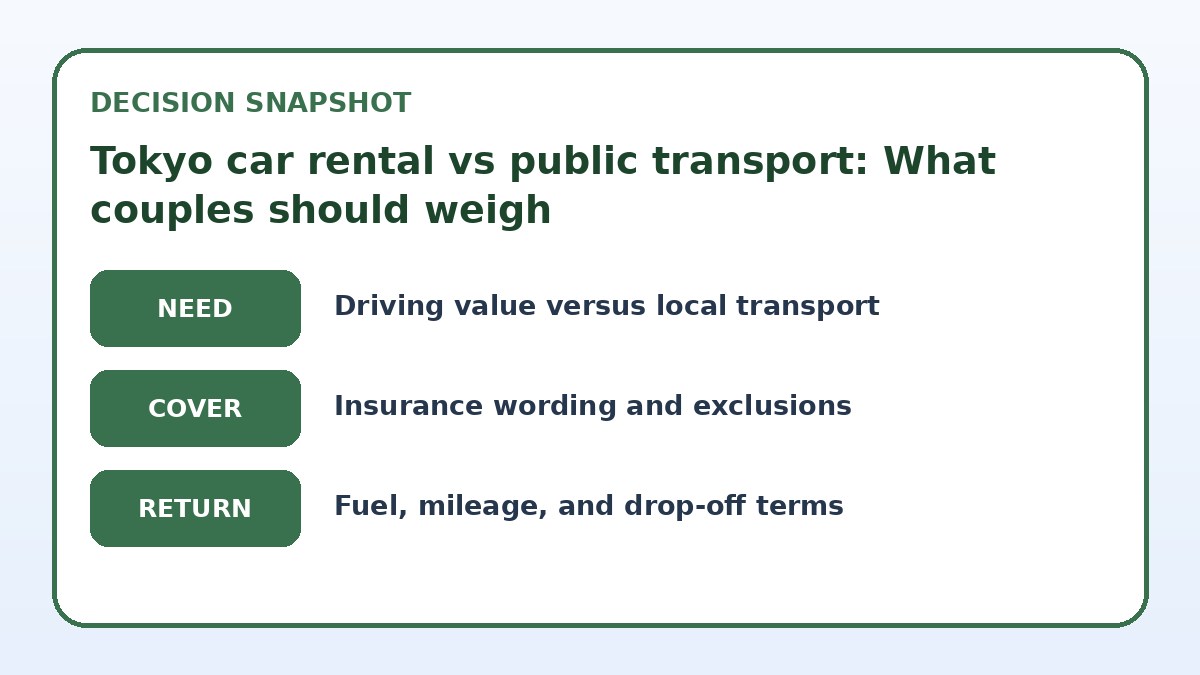
- Compare insurance options and what situations each covers; verify excess and roadside assistance procedures on the provider page.
- Plan where you’ll pick up and drop off the car to minimize central Tokyo driving—consider airport or suburban branches.
Decision checklist and booking tips for couples
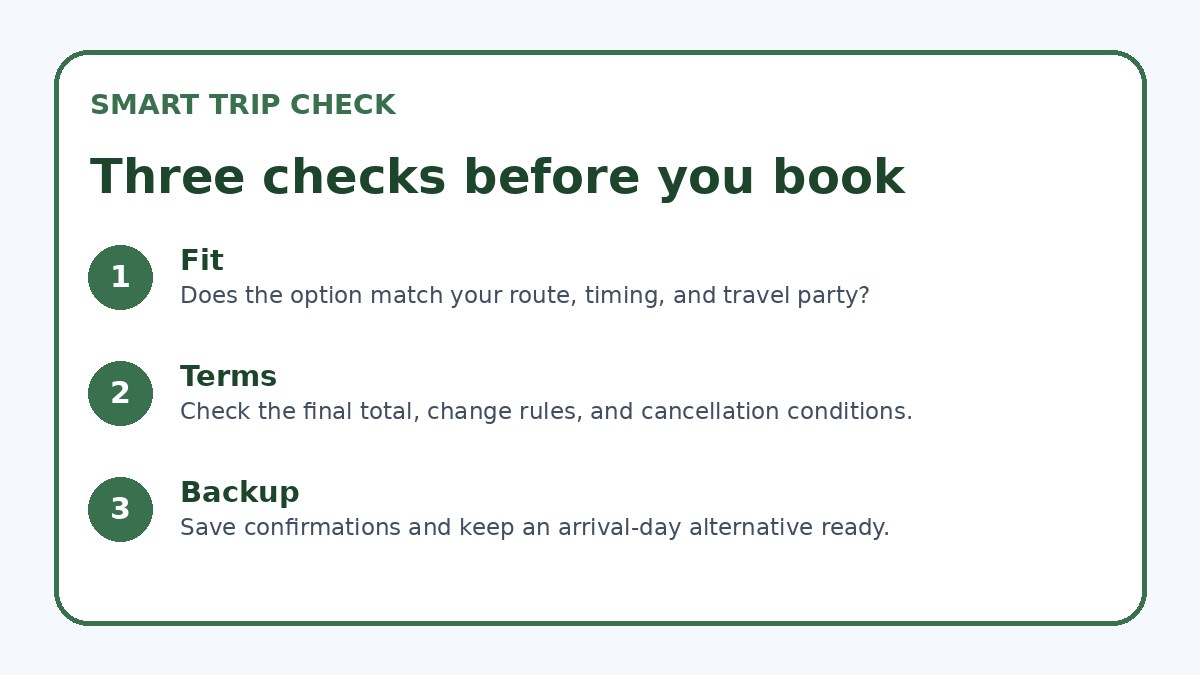
Before you book a car or commit to a transit-focused hotel, map your primary activities and mark their nearest stations or parking options. For any car booking, verify provider cancellation rules, insurance options, deposit requirements, and what documents you must present at pick-up—this includes rules about international driving permits or local licenses. When relying on public transport, check the walking distance from each hotel to the nearest station, peak transit times on days you plan long excursions, and whether late-night travel requires taxis. Remember: when provider-specific facts could change, always confirm final terms and availability on the rental company’s booking page or your transit pass vendor before payment.
If you’re undecided, consider a hybrid approach: spend several nights in central Tokyo using trains, then rent a car for one or two days for specific excursions from a suburban or airport branch. This reduces urban driving while giving you flexibility for out-of-town exploration. Use route planners and realistic door-to-door estimates when comparing options. If comparing suppliers or checking current availability and conditions, Trip.com can be one place to view options, but verify all terms on the provider’s official site before completing any reservation.
Frequently asked questions
Is driving in Tokyo hard for first-time visitors?
Driving in Tokyo can be challenging for someone unfamiliar with left-side driving, narrow city streets, and dense traffic patterns. Signage often uses English for major routes, but many smaller streets have limited markings and can be one-way. Parking requires attention: shortages and complicated payment systems in busy districts add stress. For couples, consider whether the driver is comfortable navigating and whether the partner is willing to take on navigation or parking tasks. If either of you feels uneasy, rely on public transport for city days and use a car only for specific out-of-city excursions.
Can we use a single JR or metro pass instead of renting a car?
Passes and reloadable transit cards are excellent for central and regional train travel, simplifying payments and transfers. For most couples focused on Tokyo’s urban attractions, these passes cover the majority of trips and remove the need to worry about parking or tolls. However, passes generally don’t help with remote destinations lacking regular rail service, late-night rural travel, or places where stations are far from your intended stop. Compare the geographic coverage and operating hours of the pass to your itinerary, and evaluate whether a short car rental or day trip tour could bridge the gaps where trains don’t conveniently reach.
How do we decide whether to rent a car for part of our Tokyo trip?
Start by prioritizing your planned destinations and grouping them geographically; if several are outside rail corridors or would require long, multi-transfer journeys, a car for those days becomes appealing. Factor in how much driving each of you finds relaxing versus stressful, and whether privacy or transporting items weighs heavily in your choice. Run a simple door-to-door time and cost comparison for 2–3 key days—include walking to stations, parking search time, and tolls. If renting reduces transfers and increases enjoyment even after those extra costs, it’s worth booking; otherwise the trains probably serve you better.
Final planning note
For most couples staying inside central Tokyo, public transport offers a faster, lower-stress way to see neighborhoods, eat well, and enjoy nightlife without parking or navigation chores. Choose a rental car when your shared priorities require rural access, flexible departure times, carrying bulky gear, or a private travel environment. The best approach often mixes both: use trains for city nights and book a car for select day trips from a suburban or airport branch. Whatever you choose, map door-to-door journeys, confirm driver documentation and insurance details on the rental page, and plan pick-up/drop-off locations to minimize city driving so both partners can relax and enjoy the trip.
Continue planning
Check current options and final conditions
Use the provider page to confirm live availability, the final total, cancellation terms, and every condition that matters to your trip.
This evergreen planning guide was created with AI-assisted drafting and a structured quality review. It does not display live prices, schedules, availability, visa guidance, or provider rankings. Verify current details before booking. Some links are affiliate links; we may earn a commission at no additional cost to you.