If you and your partner are planning Seoul to Singapore flights, the single most useful step before you book is to compare the carrier’s or fare’s change and cancellation rules — not the seat map or extras. Start by checking whether a fare offers free changes, a fixed change fee, or only travel-credit refunds, and whether cancellations return cash or travel credit. Also confirm how rules differ by who booked (primary passenger vs. traveler) and by ticket class. Couples often travel with mixed priorities: one partner may value flexibility for work or health, the other may prioritize a lower fare. Read the provider’s final booking page and fare conditions carefully—those conditions are binding. If you want a quick place to view options, consider comparing listings on Trip.com to surface current availability, but always verify rules on the airline’s own confirmation and terms pages before paying.
See current options before you compare the details
Availability and final conditions change. Open Trip.com now or keep reading for the practical comparison.
How to read the fare rules before you commit
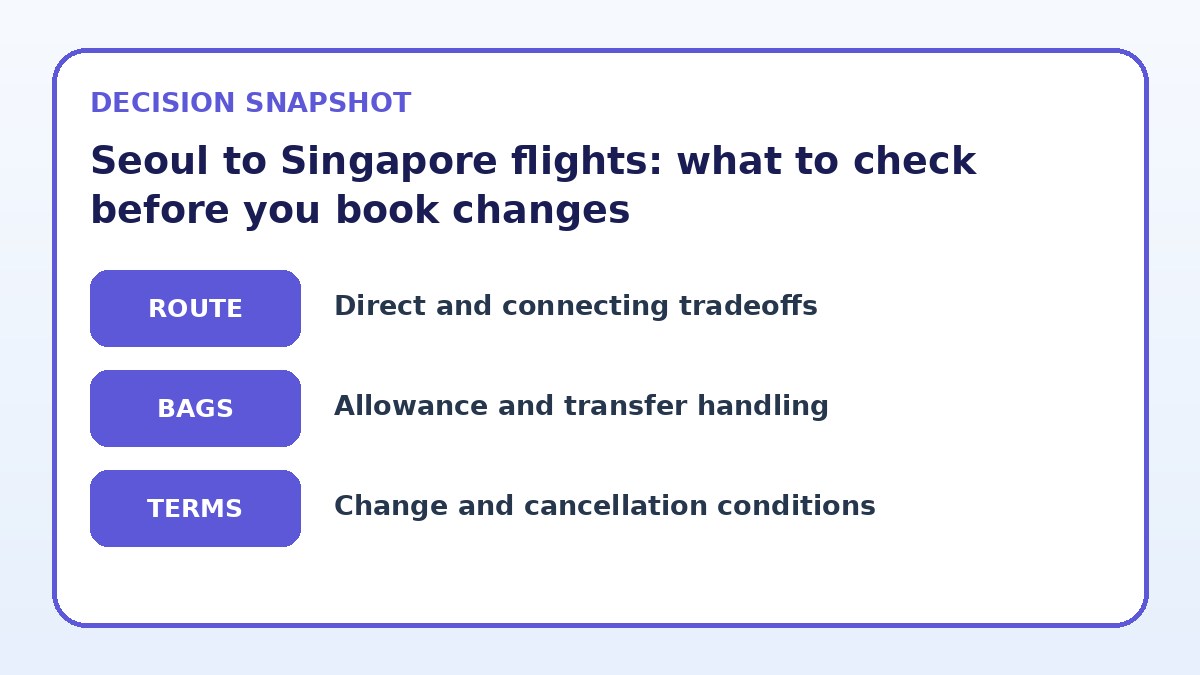
Fare rules are the contract you accept when you buy a ticket; they state whether you can change dates, get a refund, or must accept credit. On the airline or online travel agency booking page look for phrases like “changes permitted,” “cancellation permitted,” “non-refundable,” and “fare conditions.” If the site shows only a short summary, locate and open the full fare conditions or ticketing rules link. These documents will list change fees (often a fixed fee plus any fare difference), whether cancellations are refundable, and any blackout or reissue conditions.
Pay attention to how rules are applied by passenger role and booking channel: the person who paid or whose email is on the PNR may receive communications and is often the only one who can request changes. Also check whether a fare is sold through a third-party seller; some third-party fares carry additional restrictions or separate refund handling. If in doubt, screenshot the fare rules and keep the booking reference; that makes it easier to argue your case with customer service if policies differ from what you saw at purchase.
Comparing direct and connecting flight options
Direct and connecting flights can have very different flexibility profiles. A direct flight on a full-service carrier might offer more generous change or refund options at slightly higher fare classes, while a connecting itinerary that mixes carriers can complicate changes: changing one leg may force reissue of the entire ticket, often with higher fees. For couples, this matters: if one partner’s schedule is uncertain, a more flexible direct option might simplify rebooking both tickets together.
When comparing options, look for whether the itinerary is a single ticket (one PNR) or multiple separate tickets. Single-ticket itineraries allow the carrier that issued the ticket to rebook routed flights together under the same rules. Separate tickets expose you to the risk that changing one ticket won’t change the other, leaving you to handle missed connections and additional costs. Confirm on the booking page whether the displayed fare covers checked bags, seat selection, and whether any change or cancellation protections are offered as add-ons.
| Approach | Best for | Tradeoff to check |
|---|---|---|
| Buy refundable or fully-flexible fares | Couples who need cash refunds and maximum flexibility | Higher upfront cost compared with restricted fares |
| Choose flexible fares with waived change fees | Travelers who want easy date swaps without losing cash | May still require payment of any fare difference |
| Select low-cost nonrefundable fares | Couples confident in fixed plans and wanting lowest base fares | Changes costly or only allowed as travel credit |
| Book separate-coded tickets (one flexible, one cheap) | Pairs where one traveler needs flexibility and the other does not | Coordination is harder and separate rules apply to each ticket |
Ready to check the option that fits your plan?
Use your exact dates and traveler details so the provider page can show the current total and conditions.
Choosing between refundable fares, flexible fares, and travel credit
Refundable fares are the most straightforward: you cancel and get your money back to the original payment method (subject to the carrier’s processing time). They’re usually more expensive but provide cash liquidity — important if you and your partner need to reallocate travel funds. Flexible fares commonly mean reduced or waived change fees but still require you to pay any difference in fare price when rebooking. Flexible fares are often a middle ground: cheaper than fully refundable tickets, but materially easier to change than basic economy.
Travel credit or vouchers are common on budget and some legacy carriers after cancellation; they let you rebook with that carrier but not with others and often expire. For couples, travel credit can be fine if you plan to fly the same airline soon, but it’s risky if one partner prefers using miles, another carrier, or if your plans could shift considerably. Always note the credit’s expiry date, transferability rules, and any blackout windows written on the provider’s final booking page.
Before you book
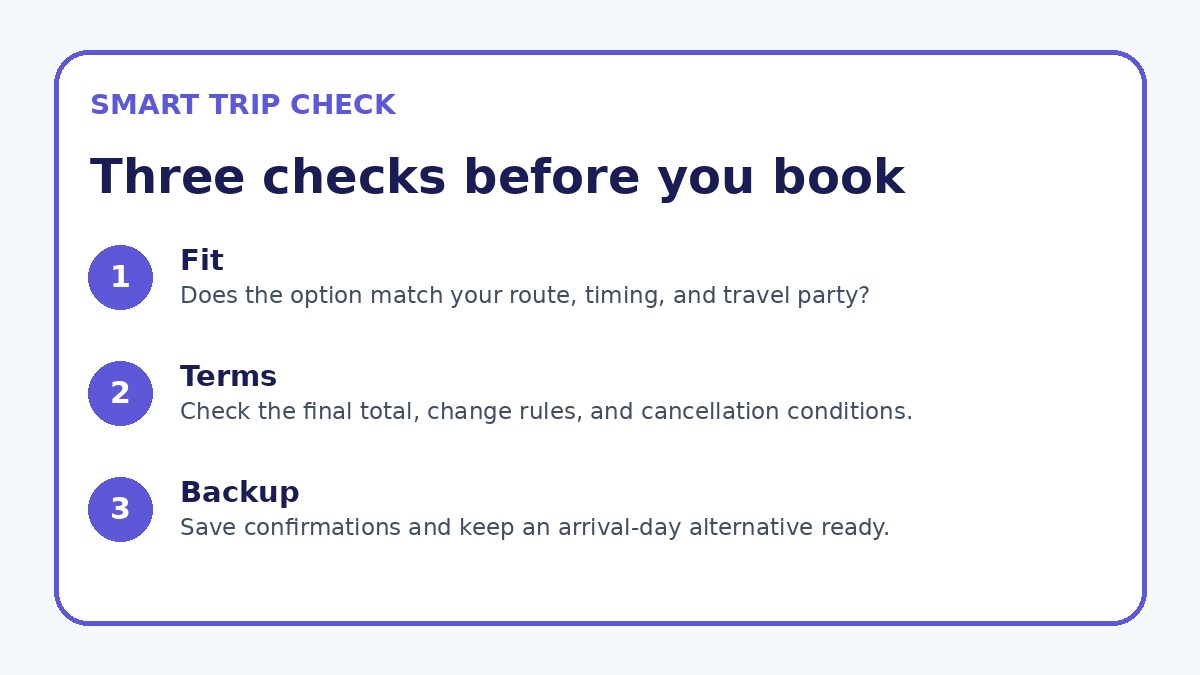
- Open the full fare conditions link on the airline’s final booking page and read change and cancellation clauses in detail.
- Record the booking reference and screenshot the fare rules and any on-screen cancellation/change summaries.
- Compare whether changes incur a flat fee, only a fare difference, or both, and note exact cut-off times.
- Confirm whether cancellations return money to the original payment method or issue travel credit, including expiry and transfer rules.
- Decide whether to buy travel insurance that covers change or cancellation reasons not protected by the airline.
- If booking separate tickets, schedule time buffer between connections and confirm each carrier’s missed-connection policy.
Practical steps and tradeoffs for couples before booking
Start by defining shared priorities: which matters more, flexibility or lower upfront cost? Then run a side-by-side comparison of at least three fare options for your intended travel dates. Look specifically at the change fee amount, whether fare difference applies, whether cancellations return cash or credit, and whether name changes are permitted. For some couples, paying slightly more for waived change fees reduces stress and the chance of a large rebooking cost if plans change.
If one partner needs extra protection—for example, frequent work changes or uncertain medical commitments—consider booking that traveler on a more flexible fare while the other takes a lower-cost fare, but ensure both bookings align for seat and baggage handling. If you choose travel credit offers, plan how you’ll use them to avoid losing value. Finally, save screenshots of the final booking page showing rules and retain the reference number; you’ll want that record if you need to invoke protection or dispute a policy later.
Frequently asked questions
Can I change just one passenger’s date on a roundtrip booking for two?
Sometimes, but it depends on the airline and how the ticket was issued. If both travelers are on the same PNR, many carriers require reissuing the ticket for the entire reservation, which can mean paying change fees or fare differences for both passengers. Some airlines allow splitting a PNR or changing a single passenger with a specific service fee. Always check the booking management section on the airline’s final booking page and, if needed, contact the carrier directly to request an exception and get a written confirmation of any applied fee.
Is it safer for couples to book two separate tickets or one joint reservation?
A single joint reservation keeps both passengers under the same rules and is simpler for seat selection and baggage. However, if one partner needs maximum flexibility and the other wants a lower fare, separate tickets let each choose different fare classes. The tradeoff is operational risk: with separate tickets you lose protection for missed connections and may face higher costs to rebook one itinerary without affecting the other. Before splitting tickets, verify each fare’s change and cancellation conditions and evaluate the time cushion between flights.
What exactly should we verify on the airline’s final booking page before paying?
Confirm the exact wording and numbers for change fees, cancellation refund type (cash versus credit), any expiry dates for credits, and whether name changes are allowed. Check baggage and seat inclusion so you’re not surprised when changing dates, and note any contact or service center details for post-booking support. If the booking was made through an agent or OTA, verify who handles refunds and changes. Keep screenshots of the final booking page that display these rules to avoid misunderstandings later.
Final planning note
For couples booking Seoul to Singapore flights, the most practical decision factor is the fare’s change and cancellation framework rather than small upfront savings. Decide together whether you prioritize cash refunds, waived change fees, or the lowest fare; then read and save the exact fare conditions from the carrier’s final booking page. Consider mixing ticket types only if you can manage the operational tradeoffs, and keep proof of the rules you saw at purchase. These steps reduce surprises, make rebooking easier if plans shift, and protect both partners’ interests when travel plans change.
Continue planning
Check current options and final conditions
Use the provider page to confirm live availability, the final total, cancellation terms, and every condition that matters to your trip.
This evergreen planning guide was created with AI-assisted drafting and a structured quality review. It does not display live prices, schedules, availability, visa guidance, or provider rankings. Verify current details before booking. Some links are affiliate links; we may earn a commission at no additional cost to you.