
If you're visiting Toronto for the first time, the single most useful booking filter is cancellation flexibility. That starts with knowing whether a fare or room can be changed or refunded and under what conditions — nonrefundable, partially refundable with a fee, or fully refundable within a window. Flexible options cost more up front but reduce stress if plans shift: flight delays, unexpected weather, or a new event in the city often change itineraries. This guide walks you through the kinds of cancellation policies you'll see for flights, hotels, and experiences, how to compare them, and the decision criteria to help you choose between lower cost and greater freedom. Read the provider’s final booking page every time before you commit; when provider-specific details could change, that page is the authoritative source.
How airline cancellation flexibility usually works
Airline cancellation rules vary by fare class and carrier. First-time visitors will typically encounter refundable fares, basic nonrefundable fares, and mid-tier options allowing changes for a fee. Refundable fares let you cancel and get money back to your original form of payment, often subject to time windows and documentation rules; mid-tier fares often permit changes with a reprice plus a fee. Always verify on the airline’s final booking page whether taxes and ancillary fees are refundable and whether a voucher or credit is offered instead of a cash refund.
When comparing flight options, weigh the advertised fare against the total potential loss if you must change plans. A nonrefundable fare might be cheaper but could leave you out of pocket for the full ticket if the carrier’s policy or your travel insurance doesn’t cover it. If you expect a risk of date changes, look for a ticket that allows free changes within 24 hours of booking or one that includes waiver conditions for unforeseen events. If you plan to compare multiple carriers or online marketplaces, note that change and cancellation processes can differ in timing and refund path.
Hotel policies: refundable windows, deposit rules, and prepayment
Hotels usually offer several rate types: fully refundable up to a specified date, partially refundable with penalties, or prepaid nonrefundable. Fully refundable rates typically permit cancellation up to 24–72 hours before arrival without charge, but that window varies; some special rates require longer notice. Prepaid rates lower your upfront cost but forfeit the amount if you cancel. Always check what constitutes a cancellation time — is it local midnight at the property, 24 hours before check-in, or another fixed cutoff? Confirm whether the hotel requires a deposit on arrival and how taxes and service charges are handled in a refund.
When weighing hotel choices for your first trip to Toronto, consider how firm your dates are. If your itinerary is prone to change, prefer refundable rates even if they cost more. If you choose a nonrefundable deal because it’s significantly cheaper, keep documentation of bookings and check whether the same property sells a refundable rate at a manageable premium; sometimes upgrading is worth the peace of mind. For group bookings or long stays, ask the property directly about modification policies and any flexibility for date shifts — the booking page will show the advertised rule, but direct confirmation helps with unusual requests.
| Approach | Best for | Tradeoff to check |
|---|---|---|
| Book refundable rates and flexible fares | Travelers who prioritize certainty and may change dates | Higher upfront cost but lower risk of losing money if plans change |
| Choose nonrefundable deals with low base price | Trip planners with fixed, certain itineraries and strict budgets | Lower price but full exposure to loss if you must cancel |
| Buy nonrefundable bookings plus travel insurance | Budget-conscious travelers wanting protected risk against specific events | Insurance reduces some risks but may not cover all cancellation reasons |
| Mix refundable and nonrefundable components | Those balancing budget constraints with protection on key items | Requires careful coordination and tracking of multiple policies and windows |
Tours, attractions, and transfer services: specifics to verify
Local experiences and day tours often have tighter cancellation rules than hotels, especially for small-group activities or limited-capacity attractions. Many operators set a cutoff (48–72 hours typical) after which cancellations are nonrefundable. Others offer a partial refund or credit toward a future booking. Before reserving, check whether vouchers, timed-entry tickets, or third-party resellers have different refund paths. If a tour includes third-party services—like ferry crossings or restaurant reservations—those suppliers’ rules can affect your refund eligibility.
If a provider’s policy is unclear, contact them directly and ask for written confirmation of the cancellation terms. When booking multi-component plans—transfer plus tour plus meal—confirm which part is refundable and which is not, because providers often treat the components separately. Consider refundable alternatives, such as reserving a tour with free cancellation up to 24 hours or booking a refundable activity and buying shorter-notice tickets for fixed-time events once your schedule is locked in. Trip.com can be used as one site to compare current conditions and availability, but always rely on the operator’s final booking page for the authoritative policy.
Before you book
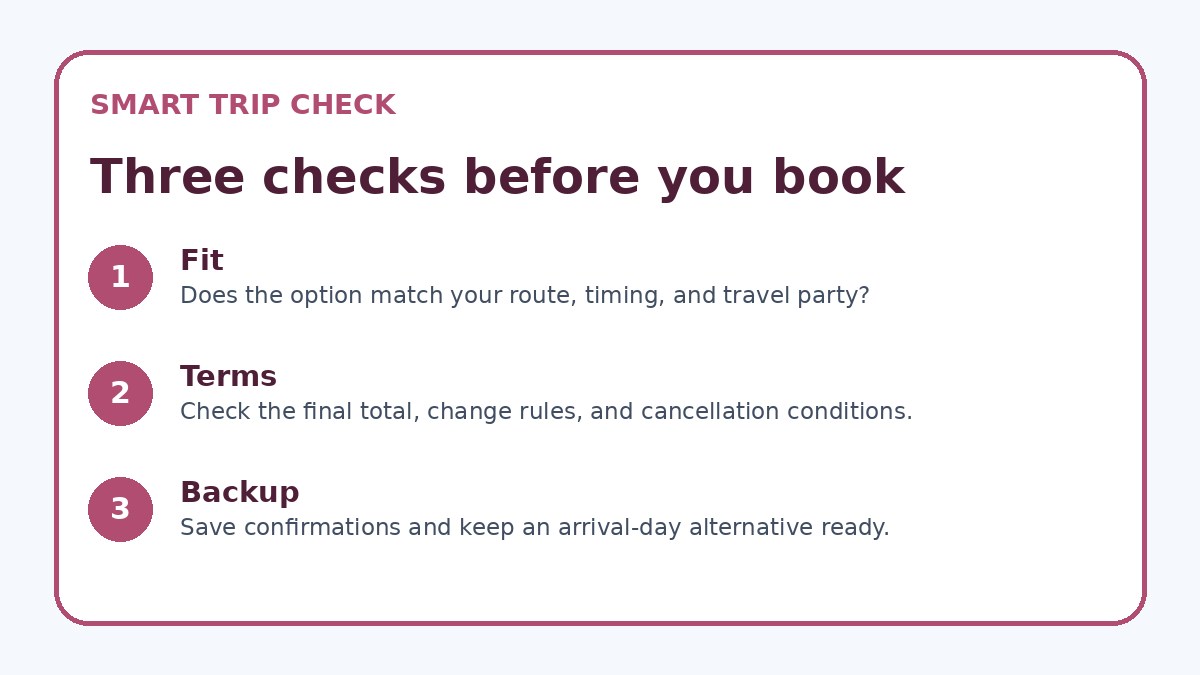
- Read the final booking page for each flight, hotel, or tour and copy the exact cancellation window and any fees.
- Confirm whether refunds go back to the original payment method or are issued as vouchers/credits.
- Note the local cutoff time for hotel cancellations (midnight local, 24 hours before, etc.) and set a calendar reminder.
- Ask tour operators to email or message their cancellation policy when the policy language is ambiguous.
- Compare the cost difference between refundable and nonrefundable options and calculate your break-even risk.
- Check whether your credit card or separate travel insurance covers cancellations for reasons relevant to your trip.
Decision criteria: when to prioritize flexibility over price
Prioritize cancellation flexibility if your travel dates are tentative, you’re visiting in variable weather seasons, or you might need to change plans for family or work reasons. Also favor flexible options when coordinating arrivals with connecting travelers or when booking around events with uncertain dates. If a small change fee is predictable and acceptable given the price difference, a nonrefundable rate plus change protection could be reasonable. Ask yourself how much you would be willing to lose if you had to cancel today, and compare that to the price premium for refundable bookings.
If budget is the main constraint and you are confident in your schedule, nonrefundable deals may be appropriate, but plan mitigations: buy travel insurance that covers cancellations for a wide range of reasons, or reserve refundable hotels and secure cheaper prepaid experiences later. For multi-leg plans combining flights, hotels, and tours, prioritize flexibility on the most expensive or hardest-to-rebook element. Finally, always re-check the final booking page for exact time windows, fees, and refund routes before purchasing; policies posted at the moment of booking are the contractual terms you will rely on.
Frequently asked questions
Can I rely on a website’s summary of cancellation rules, or should I check the provider page?
Always verify on the provider’s final booking page before you complete payment. Aggregator sites and search results often show abbreviated rules that omit important details like processing times, which fees are refundable, or whether a voucher will be issued instead of a cash refund. The provider’s booking page is the contractual source for the terms you accept, and it will state the exact cancellation window, fee structure, and refund mechanism. If anything on that page is unclear, contact the provider directly and request confirmation in writing.
If I book a cheap nonrefundable rate, what are realistic options if I need to cancel?
If you booked a nonrefundable rate, options include attempting to change the reservation (which may incur a fee), requesting a credit for future travel, transferring the booking if the provider permits, or filing a claim with travel insurance if you purchased a policy that covers your cancellation reason. Some providers offer limited exceptions for emergencies, but those are handled case-by-case and often require documentation. If you think your plans might change, look into refundable upgrades, flexible fares, or insurance before you finalize a nonrefundable purchase.
Does buying refundable hotel rates protect me if my flight is delayed or canceled?
Refundable hotel rates give you an easier path to recoup prepayments if you must cancel the room, but they do not automatically cover knock-on losses from flight disruptions. If a delayed flight causes you to miss a night, contact the hotel as soon as you know and explain the situation—some properties may offer a goodwill adjustment, but that is not guaranteed. To manage interdependent risks, coordinate policies: choose refundable options for whichever element is most critical, consider travel insurance that covers missed connections and accommodations, and document delays from carriers to support claims.
Final planning note
For first-time visitors to Toronto, cancellation flexibility is a practical lens for making booking choices. Decide which elements of your trip you cannot easily replace—usually the most expensive flights or unique events—and prioritize refundable or changeable options there. Where your schedule is firm, nonrefundable savings can be sensible if you accept the risk. Always inspect the provider’s final booking page for exact cancellation windows, refund paths, and any fees, and consider travel insurance as an additional layer of protection. With a measured mix of flexibility and budget-conscious choices, you can reduce stress and keep your Toronto trip resilient to the inevitable hiccups of travel.
Continue planning
Check current options and final conditions
Use the provider page to confirm live availability, the final total, cancellation terms, and every condition that matters to your trip.
This evergreen planning guide was created with AI-assisted drafting and a structured quality review. It does not display live prices, schedules, availability, visa guidance, or provider rankings. Verify current details before booking. Some links are affiliate links; we may earn a commission at no additional cost to you.