Practical answer up front: when booking Seoul to Bangkok flights as a couple, prioritize the fare rules that control changes, cancellations, and refunds — not just the headline price. Choose a fare that allows at least one free or low-fee change date, or one that offers a refundable option if your plans are uncertain. If you both need identical flexibility, buy the same fare class on the same reservation to avoid mismatched rules.
Tradeoffs matter: more flexible tickets cost more but reduce stress and splitting decisions later. Non‑refundable fares save money but typically charge change fees plus any fare difference. If you expect schedule shifts, compare allow‑free change windows, how refunds are processed (credit vs. cash), and whether voluntary name changes or separate bookings complicate using seats together. Read the carrier’s final booking page and the fare rules exactly as they appear before paying — that is the contract you will rely on.
How to read change and cancellation rules
Start with the fare code and the fare conditions section on the airline’s booking page. That small block of text lists whether a ticket is refundable, whether changes are permitted, and what fees apply. For couples, the critical line is whether a change incurs a flat fee per ticket, a percentage of the fare, or only the fare difference. Also watch for time windows: some fares allow free changes within 24 hours of purchase, while others permit penalties only if you change after check‑in. If the airline shows a “refundable” label, verify whether that means a full cash refund or a travel credit — wording differs and determines how you can use refunded money.
Look for ancillary rules that affect both of you: name correction limits, upgrade policies, and how much notice is required for changes. If you booked two seats but on different fare families, the lower‑flexibility ticket may force a higher fee if you need to rebook both together. For connecting itineraries with partner carriers, read each carrier’s rule as a combined itinerary can inherit the strictest conditions. Keep screenshots or a PDF of the final fare rules page — that is the record to reference if you need to press the airline later.
Comparing direct flights and connecting itineraries
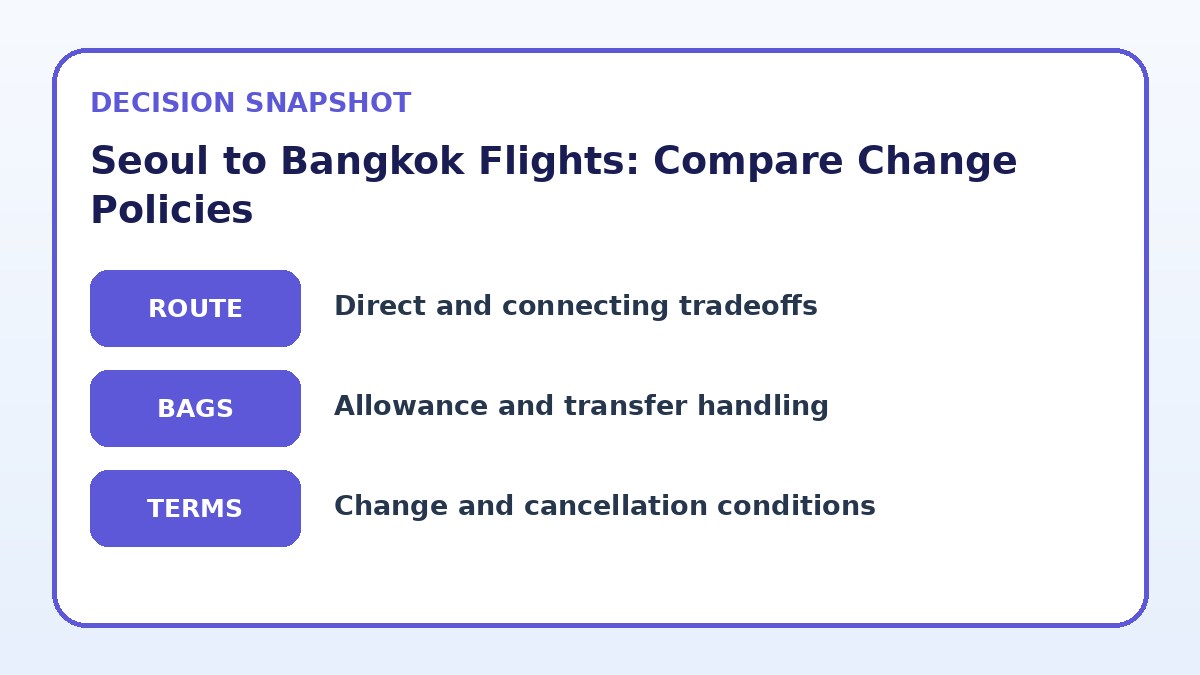
Direct flights simplify change and cancellation decisions because one carrier governs the entire ticket. When both travelers are on the same direct flight and reservation, a single change typically adjusts both seats together and calculates one fee per passenger under the same fare conditions. For couples who value simplicity — arriving together, not worrying about missed connections — direct flights reduce the number of policies you must manage. When you compare options, check whether the direct flight’s flexible fare costs more than a connecting option that could require juggling two carriers’ rules.
Connecting itineraries can save money but complicate changes: each segment may be booked with different carriers or fare classes, and partner rules can differ substantially. If one leg needs changing, you may have to reissue the whole ticket, incur separate change fees, or deal with a partner carrier’s refund process. For couples, the risk is one traveler needing a change that forces a disruptive rework for both. If you consider a connection, confirm whether it’s protected through a single ticket and what the airline’s rebooking procedure is if a connection is missed due to schedule adjustments.
| Approach | Best for | Tradeoff to check |
|---|---|---|
| Buy fully refundable fares for both passengers | Couples with high schedule uncertainty who prioritize ease of refunds | Higher upfront cost but simplest refund process and minimal paperwork if plans change |
| Buy the same semi‑flex fare on one reservation | Couples who want moderate flexibility and to stay seated together | Lower cost than refundable fares but still involves change fees and potential fare differences |
| Mix a flexible ticket for one partner and a cheaper ticket for the other | Couples where only one person needs flexibility due to work or visa uncertainty | Saves money but creates complexity if you need to rebook both tickets together later |
| Choose the cheapest non‑refundable fares and add travel insurance | Couples confident in fixed plans who want lowest ticket cost with some protection | Insurance may not cover all change reasons; carrier fees and fare differences still apply |
Special considerations for couples traveling together
Decide early whether you want synchronized flexibility or individual options. If both partners are tied to the same plans — events, tours, or family obligations — buy the same flexible fare on the same reservation. That avoids one person being stuck on a restrictive ticket while the other can change freely. If one traveler needs more flexibility (work commitments, uncertain visa timing), consider buying upgraded change protection or travel insurance for that person only, but understand that insurance does not alter the carrier’s ticket rules and often requires specific covered reasons to pay out.
Seat selection and assigned seats are also part of the decision: a low‑cost fare with cheap change options may exclude advance seat choices or charge extra to sit together. Check whether the fare includes group seating or if you must pay to reserve seats before flight. If being together inflight is essential, weigh the extra cost of a higher fare class that includes seat choice against the lower fare plus seat fees. Always verify on the booking page whether seats booked together are guaranteed if you later change one passenger’s ticket.
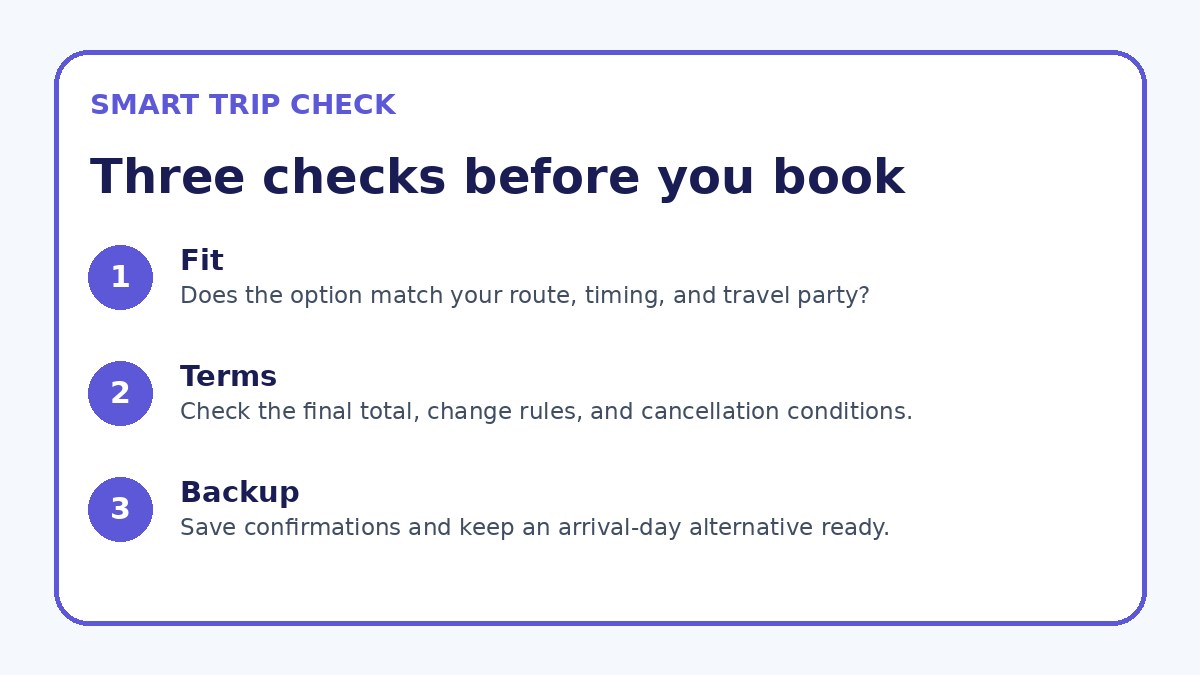
Before you book
- Confirm both passengers share the same fare class and reservation number before paying.
- Screenshot or download the full fare rules and the booking‑page summary for future reference.
- Verify whether refunds are issued as cash, card reversal, or travel credit on the carrier’s page.
- Check whether a 24‑hour risk‑free cancellation window applies to your itinerary and market.
- If the itinerary involves partner carriers, open and save each carrier’s applicable rule set.
- Decide on seat reservations now and confirm whether seat assignments survive a later change.
What to verify on the booking page before payment
Confirm these exact items on the final booking page: the fare class for each passenger, line‑item change and cancellation fees, whether refunds are cash or travel credit, and what happens if you change only one passenger. Note any 24‑hour risk‑free cancellation window and whether it applies to your market. The booking page may also disclose government taxes and third‑party fees that are non‑refundable. If you see a bundled option such as ‘flex’ or ‘standard plus,’ click through to view specific conditions — generic labels can mask important differences.
If an itinerary uses more than one carrier, open the combined fare rules and the individual carrier rules that apply to each segment. For codeshare flights, verify which airline issues the ticket, because the issuing carrier’s rules govern most change and refund processes. Take screenshots of the displayed fare rules and the total price breakdown before payment. If anything is unclear, call the airline with the booking page open so you can read back the exact fare code and rule text they reference.
Frequently asked questions
If one partner needs to change dates, can the other stay on the original ticket?
It depends on the fare rules and how the reservation was issued. If both names are on the same PNR (booking) and you change one passenger only, many airlines require reissuing the whole ticket and will calculate fees or fare differences for each passenger affected. Some carriers allow changing a single traveler on a multi‑passenger booking but will show the consequences on the reissue screen. Before changing anything, check the airline’s online change tool with the PNR or call the carrier and have the fare code and rule text available from your booking page to confirm the exact impact.
Does buying travel insurance replace buying a flexible fare for domestic or international legs?
No — insurance is separate from the ticket’s change and refund rules. Travel insurance can reimburse you for covered reasons (illness, certain travel advisories, etc.), but it does not alter the airline’s change fees or seat availability. If you file an insurance claim, you still must follow the carrier’s process to change or cancel, and then seek reimbursement from the insurer under the policy terms. Read any policy exclusions carefully and make sure the insurer covers the specific risks you worry about before skipping a flexible fare.
How should couples handle multi‑carrier itineraries between Seoul and Bangkok?
For multi‑carrier trips, try to buy a single ticket that lists all segments together so the issuing carrier can manage reissues. If that’s not possible and you book separate tickets, understand that each ticket follows its carrier’s rules — a change or delay on one leg won’t obligate the other carrier to rebook you. For couples, this can mean two separate change fees and mismatched availability. Always verify who issues the ticket (the ticketing carrier) and save all carriers’ fare rules. Consider adding protection like a buffer day between connections to reduce the risk of missed segments.
Final planning note
For couples planning Seoul to Bangkok flights, the simplest path is to align fare classes and keep both passengers on the same reservation so changes and cancellations behave predictably. Weigh the higher cost of refundable or semi‑flex fares against the administrative hassle and potential higher combined fees of cheaper, restrictive fares. If one traveler needs unique flexibility, consider targeted insurance or buying different fare types but accept the operational complexity that may follow. Always verify the final fare rules, refund type, and any carrier‑specific waivers on the booking page — that page is the contract you will need if plans change. For quick comparisons of current availability and conditions, you can optionally check a comparison site such as Trip.com, then confirm terms on the airline’s official page before booking.
Continue planning
Check current options and final conditions
Use the provider page to confirm live availability, the final total, cancellation terms, and every condition that matters to your trip.
This evergreen planning guide was created with AI-assisted drafting and a structured quality review. It does not display live prices, schedules, availability, visa guidance, or provider rankings. Verify current details before booking. Some links are affiliate links; we may earn a commission at no additional cost to you.