If you’re renting a car in Vancouver with kids, the practical priority is simple: read the key words on the rental contract and confirm who is insured, for what damage, and which coverages are optional. Insurance wording is full of short phrases that determine whether your family is protected from accident damage, third-party claims, theft, or roadside incidents — and small differences matter. Start by identifying Collision Damage Waiver (CDW)/Loss Damage Waiver (LDW), third-party liability, supplemental liability, and whose driving is permitted. Next, check deductibles, exclusions for specific vehicle types, and whether personal travel insurance or your credit card already provides overlap. This article shows the terms families encounter, how to compare options, and exactly what to verify on the provider’s final booking and pickup paperwork so you can choose sensible cover without overpaying.
What common insurance terms actually mean for family renters
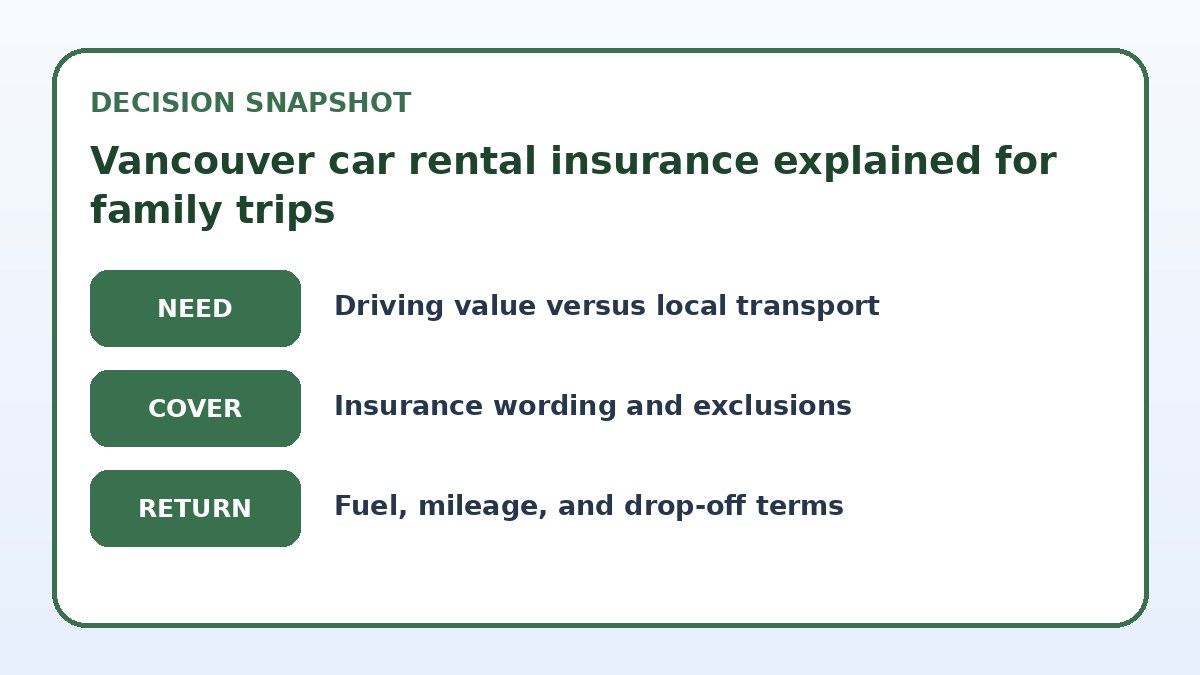
Rental agreements use acronyms and short labels that sound similar but cover different risks. Collision Damage Waiver (CDW) or Loss Damage Waiver (LDW) typically reduces or waives the renter’s financial responsibility for damage to the rental vehicle, but may still include a deductible. Third-party liability covers damage and injury to others if you are at fault; this is separate from damage to the rental car itself. Supplemental liability or extra third-party limits increase protection above the basic policy the rental provides. Understanding each label helps families decide which gaps they must fill, particularly when small children and additional users increase exposure.
Exclusions and special-case wording are crucial for families. Many waivers exclude damage from improper child seat installation, using unpaved roads, or authorized drivers under a certain age. Theft protection wording can contain conditions about leaving the car unattended with keys inside or unlocked doors. Roadside assistance or accidental loss coverage might be optional add-ons with their own caps and service limits. Read the exceptions carefully and ask the agent to explain any clause that uses terms like “willful misconduct,” “unauthorized driver,” or “commercial use,” because these can void coverage during family activities such as moving luggage or towing a stroller trailer.
Deciding which coverages families typically need
For many families, the priority is avoiding surprise out-of-pocket bills after damage or theft while maintaining adequate protection for other people involved. If your personal auto policy in your home country covers rental cars in Canada, you may not need full CDW/LDW, but you must confirm limits, deductibles, and cross-border acceptability. Parents should also focus on liability limits: a low base liability on the rental can expose you to claims for medical costs and property damage. Supplemental liability can be a relatively low-cost way to increase protection, but always compare it to any umbrella or personal policies you already hold.
Think about family-specific risks: are you driving mountain roads, carrying expensive gear, or planning multiple drivers? Roadside assistance is valuable if you have kids in car seats and a flat tire would cause a long wait. Theft waivers reduce worry if you’ll park in busy tourist areas, but read the vehicle security conditions. Compare the cost of waivers to the potential deductible and the limits of your existing policies. The goal is to buy protection that fills real gaps instead of duplicating cover you already have.
| Approach | Best for | Tradeoff to check |
|---|---|---|
| Decline all provider waivers and rely on personal auto and credit-card coverage | Families with comprehensive personal policies and primary credit-card rental coverage | You must verify limits and get written confirmation; surprise gaps can lead to large deductibles or uncovered liability. |
| Buy full CDW/LDW from the rental provider | Families wanting predictable, simple coverage and quick resolution at the counter | Usually higher daily cost and possible unnecessary overlap with existing policies; confirm exclusions and named-driver rules. |
| Purchase supplemental liability and roadside assistance only | Families seeking extra third-party protection and help for breakdowns without paying full damage waivers | Damage to the rental vehicle may still leave you liable up to the deductible unless covered elsewhere. |
| Buy third-party rental insurance from an independent insurer | Families who want higher liability limits and a potentially lower-cost alternative to provider add-ons | You must confirm claims procedures and whether coverage is primary or secondary; processing time and proof requirements can be slower. |
How to verify policy details before you book or pick up the car
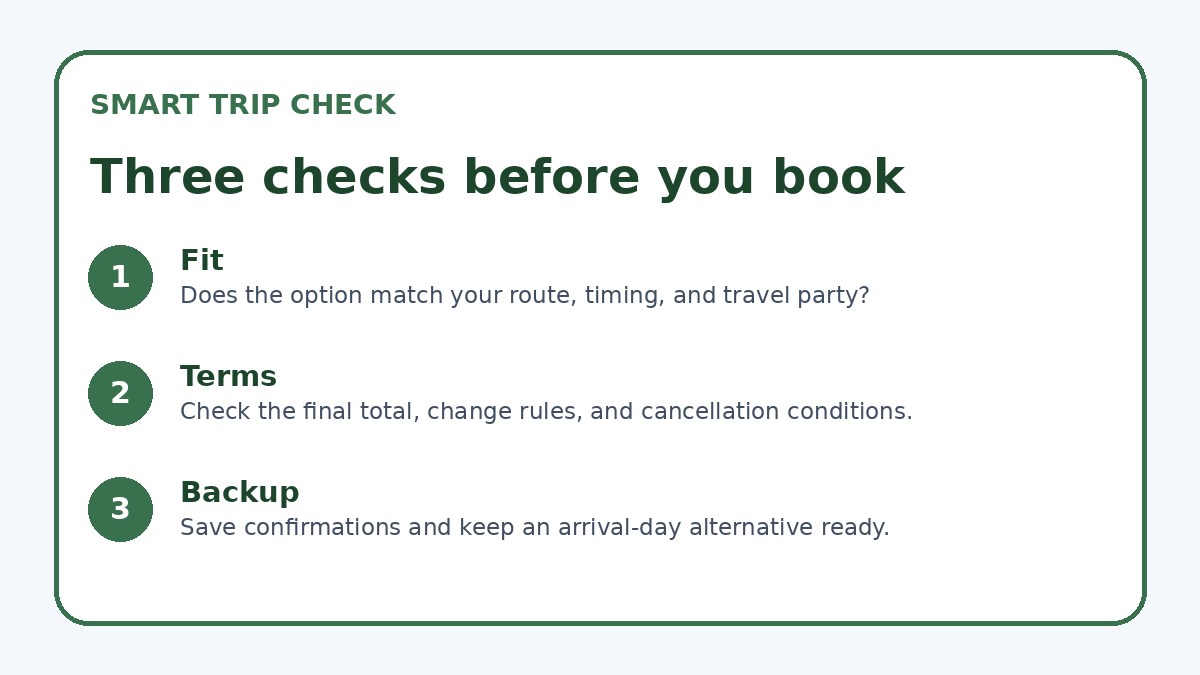
When you reach the rental provider’s booking and confirmation pages, search the contract for exact phrases: CDW/LDW, deductible amount, theft protection, third-party liability, named drivers, and exclusions. Do not rely solely on summary bullets — download or request the full rental terms and read the sections that define ‘‘you’’ and ‘‘driver,’’ and any rider about young drivers. At pickup, ask the agent to show the same policy text and note the agent’s name and time of confirmation. If the provider’s site offers a PDF contract, save it; if not, request an email copy to ensure you have the exact wording to compare with your personal insurance.
Verify what your credit card company covers by checking the cardholder agreement for rental coverage details, specifically whether coverage is secondary or primary, and whether it applies in Canada and to the vehicle class you’ll rent. Ask your personal auto insurer for a written statement of coverage for Canadian rentals and any age or vehicle-type restrictions. For families, get written confirmation if the policy covers additional drivers or child-seat-related damage. If you compare offers on Trip.com or similar sites, use them to see provider options but always confirm final wording on the rental company’s booking page before payment.
Before you book
- Download or request the full rental terms and read the sections that define ‘‘driver,’’ ‘‘deductible,’’ and exclusions before you pay.
- Call your personal auto insurer and request a written confirmation of coverage for Canadian rentals, including deductibles and age restrictions.
- Check your credit card’s benefit guide for rental-car coverage details and whether it is primary or secondary in Canada.
- At pickup, show the agent the booking terms and ask them to initial or email any verbal exceptions the company confirms.
- List every planned driver on the reservation and verify whether adding a teenage driver requires extra coverage or fees.
- Photograph the car’s condition on pickup and return, and keep the rental agreement and incident report numbers in case of later claims.
How to compare insurance approaches for a sensible family decision
Create a short checklist of your priorities — deductible tolerance, liability limits, number of drivers, and whether you want roadside assistance — then score each rental offer against those priorities. Don’t focus only on daily price; a low-rate rental with a high deductible or limited liability can cost much more after a single incident. For families traveling with young drivers, check whether youth surcharges or required extra coverage apply and whether it’s cheaper to add them on the provider policy or buy an external insurance product.
When you have alternatives, compare by asking three clear questions: (1) what is the maximum out-of-pocket after a full damage claim, (2) who is covered to drive and are additional drivers free or charged, and (3) what exclusions could apply in typical family use (child-seat incidents, beach or gravel roads, towing). Put answers in a simple table and prefer the package with predictable maximum exposure and clear written terms. If anything is unclear, ask for the clause to be emailed and pause the booking until you have that confirmation.
Frequently asked questions
Does the rental company’s CDW mean I’m fully protected if my family damages the car?
Not always. CDW/LDW typically reduces your financial responsibility for damage but often still includes a deductible and specific exclusions. Wording can exclude damage from certain uses — for example, driving off-road, using the vehicle for towing, or leaving a child seat improperly installed. Some waivers also require that only named drivers operate the vehicle. Always check the contract for the deductible amount, conditions that void the waiver, and whether you must buy additional theft protection for full coverage; ask the agent to point these clauses out in writing.
Will my personal auto insurance or credit card usually cover a Vancouver rental for our family?
It depends on the policy wording. Personal auto insurance can extend to rentals but may have limits for cross-border or out-of-province rentals and might treat some vehicle classes differently. Credit cards can provide rental coverage, but cards vary widely — some offer primary coverage, others secondary, and many exclude certain vehicles or drivers under a specific age. For family rentals, request written confirmation from both your insurer and your card issuer detailing limits, covered drivers, and whether coverage applies in Canada before you decline rental-provider options.
What should parents verify about named drivers and young drivers on the rental contract?
Check how the contract defines an authorised driver and whether there are age-based restrictions or surcharges. Many contracts require every person who might drive to be listed on the rental agreement; failing to do so can void coverage if an unlisted driver causes damage. Some companies impose higher deductibles or refuse coverage for drivers under a certain age unless additional insurance is purchased. Ask whether adding a spouse or older child is free, whether documentation like a second driver’s license is required, and get any exceptions recorded in writing at pickup.
Final planning note
Families renting in Vancouver can avoid the most common insurance headaches by focusing on wording, verification, and predictable financial exposure. Start with the contract language: identify CDW/LDW, liability limits, named-driver rules, deductibles, and exclusions. Compare those specifics to your personal auto and credit-card coverages using written confirmations, and decide whether rental-provider waivers plug real gaps or merely duplicate protection. At pickup, insist on seeing the same written terms and have the agent note any agreed exceptions. With clear documentation and a short checklist, you’ll keep the focus on enjoying Vancouver rather than worrying about who pays if something goes wrong.
Continue planning
Check current options and final conditions
Use the provider page to confirm live availability, the final total, cancellation terms, and every condition that matters to your trip.
This evergreen planning guide was created with AI-assisted drafting and a structured quality review. It does not display live prices, schedules, availability, visa guidance, or provider rankings. Verify current details before booking. Some links are affiliate links; we may earn a commission at no additional cost to you.