If you and your partner plan to rent a car in Bangkok, the single most practical step is to read the insurance wording line by line before you commit — and focus on who is covered, what damages are excluded, and how liability is allocated. Start by confirming whether the named driver and additional drivers are both insured, whether loss-damage waivers reduce your financial responsibility, and what the excess (deductible) really means in practice. Bring the policy wording into the conversation with the rental agent and photocopy or screenshot the relevant clauses. Couples often split driving; understanding whether both of you are authorized drivers and how that affects coverage will prevent an awkward and expensive dispute after a scratch, theft, or accident.
Who counts as a covered driver and why it matters
The headline item for couples is driver authorization. Policies vary: some cover a single named driver only, others include one free additional driver, and some require every swap of steering to be recorded. If your partner will take the wheel for part of the trip, make sure the policy explicitly names them as an authorized driver or that the contract states additional drivers are covered without surprise fees. Don’t rely on verbal assurances — ask the agent to point to the exact sentence in the written agreement and get a copy.
If an unauthorized driver is involved in an incident, insurers and rental companies may void the claim, leaving you both liable for repair costs, loss of use charges, and towing. For couples sharing driving duties, verify age and driving-license requirements too. Some policies exclude drivers below a certain age or those who’ve held a license for less than a stipulated period; check those lines and keep a scanned copy of each driver’s license with the rental agreement.
Excess (deductible), waivers, and what you actually pay
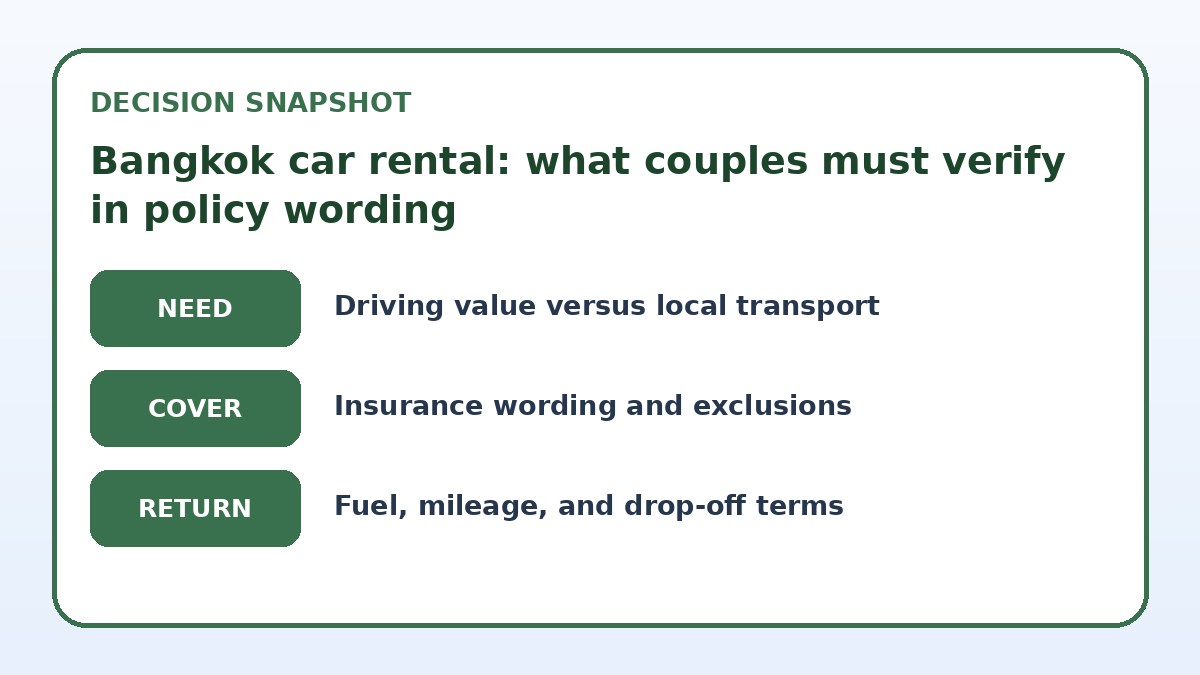
The excess — often called the deductible — is the amount you must pay before any insurance or waiver covers the rest. Some rental packages offer a collision damage waiver (CDW) or loss-damage waiver (LDW) that reduces or eliminates the excess, but the exact wording matters: an LDW may still exclude certain damage types or require you to pay administrative or loss-of-use fees. Ask the agent to explain whether buying the waiver removes your obligation to pay for all repair work immediately, or whether you will be reimbursed after filing a claim.
Third-party liability is separate from CDW/LDW and covers damage you cause to others, not to the rental vehicle. Make sure you understand both parts of the contract. If a waiver is sold at the desk, get the warranty clause shown in writing and compare it with any insurance card you bring from a credit card or third-party insurer. Keep in mind that many credit card protections have conditions and require you to pay the rental company and file for reimbursement later, so check the wording on time limits and proof required.
| Approach | Best for | Tradeoff to check |
|---|---|---|
| Accept basic rental insurance and add the company’s waiver at pickup | Couples wanting convenience and immediate clarification at the desk | Higher on-the-spot cost and possible overlap with other coverage you hold |
| Rely on credit-card rental insurance benefits | Couples with premium cards that list rental coverage | Often requires you to pay up-front and file for reimbursement later; strict eligibility rules apply |
| Buy a standalone third-party travel vehicle insurance policy | Couples taking longer trips or driving in varied terrain | Extra policy to manage and may duplicate coverage; read claim procedures carefully |
| Decline add-ons and accept full liability to lower upfront costs | Couples with confidence in low-risk urban driving and strong emergency funds | Potentially large out-of-pocket costs if an incident occurs |
Common exclusions that trip up couples
Exclusions appear as short bullet points but carry big consequences. Typical exclusions include off-road driving, driving on unpaved or restricted roads, drivers under the influence of alcohol or drugs, unauthorized drivers, and using the vehicle for commercial use or races. For couples planning weekend escapes or countryside drives, pay special attention to clauses about ferry use, island travel, or mountains — some policies immediately void coverage if the car is taken onto certain routes or beaches.
Also review theft and burglary language: some contracts require a secure parking obligation, locked doors, or that keys must never be left inside. If a theft occurs and the wording says the renter failed to take 'reasonable care' — a vague legal phrase — insurers may deny the claim. Ask for examples of what the company considers reasonable care, and if necessary, arrange additional theft protection or keep documentation (photos, timestamps) proving you followed the rules.
Before you book
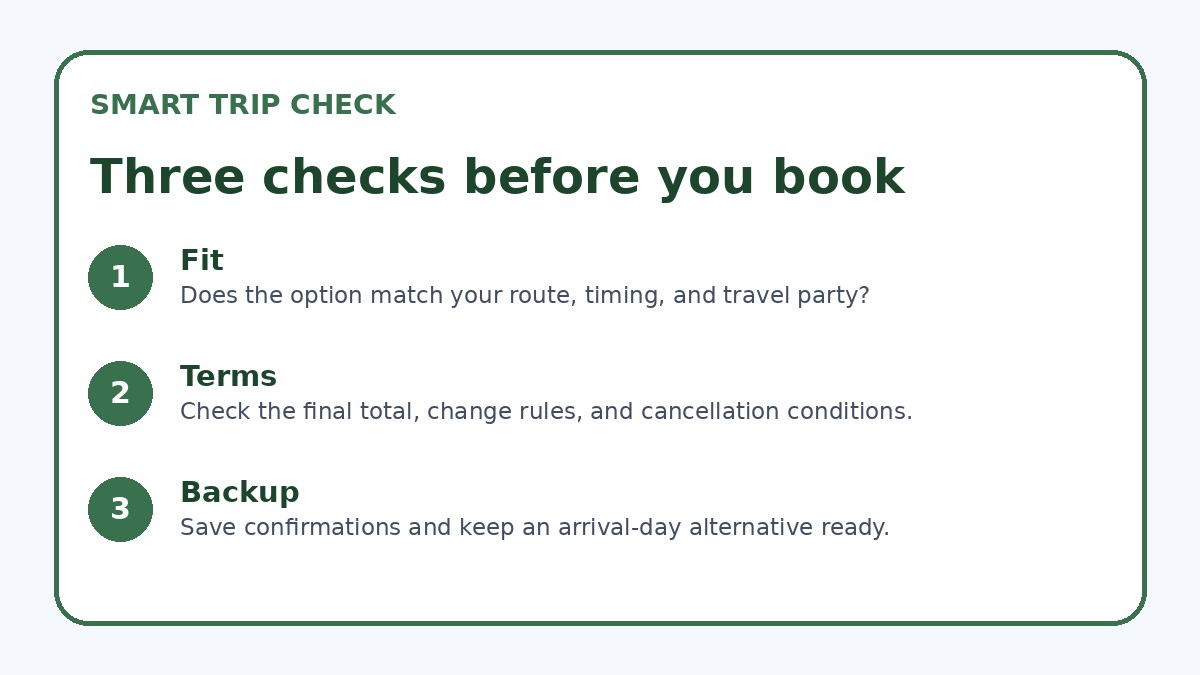
- Request and save a copy of the exact insurance clause naming authorized drivers before you sign the rental agreement.
- Photograph the car from every angle with timestamps when you pick up and return it; keep photos in cloud storage for evidence.
- Confirm excess (deductible) amounts in writing and ask for the clause number for any CDW/LDW you purchase at pickup.
- Ask which specific behaviors or locations void coverage and get an example of ‘reasonable care’ for theft or burglary claims.
- If using credit-card coverage, verify the card’s rental vehicle eligibility, required claim documents, and whether you must decline the rental company’s waiver.
- Obtain the rental company’s emergency contact for incidents and clarify steps for police reporting and obtaining an official incident report.
How to handle an incident in Bangkok: procedures and proof
Know the exact steps the policy requires after an accident or theft. Most contracts specify immediate reporting to the rental company, contacting local police, and obtaining a written report. For couples, one partner should handle communications while the other documents the scene: take wide shots of vehicle positions, close-ups of damage, license plates, and any road signs, plus timestamps or geolocation if possible. Failure to follow the specified reporting sequence can be used to deny a claim.
Keep all receipts, repair estimates, and any tow or storage paperwork — the insurer will ask for them. If your coverage depends on a credit-card benefit, read the card’s claim process and required documents; some cards require you to decline the rental company’s waiver at pickup to be eligible. Before you finalize a booking, verify all these incident-report procedures on the rental company’s final booking page or policy document, and consider saving a PDF of the full terms.
Frequently asked questions
If both partners drive, do we need to add the second driver to the rental?
Yes; to protect both of you, be sure the policy names both partners or states that an additional driver is covered. Some companies include one extra driver free, others charge or restrict who qualifies. If the contract doesn’t explicitly authorize the second driver, an insurance claim could be rejected after an accident, making both of you financially responsible. Always get the relevant clause in writing at pickup, and carry a copy of each driver’s license with the rental agreement.
Does a collision damage waiver (CDW/LDW) remove all costs if the car is damaged?
Not necessarily. A CDW or LDW often reduces your direct liability for physical damage but may still leave you responsible for the excess, administrative fees, loss-of-use charges, or certain excluded damage types. The policy wording will list exclusions (e.g., tires, windscreen, undercarriage) and circumstances that void coverage. Read the waiver’s exact language and request clause references; if you rely on a credit-card benefit, check whether that benefit requires you to decline the rental company’s waiver first.
Can we rely on our home insurance or credit-card insurance for Bangkok rentals?
Sometimes — but only if the policy language covers international rentals, Thailand specifically, and the vehicle class you’re renting. Credit-card insurance often has strict conditions: you might need to pay the full charge with the card, decline the rental company’s waiver, and submit a detailed claim within set timeframes. Home auto insurance policies vary wildly across countries. Before booking, review the insurer’s or card issuer’s terms, save screenshots of eligibility statements, and confirm any documentation they will require for claims.
Final planning note
For couples renting a car in Bangkok, the most useful habit is to read and record — carefully read the insurance wording, photograph the vehicle and the agreement, and save the exact clauses that mention drivers, excess, waivers, and exclusions. Decide together whether convenience (buying the rental company’s waiver at pickup) outweighs the paperwork of using credit-card or third-party coverage. Wherever possible, get the necessary clauses in writing and store them with timestamps and copies of both drivers’ licenses. Before finalizing any booking, verify the insurer’s incident procedures and proof requirements on the rental company’s final booking page; you can use Trip.com to compare availability and see current contract language, but always confirm the policy text directly with the provider.
Continue planning
Check current options and final conditions
Use the provider page to confirm live availability, the final total, cancellation terms, and every condition that matters to your trip.
This evergreen planning guide was created with AI-assisted drafting and a structured quality review. It does not display live prices, schedules, availability, visa guidance, or provider rankings. Verify current details before booking. Some links are affiliate links; we may earn a commission at no additional cost to you.