Practical answer first: for most solo travelers on Los Angeles to Honolulu flights, arrive at the airport 90–120 minutes before departure for a domestic nonstop, allow extra time (120–180 minutes) for checked baggage, and pack a single carry-on plus a small personal item if you want speed and fewer risks. That minimizes time in lines, reduces connection stress if you choose a one-stop itinerary, and helps avoid airport baggage check cutoffs. Choose baggage based on how long you'll stay, whether you plan inter-island travel after Honolulu, and how mobile you want to be on arrival. Before you finalize anything, verify the exact checked-bag size, weight limits, carry-on dimensions, online check-in window, and airport check-in deadlines on the airline’s booking page; policies vary by carrier and fare class.
Decide your baggage strategy before booking
Start by matching your itinerary and activities to a baggage plan. If you're staying a week or less and plan casual sightseeing, a carry-on sized soft-sided bag plus a small daypack or tote often covers clothes and beach gear while staying within most airlines’ overhead limits. For longer stays, special equipment (snorkel gear, surfboard, photographic kit), or inter-island trips where a checked bag can be cumbersome on smaller carriers, a single checked suitcase may be a better choice. Remember that checked baggage rules, fees, and included allowances vary with fare class; low-cost fares sometimes exclude checked bags entirely.
When deciding, factor in airport time savings versus cost and risk. Carry-on-only travel typically means arriving later and skimming past baggage drop lines, but you must be comfortable living out of a smaller bag and following carry-on size/weight rules. Checked bags add time at Los Angeles for drop-off and at Honolulu for retrieval; they also introduce the small risk of delay or misrouting, especially if you connect. If you’re comparing options on a booking site or with Trip.com, always click through to the airline’s itinerary page to confirm precise baggage allowances and deadlines before purchase.
How to schedule airport arrival and check-in
For nonstop Los Angeles to Honolulu departures, aim to arrive 90–120 minutes before scheduled departure; this gives a cushion for security lines, ticketing, and any last-minute bag checks. If you plan to check luggage, arrive toward the longer end of the range—most airlines have cutoffs for checking bags that can be well before departure time. For one-stop itineraries or flights that require re-checking bags through connections, add extra buffer; connecting flights can require more time in Los Angeles to ensure bags are tagged correctly and you clear all required security steps.
Make use of online check-in, mobile boarding passes, and curbside or express bag drop when available to shorten time inside the terminal. Check the airline’s online check-in window—some open 24 hours before departure, others earlier or later—and print or download boarding passes accordingly. Also confirm Transportation Security Administration (TSA) recommended arrival windows and any airport advisories for Los Angeles International Airport that might affect security waits. On travel days, build in additional time for traffic to the airport and allow for the time to move from parking or rideshare pickup to the terminal.
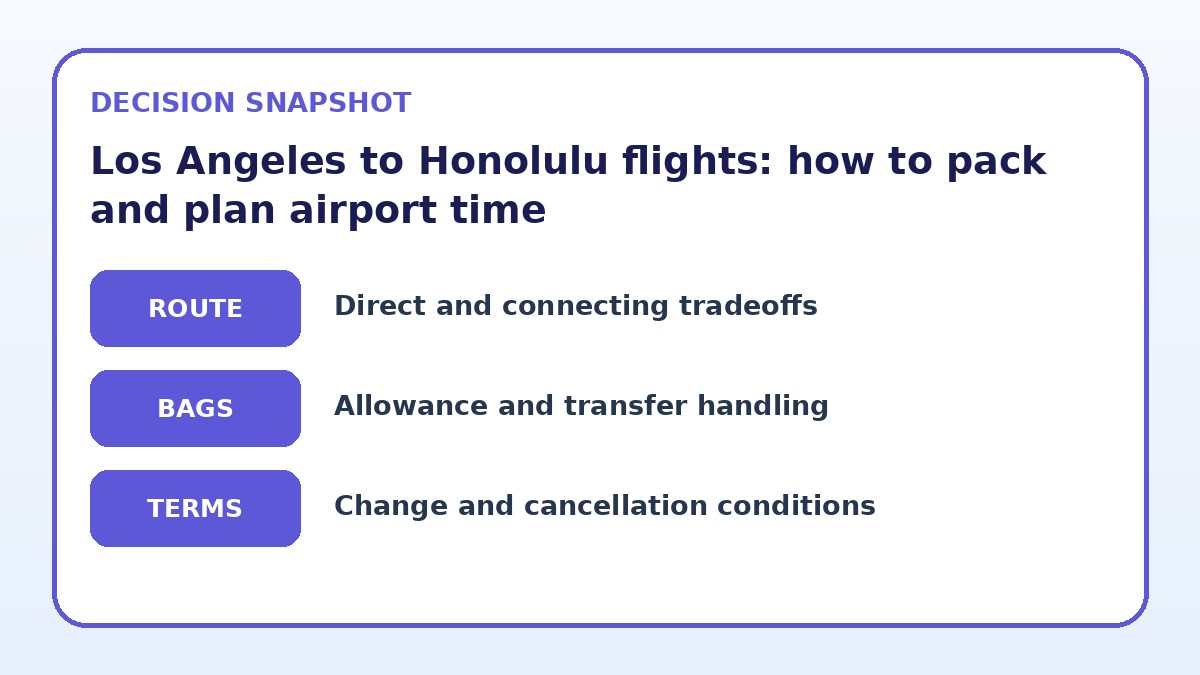
| Approach | Best for | Tradeoff to check |
|---|---|---|
| Carry-on only | Short stays, fast arrival and exit, and avoiding baggage delays | Limited clothing and gear; must obey strict size/weight rules and pack efficiently |
| One checked bag + carry-on | Longer trips or travelers needing bulkier items or formal wear | Extra time at drop-off and claim; potential fees and small risk of delay |
| Nonstop flights | Minimizing airport time, simplifying baggage handling and reducing connection risk | Fewer departure times and less itinerary flexibility |
| Connecting flights | Lower fares or more departure/arrival time options | More complex baggage logistics and higher risk of missed connections |
Packing choices that speed up airport flow
Organize your carry-on to clear security quickly and stay comfortable on the plane. Pack electronics and liquids in readily accessible places, follow the TSA 3-1-1 liquids guidance, and keep shoes that you can remove easily if a security screening requires it. A lightweight, collapsible bag or duffel that fits within carry-on dimensions gives you flexibility: you can use it as your personal item on the plane and then compress it into checked luggage if you decide to check a bag at the airport. Place essential items—travel documents, medication, chargers, a change of clothes—in your personal item to avoid panic if a checked suitcase is delayed.
Use packing aids to reduce stress and speed retrieval after landing. A clear pouch for liquids and a small tech organizer for cables and adapters makes security and in-flight use easier. If you’re carrying beach gear or souvenirs for inter-island hops, choose foldable or inflatable versions to avoid oversize baggage fees. Also keep proof of any special equipment allowances (for items such as surfboards or musical instruments) on hand, and confirm whether you must prepay or reserve space with the airline; these rules are frequently updated and must be verified on the carrier’s booking details before you depart.
Before you book
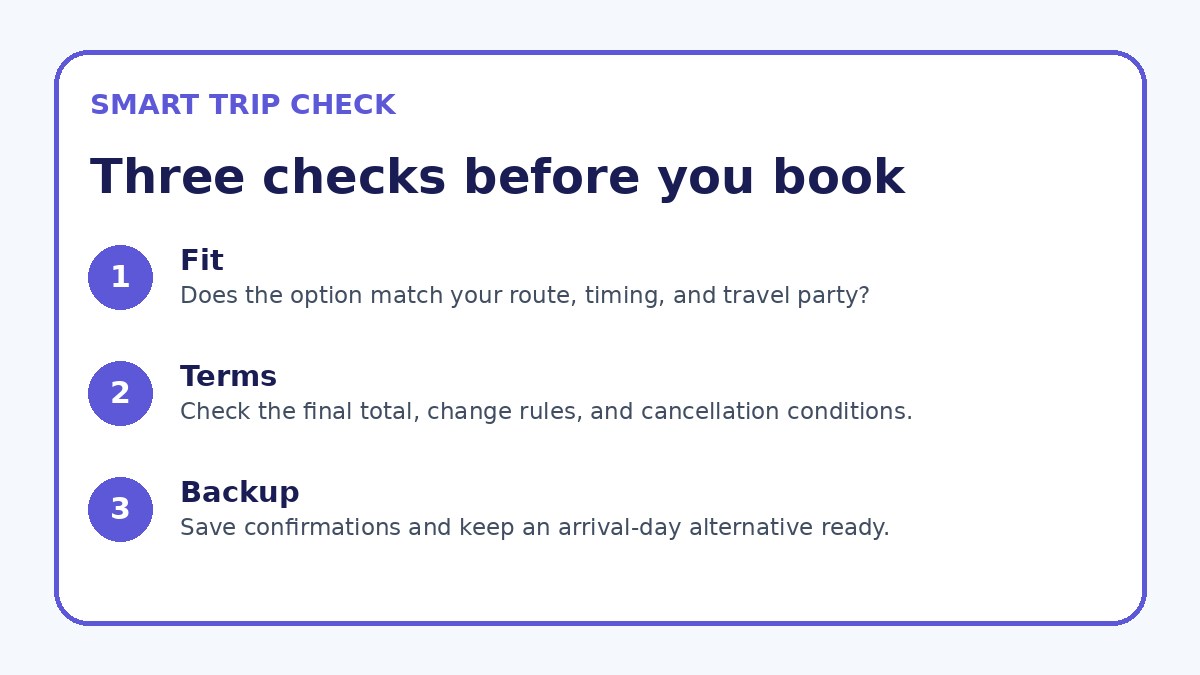
- Check the airline baggage size and weight limits on the provider’s final booking page and note fees for extra or oversize bags.
- Use online check-in as soon as it opens and download your mobile boarding pass to skip printing lines at the airport.
- If checking a bag, verify the airline’s check-in cutoff time and arrive at least 30 minutes before that deadline.
- Pack essential items (medications, travel documents, charger, change of clothes) in your personal item in case checked luggage is delayed.
- Reserve curbside drop-off or express bag drop if the airline offers it, and keep receipts for baggage claims.
- Allow extra ground travel time to LAX for traffic, and reconfirm terminal and baggage procedures on the airline’s website the evening before travel.
Deciding between nonstop and connecting flights
Nonstop flights from Los Angeles to Honolulu are the fastest and simplest choice for solo travelers who prioritize minimal airport hassle: no re-checking of bags, no risk of missed connections, and fewer terminals to navigate. If you value convenience and have limited time, a nonstop typically reduces the number of pre-departure hours you need and keeps your bag handling straightforward. That simplicity comes at a price in flexibility—you may have fewer schedule options and less ability to change flights mid-route without penalties, depending on the fare rules.
Connecting options can save money or open additional departure times, but they add complexity to baggage and timing. For connections, compare minimum connection times offered by airlines and allow extra buffer for delays at the connection airport. If your itinerary requires switching between carriers that don’t interline baggage, you will need to collect and re-check luggage between flights, which means planning more time at each stop. Before booking, check on the airline’s page whether your tickets are on a single reservation (through-checked baggage) or separate tickets that require you to claim and re-check bags.
Frequently asked questions
How early should a solo traveler arrive at Los Angeles for a Honolulu nonstop?
For a nonstop Los Angeles to Honolulu flight, plan to arrive 90–120 minutes before departure if you travel with carry-on only and have checked in online. If you need to check a bag, target the longer end of that window; airlines set baggage check-in cutoffs that can be well before departure, and arriving earlier avoids rushed lines. Also factor in road traffic and any airport alerts for LAX; check the airline’s recommended arrival time and the specific baggage check cutoff on the airline’s booking page the day before travel.
Can I bring surf gear or oversized items on these flights and how does that affect timing?
You can often bring surfboards and oversized gear, but these items usually require advance coordination with the airline and may incur special handling fees or reservations. Bringing oversized items adds time at the airline counter for inspection and documentation, and you may need to check them well before the standard baggage cutoff. Verify whether the carrier requires a booking through the sports equipment desk and whether you must prepay or reserve space; these details appear on the airline’s final booking page and can affect how early you should arrive at the airport.
Is it faster to check a bag at curbside or at the ticket counter for a Hawaii flight?
Curbside drop-off can be significantly faster if your airline offers it and you’ve already checked in online, because staff can tag bags quickly and you bypass ticketing lines. However, curbside services may have separate hours, differ by terminal, or charge fees, so check availability before relying on it. If curbside isn’t available, use the airline’s express bag drop counters; otherwise allocate time for regular check-in counters. Always confirm on the airline’s booking page whether curbside or express drop is available and what documentation you should present.
Final planning note
Organizing baggage and airport time for Los Angeles to Honolulu flights comes down to clear tradeoffs: carry-on travel speeds you through LAX and Honolulu but restricts what you can bring; checking a bag eases packing but adds time and small risk. Favor nonstop flights if you want simplicity; choose connections only if timing or cost advantages outweigh the added complexity. Always verify baggage allowances, check-in windows, and any special equipment rules directly on the airline’s booking page before you purchase. For quick comparison shopping, you can look at Trip.com as one point of reference, but use the carrier’s itinerary details to finalize the practical decisions that affect your airport timeline and packing choices.
Continue planning
Check current options and final conditions
Use the provider page to confirm live availability, the final total, cancellation terms, and every condition that matters to your trip.
This evergreen planning guide was created with AI-assisted drafting and a structured quality review. It does not display live prices, schedules, availability, visa guidance, or provider rankings. Verify current details before booking. Some links are affiliate links; we may earn a commission at no additional cost to you.