If time, border predictability, and getting straight to downtown meetings matter most, take a short flight into Seattle and use a downtown taxi or rideshare—this usually minimizes door-to-door uncertainty on a tight schedule. If you prefer avoiding airport routines or want a city-center arrival without transfers, intercity bus or rail options that land near downtown can be competitive, provided you budget extra time for the border crossing and any customs procedures. Driving gives full schedule control but adds the stress of customs lines, potential parking hassles, and variable traffic. This article lays out the practical tradeoffs business travelers should weigh—travel time variability, border and customs steps, luggage and work needs, and the meeting-side arrival point—so you can pick and prepare the most pragmatic option for your trip.
Compare total door-to-door time, not just in-vehicle time
Business travelers often focus on the scheduled travel duration (flight time, train schedule) and overlook the full door-to-door journey. For flights, add time for getting to the airport, security or check-in, potential immigration or customs re-entry steps, taxi/rideshare from the arrival airport to your meeting location, and contingency time for delays. For buses and trains, you still need to include the border inspection process and the time to get from the station to your final destination. When you total those elements, some surface options that seem slower on paper may beat air travel because they deliver you straight to a downtown stop with fewer transfers.
To compare realistically, map the route from your office or hotel to each departure point and from each arrival point to the meeting venue. Estimate travel at peak and off-peak times—rush hour can turn a short drive into a substantial delay. If a supplier offers a single-seat service vs. one requiring a change, weigh the time and hassle of transferring with luggage. Use conservative buffer time for critical meetings (for example, at least 60–90 minutes margin) and choose the option whose real-world door-to-door time and reliability best protect that margin.
Border procedures and documentation: plan for variability
Crossing the Canada–U.S. border introduces variability that affects all transport modes. Business travelers should ensure passports and any required travel documents are current and easily accessible to speed inspections. If you have Global Entry, NEXUS, or other trusted-traveler credentials, check how those programs apply to your chosen mode; they often reduce wait times but can have different procedures for air versus land crossings. Note that border processing can be unpredictable—busy times, special events, and staffing can change wait times day to day.
When booking, confirm where and when customs inspections happen for your option: some bus and train services conduct inspections at the border or require everyone to disembark, while flights will follow airport customs and immigration procedures. For driving, think about primary inspection points and possible secondary inspections. The key is to verify the provider’s current guidance about where inspections occur and whether you need to carry additional paperwork—for example, proof of business purpose or company letterhead—if you expect a more detailed questioning at the border.
| Approach | Best for | Tradeoff to check |
|---|---|---|
| Short flight into Seattle + taxi/rideshare | Tight schedules where airborne time must be minimized and you accept airport transfers. | Adds airport time and transfers; confirm terminal-to-downtown transfer options before booking. |
| Intercity train or premium bus to downtown | Arriving directly in downtown with workspace and fewer transfers. | Border inspections can delay departures; check when and where inspections occur for your service. |
| Driving or car service door-to-door | Maximum schedule control and flexible routing between meetings. | Customs lines and parking can be time-consuming; assess city parking and likely inspection points. |
| Budget bus services | Cost-conscious travelers with flexible schedules and minimal luggage. | Fewer amenities and variable border wait times; confirm luggage policies and layover handling. |
Work-friendly travel: connectivity, power, and workspace needs
If you need to work en route, compare seating, power access, and reliable onboard Wi‑Fi across options. Trains and some premium buses often provide table space, power outlets, and wider seats that make mobile work easier. Flights can offer good connectivity on the ground and sometimes in the air, but security procedures and boarding mean fragmented work windows. Driving allows the most control but keeps you off devices while operating the vehicle unless you rely on a car service with a driver, which changes cost and planning considerations.
Consider what uninterrupted time you truly need. If you have a 30–45 minute call, a direct flight might offer a quieter, private space during taxi and climb—if you can avoid background noise and if onboard connectivity supports your call. For longer focused work, a train with a window table can be more productive. Always check the provider’s current information about Wi‑Fi performance and power availability on the specific service you plan to book, and have a backup plan for calls (mobile hotspot, meeting rescheduling) in case connectivity is unreliable.
Before you book
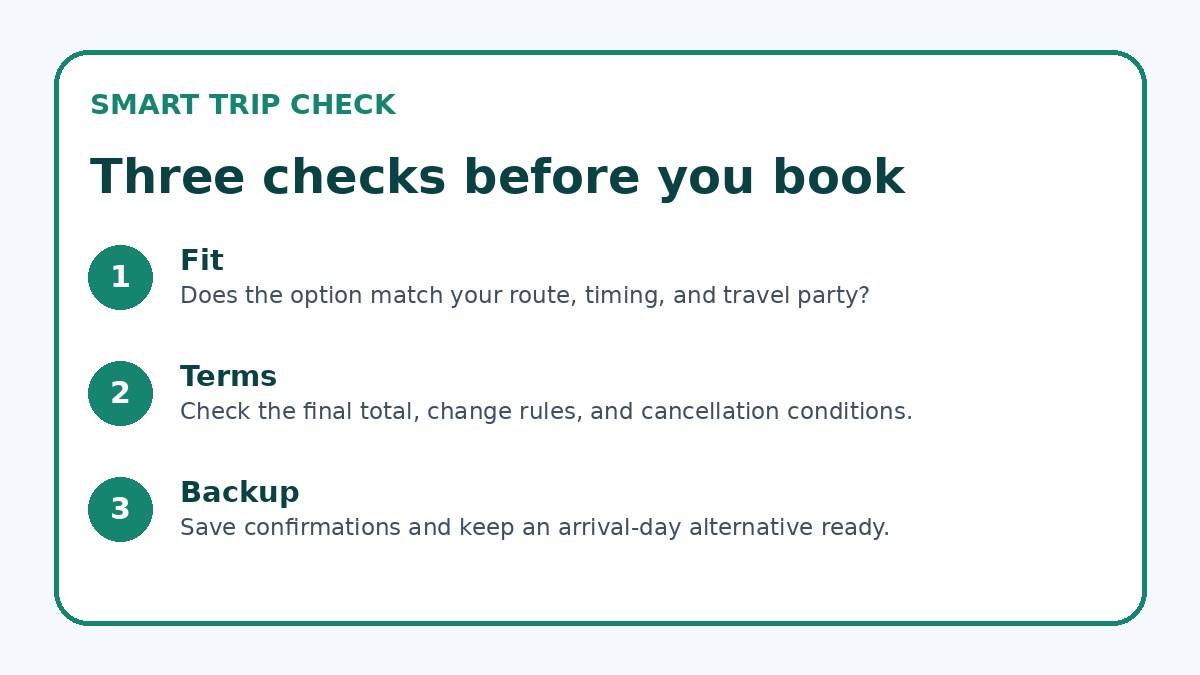
- Confirm passport validity and any required business-entry documents; keep them accessible during border crossings.
- Map door-to-door travel times for each option at your planned travel times, including likely rush-hour effects.
- Verify where customs or immigration occurs for your chosen service on the provider’s booking page before purchasing.
- Check power outlet availability and onboard Wi‑Fi status for work calls; prepare a mobile hotspot as backup.
- Plan at least a 60–90 minute buffer before critical meetings and choose the option that best preserves that margin.
- If driving, research arrival parking options near your meeting venue and factor estimated walking time from parking to the office.
Cost drivers, convenience, and the meeting-side arrival
Ticket cost is only one part of the budget equation; include last-mile transfers, parking, potential waiting time billed as lost work hours, and any fees for checked luggage or seat selection. Convenience for a business traveler often means minimizing steps between arrival and the meeting: arriving at a downtown train station or central bus terminal can be more valuable than saving nominal money on a flight that lands at an airport farther from your destination. Also factor in the predictability of the service—frequent scheduled options let you pick alternatives if something goes wrong.
When comparing options, ask whether the transport lands you within easy walking distance of client offices or conference venues, or whether it requires a costly or time-consuming transfer. If your schedule has tight, back-to-back meetings, favor choices that reduce the number of touchpoints (transfers, luggage handling, or customs steps). Before finalizing, verify the current booking page for each provider to check exact station or terminal arrival points, transfer recommendations, and any special instructions about corporate bookings or group travel.
Frequently asked questions
Should I prioritize arrival location or total trip time when traveling for meetings?
Prioritize the arrival location when meetings start soon after your arrival—being dropped in a downtown station or close to your client’s office can save time otherwise lost to airport transfers and traffic. If you have ample buffer time and the primary constraint is minimizing travel duration, then selecting the fastest overall door-to-door option (which may still be a flight for some schedules) makes sense. For back-to-back meetings choose the option that reduces the number of transfers and reliability risk even if it costs slightly more or takes a bit longer.
How much extra time should I budget for border checks between Vancouver and Seattle?
Border check times can vary with traffic, staffing, and time of day. For planning, allocate a conservative buffer rather than depending on average times: add at least an extra 30–90 minutes to the nominal schedule to cover potential inspections or secondary questioning. If you rely on a specific service, review the provider’s guidance on where inspections happen and consider using trusted-traveler programs if you already participate, after verifying how those credentials apply to your chosen mode of transport.
Can I work during the trip and still arrive ready for a meeting?
Yes, but choose the mode that supports focused work. Trains and premium buses typically offer more space, stable tables, and power outlets for laptops, making longer stretches of productive work possible. Flights can offer short, quiet windows for calls or focused tasks but include interruptions for boarding and cabin announcements. If uninterrupted work is critical, prioritize a service with a reliable workspace and connectivity, and always confirm the provider’s current Wi‑Fi and power availability on the booking page before relying on it.
Final planning note
For most business travelers balancing meeting punctuality and convenience, the practical choice depends on whether you value a downtown arrival over minimal travel time. Flights are attractive when airborne duration must be minimal and you can absorb airport transfers; trains or premium buses win when you need a work-friendly environment and a downtown touch-down with fewer transfers. Driving gives flexibility but introduces customs and parking uncertainty. Before booking, map the full door-to-door itinerary, confirm where customs inspections occur, check power and connectivity for work, and allow a healthy buffer before critical meetings so you arrive prepared and on time.
Continue planning
Check current options and final conditions
Use the provider page to confirm live availability, the final total, cancellation terms, and every condition that matters to your trip.
This evergreen planning guide was created with AI-assisted drafting and a structured quality review. It does not display live prices, schedules, availability, visa guidance, or provider rankings. Verify current details before booking. Some links are affiliate links; we may earn a commission at no additional cost to you.